Alfa Romeo Biscione Makes a Case for a Rebodied GranTurismo
By Hugo Mattson November 12, 2026

Automotive designer Abel Bahri has created the Alfa Romeo Biscione, an independent four seat grand tourer concept inspired by the Italian manufacturer's Milanese heritage.
The Biscione is just 7 mm narrower and 53 mm lower than the Maserati GranTurismo, raising the possibility of a future Alfa Romeo GT using existing Stellantis engineering.
The project includes original design sketches, detailed 3D models and packaging studies, with styling references to classic Alfa Romeo models and the modern 33 Stradale.
Alfa Romeo has a long history of building beautiful grand tourers, from the classic 2600 Sprint and Montreal to the more recent 8C Competizione. Although the Italian manufacturer has since concentrated much of its attention on sedans and SUVs, its sporting heritage continues to inspire automotive designers.
The latest example comes from Abel Bahri, an independent car designer who has imagined a modern Alfa Romeo grand tourer called the Biscione.
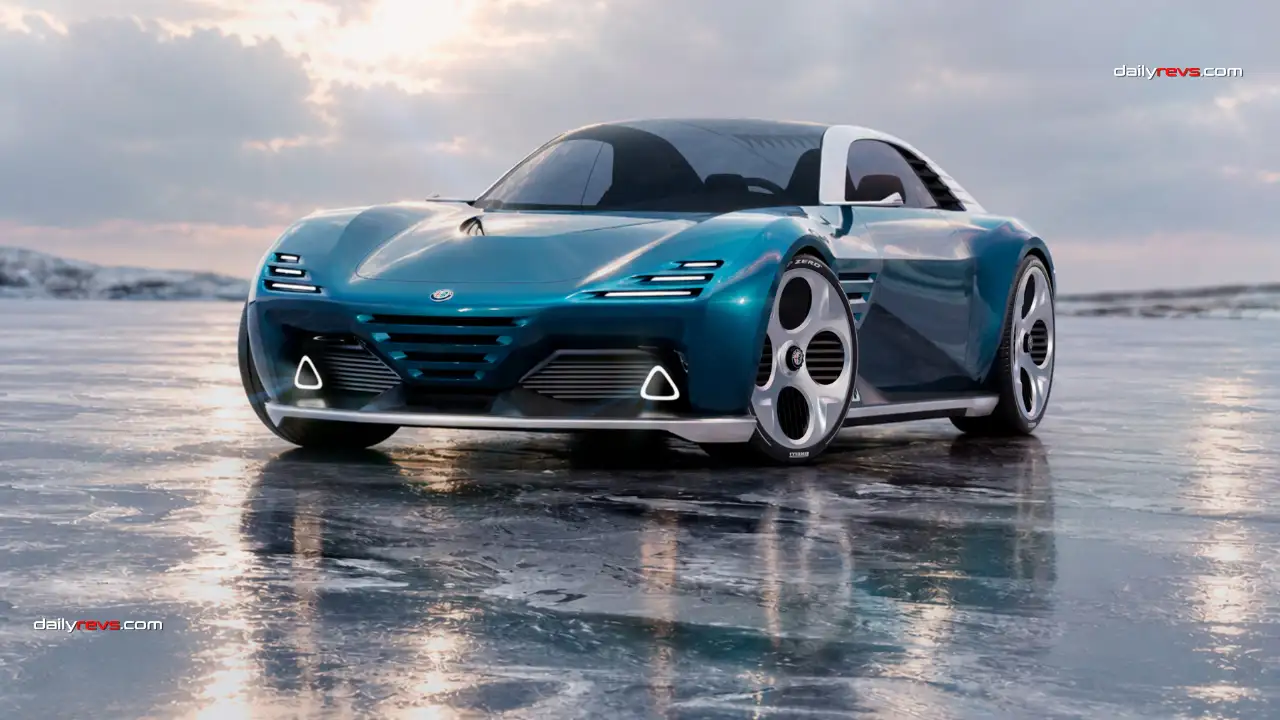
His creation combines a long hood, a low roofline and four individual seats with several familiar Alfa Romeo styling details. However, the overall design is quite different from anything currently offered by the manufacturer.
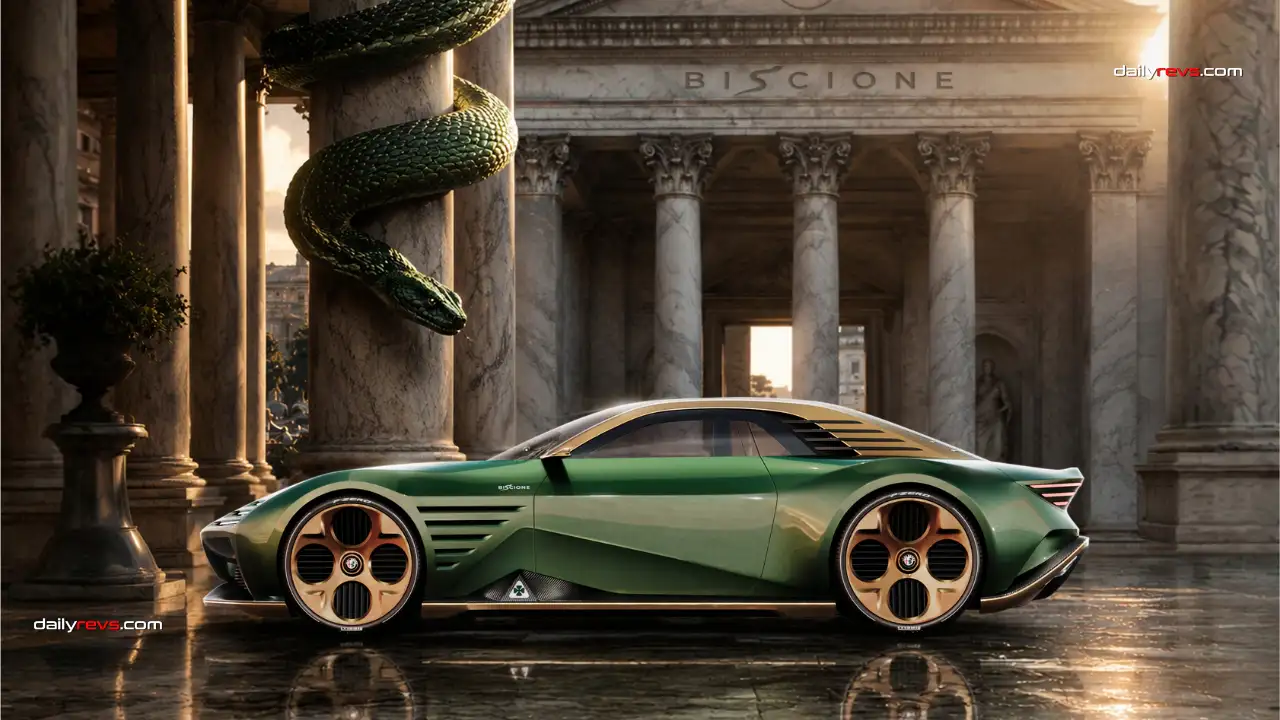
There is also an interesting connection to another Italian grand tourer already in production. The Biscione's dimensions are surprisingly close to those of the Maserati GranTurismo, raising the question of whether Stellantis could use the existing Maserati as the engineering foundation for a new Alfa Romeo GT.
The Biscione takes its name from the serpent associated with Milan, a symbol that has appeared in Alfa Romeo's emblem since the company's earliest years. Bahri describes the project as an attempt to reconnect with the passion and character of traditional Alfa Romeo sports cars through contemporary Italian design.
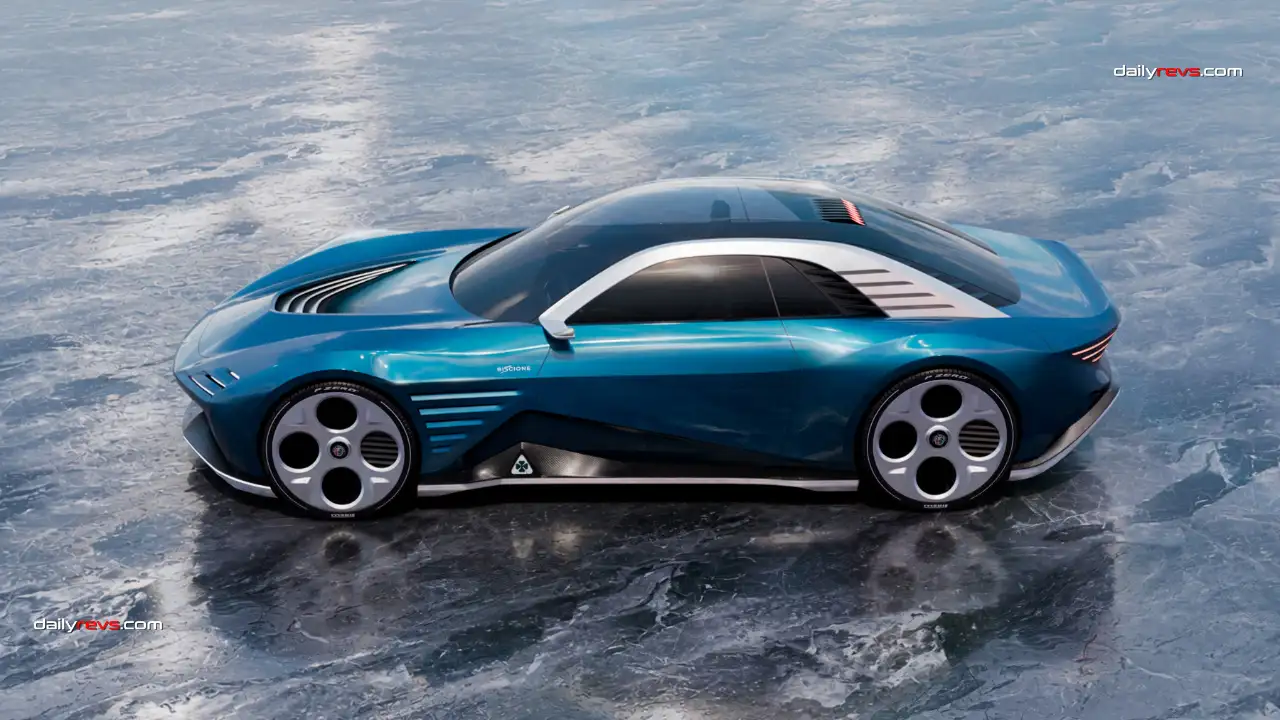
Finished in metallic green with contrasting gold accents, the concept has the proportions of an exotic grand touring coupe. Its deeply sculpted doors, enormous wheels and sweeping glass canopy give it a distinctive profile.
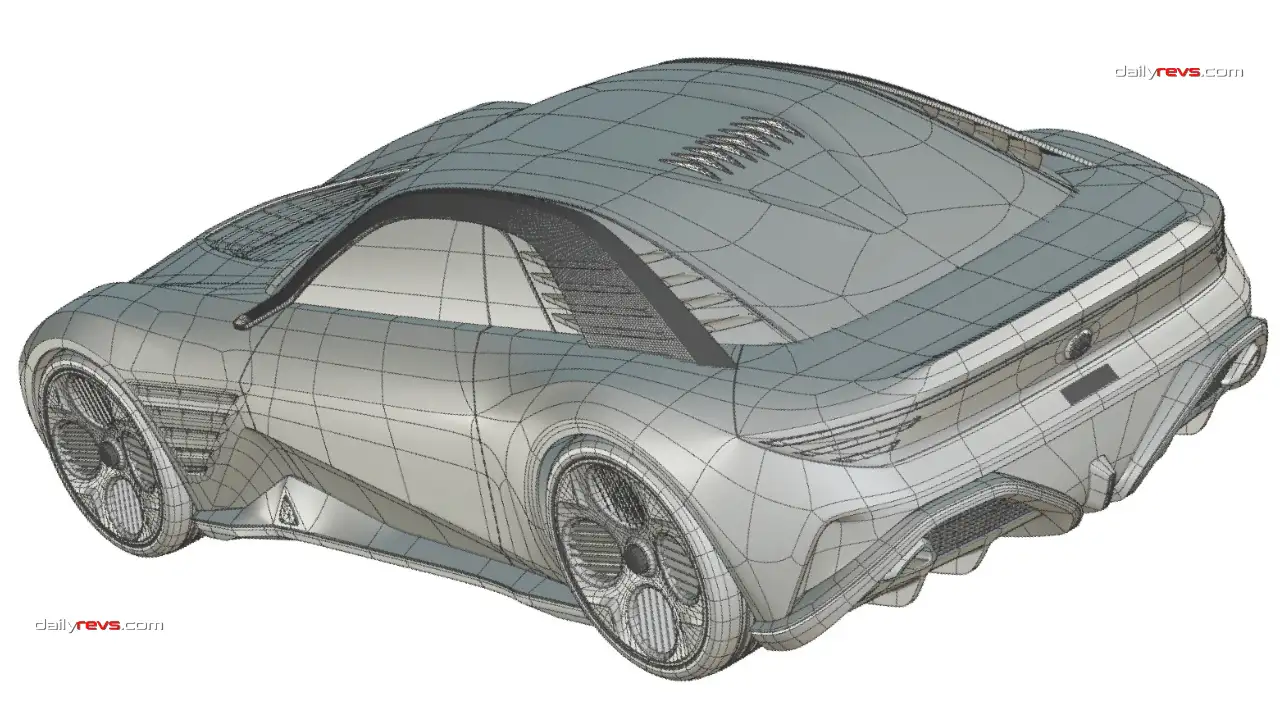
The project also includes original sketches, detailed 3D models and technical packaging drawings, providing a closer look at how Bahri developed the design.
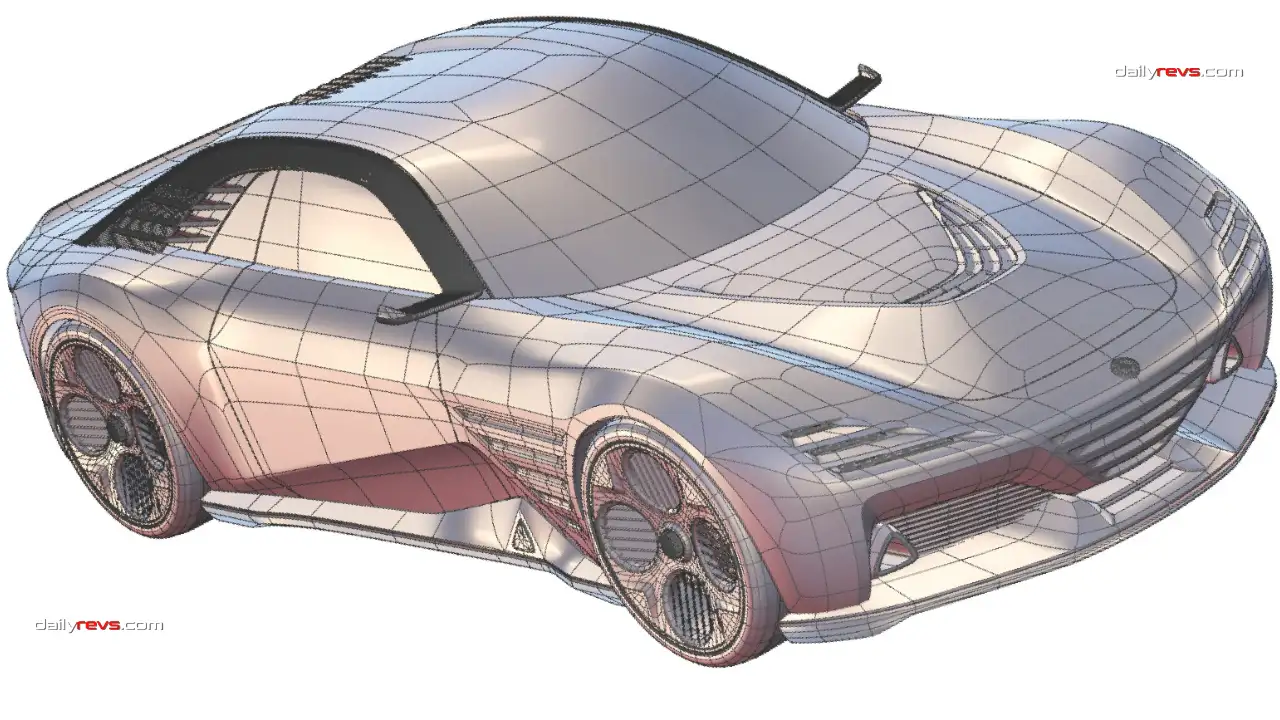
An Alfa Romeo With a Little More GranTurismo in Its DNA
The Alfa Romeo Biscione measures 4,700 mm in length, 1,950 mm in width and just 1,300 mm in height. Its wheelbase stretches 2,820 mm, giving the concept a long, low stance with relatively short overhangs.
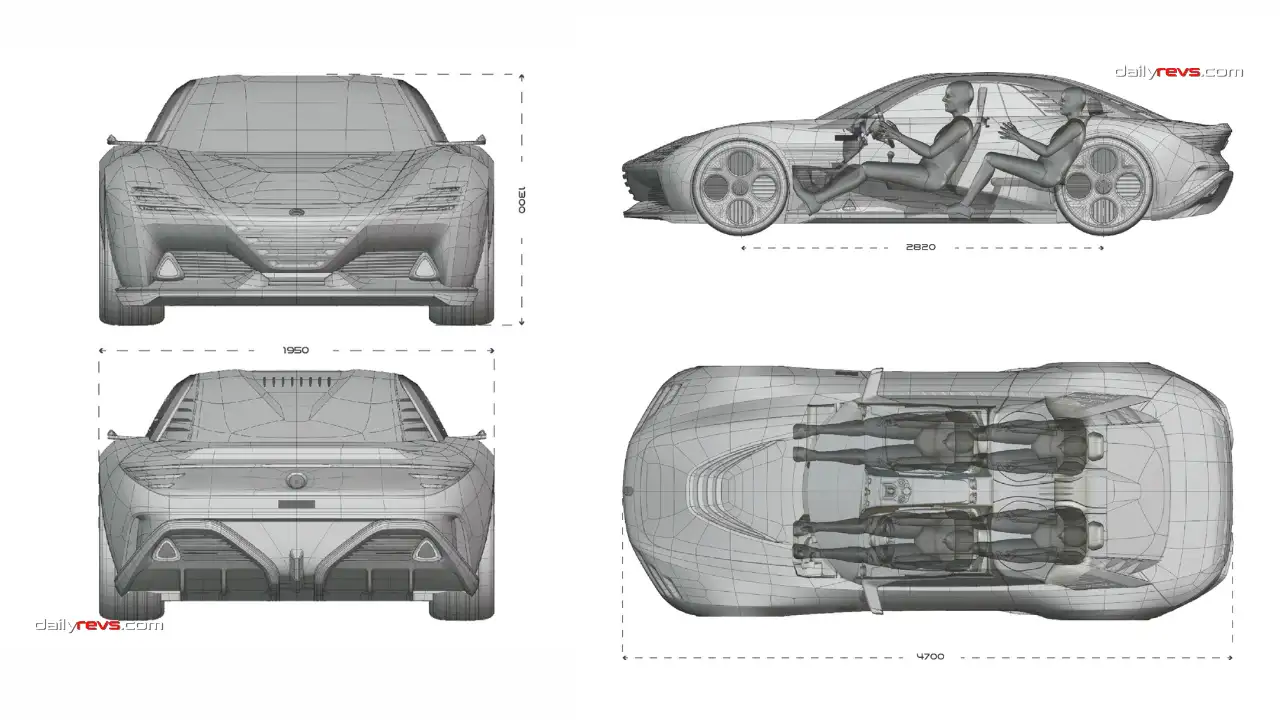
These dimensions place it firmly in grand touring territory, although its roofline is considerably lower than that of most modern four seat coupes.
The hood extends well ahead of the windshield, with pronounced front wheel arches rising above its otherwise low surface. Behind it, the passenger compartment sits relatively far back, while the roof follows a smooth curve toward the short rear deck.
A continuous glass canopy covers much of the upper body. Its shape is defined by a gold finished structure that begins near the base of the windshield, follows the roofline and descends toward the rear quarters.
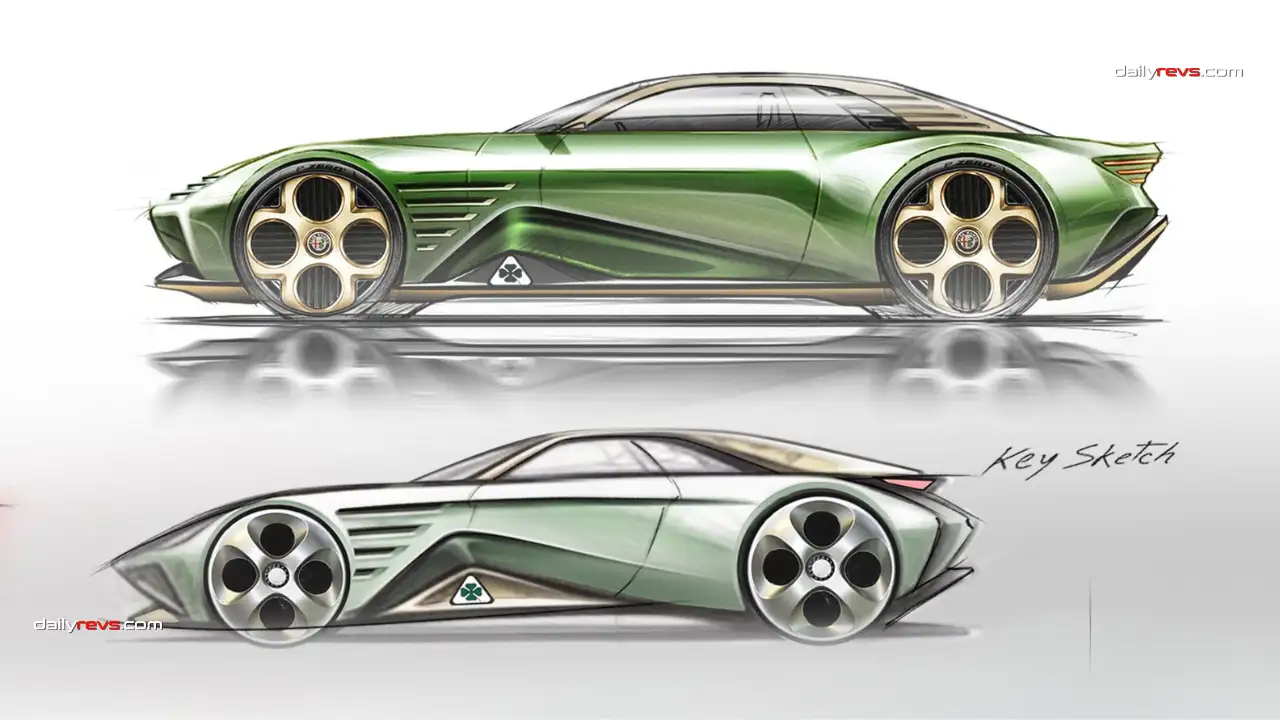
The treatment gives the cabin a separate visual identity from the rest of the bodywork, particularly when viewed from the side.
Behind the rear side windows, a series of horizontal louvers adds another layer of detail. These openings sit within the gold roof structure and follow the descending line of the rear glass.
The doors feature some of the Biscione's most elaborate surfacing.
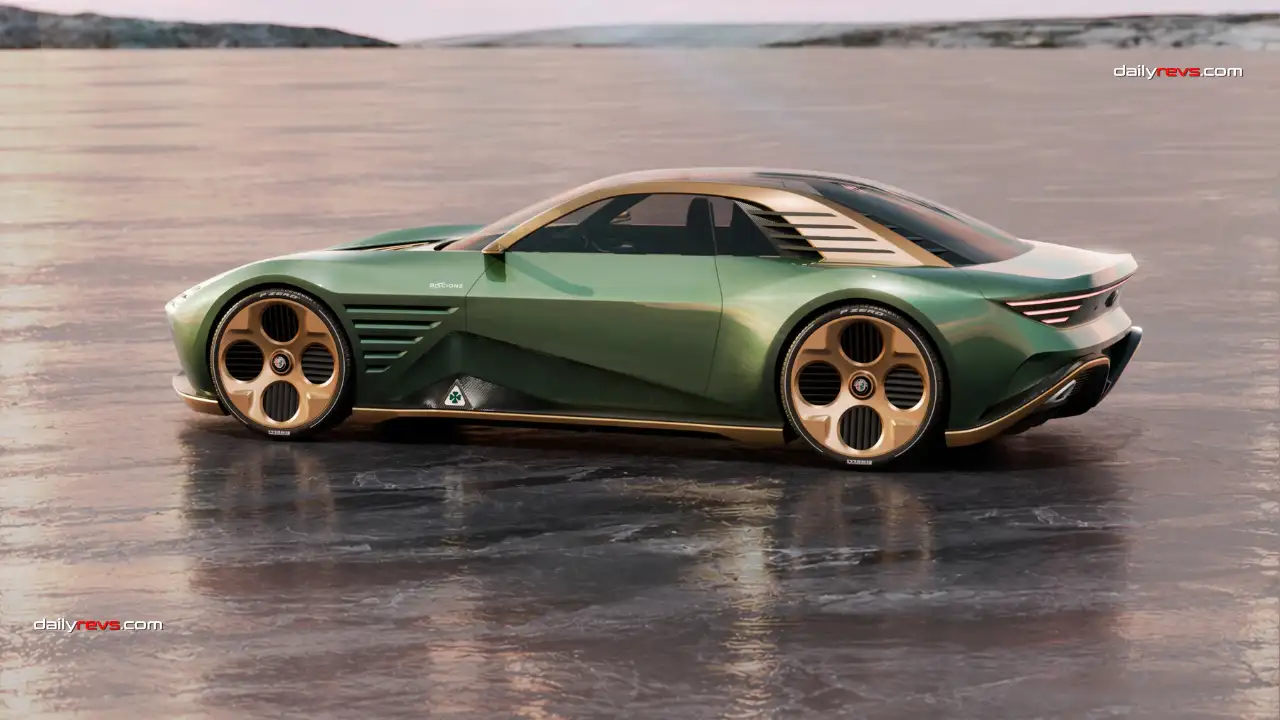
A strong shoulder extends from the front fender toward the rear wheel arch, while a deep recess cuts through the lower half of the body. The surface begins behind the front wheel and rises toward the rear, where it meets the broad rear quarters.
The front fenders also incorporate a series of horizontal vents, positioned just behind the wheels. Their arrangement recalls details found on classic Italian sports cars, although Bahri has integrated them into the surrounding bodywork rather than treating them as separate decorative elements.
The large gold wheels are another recognizable Alfa Romeo reference.
Their five circular openings are inspired by the manufacturer's famous telephone dial wheel design, used on several historic models and revisited on the modern 33 Stradale.
Bahri's interpretation features particularly large openings with thick, rounded spokes. The gold finish matches the roof accents and selected elements of the lower bodywork.
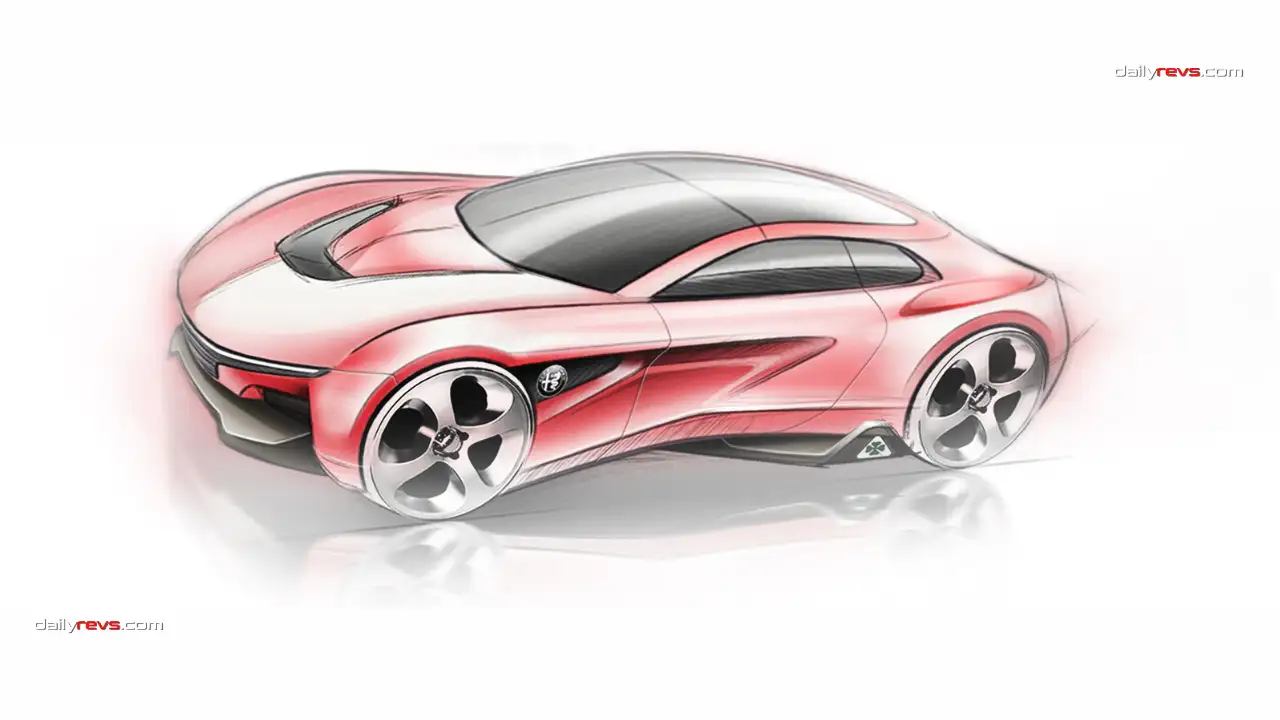
The green paintwork shown in the main renderings highlights the relationship between the upper and lower surfaces. A second version finished in metallic red places greater emphasis on the car's muscular fenders and low nose.
Both versions retain the same exterior design, although the different colors give the Biscione noticeably different appearances.
The Details That Make It an Alfa Romeo
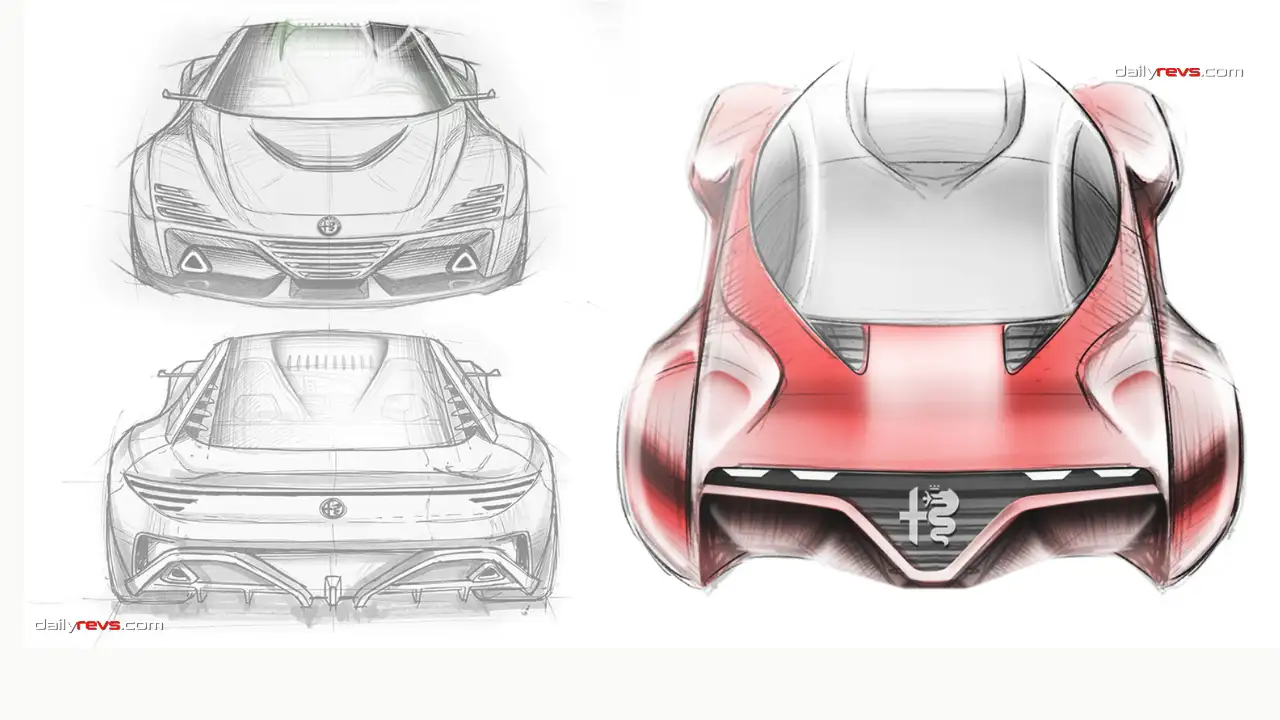
The Biscione's front end takes a different approach to Alfa Romeo's traditional grille design. Instead of the familiar upright Scudetto, Bahri has developed a broad central opening with horizontal elements that taper toward the middle of the bumper.
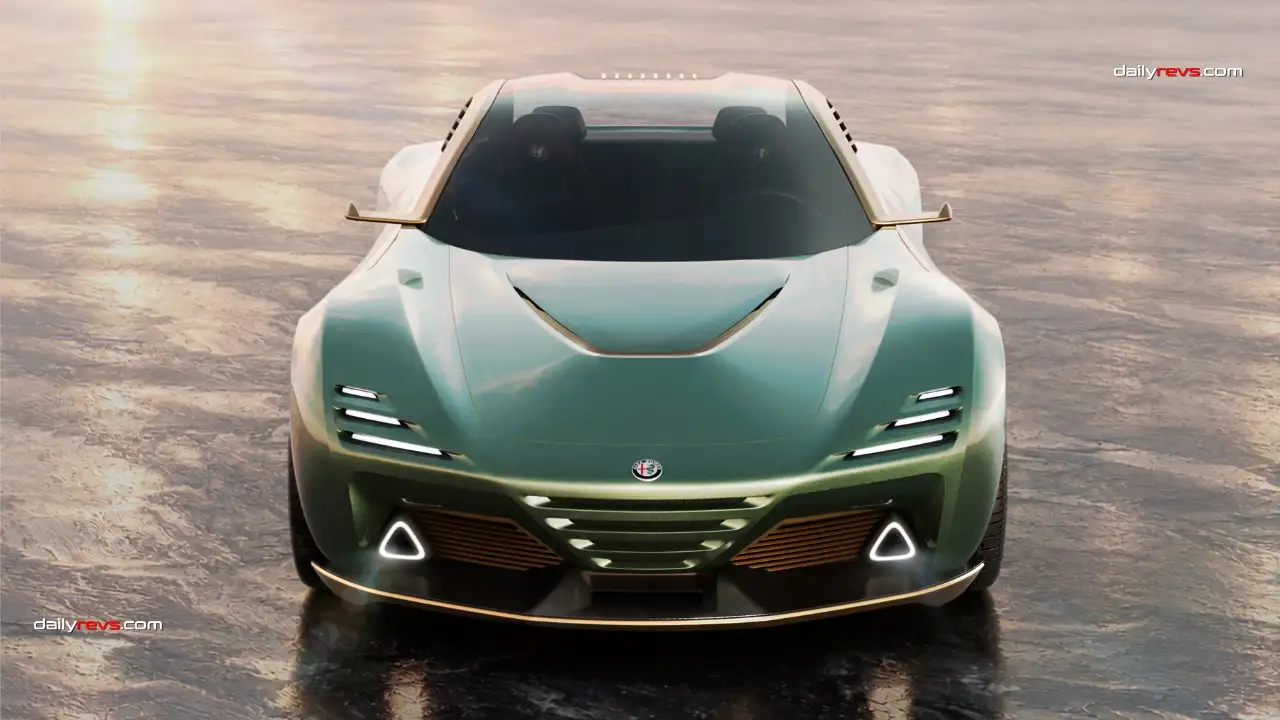
The Alfa Romeo badge sits on the low hood, above a narrow upper intake. Below it, the grille extends toward the corners of the front fascia, giving the nose a wider appearance.
The headlights feature several narrow horizontal strips integrated into the upper corners of the front fenders. Their staggered arrangement is particularly noticeable from the front, while triangular lighting elements occupy the lower bumper openings, surrounded by dark surfaces and gold accents.
There are also some interesting parallels with the Alfa Romeo Montreal, the classic grand tourer designed by Marcello Gandini at Bertone. Introduced in production form in 1970, the Montreal featured partially concealed headlights with distinctive slatted covers, a prominent hood opening and horizontal louvers behind its side windows.
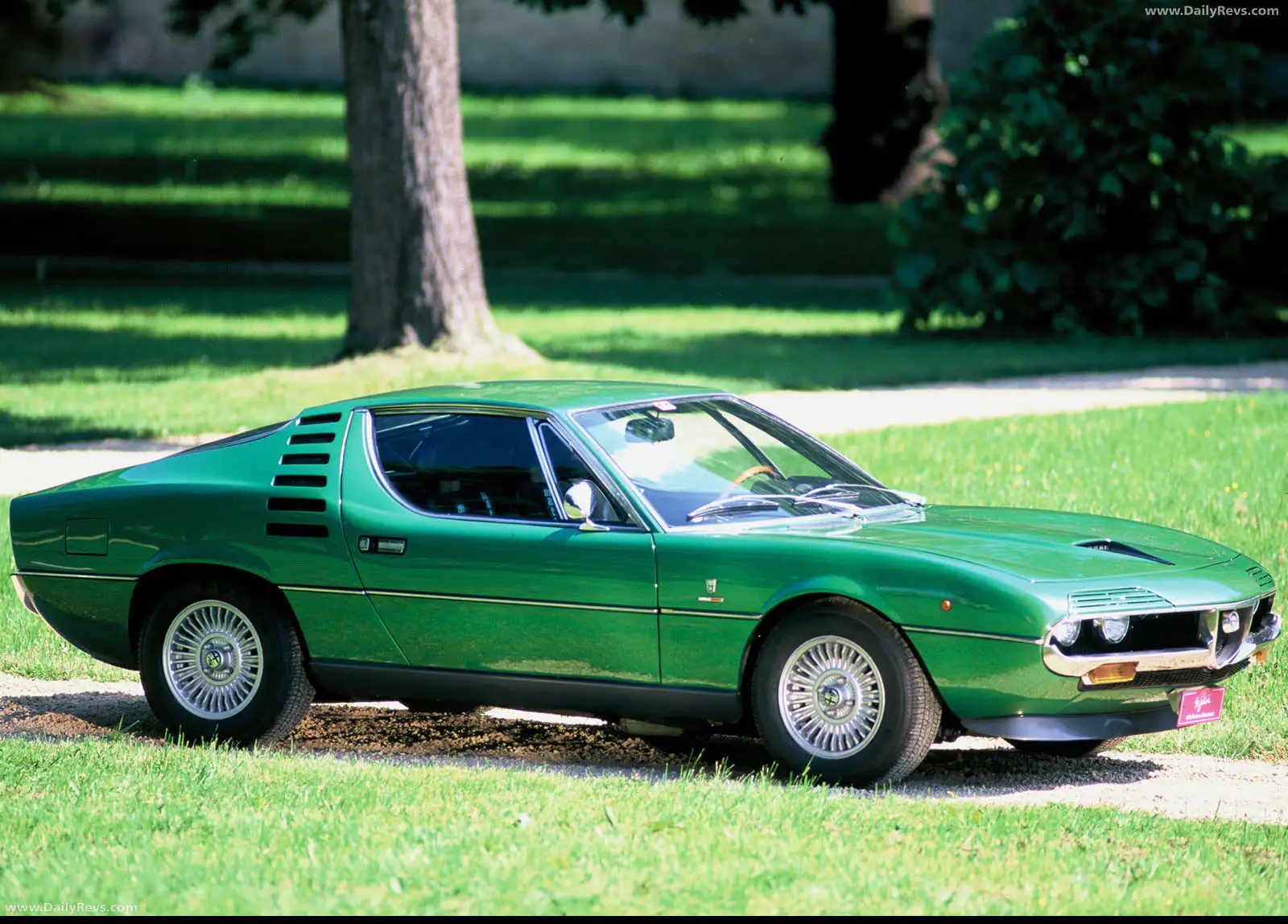
Bahri's Biscione recalls several of these details without directly reproducing them. Its layered front lighting has a visual connection to the Montreal's unusual headlamp treatment, while the recessed hood vent provides another point of comparison.
The strongest resemblance, however, appears around the rear side windows. The Biscione incorporates horizontal louvers within its gold finished roof structure, positioned behind the side glass. The Montreal used a similar arrangement of slats on its rear pillars, one of the most recognizable features of Gandini's original design.
Both cars also share the traditional grand touring proportions of a long hood, low roof and seating for four, although the Biscione is considerably wider and more aggressively sculpted.
At the rear, Bahri has adopted a narrow horizontal light bar extending across the tail beneath a small integrated spoiler. The broad rear shoulders flow into a relatively clean upper section, contrasting with the more elaborate lower bumper.
A substantial diffuser occupies much of the lower rear fascia, with large openings separated by a central vertical element. Gold accents highlight its edges, while triangular details echo those found in the front bumper.
The narrow taillights, broad fenders and low roof emphasize the Biscione's width when viewed directly from behind. The gold roof structure continues around the rear glass, connecting the rear design with the car's distinctive side profile.
Despite the complex treatment of the front bumper, lower doors and rear diffuser, the main body surfaces remain comparatively clean. The long hood, sweeping glass canopy and pronounced rear shoulders establish the overall proportions, while the smaller details introduce references to Alfa Romeo's design history.
The Montreal connection is especially relevant. Rather than relying entirely on the familiar Scudetto grille or telephone dial wheels, the Biscione incorporates elements that recall one of Bertone's most recognizable Alfa Romeo designs, reinterpreted for a contemporary four seat grand tourer.
There's More to the Biscione Than Pretty Renderings
The finished Alfa Romeo Biscione is accompanied by a substantial collection of design sketches and 3D development images.
The early drawings show Bahri experimenting with several variations of the car's side profile, including different door treatments, fender shapes and rear quarter designs.
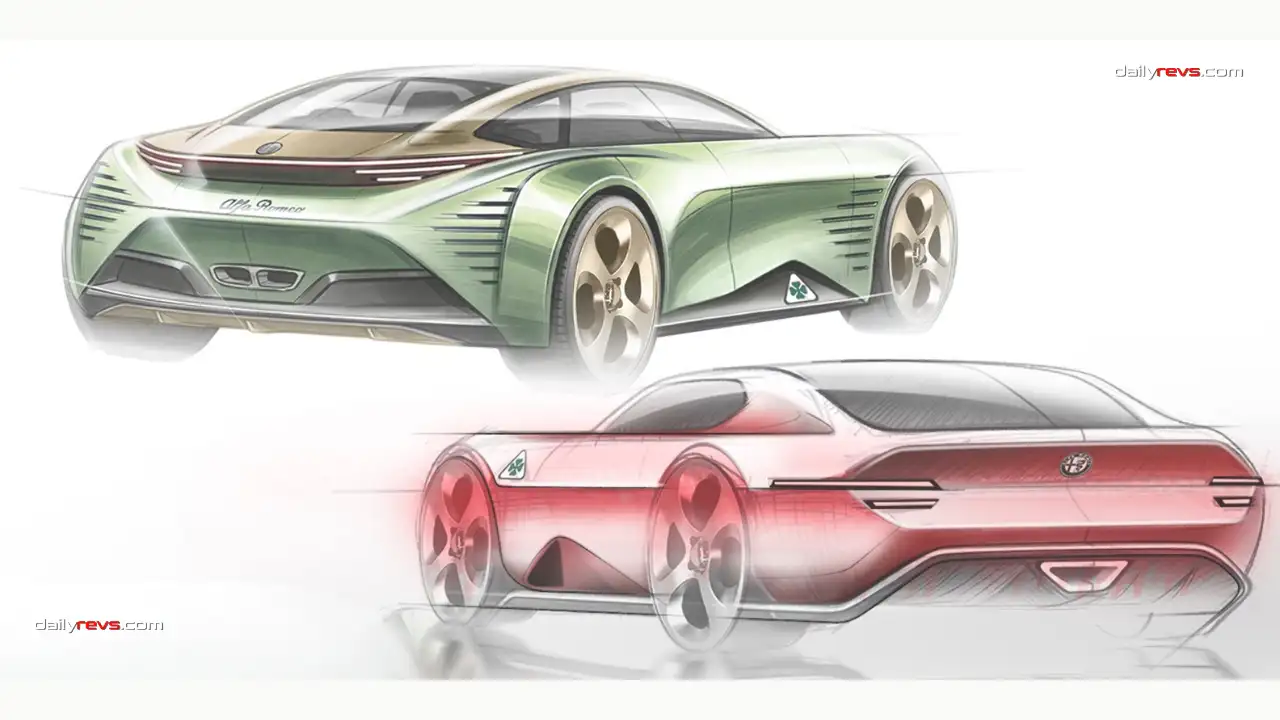
Some sketches feature a relatively simple shoulder line, while others introduce the deep recessed surfaces that eventually became a defining feature of the finished car.
The roofline also evolves throughout the drawings. Early proposals explore different relationships between the windshield, passenger compartment and rear deck, before settling on the continuous glass canopy seen in the final renderings.
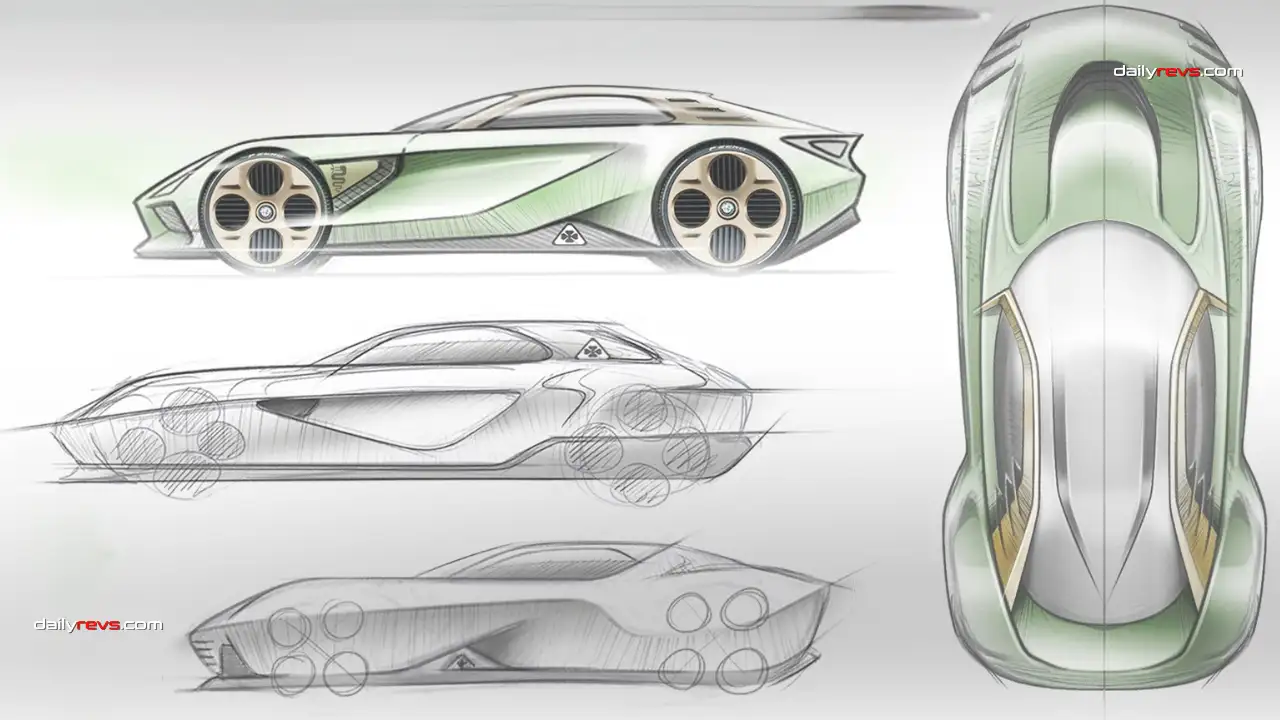
The telephone dial wheels appear consistently across the sketches, suggesting that this historic Alfa Romeo reference was part of the design from an early stage.
The front and rear received similar attention.
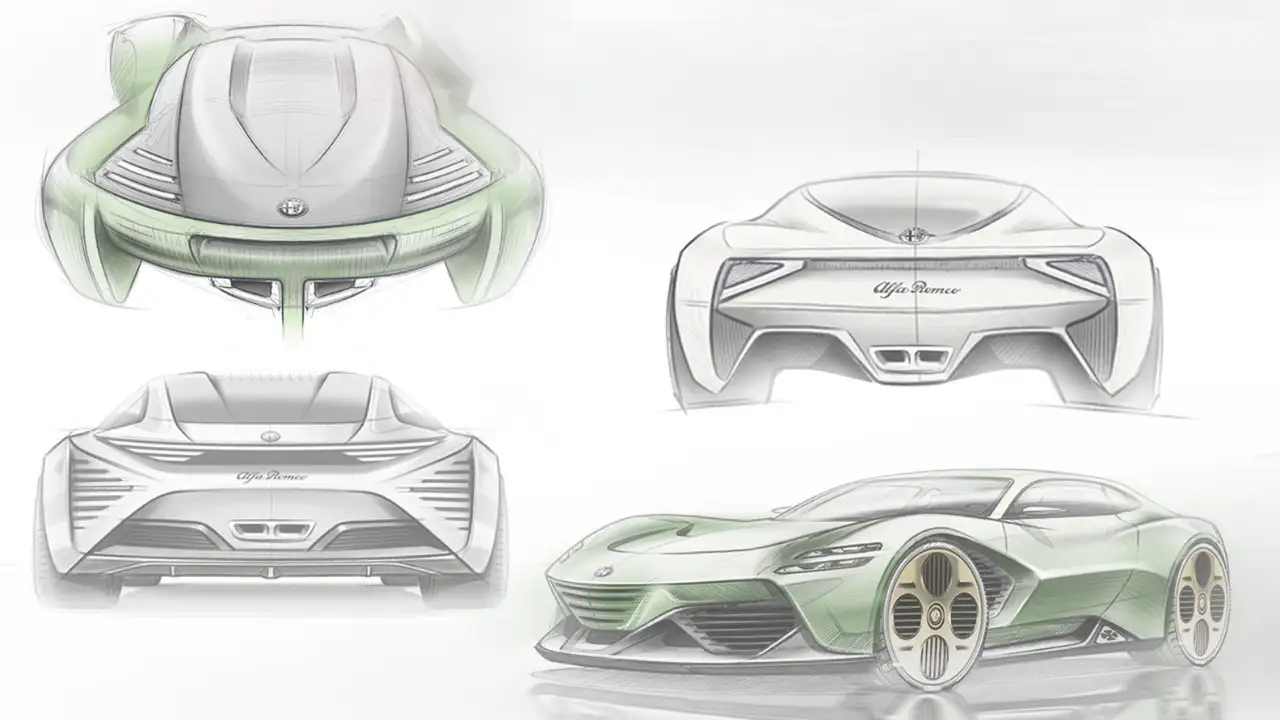
Several drawings explore alternative grille arrangements, lighting signatures and bumper openings. The final design retains the layered central grille and triangular lower elements, while the rear incorporates a more elaborate diffuser.
Bahri's 3D wireframe images reveal how these features were translated into digital surfaces.
The front three quarter model shows the transitions between the hood, front wheel arches and lower bumper. The side views reveal the depth of the recessed door sections and how they connect with the rear fenders.
At the rear, the wireframes illustrate the relationship between the descending roof, short deck and muscular rear quarters.
The project also includes technical drawings showing the Biscione's overall dimensions and proposed seating arrangement.
These studies depict four individual seats, with two occupants positioned behind the front passengers. The rear seats sit beneath the descending roofline, giving the concept a 2+2 grand touring layout.
The packaging drawings establish the intended arrangement, although the available material does not include a fully developed interior design.
Consequently, details such as the dashboard, controls, upholstery and luggage compartment have not been illustrated.
Nevertheless, the combination of exterior sketches, digital surface models and packaging studies provides a useful record of Bahri's design process.
It also distinguishes the Biscione from projects presented solely through finished exterior renderings.
Could Stellantis Give the GranTurismo an Alfa Romeo Makeover?
The Biscione's proportions raise an interesting possibility for Stellantis, which already has a modern four seat grand tourer within its portfolio.
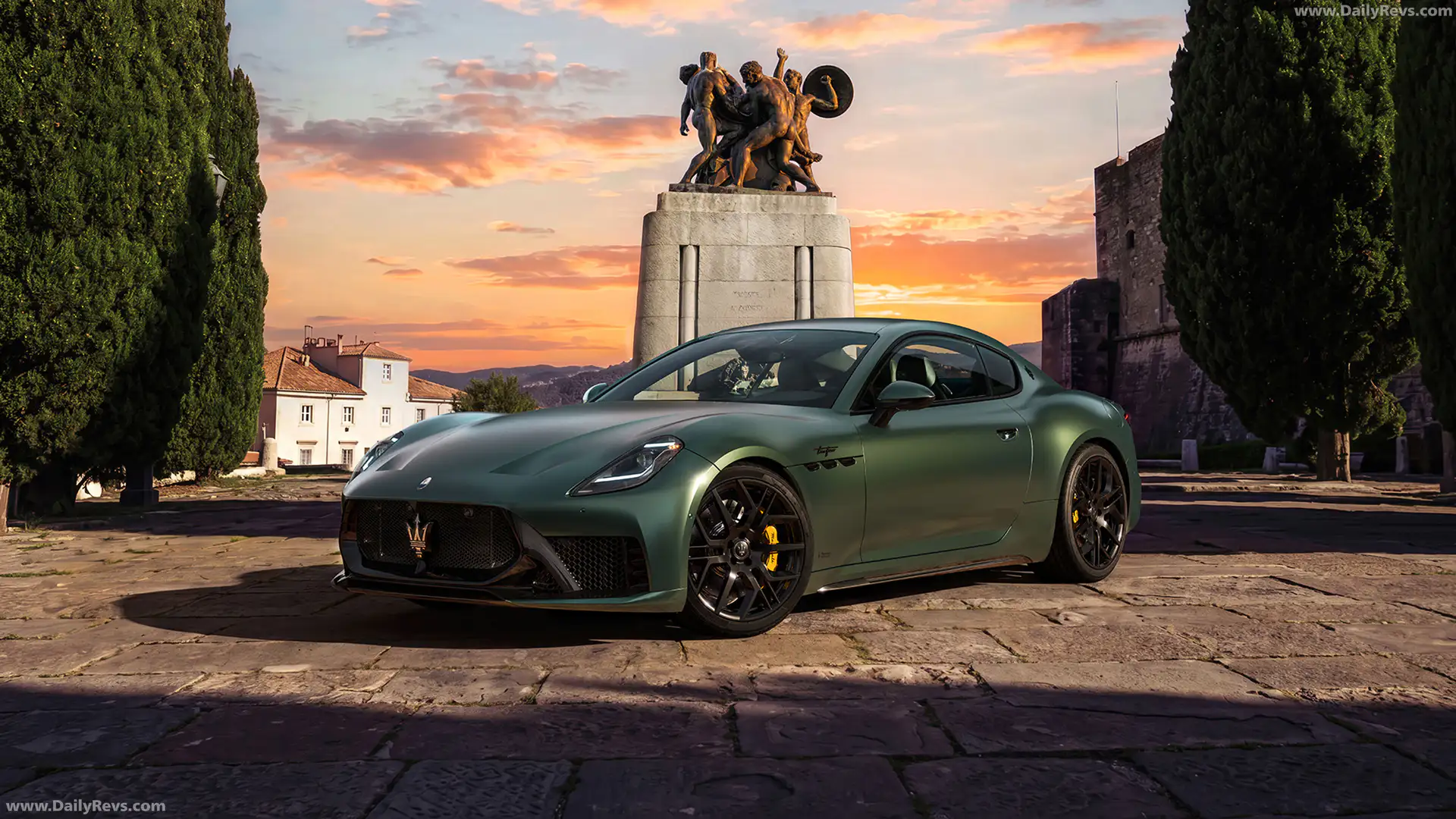
The current Maserati GranTurismo measures 4,959 mm long, 1,957 mm wide and approximately 1,353 mm tall, with a wheelbase of 2,929 mm.
Bahri's Alfa Romeo Biscione is 259 mm shorter and 53 mm lower, but just 7 mm narrower. Its wheelbase is also 109 mm shorter than the Maserati's.
Both cars have four seats and share the broad, low proportions associated with traditional Italian grand tourers.
The GranTurismo already offers a choice of combustion and electric powertrains. Its Nettuno V6 powers the Modena and Trofeo variants, while the fully electric Folgore uses a three motor configuration.
That existing engineering could provide a starting point for a hypothetical Alfa Romeo GT without requiring Stellantis to develop an entirely new vehicle architecture.
However, adapting the GranTurismo would involve considerably more than replacing its exterior panels.
The Maserati's longer wheelbase, structural hard points, passenger compartment and crash structures would influence the proportions of any derivative. Retaining the existing platform would likely require changes to Bahri's original design, particularly around the wheel positions and cabin.
There is also the question of how Stellantis would position an Alfa Romeo grand tourer alongside the Maserati.
The two brands have distinct identities, but both draw on Italian performance and luxury traditions. A shared architecture could reduce development costs, although the business case would depend on production volumes, pricing and the degree of engineering differentiation.
There is no indication that Stellantis is considering a rebodied GranTurismo or that Bahri's project has any official connection with either manufacturer.
Still, the dimensional similarities make the Biscione an interesting example of how an Alfa Romeo grand tourer could be developed around an existing vehicle package.
The possibility is especially relevant given Alfa Romeo's continuing interest in performance cars and its long history of sharing engineering resources with other Italian manufacturers.
Alfa Romeo Has Been Thinking Along Similar Lines
The Biscione also has an interesting contemporary counterpart in Alfa Romeo's own design portfolio.
At the 2026 Paris Motor Show, the manufacturer introduced the Cuorerosso, an official concept developed by Alfa Romeo Centro Stile.
Like Bahri's independent Alfa Romeo concept car, the Cuorerosso is a low, four seat grand tourer inspired by the company's sporting heritage.
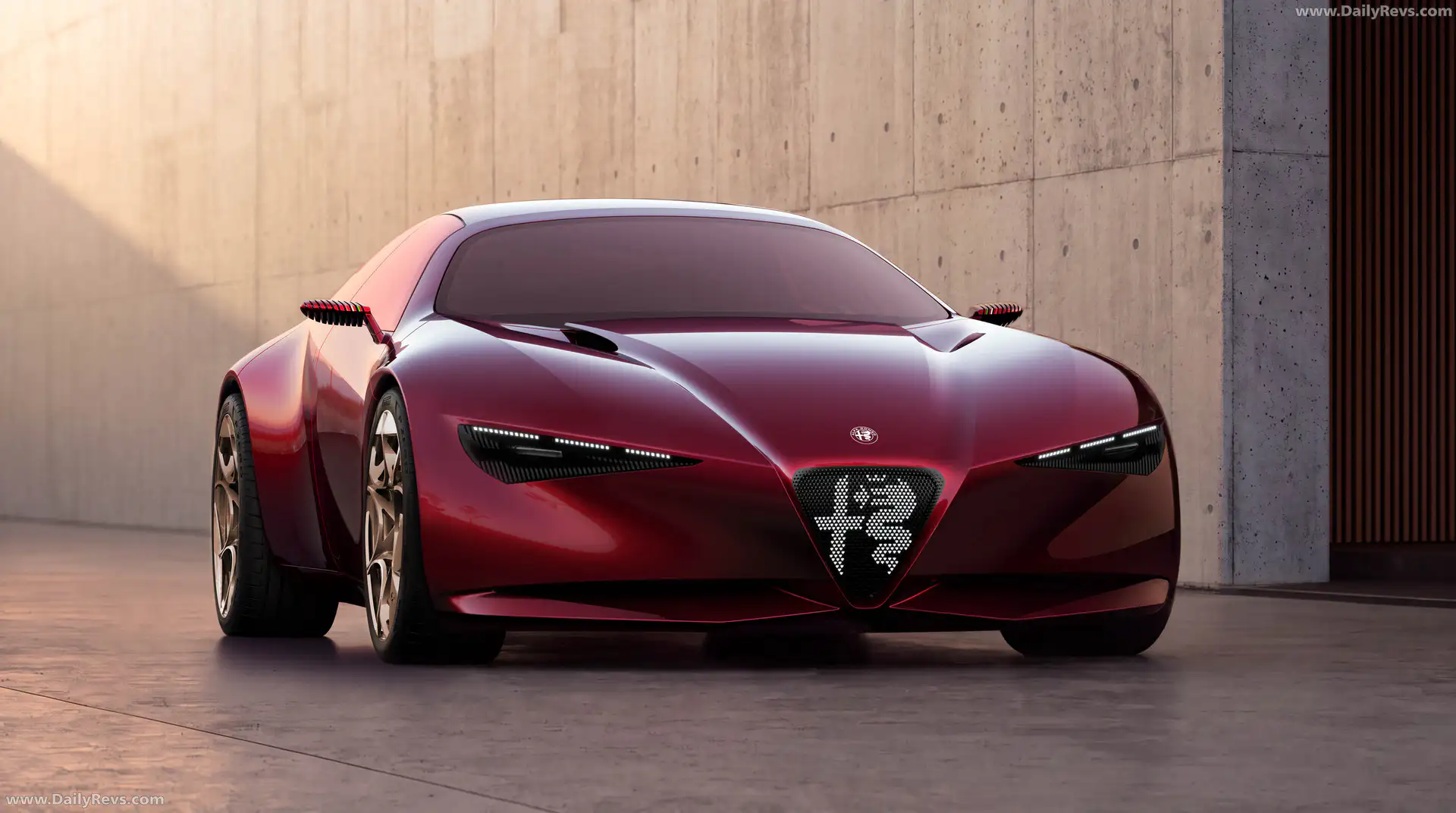
Both concepts measure exactly 4,700 mm in length. However, the Cuorerosso is slightly wider at 1,980 mm and taller at 1,331 mm, while its 2,930 mm wheelbase is 110 mm longer than that of the Biscione.
The two cars also revisit familiar Alfa Romeo styling elements, including the telephone dial wheels and the traditional Scudetto.
Their execution is quite different.
The Cuorerosso features a more continuous body shape, with flowing surfaces extending toward a truncated rear end. Its front incorporates a sculpted interpretation of the Scudetto, while the rear features circular lighting elements and a distinctive window shape.
Bahri's Biscione has a more pronounced long hood silhouette, deeper side sculpting and a broader interpretation of the traditional Alfa Romeo grille.
Its gold roof structure and horizontal rear lighting also give it a separate identity.
There is no established development connection between the two projects. The Cuorerosso is an official Alfa Romeo design study, while the Biscione is an independent proposal by Abel Bahri.
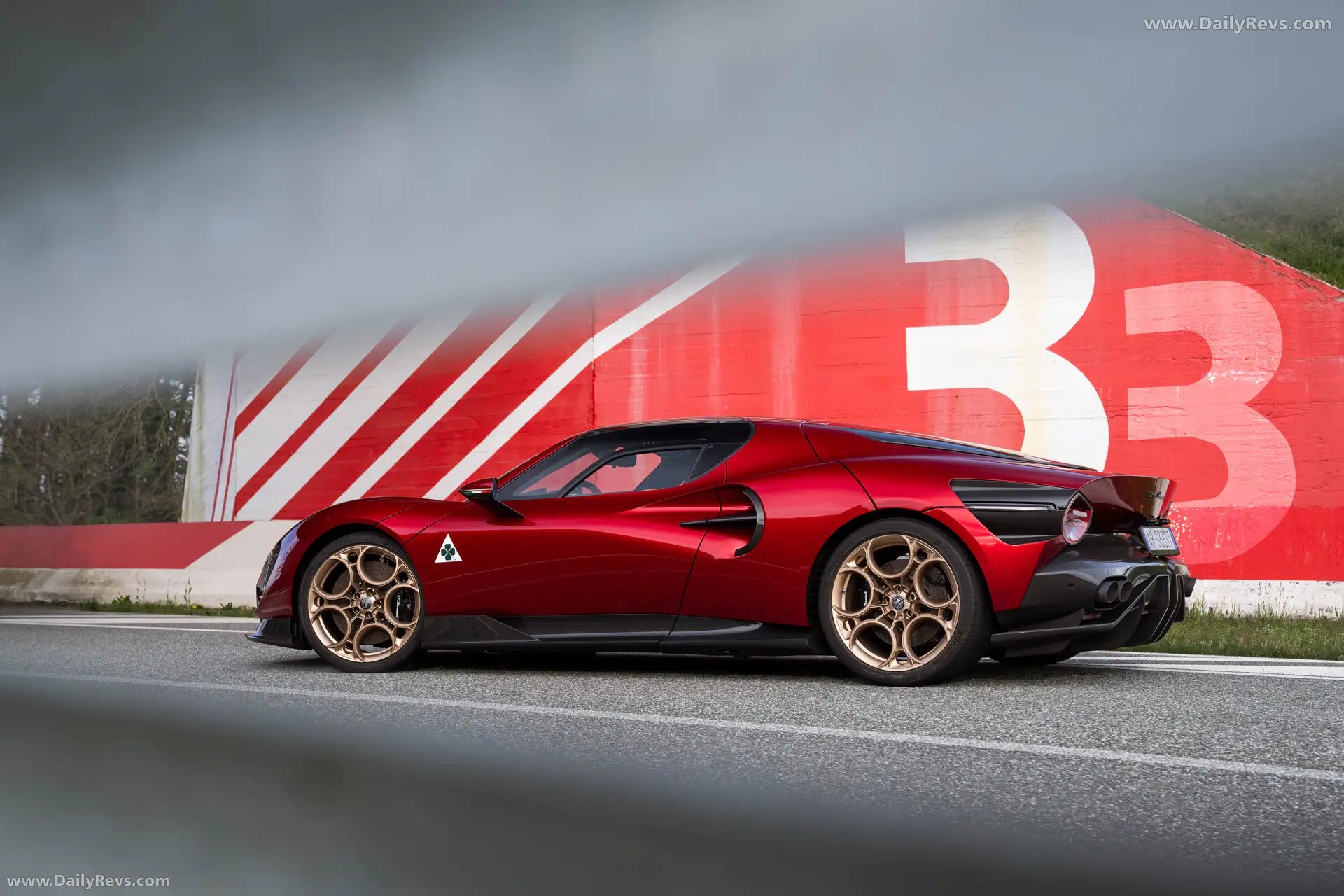
The Biscione also shares certain visual references with the modern 33 Stradale, particularly its low stance, prominent wheel design and flowing upper body.
Where the 33 Stradale is a two seat sports car, Bahri has applied some of those familiar Alfa Romeo characteristics to a larger grand touring layout.
Meanwhile, the current Giulia and Stelvio are scheduled to remain in production until 2027, while Alfa Romeo continues studying future D-segment models and different powertrain options.
Bahri has not specified an engine, drivetrain or performance figures for the Biscione. The project concentrates on exterior styling, proportions and the development of the underlying 3D design.
Its long hood, low roof and four seat arrangement suggest a car intended for grand touring rather than the conventional sports sedan segment.
Whether developed as a completely new model or hypothetically adapted from an existing architecture such as the Maserati GranTurismo, a modern Alfa Romeo GT would have a substantial design heritage to draw upon.
Bahri's Biscione offers one interpretation, combining the manufacturer's familiar styling elements with a low, sculpted body and four seat accommodation.
The sketches, digital models and packaging studies also show how the designer developed those ideas beyond the initial illustrations, making the Biscione a detailed exploration of what a contemporary Alfa Romeo grand tourer could look like.
Connect with Abel Bahri
To explore more of Abel Bahri’s work, including ongoing projects and portfolio highlights, you can follow or connect with him on the following platforms:
Disclaimer
These projects are creative explorations by young
car designers. In some cases, they were developed independently, while
in others they were created with guidance or mentorship from OEM design
studios, such as during internships. Unless otherwise noted, they are
not official works of the manufacturers or studios involved.
DailyRevs
does not claim credit for the vision or effort behind these projects
and receives no financial compensation for publishing them. Each feature
is shared with the consent of the designer following direct outreach
and agreement. We also welcome submissions from designers who wish to be
featured, provided the quality of the work meets our editorial
standards.


