A Modern Alfa Montreal?
By Hugo Mattson March 11, 2026

Independent designer Jeroen Claus reimagines the Alfa Romeo Montreal as a modern compact coupe.
The concept centers on a front-engine V6, rear-wheel drive layout and a traditional manual transmission.
With Alfa Romeo recently reviving the 33 Stradale, the Montreal name could also return—ideally as a coupe rather than an SUV.
A Contemporary Take on an Alfa Romeo Classic
Over the years, Alfa Romeo has created numerous stunning coupes, yet the Montreal occupies a unique position in the company’s history. The model, which was introduced in 1970, combined Italian sophistication with an unexpectedly aggressive appearance to form a grand touring coupe that continues to feel one-of-a-kind today.
Within that conceptual framework, designer Jeroen Claus rethought these ideas through a contemporary lens. The 2026 Alfa Romeo Montreal (Concept) was conceived as a part of a design challenge for the Montreal project in conjunction with the Alfa Romeo Montreal design competition held in approximately 2019 – 2020. Although the competition is now complete, the Montreal project has continued evolving since that time.
Claus did not set out to recreate the original, nor to create an ultra-futuristic supercar, but instead used the Montreal as a means to explore the possibility of designing a modern-day coupe based on the philosophy of the original Montreal while bearing in mind that Alfa Romeo would still be producing two-door compact, driver-focused models if they had been building them this whole time.
The final product is a design study focused on proportion, stance, and the engagement of mechanical elements rather than the pure visual appeal of the design.
.jpg)
A Coupe Designed Around the Driving Experience
Most current concept vehicles are technology-based. Digital screens, experimental controls, and autonomous driving systems tend to dominate the concept vehicle’s design and intention.
However, Claus has intentionally selected to go a different route.
The Montreal concept is envisioned to be accessible and mechanically stimulating. The engine proposed for the vehicle is simply a V6 at the front driving the rear wheels via a manual transmission. Rather than solely utilizing touchscreens, the interior would contain push-button switches and other elements that are traditional (such as Apple CarPlay) and modern.
The intent for the concept is very basic; the vehicle is envisioned as a vehicle to be employed in the everyday world, not a prototype designed primarily to be the centerpiece attraction at auto show displays.
Many car enthusiasts and others that enjoy driving agree with this philosophy; they appreciate their connection to their vehicles via the operation rather than via technology.
.jpg)
Proportion Leads the Design
The proportions of Claus’ concept provide a strong foundation for its appeal. The original Montreal was a well-balanced shape that combined elegance with a feeling of power. Claus retains that balance while modifying the design to meet today's expectations.
.jpg)
The layout is a traditional coupe configuration — a long hood extends out in front of a fairly short passenger compartment, while the front and rear overhang are kept short and neat. This configuration expresses the idea of a front-engine performance coupe and gives the illusion of movement even when the vehicle is stationary.
The width of the base is a little bit wider than what was found on the original Montreal, while the rear shoulders have been widened to provide the concept an even more grounded appearance. The added muscle will create a greater degree of visual weight than the original vehicle without losing the refinement that has long been associated with Alfa Romeo.
Body surfaces are designed to maintain a clean appearance, without the use of overly aggressive aerodynamic features or exaggerated forms. As a result, the design relies on volume and proportion rather than added decorative details.
This method allows the concept to be more believable, as it appears that it could very well be produced as a showroom vehicle for Alfa Romeo and not just a concept vehicle to be kept within the confines of a design studio.
.jpg)
Italian Elegance With a Hint of Muscle
Claus emphasized that one of the things he took into consideration when he was developing the idea for the car was the character of the original Montreal. While this vehicle is often known for its elegance, it also has a visual strength about it.
When being looked at closely, the 1970 Montreal Coupe has a slight muscular shape to it. The proportions are compact but the shoulders and where the body meets the ground create an idea that the car is 'there'.
While developing the modern version, Claus took this characteristic and used it to accentuate the modern design.
.jpg)
In the new concept, we exaggerated the planted stance; we widened the shoulders and lowered the body to help give the vehicle a more grounded appearance. This creates a subtle muscle car feel while retaining the Italian elegance associated with Alfa Romeo's design heritage.
There is a fine balance between elegance and strength that reflects the two-sided character of the original Montreal.
It's interesting to note that the early Montreal wasn't quite the compact sports car that we think of today. When it was launched in 1970, it fell into the grand touring category of vehicles with a front-mounted V8 that placed it squarely among the then-standard European GTs rather than smaller light-duty coupes. As such, Claus will be moving a little differently with his interpretation of the new Montreal by imagining him building a more compact, driver-oriented coupe for modern driving conditions but with a long hood and confident stance as characteristics of the original.
Alfa Romeo Has Already Shown It Can Revive Icons
Alfa Romeo has shown a tendency in the past couple of years to look at some of their greatest historical models again.
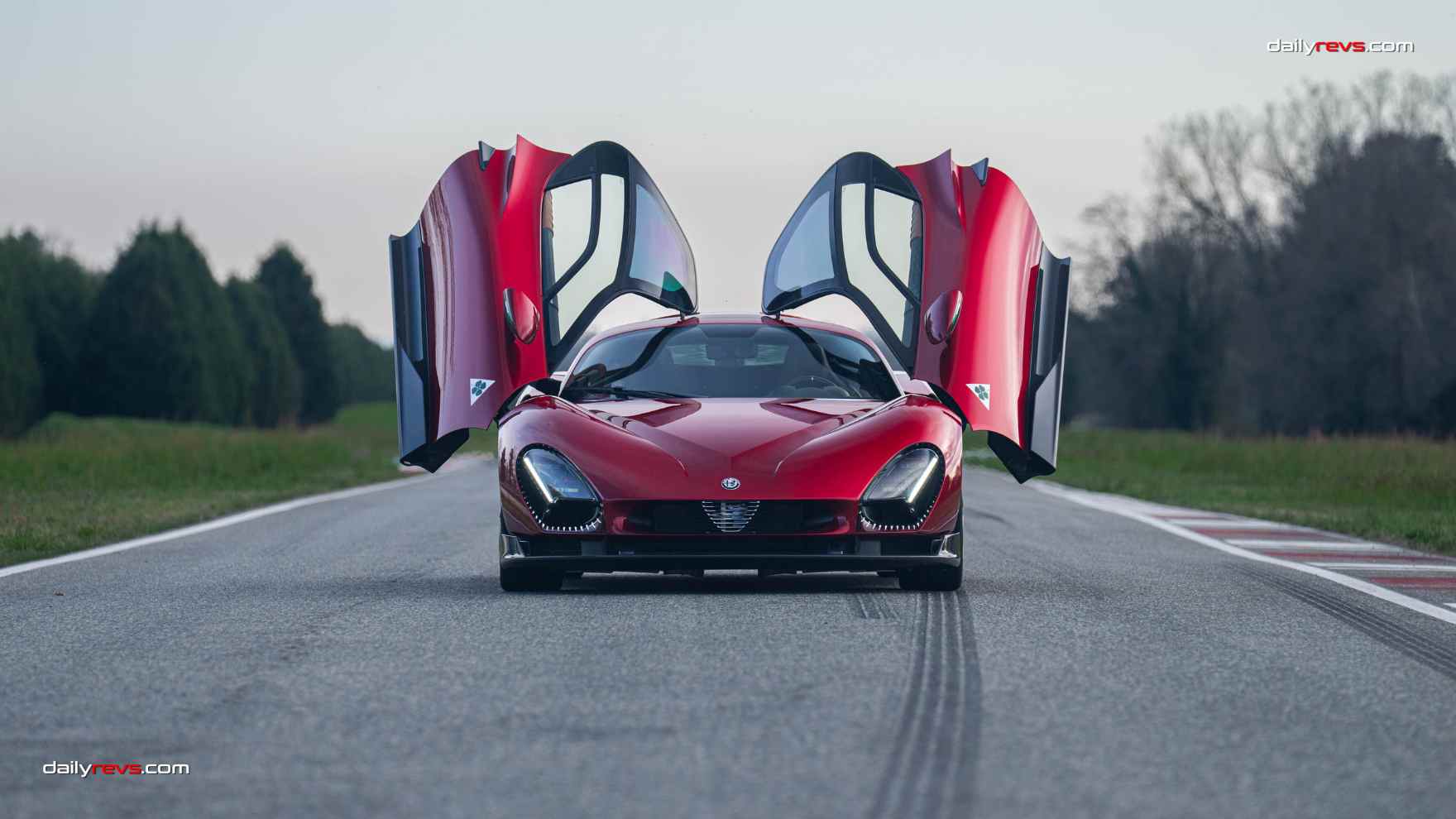
The best example of this is the 33 Stradale. A modern version of one of Alfa Romeo's most popular sports cars, the 33 Stradale was unveiled many years after the original model from the 1960’s, and it demonstrated that Alfa Romeo could still take its historic design language and create something modern with it.
The 33 Stradale also points out how important and valuable Alfa Romeo's heritage is. When Alfa Romeo goes back to an existing nameplate from its history, they place a lot of emotional value on that design, as well as a lot of small series manufacturing techniques. In this light, a new Montreal seems to be a plausible possibility.
A Name That Deserves the Right Kind of Comeback
Of course, the modern automotive landscape looks very different from the one that produced the original Montreal.
Coupes have gradually given way to SUVs and crossovers across most manufacturers’ lineups. If the Montreal name were to return today, there would almost certainly be pressure to apply it to a utility vehicle.
That possibility is exactly what makes projects like Claus’ concept interesting.
The Montreal was always a coupe first and foremost. Its identity was tied to its proportions, its stance, and the experience of driving a compact grand touring car. Applying that name to an SUV might deliver stronger sales, but it would fundamentally change the character associated with the badge. If Alfa Romeo were ever to revive the Montreal name, many enthusiasts would likely prefer to see it return in the form that made it memorable in the first place. A compact, driver-focused coupe would arguably be the most authentic tribute.
A Personal Vision of a Modern Alfa Coupe
Unlike all independent designs show how a car can be interpreted rather than intended to create an actual commercial product. This is true for the Alfa Romeo Montreal 2026 Design Study.
Many auto design themes can still be used by Claus in developing the Montreal Concept: proportions, history, and the driver-to-vehicle relationship with regard to mechanical functions.
Designers face challenges when creating a contemporary reinterpretation of a classic vehicle. If designers have too much nostalgia when designing, they will create a reproduction of the original vehicle. On the other hand, they must also avoid creating a vehicle that no longer maintains any resemblance to the original vehicle. Designers must use a combination of nostalgia and new and popular styling ideas to create a contemporary design that retains the character of the original design.
By using character to guide the design of the Montreal, Claus was able to create a one-of-a-kind design that keeps the original coupe character without losing any of its contemporary qualities.
A Reminder of the Appeal of Simple Driver’s Cars
The automotive world is rapidly evolving towards electric and digital integration; these changes are ushering in some great innovations and improvements, but they are also changing the way we experience driving.
Projects such as the Montreal concept illustrate an undying love for mechanical simplicity; the combination of a front engine, rear wheel drive and manual transmission appeal to many automotive purists.
Claus' reimagination does not attempt to anticipate what direction the automotive landscape will take going forward; it simply demonstrates his personal love of cars that were once the foundation of automobile enthusiast communities.
Even now, as we see less and less vehicles like this, the interest in concepts such as this one show there is still a desire for the type of compact, driver-oriented coupes that once created those same communities.
Whether it be designers or automobile enthusiasts, there continues to be a strong connection between them.
Connect with Jeroen Claus
To explore more of Jeroen Claus’s work, including ongoing projects and portfolio highlights, you can follow or connect with him on the following platforms:
Disclaimer
These projects are creative explorations by young
car designers. In some cases, they were developed independently, while
in others they were created with guidance or mentorship from OEM design
studios, such as during internships. Unless otherwise noted, they are
not official works of the manufacturers or studios involved.
DailyRevs
does not claim credit for the vision or effort behind these projects
and receives no financial compensation for publishing them. Each feature
is shared with the consent of the designer following direct outreach
and agreement. We also welcome submissions from designers who wish to be
featured, provided the quality of the work meets our editorial
standards.


