Mercedes Benz MODERN Concept Brings Art Deco Back to the Future
By Hugo Mattson October 21, 2026

Mercedes Benz MODERN is an independent design project by Hyungjoon Kim that explores the influence of Art Deco on future luxury cars.
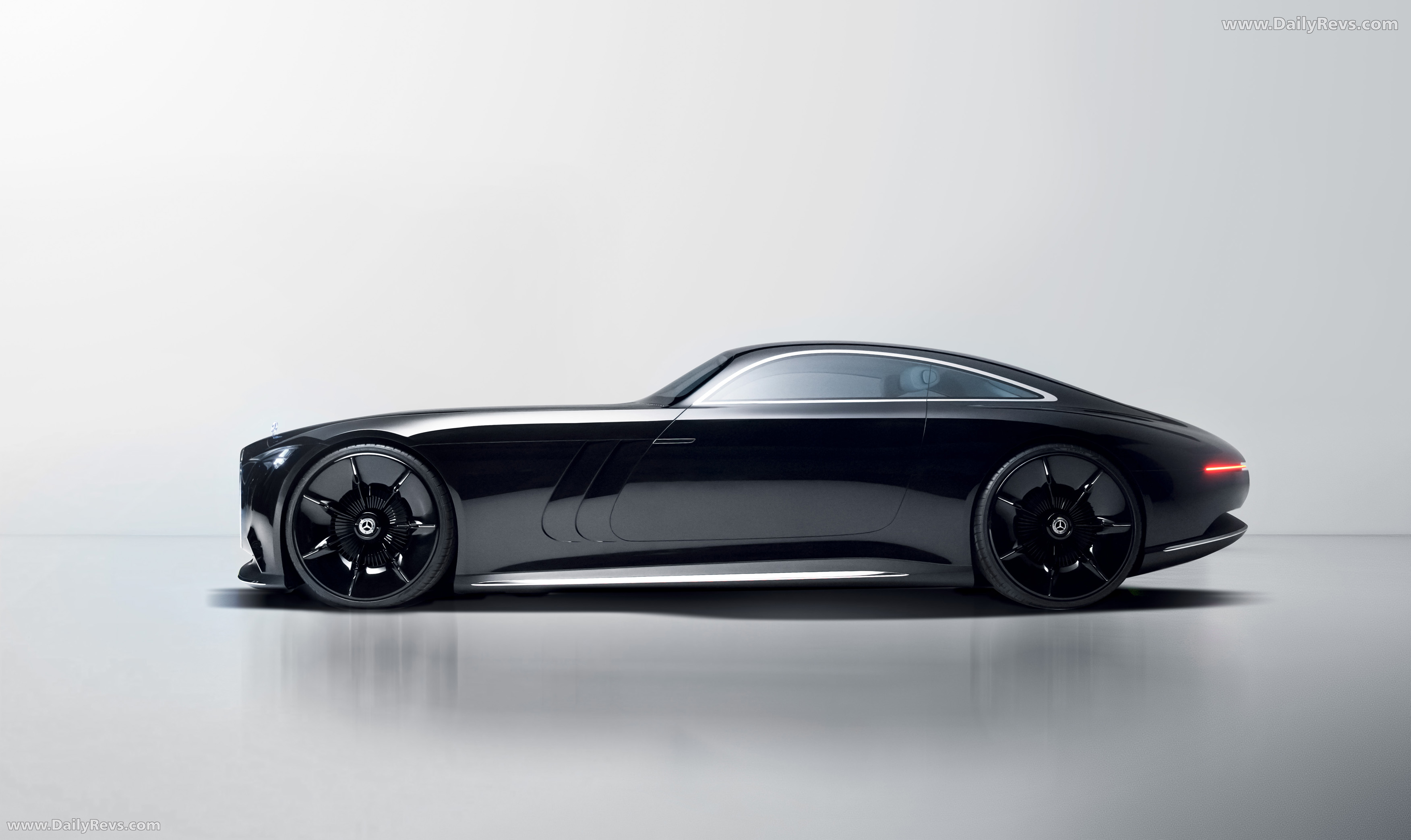
The Mercedes Benz 300 SL and VISION ICONIC provide inspiration for the concept's long proportions, rounded fenders and distinctive bodywork.
Decoration becomes part of the car's shape, with Kim using flowing surfaces and contrasting volumes instead of conventional ornamental detailing.
There was a time when a Mercedes Benz could be recognised by its silhouette long before anyone noticed the badge. The long bonnet, prominent fenders and carefully proportioned cabin were often enough.
Those proportions are at the heart of Mercedes Benz MODERN, an independent design project by automotive designer Hyungjoon Kim.
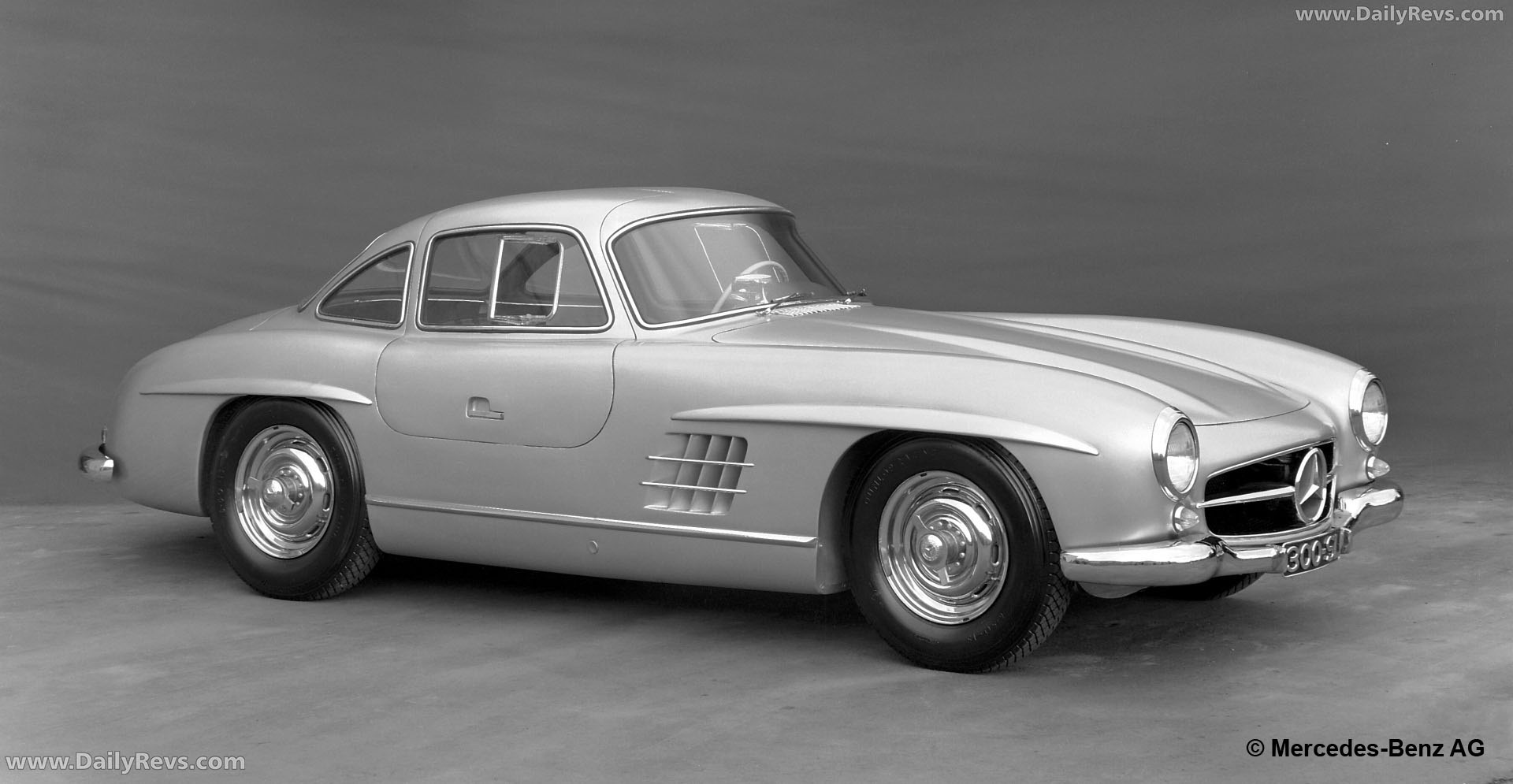
Inspired by the legendary 300 SL and the more recent VISION ICONIC, Kim has created a grand touring concept that looks considerably further back than most contemporary automotive designs.
Art Deco is the principal influence, although MODERN is not intended as a recreation of a 1930s automobile. Its bodywork combines the rounded fenders and sweeping forms of early streamlined cars with a much more contemporary treatment of the cabin, lighting and wheels.
The result is a Mercedes Benz that looks familiar in some places and entirely different in others.
What comes after modernism?
That is the question Kim set out to explore.
"After today's modernism, we will seek the new beauty," he explains.
Modernism has had an enormous influence on automotive design. Clean surfaces, minimal decoration and functional detailing have become familiar characteristics of contemporary vehicles, particularly in the luxury segment.
Kim is interested in whether some of the decorative qualities associated with earlier design movements deserve another look.
His choice of Art Deco is particularly relevant to Mercedes Benz.
During the 1930s, luxury automobiles were often designed with considerable attention to their exterior proportions and decorative detailing. Independent coachbuilders produced bodies with sweeping fenders, elongated bonnets and intricate metalwork.
Cars such as the Mercedes Benz 540 K Special Roadster are among the best-known examples of this period.
Kim's interpretation is less concerned with reproducing those details than with bringing some of their character into a modern design.
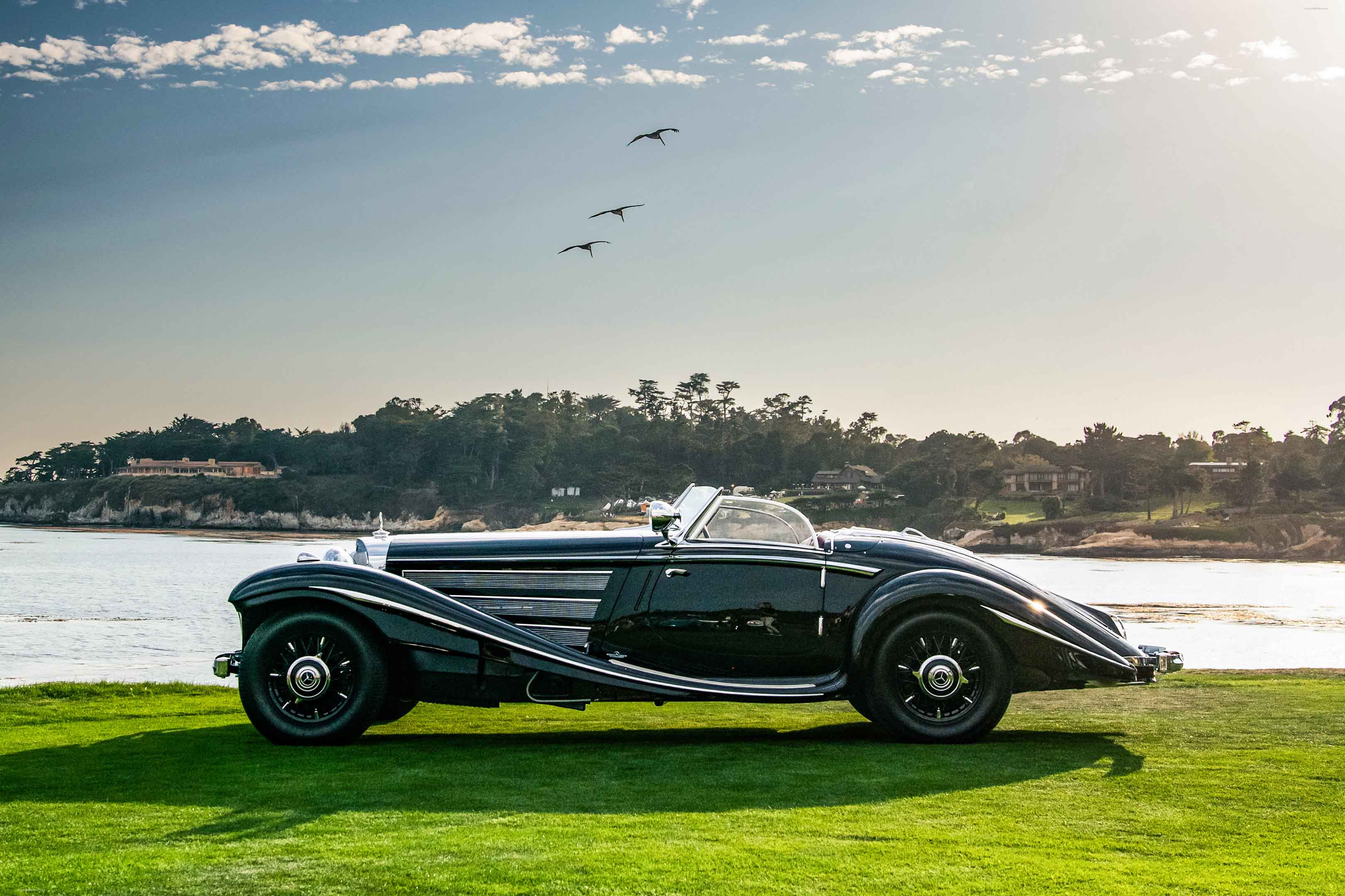
"Like Art Deco, the design of cars will also embody decoration—not merely as ornament, but sculpted into the body itself."
That idea explains much of what is happening across the exterior of MODERN.
The 300 SL is there, but Kim has taken a different route
The influence of the Mercedes Benz 300 SL Gullwing is easy to recognise in the car's proportions.
There is a long front section, a compact cabin and a rear end that tapers away behind the passenger compartment.
Beyond that, the similarities become less obvious.
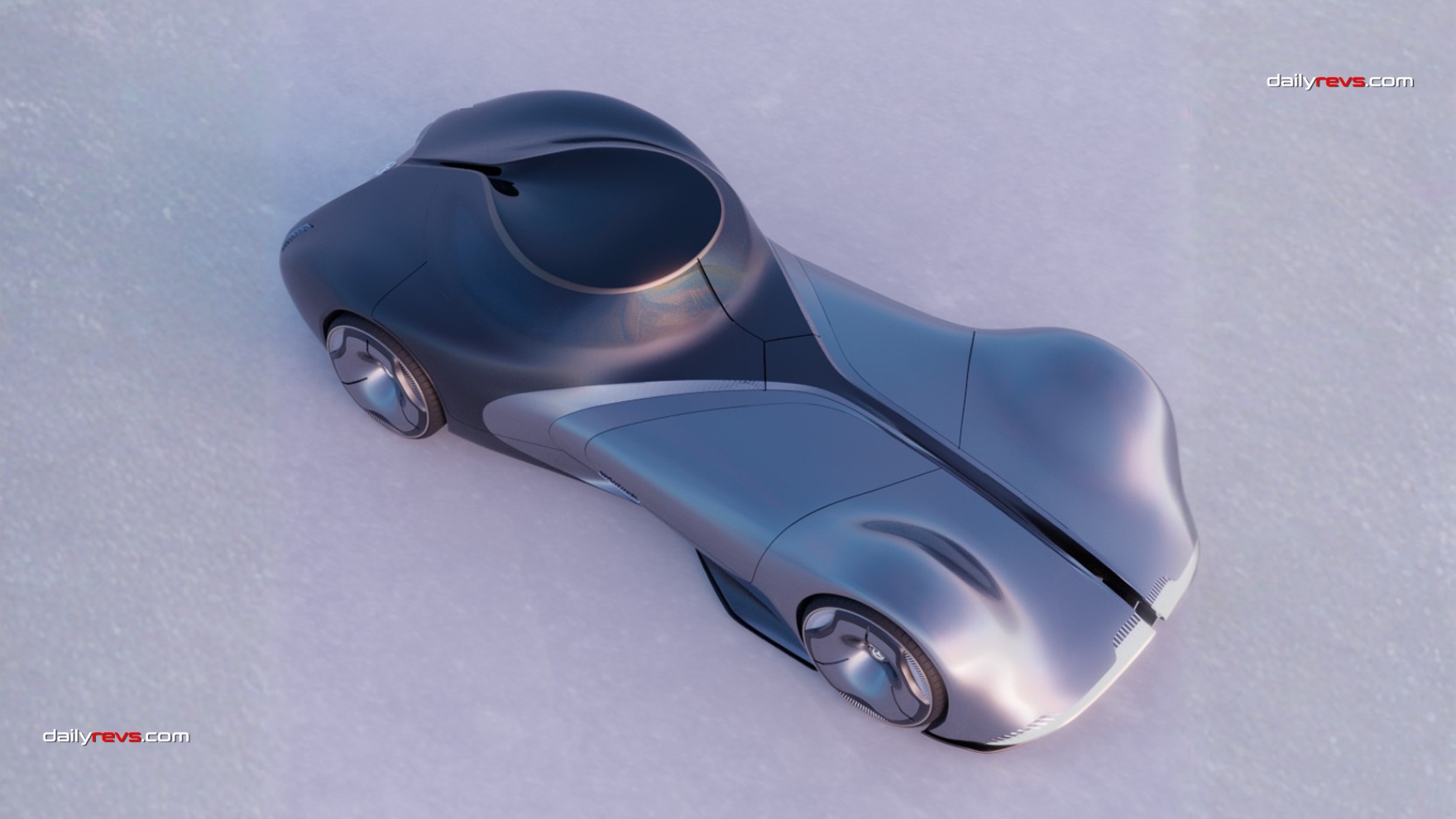
The front fenders are enormous, rising well above the central bonnet. They have a rounded, almost separate appearance, recalling an era when the wheel arches were treated as major design elements rather than being absorbed into the rest of the body.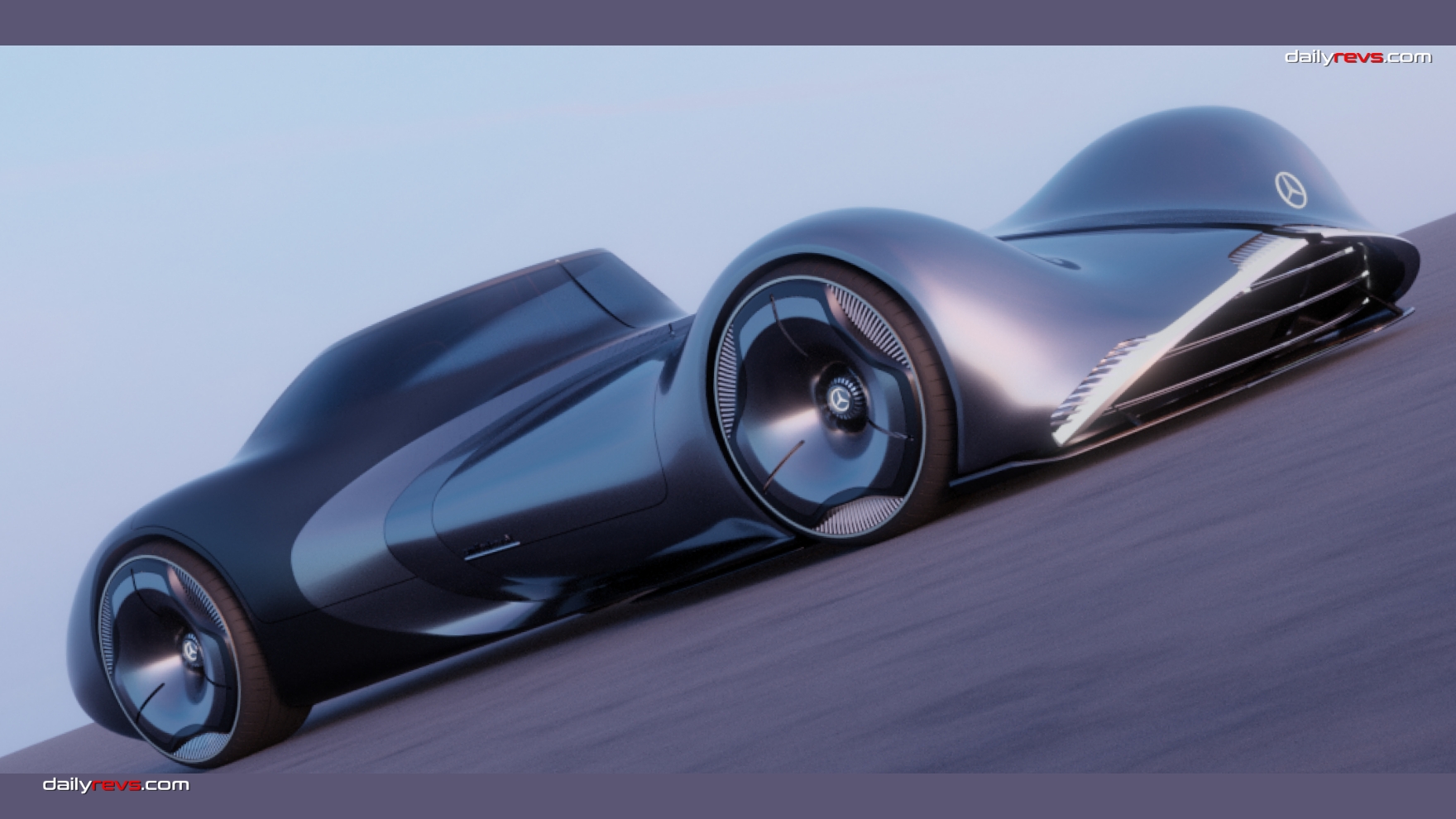
A narrow spine divides the bonnet before extending towards the cockpit.
From above, this arrangement becomes one of the most interesting parts of the car. The central line separates into two sweeping sections that wrap around the passenger compartment, while the front fenders occupy much of the vehicle's width.
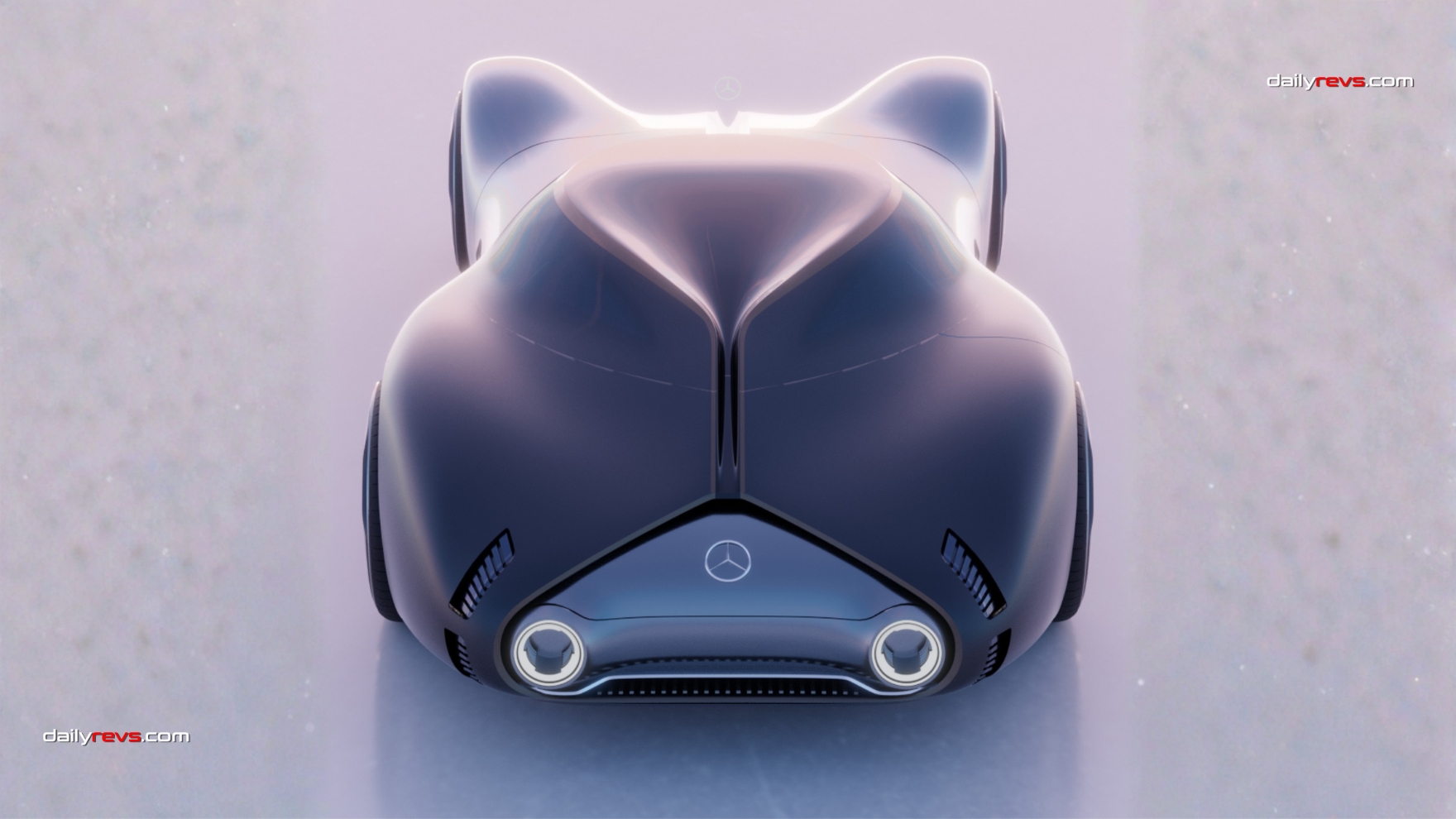
There are no conventional headlamp housings interrupting these surfaces.
Instead, thin illuminated sections follow the lower front edges, accompanied by small vertical details near the centre. A Mercedes Benz star stands above the nose.
The traditional grille has effectively disappeared, yet the car still carries several recognisable Mercedes design cues.
The cockpit is unlike anything on a current Mercedes Benz
Perhaps the most unusual part of MODERN is the cabin.
It is small, rounded and almost entirely enclosed beneath dark glazing. There is no clearly defined windscreen or conventional roofline. The canopy appears to form one continuous surface, with a thin metallic border following its outline.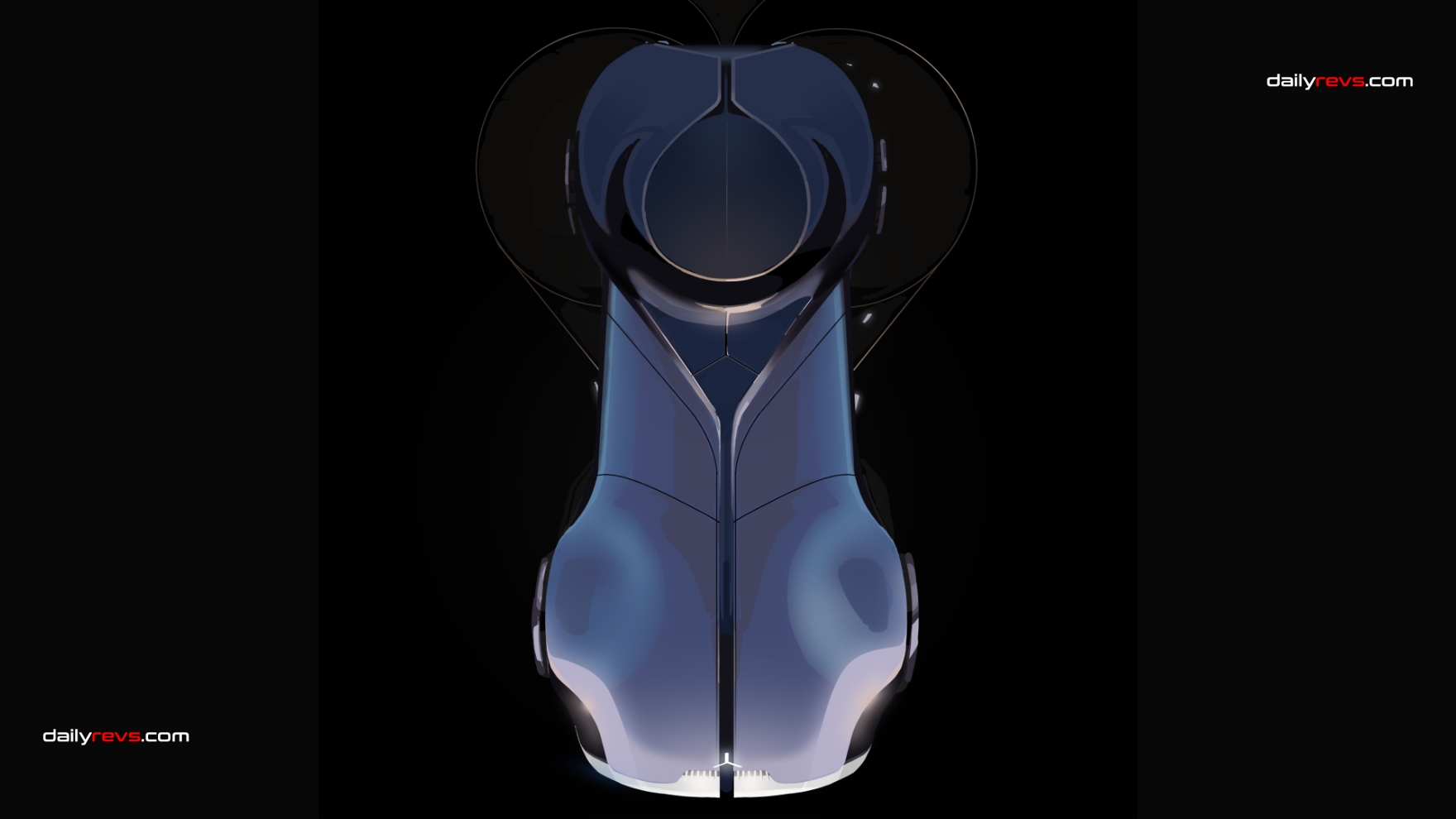
Its position also deserves attention.
The cockpit sits well behind the front wheels, giving the car the proportions of a traditional front-engined grand tourer. However, Kim has not specified an engine or drivetrain, so the arrangement is purely a matter of exterior design at this stage.
The transition between the bonnet and cabin is particularly well handled.
The body rises gradually towards the canopy, with the surrounding panels curving inward before flowing around the glass.
Viewed from the front three-quarter angle, the cabin appears much smaller than it does in the side profile. From above, its rounded shape becomes the centre of the entire composition.
It is a striking solution, although the available images leave several practical questions unanswered, including access to the cabin and outward visibility.
Art Deco is most apparent along the sides
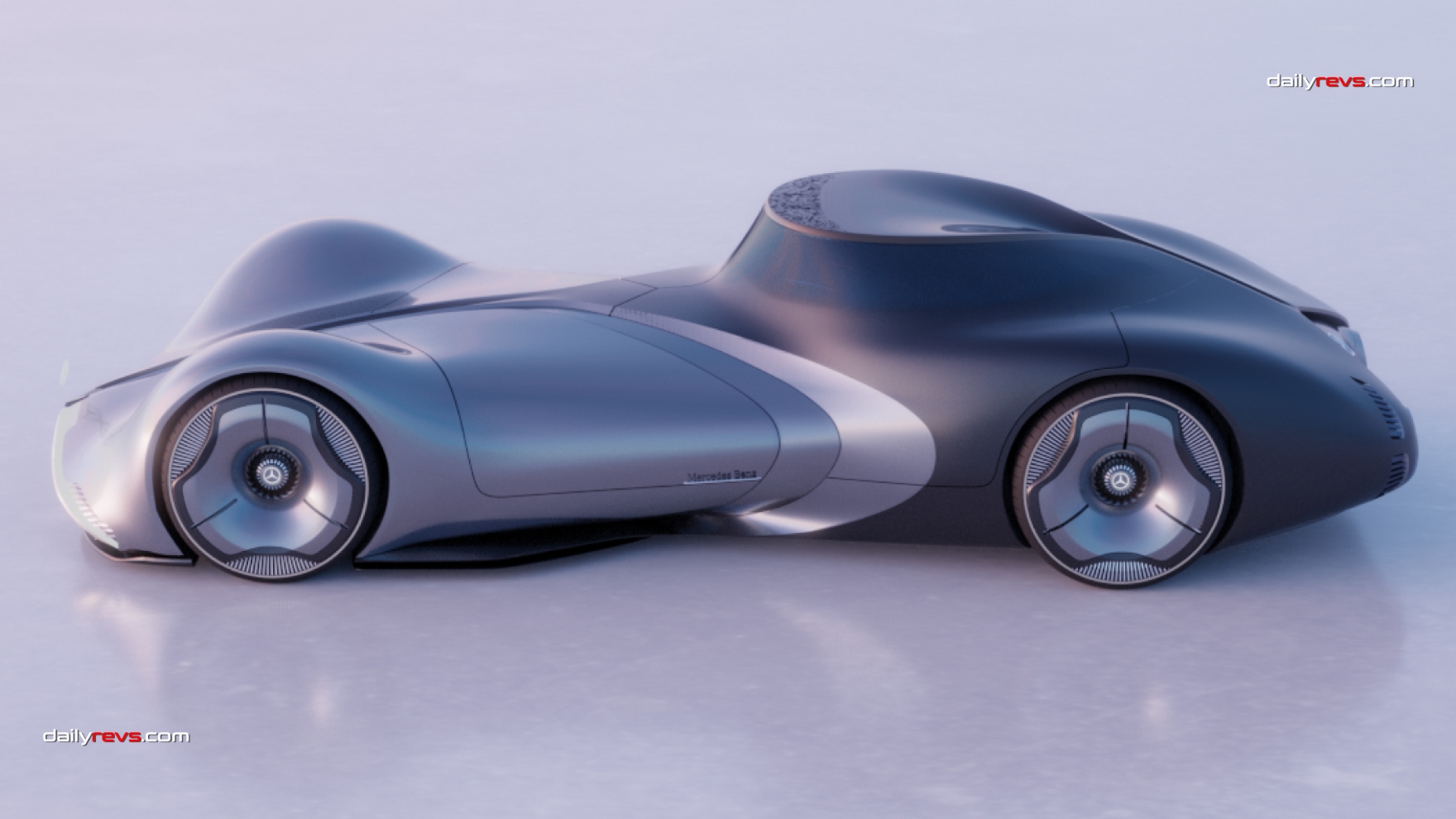
The side profile is where Kim's interest in decorative bodywork becomes especially apparent. A large contrasting metallic panel begins behind the front wheel and extends towards the middle of the car. It curves upward before narrowing beneath the cockpit, separating the front fender from the darker upper body. There is a surprising amount of detail in this area.
The front wheel arch flows into a recessed lower section, while the upper panel follows a much broader curve towards the cabin. The surfaces meet without the sharp creases normally associated with modern performance cars. The wheels have also received considerable attention. Their large, almost fully enclosed covers feature a three-part design with a Mercedes Benz emblem at the centre.
The metallic finish complements the surrounding bodywork, while the relatively thin visible tyre sidewalls give the car a distinctly futuristic appearance. From the side, the proportions are quite extreme. The bonnet is exceptionally long, the roof is low and the rear section extends well beyond the passenger compartment. There is very little conventional detailing to interrupt the silhouette.
It is easy to see why Kim chose Art Deco as his starting point. Much of the character comes from the shape of the car itself rather than the addition of separate decorative elements.
The rear has its own personality
The rear is probably the least conventional part of MODERN.
Instead of the familiar horizontal Mercedes Benz taillamps, Kim has used two circular illuminated elements set into a recessed panel.
A small Mercedes emblem sits above them, while a narrow opening runs across the lower section.
The upper bodywork is considerably more elaborate.
Two large rounded surfaces rise on either side of the centreline, tapering towards a narrow opening that continues down to the rear fascia.
Seen directly from behind, the arrangement is almost symmetrical.
Small vents are positioned towards the outer edges, but the overall appearance is dominated by the shape of the body rather than individual details.
The rear three-quarter view also reveals how much volume Kim has placed above the rear wheels. The body wraps around them before narrowing towards the back, giving the car a substantial appearance despite its low height.
It is quite different from the cleaner, more horizontal rear styling seen on most contemporary Mercedes Benz models.
VISION ICONIC shows how Mercedes Benz is revisiting its past
Kim also names the Mercedes Benz VISION ICONIC among the influences behind his project.
Unveiled in October 2025, VISION ICONIC revisited several traditional Mercedes Benz design features, including the upright radiator grille and the proportions of historic luxury coupes.
The official concept also drew inspiration from Art Deco, making it a natural reference for Kim's work.
There are similarities in the elongated proportions and the emphasis on flowing bodywork, but the two cars have quite different faces.
VISION ICONIC retains a large, illuminated interpretation of the traditional Mercedes grille.
MODERN does away with that familiar feature almost entirely.
Its front identity comes from the enormous fenders, the narrow central spine and the lighting integrated into the lower bodywork.
The difference is interesting because both designs draw from Mercedes Benz history without arriving at the same result.
Kim has also taken greater liberties with the passenger compartment and the treatment of the side panels.
The official concept remains closer to the proportions of a conventional luxury coupe, while MODERN has the appearance of a much more experimental design study.
A design exercise without the usual technical promises
The overhead views are particularly interesting. The front fenders appear almost independent of the bonnet, while the narrow central section runs back towards the cockpit before splitting around the canopy. It's an unusual arrangement, especially when compared with the relatively simple surfaces of today's Mercedes Benz models.
The side profile tells a different story. Despite the elaborate front end, the car has a remarkably clean silhouette. The long bonnet, low cabin and rounded rear give it proportions that wouldn't have looked entirely out of place among the great coachbuilt cars of the 1930s.
Kim has also resisted the temptation to cover the body with unnecessary details. Much of the decoration comes from the way the panels are shaped, particularly the contrasting metallic sections that sweep along the sides.
It's a design that benefits from being seen from different angles. What appears to be a simple curve in the side view turns out to be a much more complicated surface when viewed from above.
Mercedes Benz MODERN revisits an era of expressive coachwork
The most appealing aspect of MODERN is that Kim has not tried to make another conventional interpretation of the 300 SL.
The familiar proportions are present, but much of the exterior has been developed around his interest in Art Deco and decorative bodywork.
Some elements are more successful than others. The long front section and the way its surfaces meet the cockpit give the car a distinctive identity. The rear is more unconventional, particularly its circular lighting arrangement and the pronounced volumes above the wheels.
Together, they make MODERN recognisable as a complete design rather than a collection of historical styling references.
There is no suggestion that Mercedes Benz intends to build anything resembling it, nor does the project attempt to predict the manufacturer's next production model.
It is simply Hyungjoon Kim's interpretation of how the brand's design heritage could be revisited.
And with so many contemporary cars relying on similar proportions and surface treatments, there is certainly room for designers to explore ideas beyond the familiar.
Connect with Hyungjoon Kim
To explore more of Hyungjoon Kim's work, including ongoing projects and portfolio highlights, you can follow or connect with him on the following platforms:


