Mercedes-Benz ITHACA Concept Keeps Grand Touring Clean and Understated
By Hugo Mattson April 27, 2026

A GT concept shaped by natural forces like water flow and gravity
Strong focus on smooth, uninterrupted surfacing and proportion
Minimalist approach to lighting, aero, and overall detailing
An Alternative Grand Tourer
The Mercedes-Benz ITHACA Concept by Hyun Woo Choi is designed and built without attempting to create an impression of speed or performance through exaggerated venting systems, or excessive edges intended to create visual drama. The simple goal is to design a car that is enjoyable to be driven in for long periods.
Full Gallery Featuring The Mercedes-Benz ITHACA Concept by Hyun Woo Choi can be found right at the end of the article.
The concept for this project considers the person who enjoys taking long trips; therefore, the overall look and feel of the vehicle conveys calmness and stability long before detail analysis has been completed.
Form That Flows From Front To Rear
The cohesive design of the ITHACA concept is one of its most appealing features.
Looking at the front of the vehicle, we see a wide, low nose with a smooth surface that transitions to fenders without sharp lines or breaks in curvature. The bonnet of the car features two depressions (or "channels"), however, they have been designed into the overall form in a very clean manner and do not appear to be additional parts of the car.
.jpg)
When viewed from the side, the overall shape remains very much the same; the roof line arcs gently toward the rear and does not have any sharp change of direction at any point on the body; therefore, the long hood/rear-mounted cabin configuration that typifies GT design is preserved, but is very soft in appearance.
Viewing the car from above, there is a central spine running through the entire car which enhances the overall organisation of the car without interrupting the design. This is a very basic design element, but it also provides structural integrity to the overall design.
Natural Forces and Their Influence
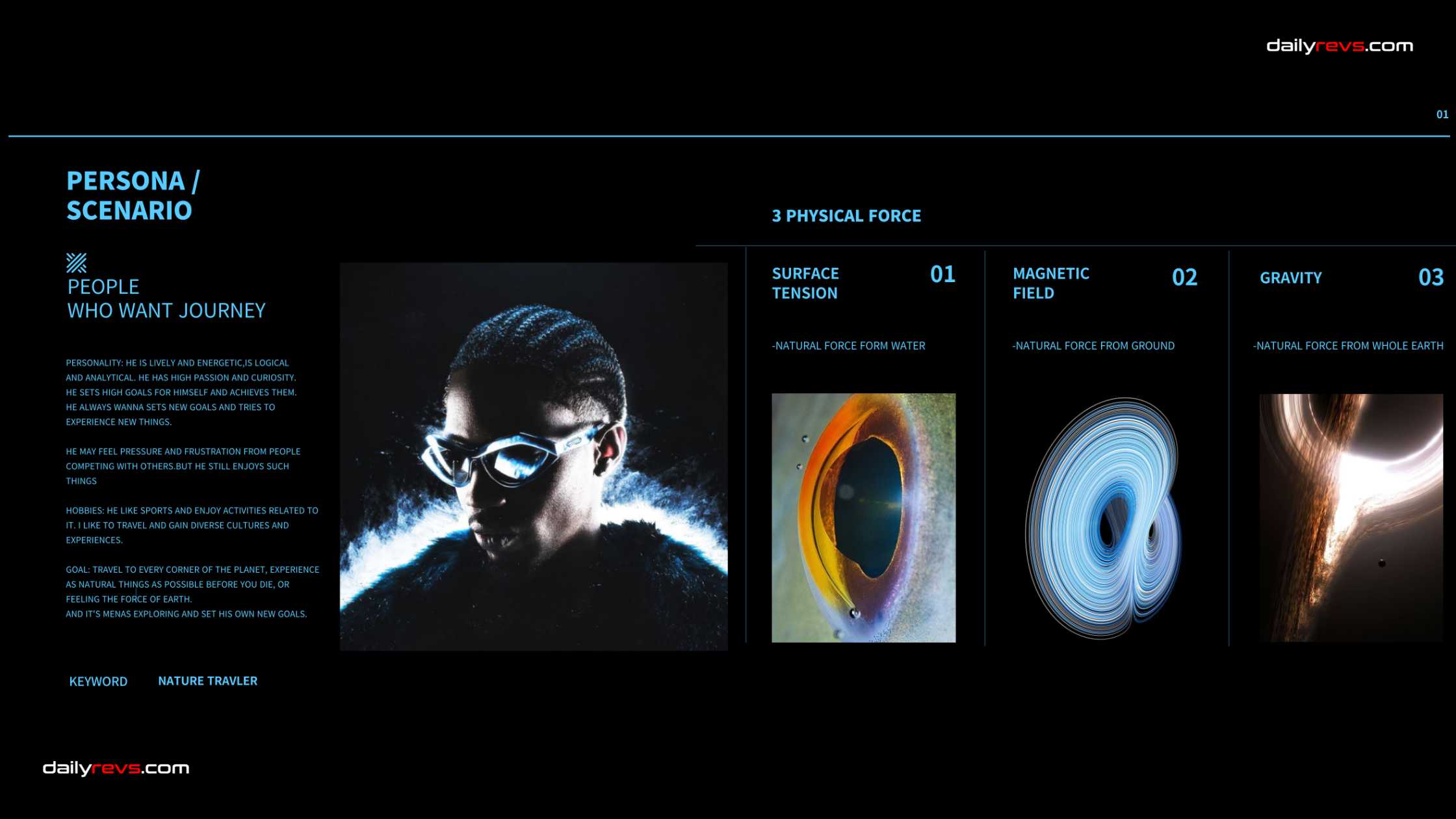
The design concept board illustrates the visual origin of the form, as there are three distinct force references being utilized (surface tension, magnetic fields, gravity). Surface tension is represented in the way the body area stretches out over the wheels. Panels appear pulled taut and are wrapped around a solid object as if they were wrapped in thin, lightweight film.
.jpg)
The design of the side surfaces indicates to the viewer how their eye should flow along the full length of the vehicle without sharp lines acting as a guideline. Gravity relates closely to how the vehicle is positioned on the ground. The rear section appears very much connected to the ground and when tapering off, it has the appearance of being stable and secure.
The above-mentioned references are not used literally which assists in allowing for a clean design.
Lighting That Stays in the Background
The illumination that is used in the whole vehicle is maintained at an equally low-key function. The slim module perimeter lighting at the front of the vehicle flows around the patterned grille area. There is some detail there for those that search for it, but it is not the focal point of the vehicle.
.jpg)
The rear lighting consists of a full-width light bar that sits on a slightly recessed surface. The interior pixel style light engines add some form of technical detail; however, it is contained. Lighting is never treated as the primary feature of a design will always be to support the design.
Wheels, Stance, and Proportion
Lift the hood of a GT and you will be greeted by the same basic silhouette. A long hood, a short deck, and a wide stance.
.jpg)
The wheels are very large but have a very simple appearance. Clean spokes and an understated level of illumination help keep the car's visual weight low. The wheels sit flush to the car's body so the car appears stable with no need for exaggerated fender flaring. Low ground clearance versus not extreme and the GT looks to be a functional car vs. just a concept car. This fits well into the image of a grand touring vehicle.
Our Thoughts:
The overall design of the Mercedes-Benz ITHACA Concept will continue to be consistent. The design will have smooth surface transitions, consistent proportions, as well as referencing design elements. The design does not contain any additional components that add character. The outcome is a grand tourer concept created by form rather than through using external characteristics to define the shape of the vehicle.
Related News
Lamborghini Vettore V12 Concept Looks Ahead to Sant’Agata’s Next V12 Era
Lola Vision T Revisits Can Am Madness With Modern Precision
A Modern Alfa Montreal?
Learn More About the Designer
Hyun Woo Choi’s Maybach Oceanliner project reflects a thoughtful and disciplined approach to design. To explore more of his work and follow future developments, you can view his portfolio and profiles below:
Disclaimer: These
works are not affiliated with the official efforts of OEM design
studios. They are independent reflections of the creative minds of young
car designers whose voices deserve to be heard. DailyRevs does not
claim any credit for the effort or vision behind these projects. We do
not receive financial compensation for publishing such work. These
features are shared only with the consent of the designers, after direct
outreach and agreement. We also welcome submissions from designers who
wish to be featured, provided the quality of the work meets editorial
standards.
Lamborghini Vettore V12 Concept Looks Ahead to Sant’Agata’s Next V12 Era


