Lancia Astra Concept Gives Stellantis a Reason to Raid Its Ferrari-Derived Parts Bin
By Hugo Mattson October 23, 2026

Francesco Fissi's Lancia Astra concept reinterprets the legendary Stratos Turbo Group 5 race car, drawing on several decades of Lancia design and motorsport history.
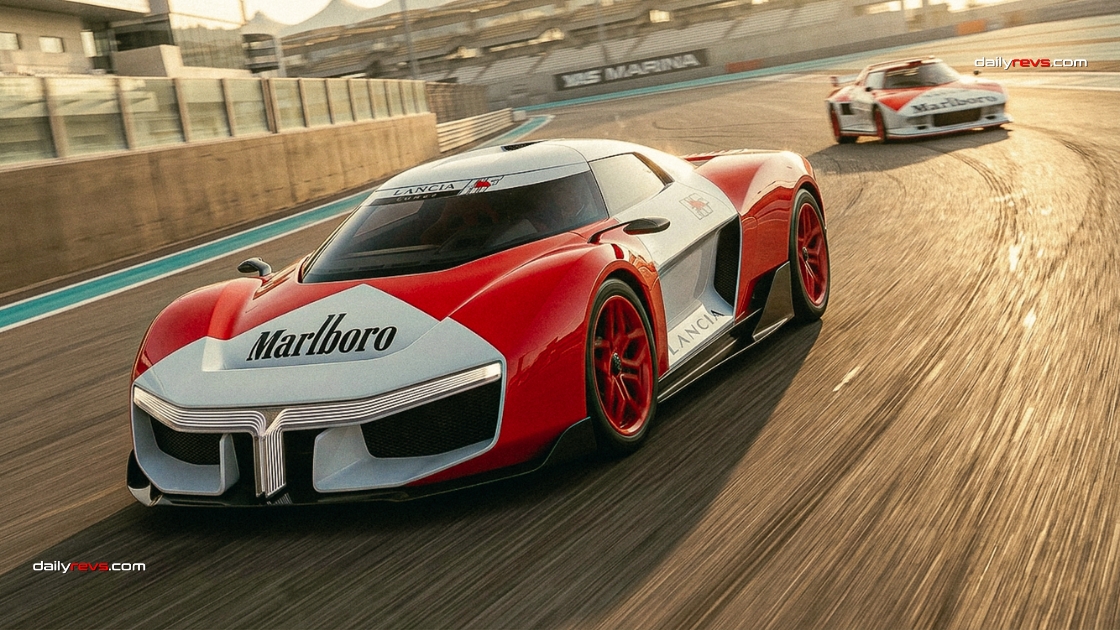
The exterior introduces a new interpretation of familiar Lancia features, including manta ray-inspired front fenders, fiber-optic headlights, Stratos Zero-inspired rear lighting and redesigned five-spoke wheels.
A proposed Ferrari-derived hybrid V6 powertrain could theoretically be combined with an adapted carbon-fibre architecture, although the Astra remains an independent design study with no production plans.
The Lancia Stratos has probably been reimagined more times than most Italian sports cars. Digital concepts, coachbuilt prototypes and limited-production interpretations have all attempted to bring Marcello Gandini's celebrated Bertone design into the modern era.
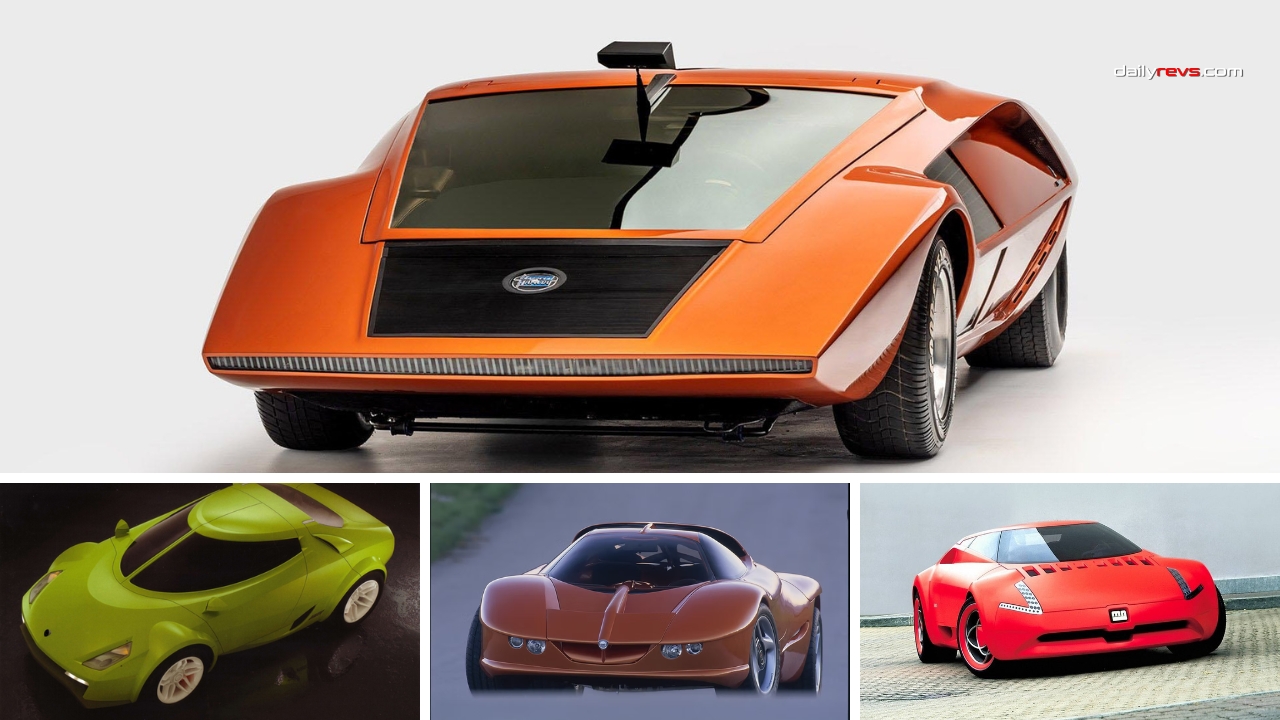
Most have followed a familiar formula: preserve the wedge-shaped silhouette, update the surfaces, introduce contemporary lighting and retain as much of the original character as possible. It is an understandable approach. The Stratos has such a distinctive identity that changing its proportions too extensively can make the connection difficult to recognise. Italian automotive designer Francesco Fissi has approached the subject differently with the Lancia Astra.
The Group 5 Stratos Turbo remains the principal influence, but Fissi has also drawn from the Stratos Zero, the Stratos HF and Lancia's wider motorsport history. These references inform a new exterior design rather than determining every detail of its appearance. The Astra is conceived as a road-legal sports car, with sculpted bodywork, distinctive lighting and a proposed Ferrari-derived hybrid V6 powertrain. Its design also raises an interesting question about what a modern Lancia flagship might look like if the manufacturer revisited its performance heritage.
The Stratos Turbo Provides the Foundation, but Not the Limits
The original Stratos, designed by Marcello Gandini at Bertone, was defined by its compact proportions, sharply inclined windscreen and wedge-shaped body. The later Stratos Turbo Silhouette, developed for Group 5 circuit racing, exaggerated those characteristics with widened wheel arches, substantial aerodynamic modifications and an aggressive competition stance. These proportions form the foundation of the Astra.
The concept retains a low, compact cabin positioned between pronounced front and rear wheel arches. Its steeply inclined windscreen flows into a short roofline and broad rear deck, maintaining the proportions associated with the original racing car. Fissi has replaced the relatively simple geometric surfaces of the 1970s design with a more elaborate relationship between convex volumes, recessed sections and sharply defined intersections.
The monochrome sketches reveal this approach particularly well. The front fenders, central bonnet and rear quarters are treated as distinct volumes, connected through the underlying wedge profile.
Manta Ray-Inspired Fenders Establish a New Front-End Identity
The Astra's front fenders take inspiration from the cephalic lobes of a manta ray, translating their flowing forms into the bodywork surrounding the front wheels. The fenders rise prominently above the central bonnet, creating two pronounced shoulders that extend rearward towards the windscreen. Between them, the bonnet sits considerably lower, with a dark central section emphasising the separation between the main volumes. This arrangement gives the Astra an exceptionally wide appearance while maintaining relatively compact front proportions.
The contrast between the broad, organic fender surfaces and sharper intersections around the front fascia introduces a more complex surface treatment than the original Stratos. The side profile develops these forms further.
A comparatively restrained door section separates the front wheel arches from the substantial rear quarters. Behind the doors, large recessed air intakes create a pronounced transition into the wider rear bodywork. The lower sill rises towards the rear wheels, reinforcing the relationship between the intake openings and surrounding surfaces. The mirrors are conceived as narrow, elongated speedforms, visually suggesting the movement of air around the body.
Lancia's Historic Grille Becomes a Fiber-Optic Lighting Signature
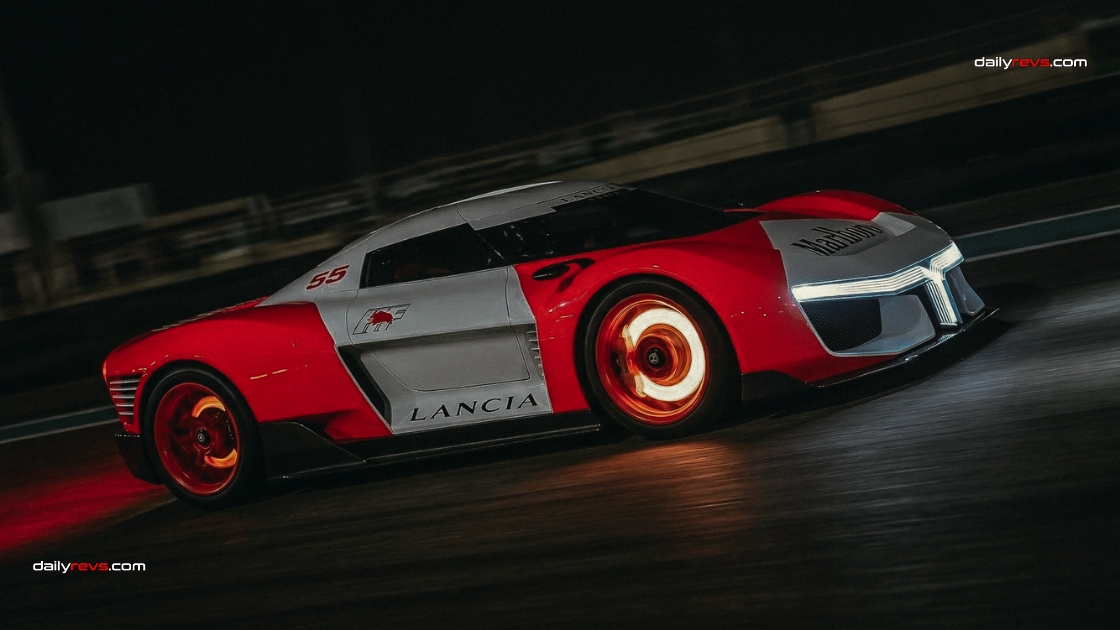
The Astra's front lighting reinterprets one of Lancia's most recognisable design features. Instead of incorporating a conventional grille, Fissi has developed a fiber-optic lighting element suspended within Plexiglas. The lighting extends horizontally across the nose before descending vertically at the centre, creating a contemporary interpretation of Lancia's traditional grille identity. The finished renderings show the graphic illuminated, particularly against the darker surroundings of the circuit scenes.
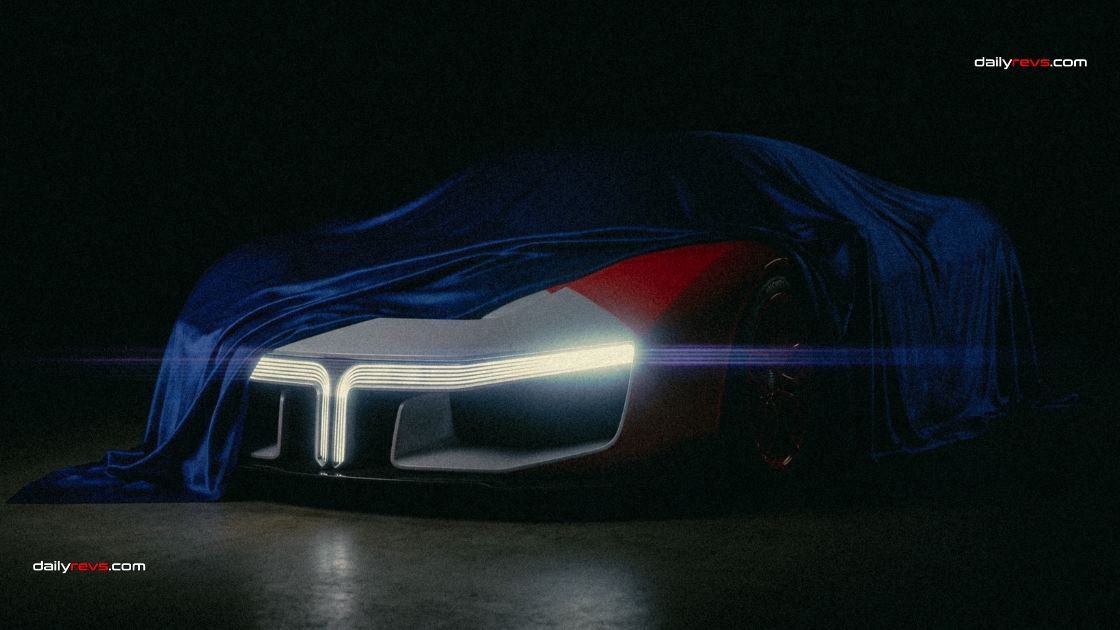
Below the lighting, large openings and a low splitter reinforce the car's competition-inspired character. The rear introduces another historical reference, this time to the Bertone Lancia Stratos Zero of 1970. Its distinctive rear lighting graphic has been reinterpreted as a continuous element extending across the Astra's tail and wrapping around the outer corners. Fissi has integrated this treatment into the surrounding aerodynamic architecture rather than applying it as a decorative feature.
Below it, a substantial diffuser, deep vertical elements and a centrally positioned exhaust outlet give the rear a distinctly mechanical appearance. The upper deck incorporates additional openings and raised surfaces, completing a rear design that combines Stratos Zero influences with the more aggressive character of the Group 5 car.
The Wheels and Racing Livery Connect Different Chapters of Lancia's History
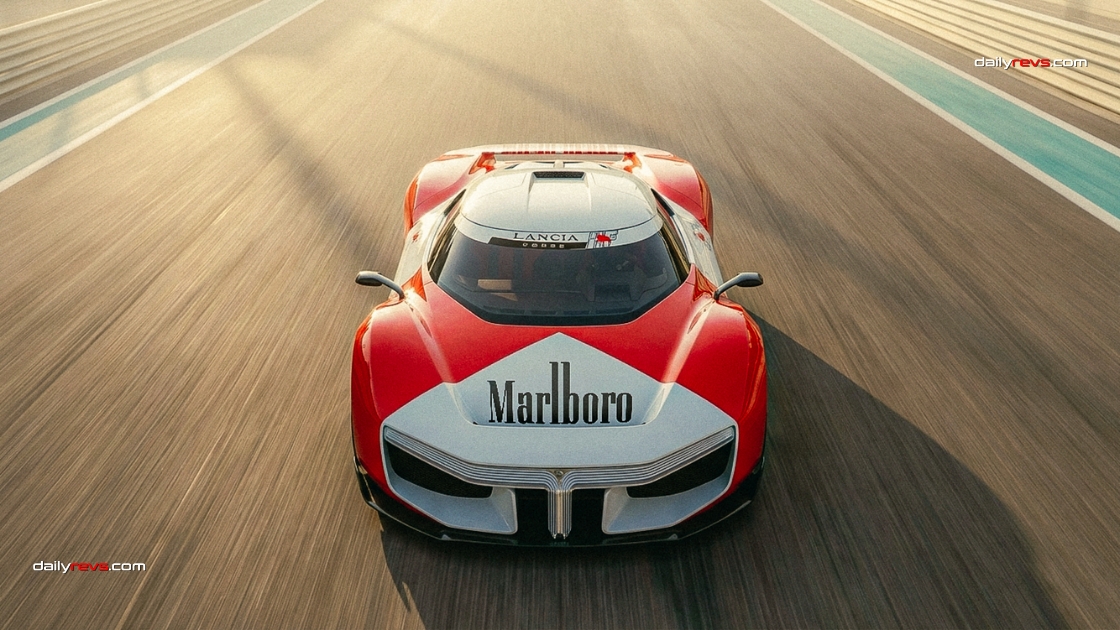
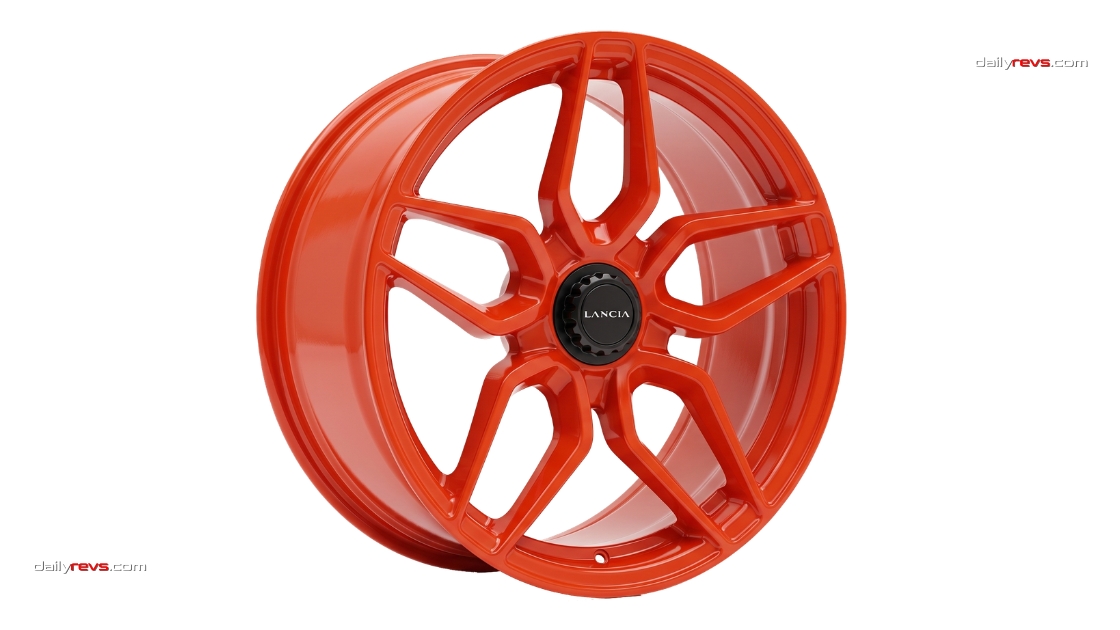
Fissi has revisited the original Stratos HF's distinctive five-spoke wheels. For the Astra, the familiar geometry has evolved into a skeletal design featuring hollowed sections and more elaborate spoke profiles, retaining the historical reference while communicating lightness and mechanical intensity. The finished renderings also introduce a reinterpretation of the Stratos Turbo's historic red and white racing livery.
The Marlboro-inspired graphics follow the Astra's redesigned surfaces rather than reproducing the original competition scheme. Red front fenders contrast with the lighter central bonnet, while the graphics along the sides emphasise the transition between the cabin, doors and rear quarters.
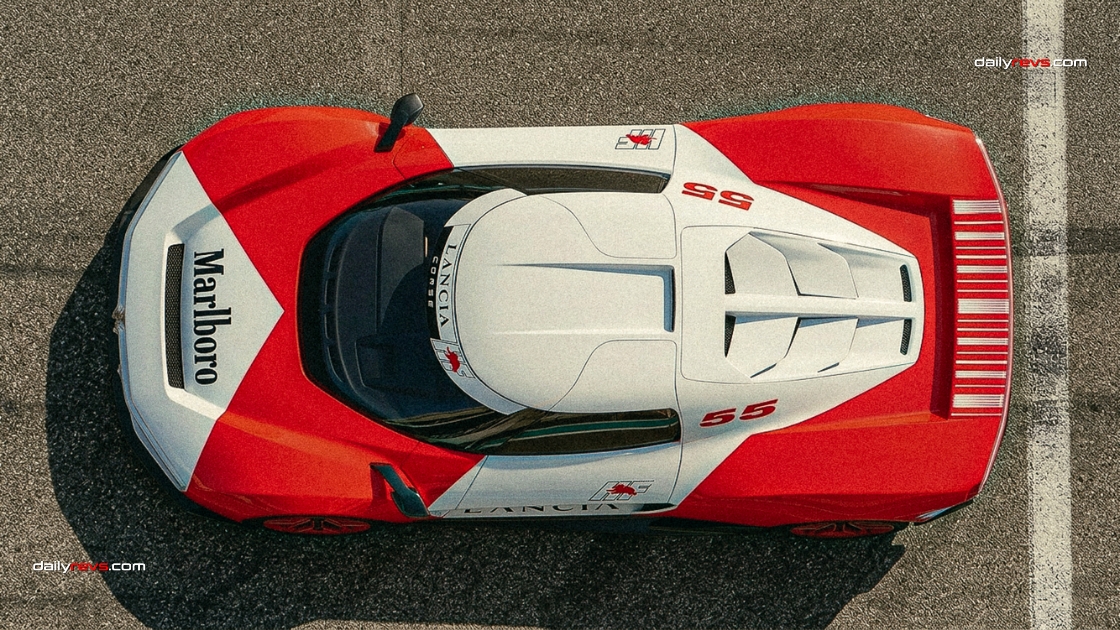
The overhead renderings reveal how the colours reinforce the narrow cabin and wide bodywork. In the circuit images, the illuminated front graphic and competition livery establish a more direct visual connection with the Stratos Turbo.
A Ferrari-Derived Hybrid V6 Could Continue the Stratos Tradition
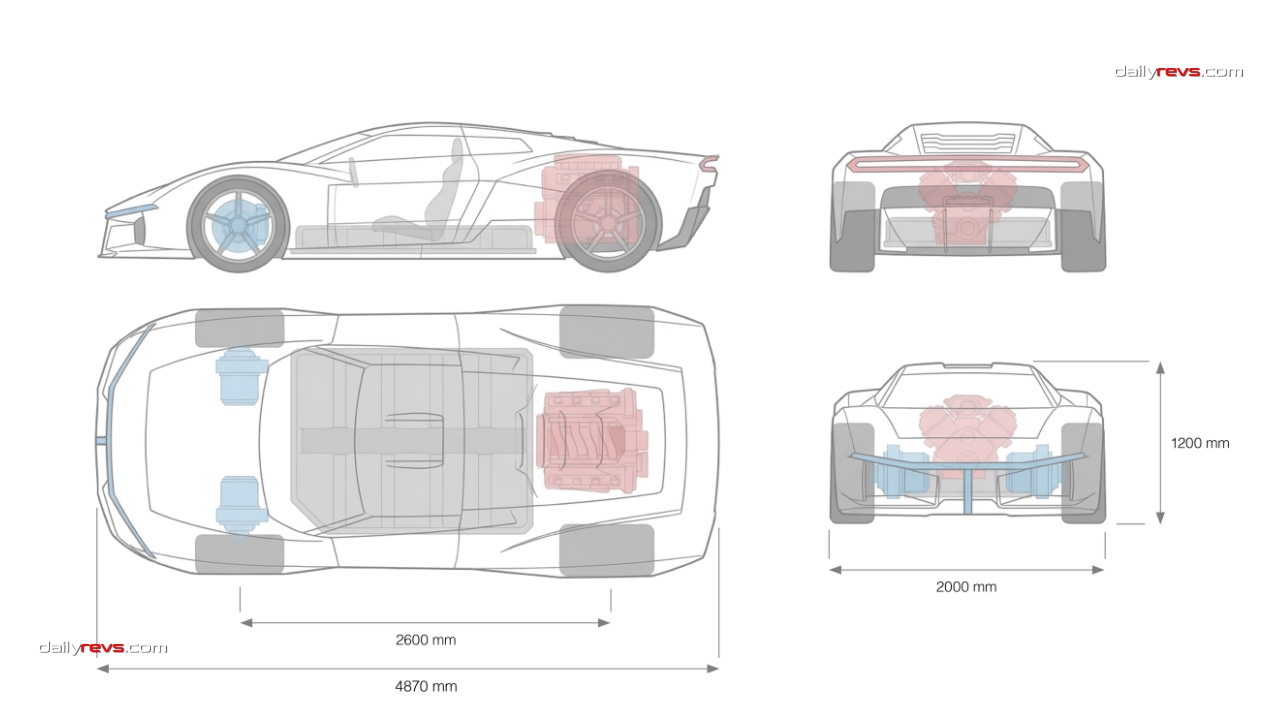
Fissi has proposed a powertrain that maintains the Stratos' historic connection with Ferrari. The original Stratos HF used a Ferrari Dino V6, while the Astra is conceived around a rear-mounted, Ferrari-derived twin-turbocharged V6 supported by two electric motors driving the front wheels.
The arrangement would provide hybrid four-wheel drive, combining combustion power at the rear with electric assistance at the front. Ferrari already produces a possible starting point in the 296 GTB, whose 3.0-litre twin-turbocharged V6 forms part of a plug-in hybrid powertrain producing 830 cv.
Although the 296 uses a different drivetrain configuration, its V6 could theoretically form the basis of a bespoke hybrid system similar to the one Fissi envisages. The MAT New Stratos offers a relevant precedent. Developed by Manifattura Automobili Torino using modified Ferrari F430 underpinnings, the limited-production sports car brought the Pininfarina-designed New Stratos into production, demonstrating how a contemporary interpretation of the Lancia icon could be engineered using existing Ferrari components.
For the Astra, another possibility could involve the carbon-fibre architecture developed for the Maserati MC20 and subsequently adapted for the Alfa Romeo 33 Stradale. An evolution of this architecture, incorporating revised suspension geometry, dedicated subframes and structural modifications, could provide a starting point for a limited-production sports car.
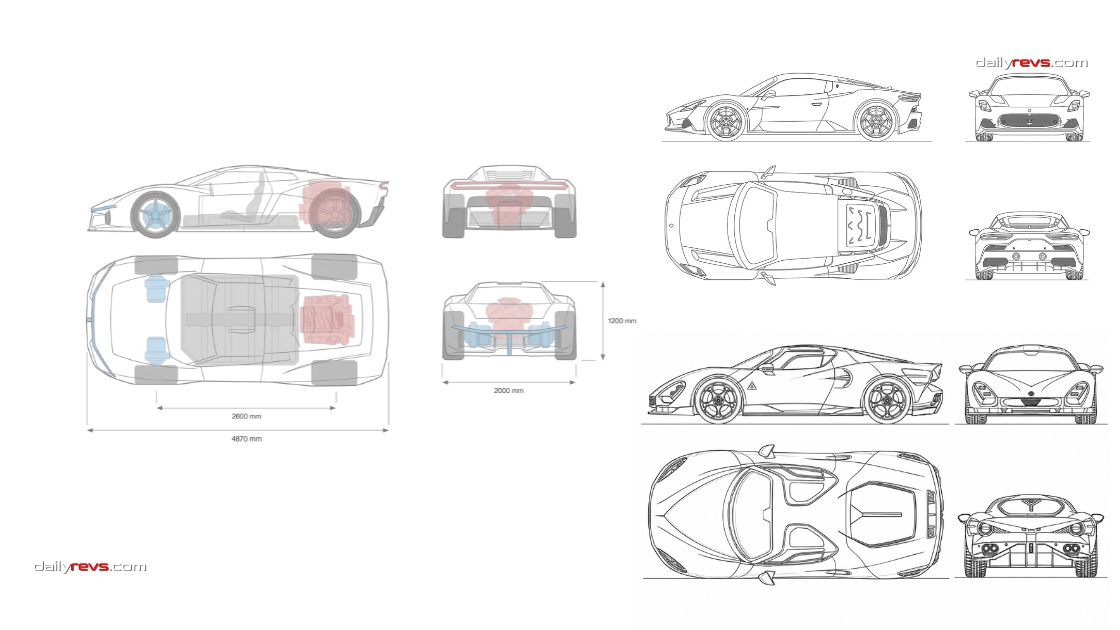
A side-by-side comparison of Francesco Fissi’s Lancia Astra concept (left), Maserati MC20 (top right) and Alfa Romeo 33 Stradale (bottom right), illustrating how existing Italian supercar architectures could provide a potential starting point for a low-volume Astra production model. Such an adaptation remains hypothetical and would require substantial engineering modifications.
Combining it with Fissi's proposed hybrid system would require extensive development, particularly around the front electric motors, battery packaging, cooling and electronic controls. Access to Ferrari technology would also depend on a separate commercial agreement. The Astra remains an independent design study, with no confirmed engineering specifications or production programme.
The Astra Makes a Case for a Modern Lancia Halo Car
Lancia has no shortage of historic models worth revisiting. The Stratos, 037 and Delta Integrale established the manufacturer's reputation for distinctive engineering and competition success, and their influence remains evident in contemporary automotive design. A limited-production halo car could provide an opportunity to reconnect the brand with that history.
The MAT New Stratos and Alfa Romeo 33 Stradale have already demonstrated two approaches to reviving historic Italian sports cars using existing engineering resources.
Such a project would still require considerable investment, particularly if it involved a bespoke hybrid powertrain and extensive modifications to an existing carbon-fibre platform. There is also no indication that Lancia is considering a vehicle of this kind. Francesco Fissi's Astra is nevertheless an interesting design proposal because it looks beyond the familiar exercise of modernising Gandini's original Stratos.
The Group 5 proportions, Stratos Zero-inspired lighting, reinterpreted HF wheels and racing graphics are all recognisable references, but they have been developed into a design with its own character. The Astra remains a tribute to the Stratos, although its influences extend across several decades of Lancia's history. In that sense, it is as much a celebration of the manufacturer as it is a reinterpretation of one particular car.
Connect with Francesco Fissi
To explore more of Francesco Fissi’s work, including ongoing projects and portfolio highlights, you can follow or connect with his work, including ongoing projects and portfolio highlights, you can follow or connect with him on
Disclaimer
These projects are creative explorations by young car designers. In some cases, they were developed independently, while in others they were created with guidance or mentorship from OEM design studios, such as during internships. Unless otherwise noted, they are not official works of the manufacturers or studios involved.
DailyRevs does not claim credit for the vision or effort behind these projects and receives no financial compensation for publishing them. Each feature is shared with the consent of the designer following direct outreach and agreement. We also welcome submissions from designers who wish to be featured, provided the quality of the work meets our editorial standards.


