Lamborghini Audace Imagines a Wild V12 Future
By Hugo Mattson October 30, 2026

Automotive designer Alberto Buggiotti has created the Lamborghini Audace, an independent V12 hypercar concept inspired by racing prototypes.
Its defining features include a low wedge-shaped body, a sweeping glass canopy, prominent wheel structures and an elaborate rear aerodynamic treatment.
The design recalls the experimental proportions of Bertone's Lancia Stratos Zero and the original Lamborghini Countach LP500, while exploring a more futuristic direction.
Lamborghini's wedge-shaped supercars have influenced generations of automotive designers. More than fifty years after the original Countach appeared, Italian designer Alberto Buggiotti has revisited that tradition with the Lamborghini Audace, an independent hypercar concept that explores how far the company's design language could evolve.
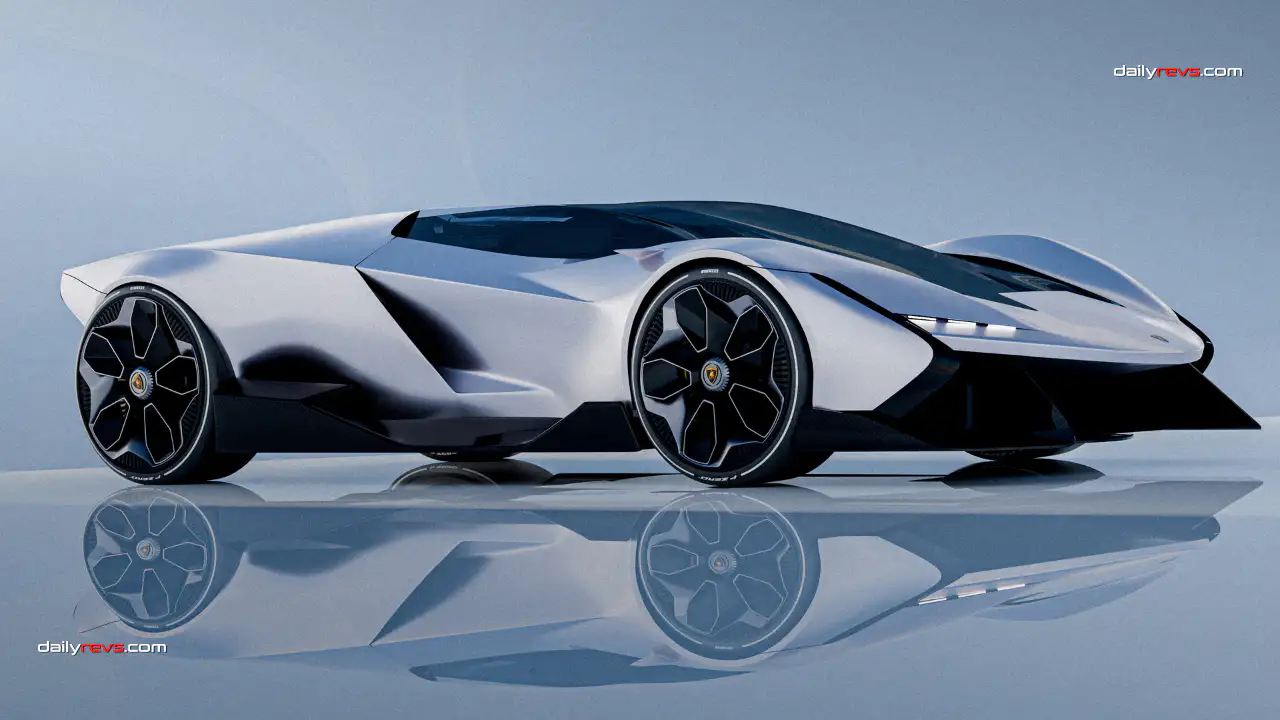
The Audace sits exceptionally low, with a sweeping glass canopy stretching across much of its upper body. Large wheels rise above the central structure, while deep channels and angular aerodynamic elements shape the front, sides and rear. Its proportions suggest a vehicle conceived around high-speed performance, although Buggiotti has presented the project as an exterior design study rather than an engineering proposal. The designer explains his approach:
Lamborghini Audace was born from the desire to explore a new interpretation of Lamborghini's design language, where aggression and elegance coexist in an uncompromising balance. Inspired by the world of hypercars and racing prototypes, the concept expresses speed through radical proportions, sharp geometries and tense surfaces, creating a bold and instantly recognizable identity. The nine renderings show a consistent exterior design, from the unusual front wheel arrangement to the glazed engine cover and complex rear diffuser.
They also reveal several connections with Lamborghini's design history.
Lamborghini Audace revisits the proportions of the original Countach
The Audace's most striking feature is the height of its central body relative to the wheels. From the side, the passenger compartment sits low between four large wheel structures.
The front wheels are partly enclosed by raised shoulders, while the pointed nose extends forward between them. This arrangement creates an unusual front profile. The body narrows towards the centre, leaving the wheels visually separated from the main structure by deep openings. Slim lighting elements follow the upper edges of the front bodywork. Beneath them, a broad splitter and recessed aerodynamic channels give the nose a layered appearance.
The design becomes easier to understand in the front three-quarter rendering. Rather than following the conventional arrangement of a bonnet between two wheel arches, Buggiotti has shaped the front body around the wheels themselves. There are similarities with the experimental Italian wedge designs of the early 1970s. Marcello Gandini's 1970 Lancia Stratos HF Zero, developed at Bertone, explored an exceptionally low vehicle architecture. At approximately 840 mm tall, it featured a sharply inclined windscreen, a compact cabin and a front-opening canopy.
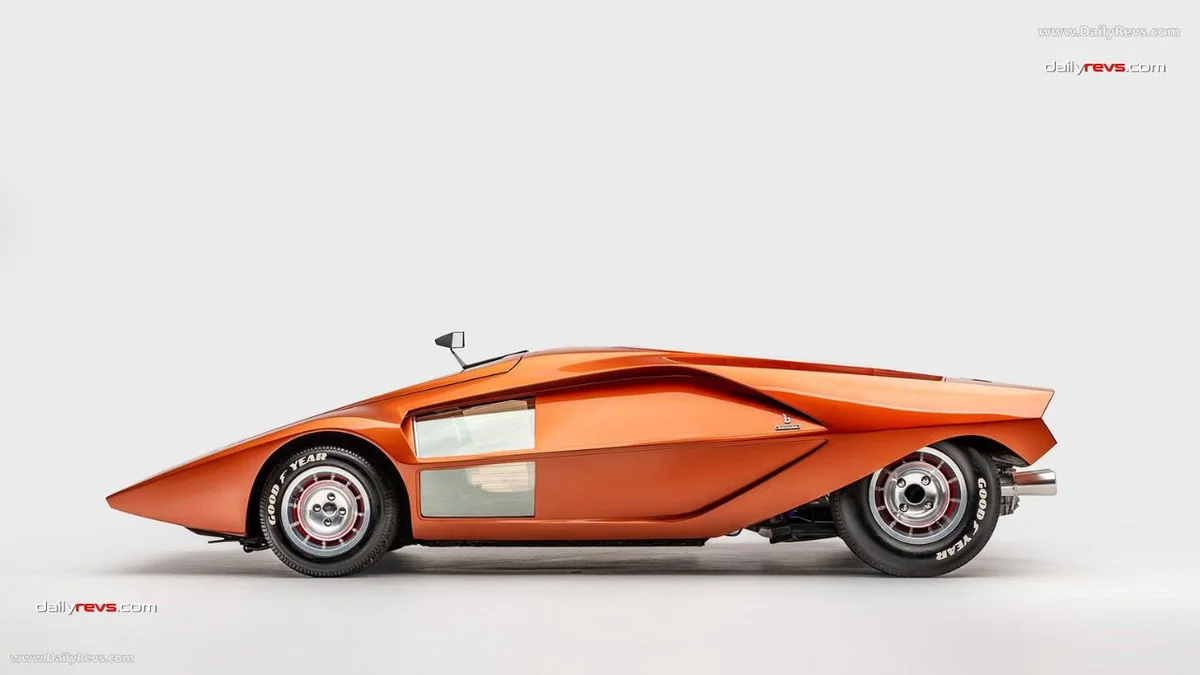
The Stratos Zero used relatively simple geometric surfaces to achieve its unusual proportions. Its front end was almost entirely defined by a continuous wedge, with little separation between the bonnet and passenger compartment.
A year later, Gandini introduced the 1971 Lamborghini Countach LP500 prototype at the Geneva Motor Show. The LP500 established a new direction for Lamborghini, replacing the Miura's rounded forms with a sharply angled body, a forward-positioned cabin and scissor doors. Buggiotti's Audace explores similar questions about vehicle height, cabin placement and the relationship between the wheels and body.
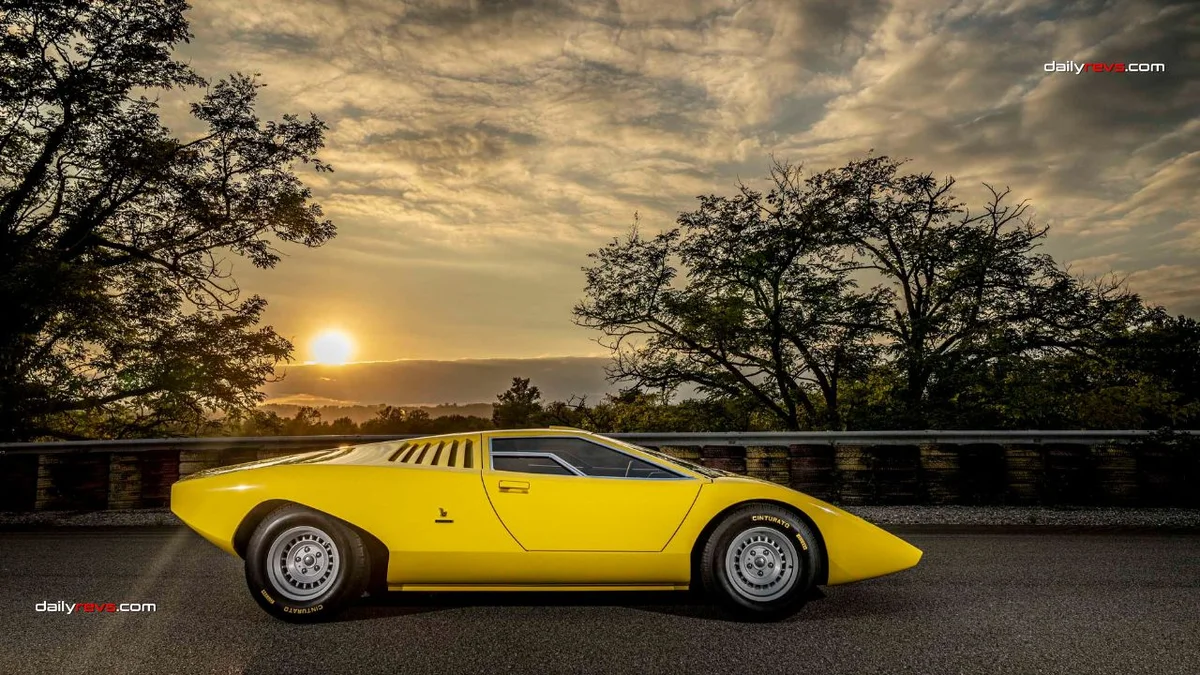
However, the three designs approach those problems differently. The Stratos Zero was exceptionally compact. The Countach LP500 used a longer, more substantial body to accommodate its longitudinally mounted V12. The Audace has an elongated central structure surrounded by pronounced wheel forms and deeply recessed aerodynamic surfaces. Its side profile also reveals a relatively smooth upper body. Sharp creases and large openings become more prominent below the shoulder line, where the sculpted surfaces connect the front and rear wheels. The large black wheels contribute considerably to the overall appearance.
Their geometric spokes and Lamborghini emblems are clearly visible in the side renderings, while the low body makes their diameter appear even more pronounced.
The proportions are extreme, but the individual elements follow a consistent design approach. The front shoulders lead towards the canopy, the side channels continue towards the rear wheels, and the upper body gradually widens around the engine compartment.
The glass canopy and V12 engine cover shape the upper body
Viewed from above, the Lamborghini Audace reveals a large glass canopy that occupies much of the vehicle's length. The glazing tapers towards the front and broadens around the passenger compartment. Its angular edges follow the surrounding bodywork, creating a sharply defined transition between the dark glass and light metallic exterior.
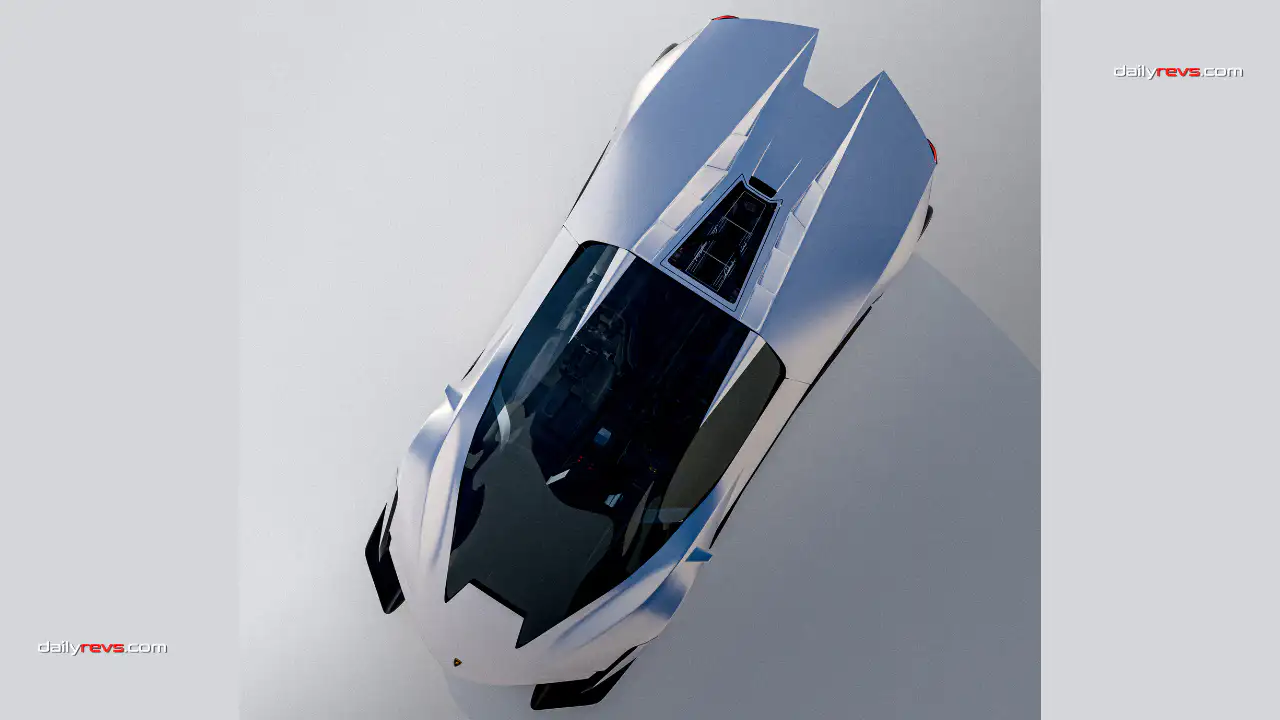
The upper surface has an aerospace character, particularly around the front section where the canopy meets the raised wheel shoulders. Unlike the original Countach, which had a comparatively conventional enclosed cabin despite its unusual proportions, the Audace uses a continuous glass surface extending towards the rear deck. The renderings show portions of the interior through the tinted canopy, including what appears to be a compact cockpit.
However, the images do not establish the complete seating arrangement or dashboard layout. The side openings are equally prominent. Large channels run beneath the upper body, leaving substantial areas of the lower structure exposed. Dark aerodynamic surfaces fill these recesses and create a clear separation between the painted exterior and the underbody.
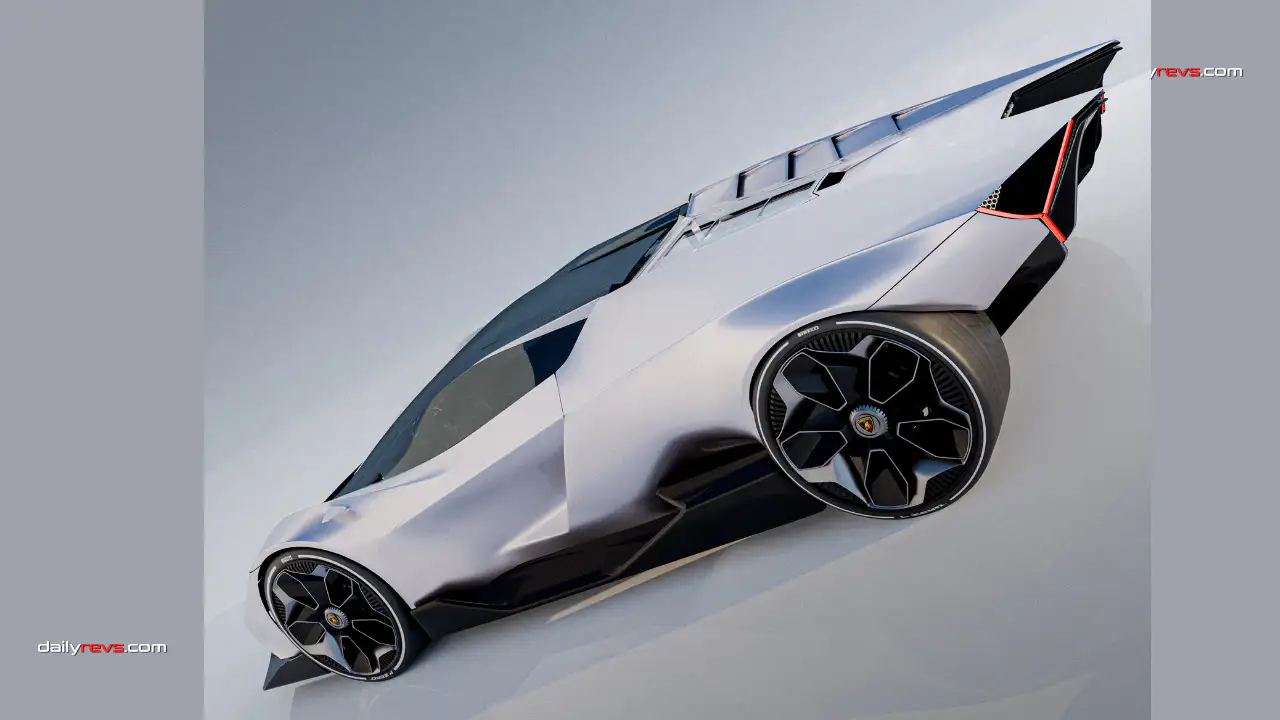
This arrangement gives the Audace a slender central section when viewed in profile, despite the considerable width suggested by its front and rear views. Behind the cabin, the bodywork rises slightly around a glazed engine cover.
A series of ventilation openings runs along either side of the central section. Their shape follows the longitudinal direction of the vehicle, connecting the engine compartment visually with the passenger canopy. A small plaque visible beneath the rear glazing carries a V12 designation. Lamborghini's twelve-cylinder engines have played a central role in the company's history, from the Miura and Countach to the Diablo, Murciélago and Aventador.
That tradition continues with the Revuelto and the limited-production 2026 Lamborghini Fenomeno, which uses a hybrid V12 powertrain. The Fenomeno provides a useful contemporary reference for Buggiotti's work. Both designs use sharply defined surfaces, extensive aerodynamic detailing and dramatic proportions associated with Lamborghini's flagship models.
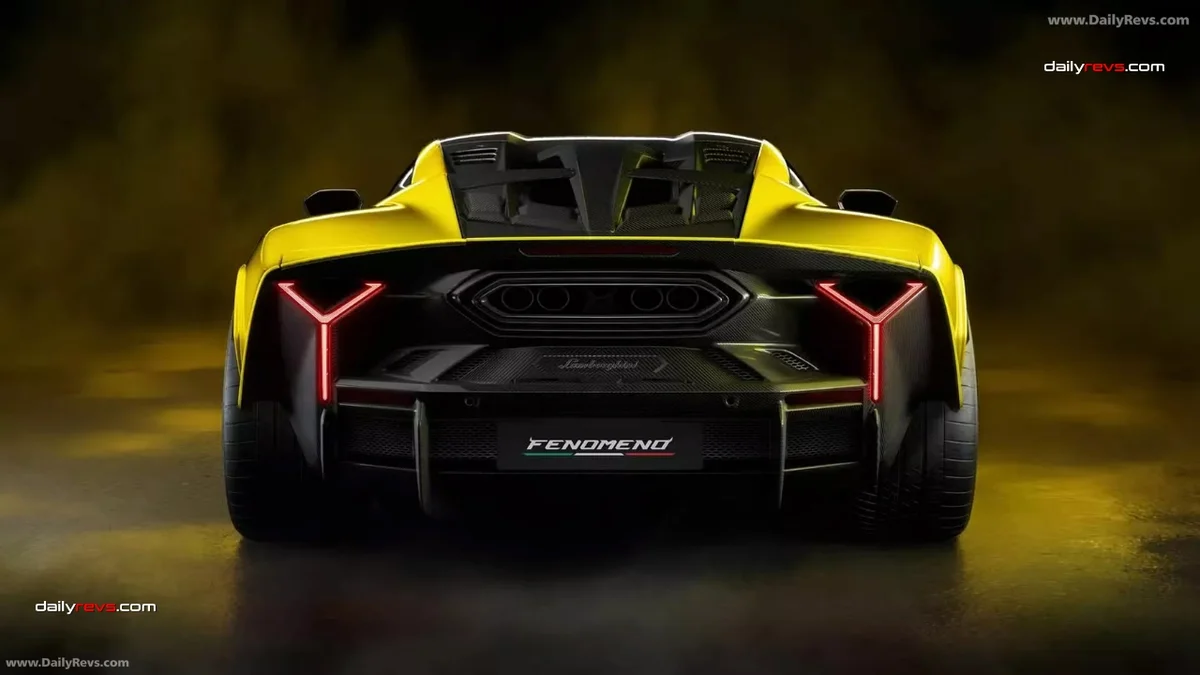
Their overall architectures differ considerably, however.
The Fenomeno retains the recognizable proportions of a modern mid-engined Lamborghini. The Audace places greater emphasis on the glass canopy and exposed wheel structures, with a lower central body and more pronounced separation between its upper and lower surfaces.
Although the V12 plaque suggests Buggiotti envisages a twelve-cylinder engine, no technical specifications have been released for the concept. Engine displacement, output, drivetrain configuration and cooling requirements remain undefined. The renderings also provide insufficient information to determine how the powertrain would fit beneath the rear deck.
For now, the V12 designation establishes the intended character of the Audace rather than a confirmed mechanical specification.
The rear design combines sharp geometry with deep aerodynamic openings
The rear of the Lamborghini Audace is considerably more complex than its relatively smooth upper body suggests.
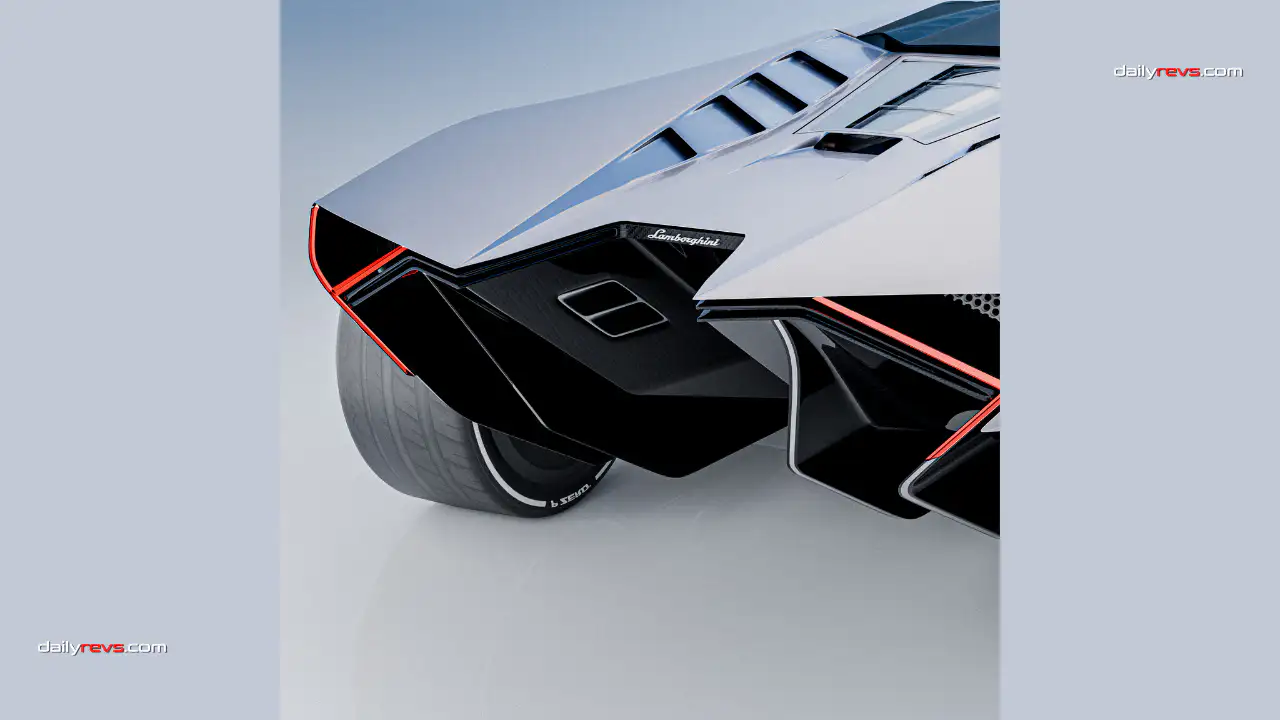
Thin red lighting elements trace angular paths around the outer sections, creating a distinctive signature when viewed directly from behind. The rear deck extends into sharply pointed forms above large black recesses.
Below them, a substantial central aerodynamic assembly incorporates deep channels and vertical surfaces.
The combination gives the rear a broad appearance, particularly in the low three-quarter rendering where the width of the tyres becomes apparent. Buggiotti has also incorporated several smaller details that are easier to see in the close-up images.
Two rectangular openings sit within the central rear section. They resemble exhaust outlets, although their precise function has not been confirmed. A Lamborghini script appears above the rear aerodynamic assembly, while the surrounding surfaces have a carbon-fibre-like finish. The rear lighting follows the edges of the bodywork rather than forming a conventional horizontal strip. Its angular shape complements the pointed outer sections and visually connects the upper body with the lower aerodynamic elements. From above, the rear deck has a more restrained appearance.
The glazed engine cover occupies the centre, surrounded by symmetrical ventilation openings and broad painted surfaces. Towards the outer edges, the bodywork extends into raised forms that become more apparent in the rear three-quarter views.
This contrast between the relatively clean upper deck and the complex rear fascia is one of the more successful aspects of the design.
The front and rear also have different visual priorities.
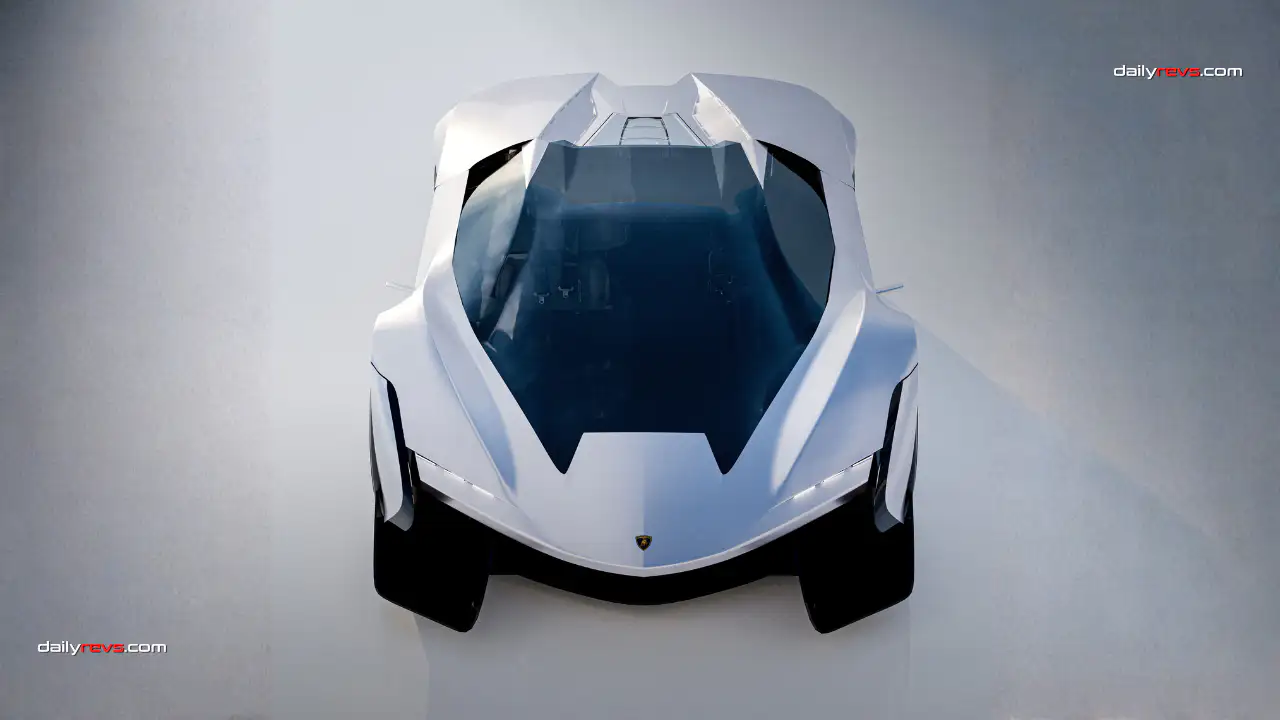
At the front, the narrow nose and exposed wheel structures establish the vehicle's unusual proportions.
The rear concentrates more heavily on cooling openings, lighting and aerodynamic elements. The design suggests an emphasis on airflow management, although no aerodynamic calculations or wind-tunnel results accompany the project. Its extreme packaging would also raise engineering questions. The low passenger compartment, substantial wheel structures and limited ground clearance would affect suspension travel, steering geometry, occupant access and structural design.
A functioning V12 powertrain would introduce additional demands for cooling and mechanical packaging. These considerations would become relevant if the Audace progressed beyond its current digital form. As presented, the project remains an independent automotive design exercise without announced production plans or official Lamborghini involvement. Buggiotti's work is strongest where the proportions and individual surfaces support one another.
The long canopy establishes the main silhouette, the raised wheel structures give the body its unusual stance, and the rear deck carries those forms into a more technical treatment.
The comparison with Gandini's Stratos Zero and Countach LP500 is useful because both earlier concepts explored unconventional vehicle architecture before production requirements shaped their development.
More than five decades later, the Lamborghini Audace examines the same freedom from a contemporary perspective, with the additional complexity of modern hypercar aerodynamics.
Its sweeping glass canopy, pronounced wheel structures and V12 reference give the concept a clear connection to Lamborghini's heritage.
The execution, however, belongs to Alberto Buggiotti, whose design proposes a more radical interpretation of the Italian marque's familiar proportions.
Design: Alberto Buggiotti
The Lamborghini Audace is an independent design study and has no announced official connection with Automobili Lamborghini.
Connect with Alberto Buggiotti
To explore more of Alberto Buggiotti ’s work, including ongoing projects and portfolio highlights, you can follow or connect with his work, including ongoing projects and portfolio highlights, you can follow or connect with him on
Disclaimer
These projects are creative explorations by young car designers. In some cases, they were developed independently, while in others they were created with guidance or mentorship from OEM design studios, such as during internships. Unless otherwise noted, they are not official works of the manufacturers or studios involved.
DailyRevs does not claim credit for the vision or effort behind these projects and receives no financial compensation for publishing them. Each feature is shared with the consent of the designer following direct outreach and agreement. We also welcome submissions from designers who wish to be featured, provided the quality of the work meets our editorial standards.


