Ferrari GTO Concept Brings Back the Mechanical Connection
By Hugo Mattson August 19, 2026

The Ferrari GTO Concept which was created by Harry Edwards presents a vision of what a modern Ferrari can offer in terms of mechanical interaction and tactile communication compared to increasing digitized complexity.
While heavily influenced by the classic Ferrari 288 GTO, the design reflects lighter proportions along with a performance-based approach that later Ferrari F models boast of.
For instance, a manual transmission, unobstructed eight-cylinder engine, and peculiar low-cab forward design of the Ferrari GTO Concept suggest the importance of driving experience along with the look of this vehicle.
In the car industry, a peculiar paradox emerges with respect to modern performance cars. Technology keeps on making the vehicles faster, better and simpler to operate. At the same time, car makers are on a quest to find the way to recreate the feeling that technology took away from the drivers.
Harry Edwards, a young designer, finds a perfect source of inspiration in this situation for his Ferrari GTO Concept.
.jpg)
Instead of imagining the new level of high-tech innovations, self-driving technologies or complex interface designs, Edwards has opted for an alternative solution. Edwards decided to think what a future Ferrari would look like if it shifted the focus back to the physical interaction between a driver and a car.
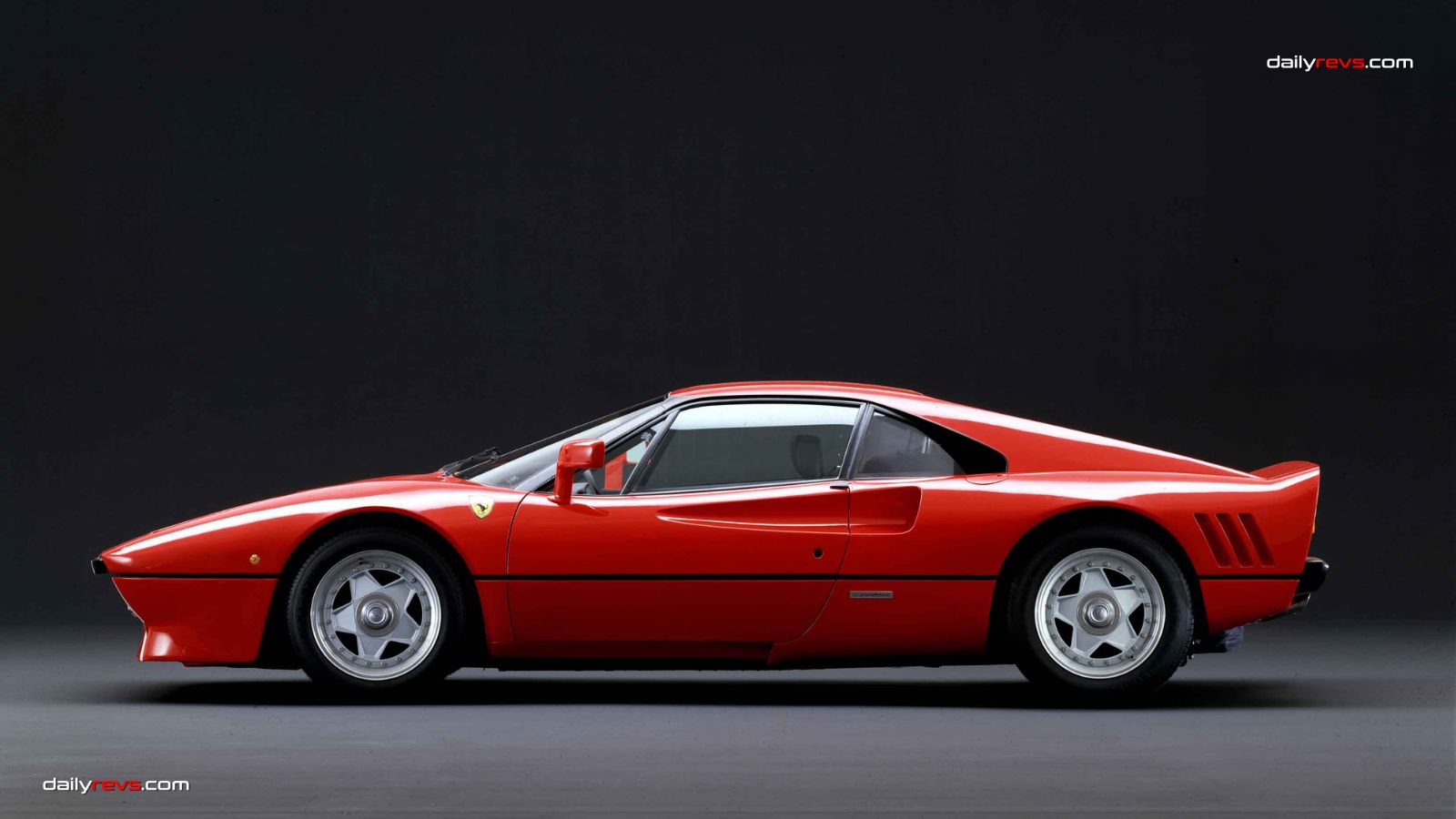
As a result, a small size really low sports car has been conceived based on one of the most famous Ferrari road cars ever produced, namely the Ferrari 288 GTO.
Ferrari heritage without recreating an old Ferrari
The 288 GTO was a bold adaptation of the 308 model. It incorporated a powerful V8 engine and a manual transmission consisting of five gears. The body was elongated and as serious as a racing car.
According to Edwards, the 288 GTO has a strong "muscular character," but he has not stolen the car's styling.
Instead, the design is embodied in proportions. The concept looks very low and heavy at the rear with small cabin and large wheels. The front section of the car is quite small.
There is no attempt to reproduce the traditional grill of the 288 GTO. It connects to its ancestor through the proportions rather than through noteworthy features.
Thus, retro style does not mean repeating the elements of an existing design.
This distinction matters because retro design can quickly become dependent on recognisable details. The Ferrari GTO Concept avoids that route. Its surfaces are largely uninterrupted, and several traditional elements have been reduced to simple geometric forms. The front end, for example, is extremely shallow. Small lighting elements are integrated into dark openings positioned at the outer edges, leaving most of the nose as a clean volume.
.jpg)
The body becomes more substantial as it moves rearwards. A dark graphic begins around the cabin and visually separates the passenger compartment from the surrounding bodywork.
The windscreen and side glass consequently appear almost like a single visor inserted into the car rather than conventional glazing placed on top of it. A strong vertical component directly behind the front wheel creates one of the most distinct visuals in the overall design. In addition to splitting the horizontal lines, it gives a clear connection between the front section and the main body of the vehicle.
The factor that influences the stance of the model the most is the large wheels. Their aerodynamic shapes do not use traditional spokes that are normally uninformed in their shape. From the side, it looks as if every part of the vehicle has been designed in connection to the lower body.
The rear gives the concept much of its character
The back part is much more expressive than the front. Unlike the front, the rear has noticeable mechanical components, and therefore instead of being clean, it has visible lighting and aerodynamics. The design of the back part ends with almost vertical part giving contrast with the huge upper part of the body. The important thin illuminated element crosses the back part and goes through the visible central details.
.jpg)
This part has a big dark diffuser that contains numerous exhaust parts. The design of this element reminds of racer's constructions even though it is not a clone of any Ferrari racing unit. In addition, the design makes the whole concept look more mechanical. This is especially true for the view at the angle of 45 degrees behind the car when it is much easier to see proportions of the concept. There is plenty of structure between the back part of the cabin and the end of the body, which visibly defines the presence of a mechanical unit instead of a cabin behind the car.
An eight cylinder engine becomes part of the design
A different view illustrates another key component. The configuration includes an eight cylinder engine located within an open or clear section behind the passenger compartment. Instead of hiding the power unit with a large engine cover, Edwards incorporates it as an essential architectural aspect. This choice of design aligns perfectly with a broader vision of the project.
.jpg)
If the goal of the design is to show a more analogue approach to the relationship between the driver and the vehicle, it makes sense that the mechanical components remain visible. The engine is perceived not just as a piece of machinery to drive the car but as a part of the experience and therefore design.
The arrangement also explains the strange proportions. Due to the rear engine, the passenger cell can be kept small while the rear part of the vehicle covers the engine. The outcome is a mid-engine look without the common wedge design typical for many supercars.
The manual gearbox makes the intention clear
It is possible that the tiny detail in the scheme indicates the project’s aim most effectively. An exposed manual gearbox is located between the seats of the vehicle. It is made simple deliberately and can be easily recognized. The choice is significant not only from the viewpoint of the visual theme of the design. Edwards offers the possibility of physical interaction with the car as a key feature of the vehicle.
Ferrari abandoned traditional manual gearboxes as automatic gearboxes became more advanced and effective. The logic was reasonable when it comes to speed and performance. Nevertheless, speed or the engagement of the driver can be regarded from a different perspective. This is what the Ferrari GTO Concept does. Edwards characterized the car as a “brave manifesto of its analogue future.” Thus, it would be incorrect to think that a manual gearbox is presented there just because of nostalgia.
A different interpretation of the modern Ferrari
One of the strongest points of the project is the lack of interest in guessing what Ferrari’s next model will be. Conceptual design can be beneficial when it focuses on an idea instead of predicting something accurately. In this case, the question is pretty simple: what if the sector decided to remove some of the layers separating the driver and the performance car? Edwards’s answer is not to make the car old-fashioned.
.jpg)
The GTO Concept is very modern in terms of design, wheels, lighting, and aerodynamics. There are few things that could constitute a straightforward reinterpretation of a Ferrari. However, the priority is traditional. Combining a small cockpit, an open engine, a manual gearbox, and a fair amount of mechanical proportions focuses the attention on the most important elements of the car.
Where the 288 GTO influence really shows
The most interesting aspect of Harry Edwards' Ferrari GTO Concept is therefore not whether it looks sufficiently similar to the 288 GTO. It is the decision to identify what made cars such as the 288 GTO significant in the first place. The answer was not simply their styling. Their character came from the relationship between their proportions, mechanical layout and the involvement demanded from the person driving them.
Edwards has attempted to translate those qualities into a considerably more futuristic object. The enormous wheels, extremely low body and simplified surfaces belong firmly to contemporary concept design. The exposed eight cylinder engine and manual gear selector point in another direction entirely. At the moment when sports cars become more and more complex, the Ferrari GTO Concept challenges the belligerent notion that any development means eliminating complexity that can be recked by the driver.
For a student or a young designer, this is a very daring topic. Most importantly, the project does not depend on typical Ferrari design elements to prove its concept. The Prancing horse clarifies brand identification, while the proportions, structure, and focus on driver interaction do the rest.
Connect with Harry Edwards
To explore more of Harry Edwards’s work, including ongoing projects and portfolio highlights, you can follow or connect with him on the following platforms:


