Ford GT Vision Aero Looks To The Skies Without Forgetting Le Mans
By Hugo Mattson June 4, 2026

GT4 Vision Aero takes cues from the GT40 for proportions but is not simply retro design; rather it uses Aerospace-inspired forms.
This GT4 Concept has an emphasis on aerodynamic efficiency, clean shapes, and showing the engineering beneath it. All of these connect back to Ford’s racing history.
One way that Seung Cheol Lee is looking at how the GT Philosophy can move forward into a different type of supercar without completely losing its hold of Le Mans.
Aviation Influence Shapes The Entire Car
According to Lee, this project draws on many American symbols of performance, including aviation and motorsport — and it becomes evident right away.
The greenhouse is comparable to a fighter jet's canopy relative to the layout of a traditional supercar cockpit. A view from the top shows that the cabin is high, and the design has an open feel. This gives the overall vehicle a low, efficient and highly functional appearance.
.jpg)
More importantly, aviation takes on a role in the concept beyond the visual.
The surfaces are clean, disciplined and show no complex content. Sharp lines appear limited and therefore leave the bulk of the volume to contribute significantly to the character of the vehicle. The form of the body shape is an effect of aerodynamic flow rather than on-trend styling; hence, the vision has a sense of engineering credibility.
Instead of including aircraft design elements as mere decoration, the VISION AERO has treated them as part of the overall structure.
The GT40 Legacy Comes Through Proportion
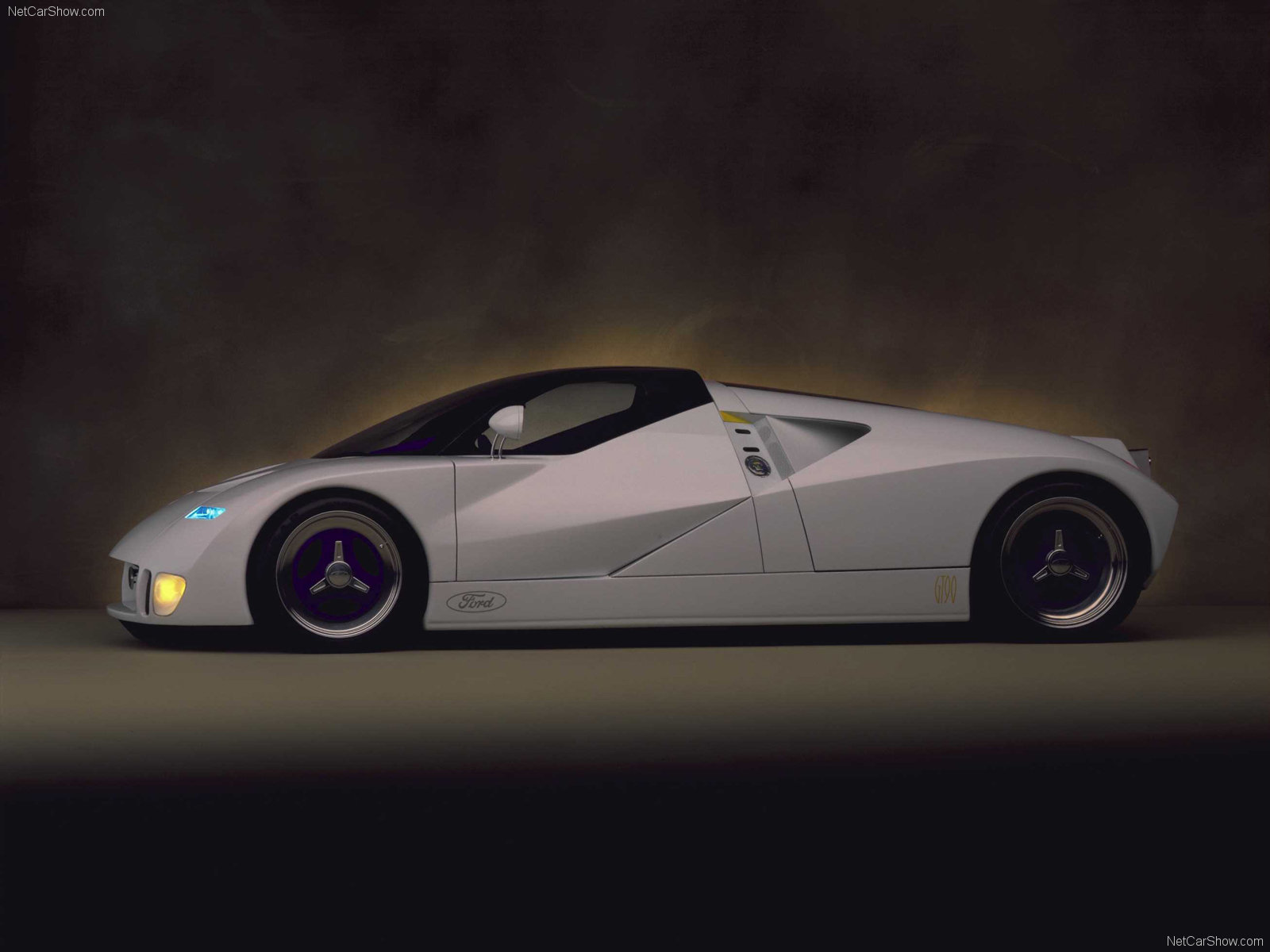
The design concept draws from the GT40 but does not directly duplicate the GT40. However, it is obvious in the details of the design and how they relate to one another.
The roofline is very low and the cockpit location is condensed compared to the overall size of the vehicle's wheelbase. The rear of the car is so large visually that it confirms a mid-engine configuration; therefore, immediately revealing that the car was built for endurance race events.

These proportions were what defined the original Ford GT40, and they still continue to be one of the major visual identifiers across all generations of Ford GTs.
The Vision Aero recognizes that heritage can be obtained from more than just mimicking design elements. Heritage can also be communicated through the way the car is packaged, how well it is balanced, and how present it is in the marketplace.
Thus, the Vision Aero feels modern instead of classic.
Aerodynamics Are Integrated Into The Structure
One surprising element of this project is the way all of the aerodynamic components smoothly integrate into the body.
The raised surface of the hood provides visual definition in the front part of the vehicle, and directs air flow over the top of the vehicle. Side openings direct airflow along the sides of the vehicle to help channel air to the rear without affecting the overall shape; and, even the rear of the bodywork was intentionally shaped for aerodynamics, rather than for aggressive style.
Contemporary supercar designs often feature large wing surfaces and active aerodynamics that are very apparent to everyone in order to succeed at conveying performance.
The "Vision Aero" car is not as overt.
Rather than using large wing surfaces or active aerodynamic devices to create a performance aura, the Vision Aero has aerodynamically efficient shapes that suggest aerodynamic potential rather than presenting individual parts as such. This approach produces a much cleaner, more unified, and less haphazard design while also providing an overall strong performance image.
.jpg)
The Side Profile Is The Strongest View
When you look at the Vision Aero from the side, it shows off its most convincing traits.
The body has a strong horizontal emphasis that stretches from front to back which lowers the vehicle visually and emphasizes its overall length. The cabin is very compactly proportioned between the axles, and the rear section forms a muscular volume which contains the powertrain.
.jpg)
The balance achieved in this vehicle is one of the areas where many modern hypercar concepts fall short.
The design has a dramatic look but avoids being over-the-top. The vehicle has a good visual presence and does not require excessive surface complexity or aggressive detailing to achieve this.
The restraint of the design contributes to the vehicle having an overall sense of maturity, which makes it feel more like a production-oriented design study than simply another concept vehicle.
Mechanical Honesty Remains Part Of The Formula
The renders include details of the vehicle's engineering in the rear section of the vehicle.
There are portions of structural components, cooling systems and powertrains visible as part of the mechanical architecture that became part of the visual experience since they were not hidden under body panels. It is stated that recognizing the significance of the engineering itself is part of the design itself.
This is particularly significant for a vehicle that bears the name Ford GT. The original GT40 was both a race car first and a design statement second. The latest Ford GT has made itself known as one that celebrates engineering through exposed carbon fiber structures and race-based packaging knowledge. The Vision Aero supports this philosophy by including the mechanical layout as part of the car’s identity.
Looking Beyond Nostalgia
Many designers of iconic sportscars have taken the route of recreating familiar designs from the past.
The Vision Aero design doesn’t follow this direction.
Rather than using retro light graphics, old-fashioned design elements, or blatant visual referents, the concept is instead based on foundational philosophies that were the basis for the success of the GT40. The main design philosophies of the GT40 including low profile, aerodynamic efficiency, compact footprint and engineering-based design, are still relevant to this concept.
The connection to aviation adds an additional dimension without diminishing any of the connections.
Thus this concept appears to be more interested in exploring where the philosophy of Ford GT could potentially lead, rather than just recreating things from the past.
A Future Interpretation Of The Ford GT
Each version of the Ford GT represents unique periods in the evolution of automotive design.
The GT40 was innovative in terms of endurance racing. The 2005 Ford GT recognised one of Ford's greatest successes. The most recent GT takes into account aerodynamic performance and contemporary motorsport technologies.
Seung Cheol Lee's vision for Aero is a natural step forward.
Instead of an unchanging design, the Ford GT continues to be an ever-changing performance concept. The proportions will still be related to Le Mans. The engineering is still a key part of the design, and will continue to do so. The aerodynamic performance will likewise be as critical as it has been.
What changes is the perspective.
The Vision Aero gives a look at what may come next for Ford GT while keeping the original lineage intact by incorporating aerospace thought processes into the design. This balance gives the Vision Aero a unique standpoint within the project.
Connect with Seung Cheol Lee
To explore more of Seung Cheol Lee’s work, including ongoing projects and portfolio highlights, you can follow or connect with him on the following platforms:


