The AMG Hammer Is Back, At Least in Pixels
By Hugo Mattson September 3, 2026

Ihn Lee has created an independent CGI interpretation of the Mercedes AMG Hammer based on the W124.
The concept keeps the W124's familiar shape while adding a wider body, modern lighting and contemporary aerodynamic details.
With the HWA EVO reviving another 1980s Mercedes icon and Vision Iconic revisiting historic design cues, the timing feels particularly interesting.
The Mercedes AMG Hammer does not immediately appear to need reinvention. That is partly why Ihn Lee's interpretation works. His independent CGI project takes one of the cars that established AMG's reputation and gives it the sort of treatment now being applied to increasingly valuable performance cars from the 1980s and 1990s. The W124 remains easy to recognise.
.jpg)
Everything around it has become considerably more serious. The body is wider and lower, enormous AMG-inspired wheels fill the arches, and modern lighting and aerodynamic details bring the Hammer forward several decades. Lee's project has no connection to Mercedes-Benz, AMG, HWA or Brabus, and there is no suggestion that it will be built. The timing, however, is interesting. HWA is already reengineering another important Mercedes from this period with the HWA EVO, while Mercedes itself has begun looking back at familiar design elements with concepts such as the Vision Iconic.
Suddenly, the idea of a modern Hammer doesn't seem quite so strange.
The original Hammer didn't need to shout
The Hammer came from a very different AMG. During the 1980s, AMG was still an independent engineering company. Customers could bring their Mercedes in for anything from cosmetic changes to substantial mechanical work. The W124 300 E became the basis for one of AMG's most famous creations. Its standard six-cylinder engine made way for Mercedes' larger M117 V8, with the best-known Hammer specification eventually using a 6.0-litre version with AMG-developed four-valve cylinder heads.
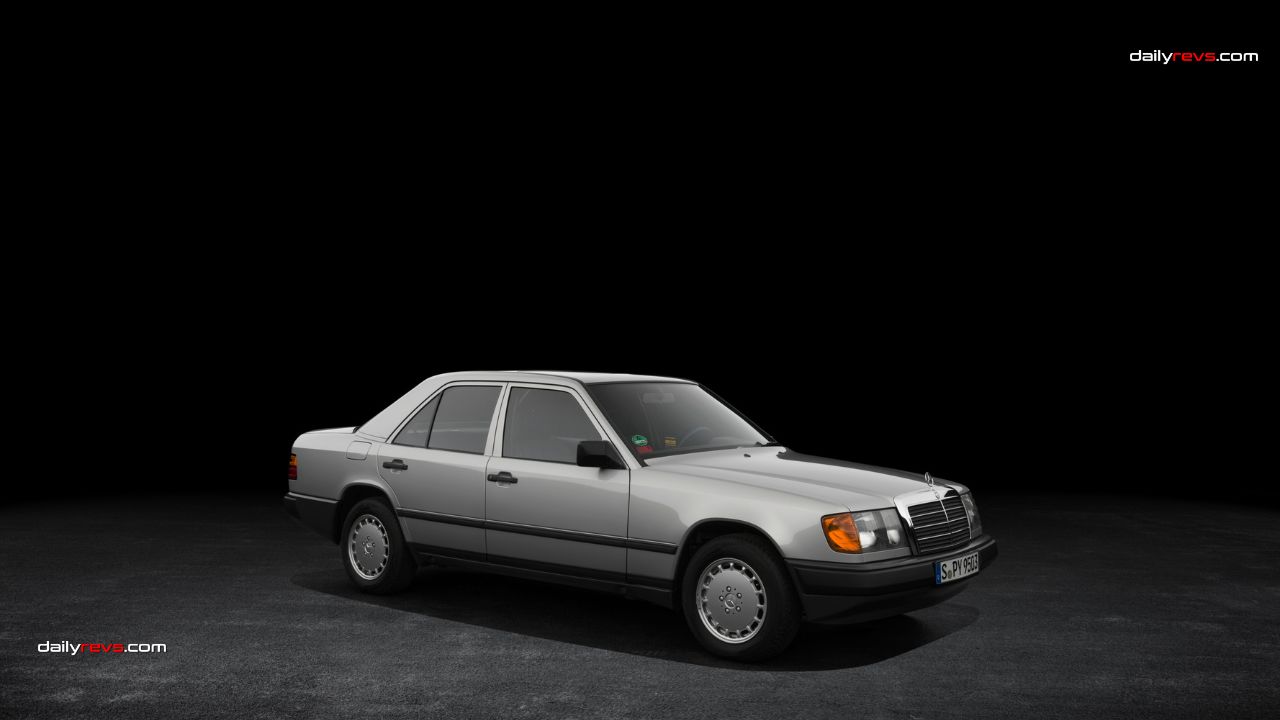
Mercedes-Benz 300 E (model series 124), Saloon
With approximately 375 hp and around 550 Nm, it was extraordinarily fast for a four-door Mercedes of the period. It didn't necessarily look it. There were deeper bumpers, side skirts and larger wheels, but the formal shape of the W124 remained. Much of the Hammer's appeal came from hiding serious performance inside an executive sedan. Lee keeps the familiar architecture but makes considerably less effort to hide what is underneath.
The W124 is still easy to recognise
The upright greenhouse remains, along with the thin pillars, long hood, horizontal beltline and separate trunk. Most of Lee's changes happen below them. The wheel arches have grown dramatically and the body sits much lower over its large wheels. Deep side skirts connect the widened front and rear arches, giving the lower half of the car considerably more visual weight. Yet from the side, it remains unmistakably a W124. That balance is increasingly common among modern restomods: preserve the proportions that made the original memorable, then rethink everything around them. Which makes the HWA EVO difficult to ignore.
.jpg)
HWA has already shown what is possible
The HWA EVO takes the Mercedes 190E Evo II as its starting point, but it is much more than a restored W201 with modern parts. HWA has developed a highly specialised limited-production car around the familiar shape, combining it with modern materials, suspension, brakes and a new powertrain. Put it beside Lee's Hammer and there is an interesting similarity. Both retain the upright proportions of Mercedes sedans from the period and place them over a much wider footprint. Of course, the cars start from very different places.
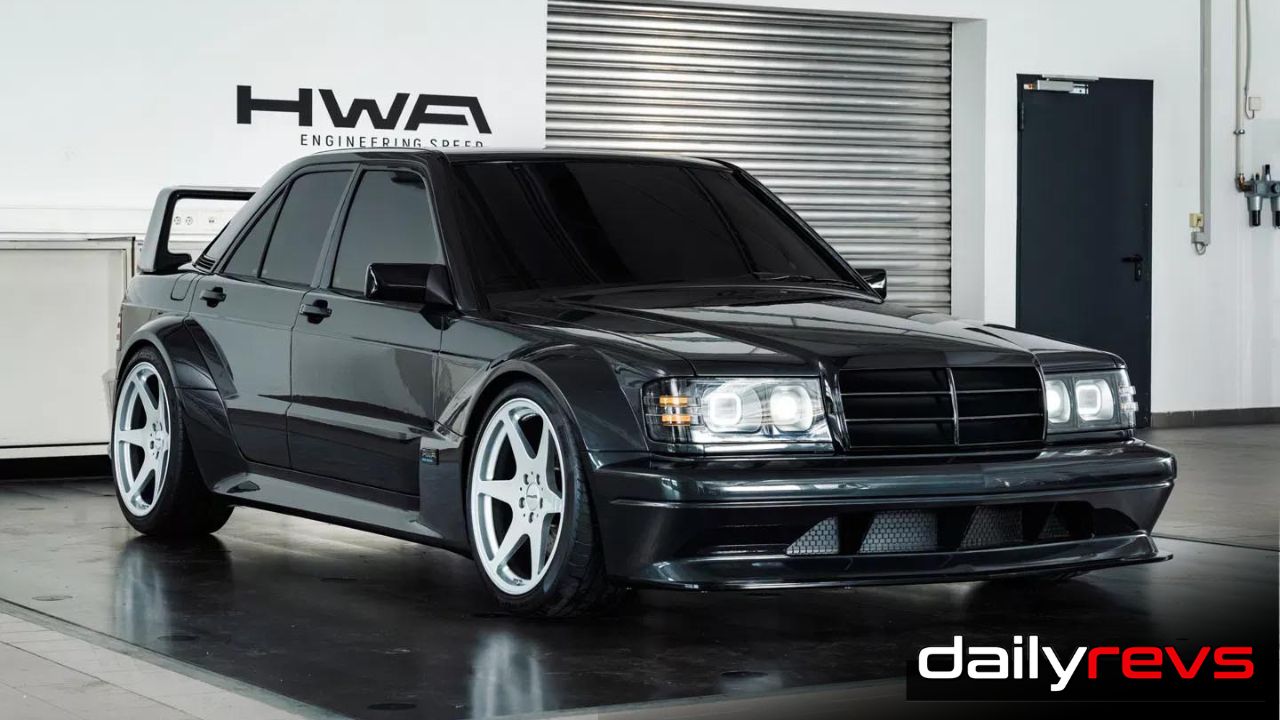
The 190E Evo II was already a conspicuous homologation special with extended bodywork and a huge rear wing. The original Hammer was far more discreet. But the HWA EVO has demonstrated that a boxy Mercedes from this era can be comprehensively modernised without losing the shape that made it recognisable. Lee has effectively explored what that idea might look like on the larger W124.
Even the grille suddenly feels relevant again
The front takes the Hammer in another direction. Lee keeps the large upright Mercedes grille and traditional three-pointed star above it, but replaces the familiar grille treatment with an illuminated geometric pattern. The headlights receive a similar update.
.jpg)
Their rectangular housings sit where you expect them on a W124, while contemporary horizontal lighting elements replace the original internals. It looks old and new at the same time. Coincidentally, Mercedes is exploring something similar. The Mercedes-Benz Vision Iconic reaches much further back into the company's history, but its illuminated grille and standing hood ornament show that Mercedes is once again interested in turning traditional identifiers into modern graphic elements. There is no connection between the two projects, and the cars themselves are completely different. What they share is an unwillingness to throw away the grille simply because modern cars no longer need to use it in quite the same way.
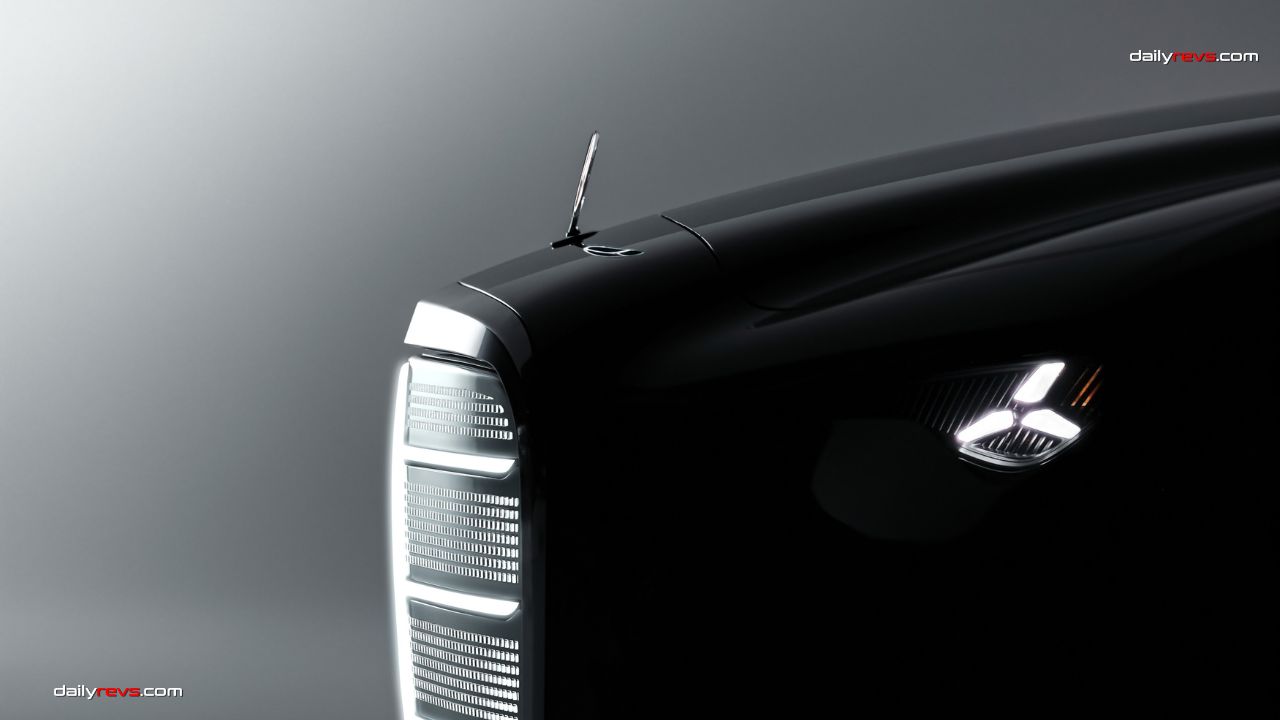
Radiator Grille Design Of The Mercedes-Benz Vision Iconic
The wheels bring the Hammer back to AMG
Among all the modern details, the wheels provide one of the clearest links to period AMG machinery.
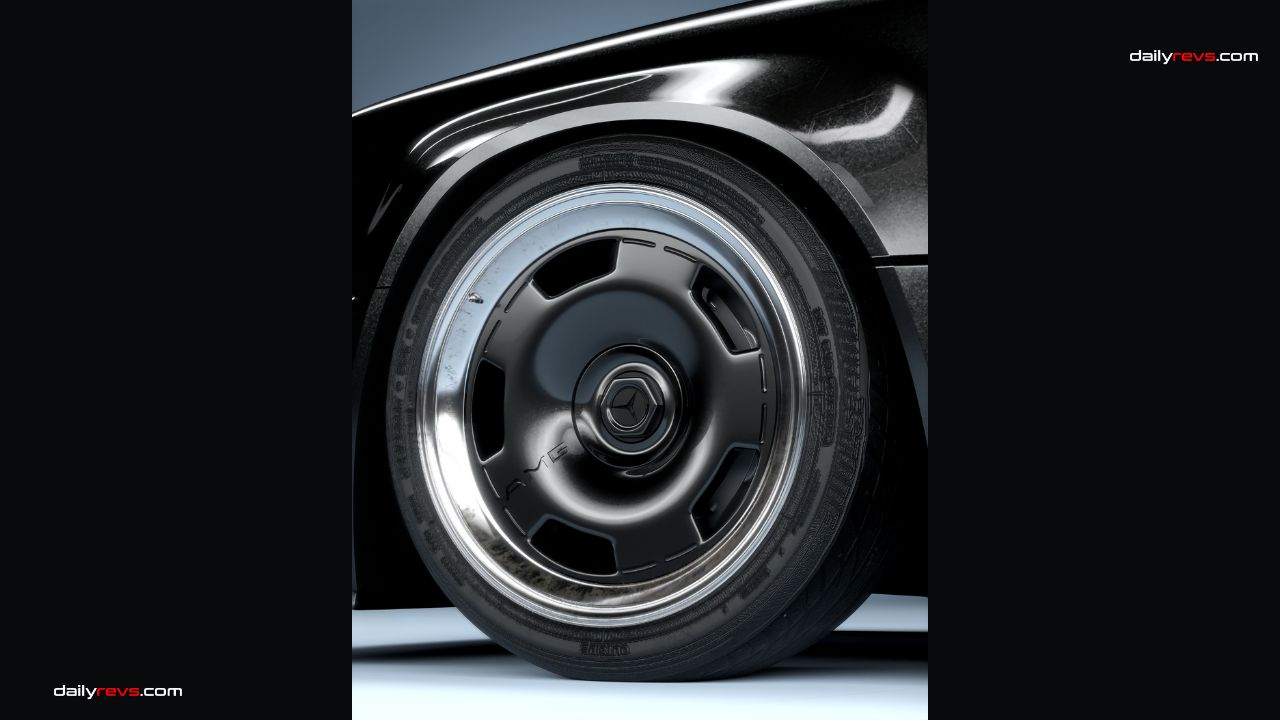
Their large dark centres and polished outer sections recall wheel designs associated with AMG in the 1980s, only at a scale the original Hammer could never have accommodated. The widened body is effectively built around them. This is also where Lee's interpretation moves furthest away from the original car. The real Hammer was relatively discreet. This one isn't. Its arches are enormous, the stance is extremely low and the front splitter and enlarged openings make its intentions obvious. Whether a real Hammer restomod should go quite this far is another question.
Could the Hammer be next?
If anyone were going to revisit the Hammer properly, HWA would make an interesting candidate. The EVO has already established a template for taking an important Mercedes performance car from this era and rebuilding it with modern engineering. The W124 would also offer something different. Where the W201 is closely tied to Mercedes' touring-car history, the Hammer represents the beginnings of another formula: putting enormous performance into a relatively formal executive sedan. Brabus has history here too. The company was already modifying Mercedes models during this period and became famous for extreme engine conversions and very fast sedans. Either could build something fascinating from a W124. More importantly, neither would need to copy Lee's car.
The Hammer fits an interesting moment for Mercedes
The original Hammer represents AMG before AMG became part of Mercedes. The HWA EVO shows how seriously cars from this period can now be reengineered. And Vision Iconic suggests Mercedes itself is increasingly comfortable bringing recognisable elements from its past into new designs. Ihn Lee's Hammer happens to land somewhere between them. It has the unmistakable proportions of a late-1980s W124, the exaggerated stance of a modern restomod and a grille treatment that suddenly doesn't look quite as far removed from Mercedes' own experiments. None of that means another Hammer is coming. For now, this one exists only in pixels. But if HWA, Brabus or someone else eventually decides the W124 deserves the same attention now being lavished on other performance icons of the period, they have quite a piece of history to work with. The Hammer was a super sedan long before we routinely called cars super sedans. Maybe that's enough reason to have another one.
Connect with Ihn Lee
To explore more of Ihn Lee's work, including ongoing projects and portfolio highlights, you can follow or connect with him on the following platforms:


