Nissan N7 Disrupts China’s EV Market and Poses a Clear Threat to Mazda
By Hugo Mattson July 8, 2025

Nissan N7 electric sedan debuts in China with aggressive pricing and robust initial demand.
Mazda's EZ-6 is confronted with immediate competition as the N7 undercuts it on both price and range.
Global export plans suggest that Nissan might take the N7 outside of China if things keep going in that direction.
Nissan's EV Strategy Picks Up Steam in China
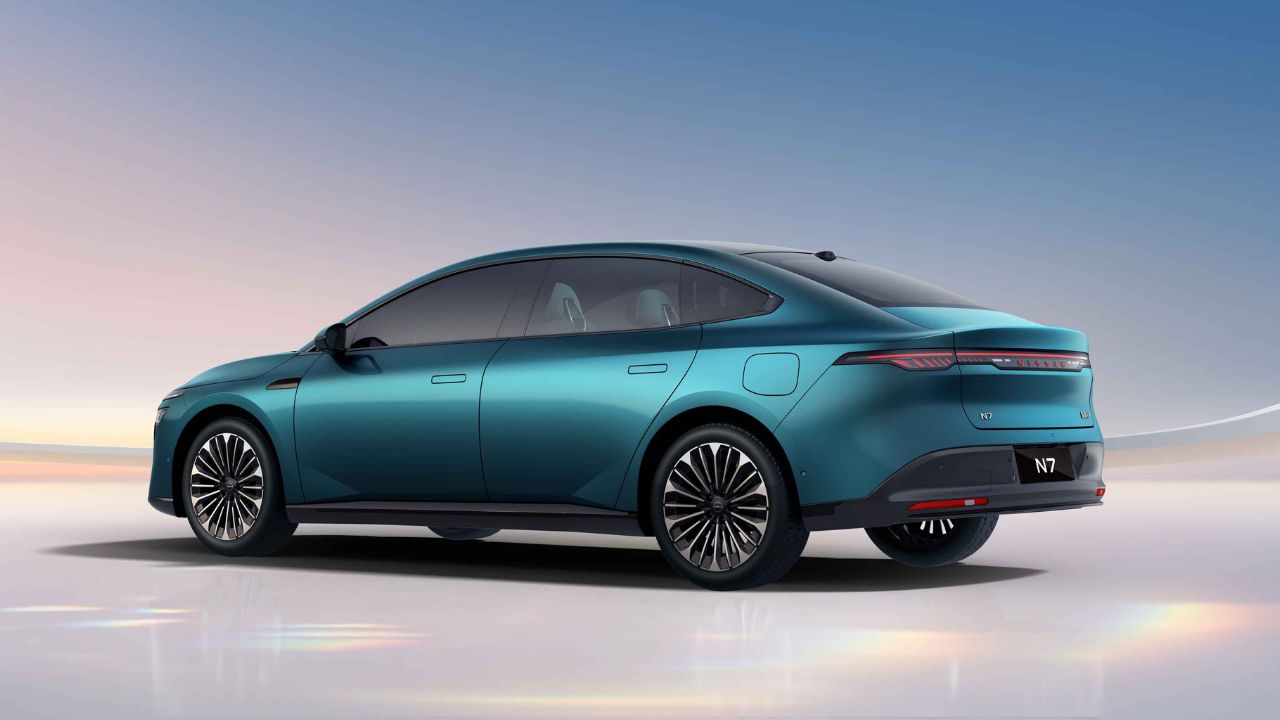
The introduction of the Nissan N7 in China represents a deliberate strategy by the automaker and its Chinese joint venture partner, Dongfeng. Priced at only 119,800 yuan (about $16,400), the electric sedan has already garnered interest with an aggressive spec list and swift early sales—more than 20,000 units reserved immediately after orders began.
In a world where price and range are deal-or-die considerations, Nissan's decision to start with price and uncomplicated performance has been well-timed. The N7 breaks into an expanding category but stands apart through a drag coefficient of just 0.208, a slippery design that promises something more than bargain intent. A 15.6-inch screen and tech-laden interior make the point that this is a properly contemporary EV designed to satisfy both regulator and consumer expectations.
Range and Price Undercut Competitors
The N7's battery capacities differ by trim, with either a 58 kWh pack (215 hp, 330-mile range) or a 73 kWh model with 268 hp and up to 388 miles (around 625 km) on the Chinese CLTC cycle. This puts it ahead of the Mazda EZ-6, which begins higher in price and has similar or slightly lower range.
Where Mazda is looking for refinement and understated branding with the EZ-6, Nissan's strategy is more utilitarian: offer value at scale, quick. The N7's head start in orders seems to justify that approach. Where Mazda's product is still attractive to buyers seeking a more mainstream ownership experience, it might struggle to translate eyeballs into sales against the gun of a better-equipped and lower-pricing competitor.
.jpg)
Dongfeng's Platform Strategy Shows Results
Nissan's partnership with Dongfeng via the eπ platform is already starting to reap rewards. The N7 has architecture in common with the Dongfeng 007 but is tuned and badged with global appeal in view. For Nissan, it is a return point to credibility in the Chinese EV boom, where overseas brands have not been able to sustain competitive pricing and technological advantage.
The venture enables Nissan to act more quickly and lower production costs. By localizing development and using Dongfeng's scalable EV platform, Nissan sidesteps the premium-pricing trap that confronts many non-Chinese manufacturers. This model could be the template for the way other Japanese brands develop cost-competitive EVs in the future.
.jpg)
Discover more electric sedans from Dongfeng at DailyRevs →
Global Expansion Could Follow Chinese Momentum
Nissan has not eliminated the possibility of exporting the N7 from China. Though nothing official has been announced for North America or Europe, the enthusiastic reception at home may encourage the company to pursue worldwide availability—specifically, in underserved markets for affordable EVs.
The value point alone makes the N7 an interesting prospect. If local safety and emissions requirements can be achieved at an affordable price, the car might find buyers in Eastern Europe, Latin America, and even Southeast Asia. Western markets with high standards would, however, need a more expensive reworking of the platform.
Nevertheless, it's definitely apparent that Nissan has conceived the N7 with at least one market in mind. Its design, user interface, and branding do not show clear regionalization—implying that this car was not constructed solely for Chinese buyers.
Related: See more global EV rollouts from Nissan →
The EV Market in China Is Changing Rapidly
Nissan's N7 comes at a time when Chinese buyers of EVs are more discerning, price-sensitive, and brand-blind than ever. Local brands such as BYD still hold sway, but foreign carmakers that compete on price and specification—and not just badge—finally have an inroad.
Mazda, on the other hand, seems wedged in a middle ground. The EZ-6 is elegant and plausible, but without the same price aggression or a splashy feature list, it can likely fight for traction. Nissan's tactical deployment of platform sharing, coupled with its decisive pricing advantage, has provided it with a head start.
Legacy loyalty does not necessarily translate to relevance in an automotive market here. Products do, and in this one, the N7's message is concise.
Conclusion
With the N7, Nissan has made a disciplined charge into one of the world's most vicious EV markets. With the support of Dongfeng and rooted in price, it demonstrates that foreign automakers can fight—if they design for the market and not attempt to fit global products to it. Whether the N7 has a future beyond China is yet to be known, but its preliminary performance indicates the market won't take long to learn.