New AMG C53 Gets Six Cylinders, And This Is How It Could Look
By Hugo Mattson September 5, 2026

Mercedes-AMG has confirmed the upcoming C53 will use a 3.0-liter inline-six, bringing six-cylinder power back to the W206 C-Class.
With a V8 increasingly unlikely for the current C63, the C53 could emerge as the AMG C-Class many enthusiasts have been waiting for.
Mercedes hasn't revealed the C53 yet, so DailyRevs created a series of independent renders imagining how the new six-cylinder AMG could look.
The upcoming Mercedes-AMG C53 could be the W206 C-Class enthusiasts have been waiting for. AMG has confirmed that the new model will use a 3.0-liter inline-six, bringing six-cylinder power to the current C-Class generation without the C63’s elaborate performance plug-in-hybrid system. Mercedes hasn’t revealed the car yet, but the confirmation gave us enough reason to imagine what it could look like.
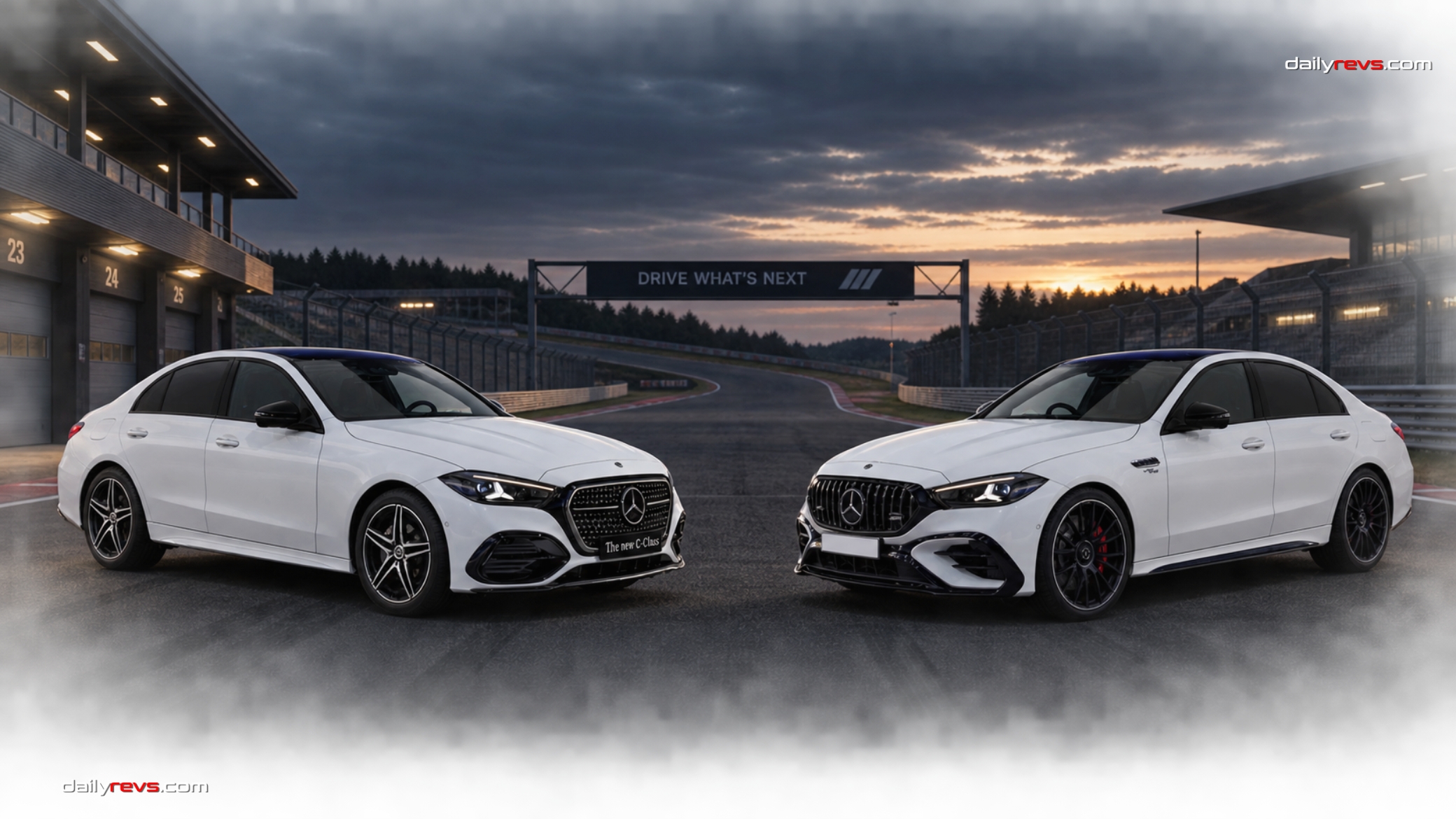
DailyRevs rendering of how the facelifted W206 C-Class could look as the upcoming Mercedes-AMG C53.
The timing makes the C53 particularly interesting. Anyone still waiting for Mercedes-AMG to put a V8 back into the current C63 can probably stop waiting. Mercedes has effectively ruled that out, not because the V8 itself is disappearing, but because there simply isn’t enough life left in the current W206 C-Class to justify engineering another V8 version. T
hat makes the C53 much more than another model filling the gap between the C43 and C63 S E Performance. A six-cylinder AMG C-Class without the C63’s complex performance PHEV system could end up being one of the most appealing versions of the W206 yet. And there is another reason not to read too much into the death of the V8-powered W206 C63.
Mercedes is still developing eight-cylinder engines for the next decade. That doesn't guarantee the V8 will ever return to the C-Class, but it does mean the current four-cylinder C63 may ultimately prove to be a chapter in AMG's history rather than a blueprint for everything that comes next.
The W206 Isn't Getting Its V8 Back
Mercedes-Benz head of product management and global training Klaus Rehkugler recently poured cold water on the idea of a V8 returning to the current C-Class, saying the company isn't planning such a model. His explanation is arguably more interesting than the decision itself. Mercedes would have to invest in adapting the W206 for the engine and then recover that money during what remains of the current C-Class lifecycle. Rehkugler suggested the numbers simply wouldn't work.
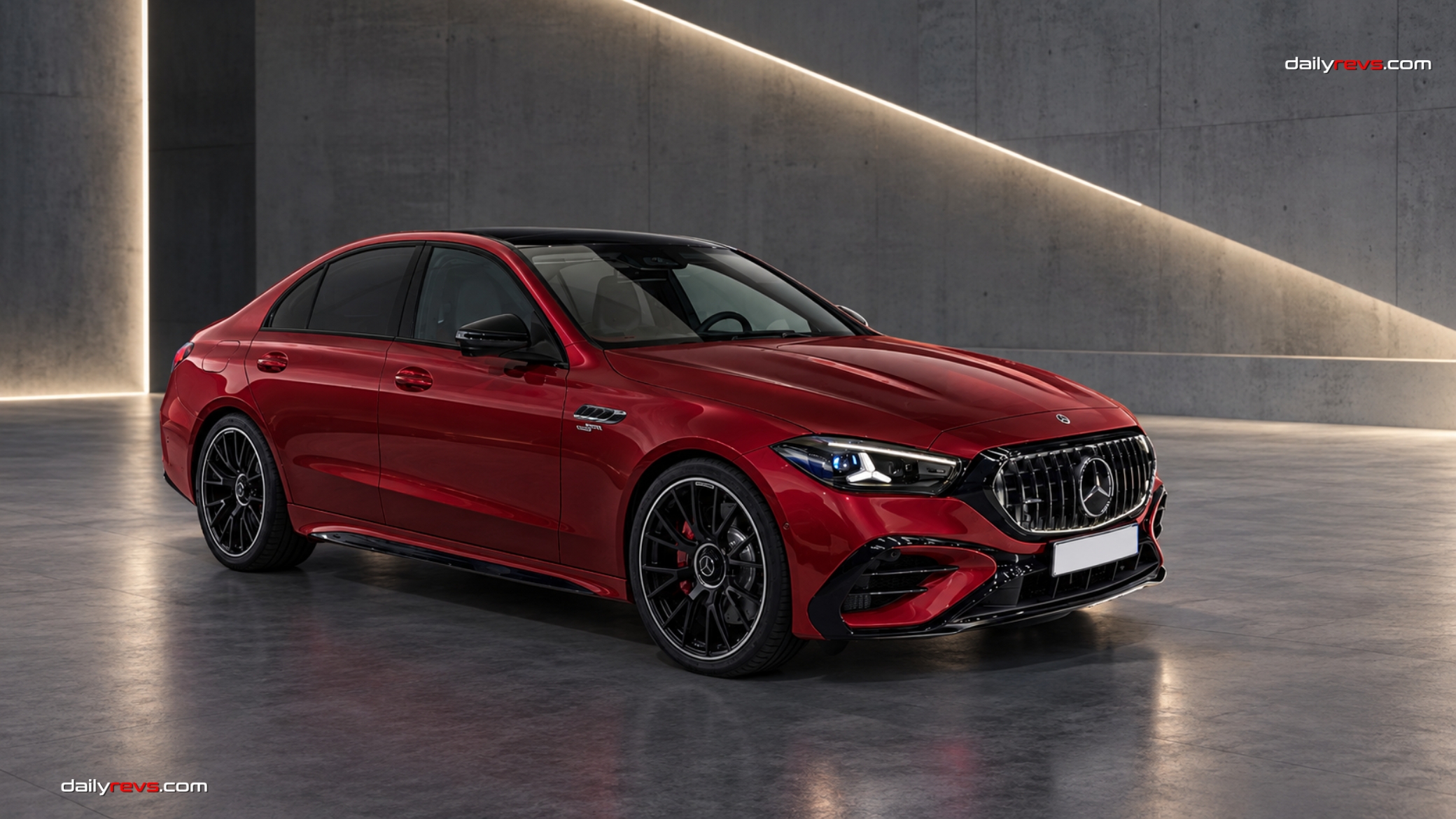
Rendering of C53 AMG's front view in Patagonia Red made by DailyRevs Internal Designer
In other words, Mercedes isn't saying that it can't build a modern V8, or even that such an engine has no place in this part of its range. It is saying that developing a V8 version of a car already well into its lifecycle is difficult to justify financially. That also clears up some of the confusion surrounding the C63. Earlier reports had raised the possibility that the incoming six-cylinder C53 could eventually be joined by another V8-powered C63. Mercedes' more recent comments make that increasingly difficult to imagine for the W206. What is coming instead could be interesting for entirely different reasons.
The C53 Could Be The AMG This Generation Needed
AMG boss Michael Schiebe has already confirmed that a new C53 will use the 3.0-liter turbocharged inline-six found in the CLE53, bringing six cylinders back to the AMG C-Class. Just as importantly, it won't follow the formula used by the C63 S E Performance or the larger E53 Hybrid. Schiebe has described the upcoming car as using a “pure inline six-cylinder” rather than a performance plug-in-hybrid powertrain. There is still some electrification involved. The CLE53's engine uses a 48-volt integrated starter-generator, so describing the C53 as completely non-hybrid would be misleading.
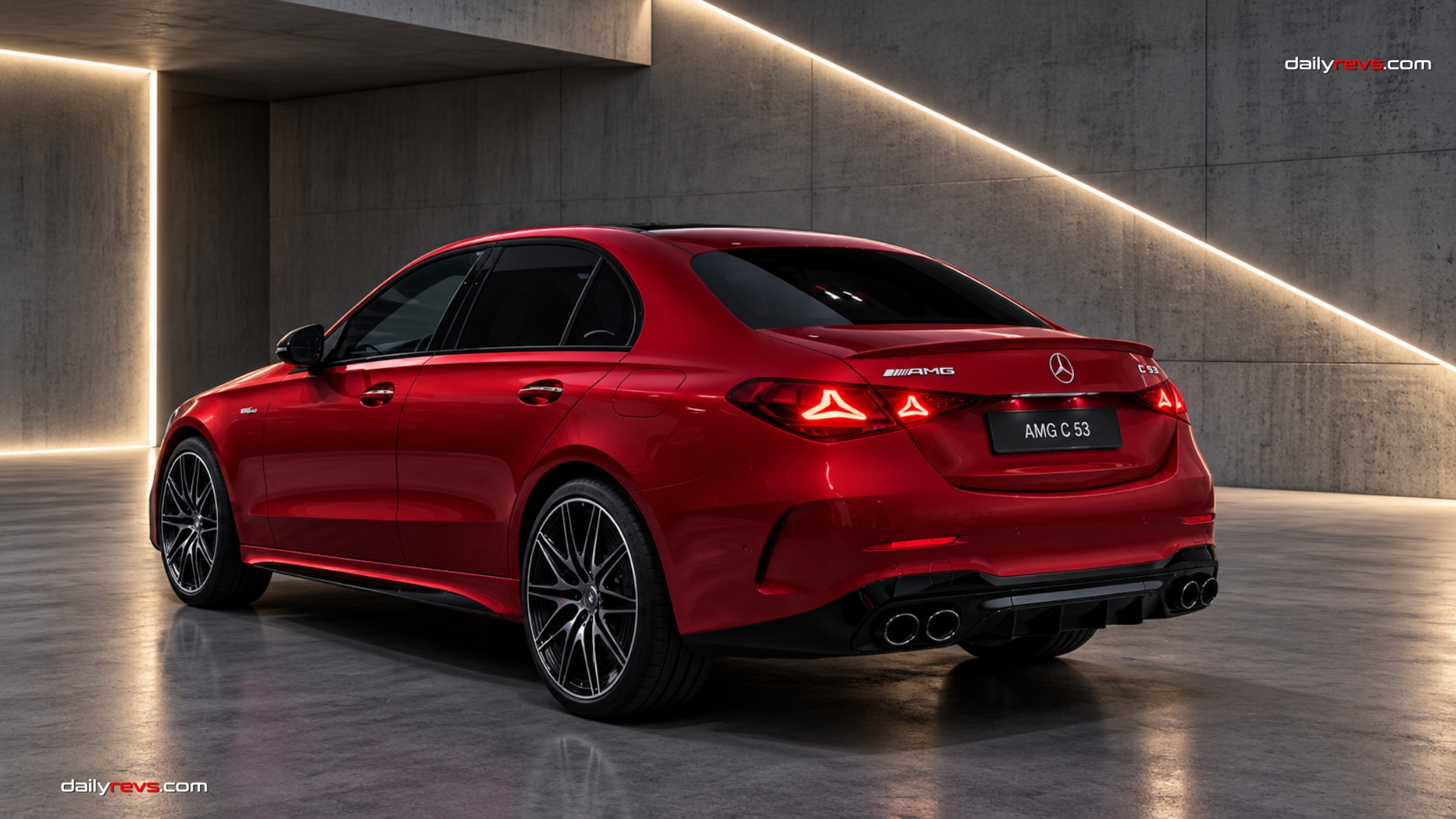
Independent DailyRevs rendering of the upcoming Mercedes-AMG C53 in Patagonia Red.
What it avoids is the much larger traction battery, electric motor and supporting hardware used in Mercedes' performance PHEVs. That could make a considerable difference. The current C63 demonstrates just how far AMG can take the other approach. Its 2.0-liter four-cylinder works with an electric motor to produce a remarkable 671 hp and 752 lb-ft of torque. It is tremendously fast, but the technology required to achieve those figures also turned the C63 into a remarkably heavy C-Class. Perhaps the C53 doesn't need to play the same game.
The CLE53 already makes 443 hp from its 3.0-liter inline-six, although Mercedes hasn't announced how much power the C53 will produce. Schiebe has also indicated that the engine will be made more free-revving and emotional in its C-Class application, suggesting AMG is thinking about more than simply transplanting the CLE's powertrain into a smaller body.
Even somewhere around 450 hp could put the C53 in a very interesting position.
Somewhere Between An M340i And An M3
BMW provides a good illustration of where such a car could fit. The M340i has become an exceptionally quick everyday sports sedan without trying to be a full M3. Move up to the M3 and you get significantly more power, more serious chassis hardware and a car designed with a very different level of performance in mind.
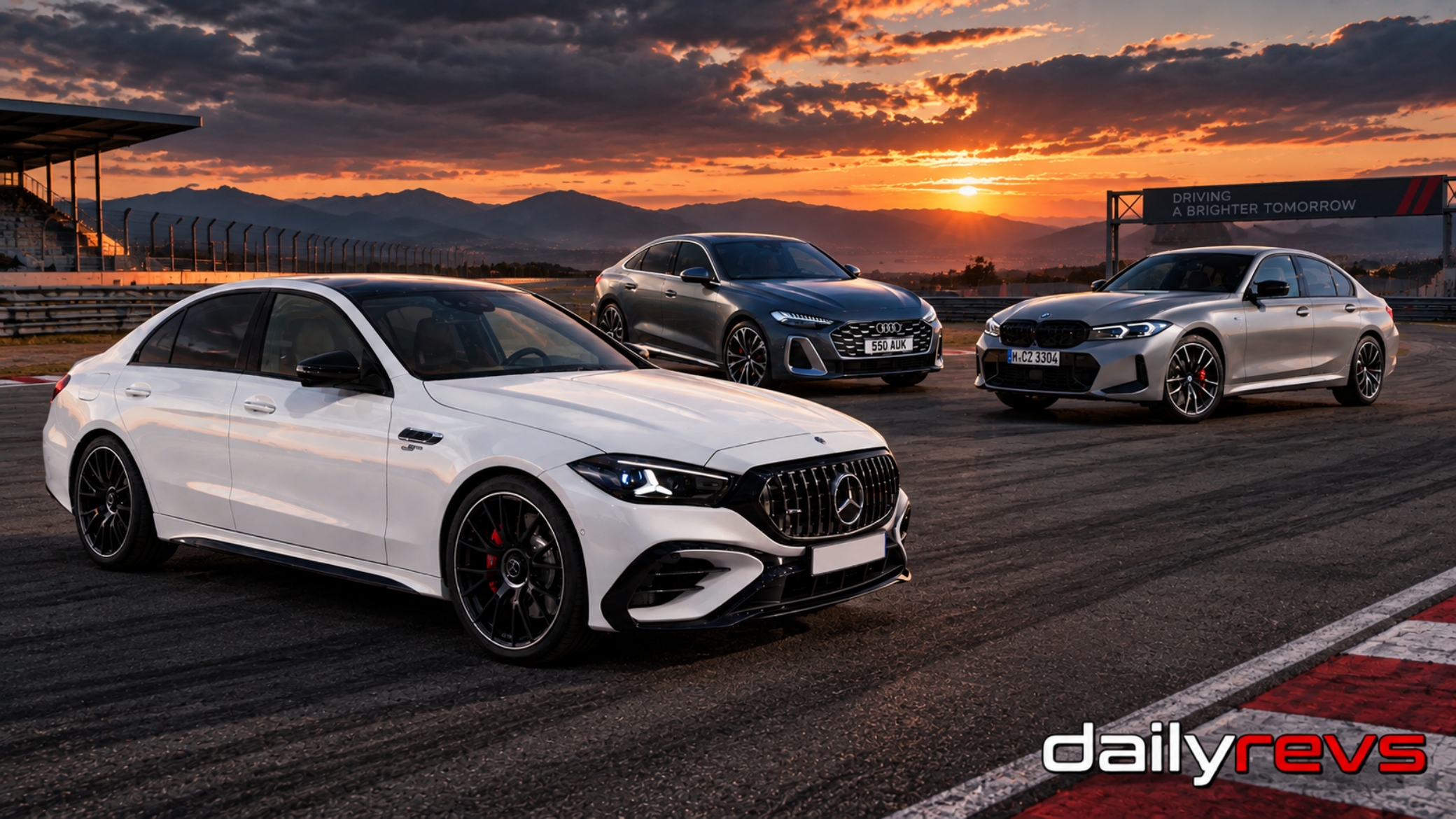
Rendering of C53 AMG's front view in white alongside M340i and S5 Sportback made by DailyRevs Internal Designer
Audi has traditionally offered something similar with the S5 and RS5, although the latest RS5 shows just how far the top end of this segment is now moving. The new RS5 combines a 2.9-liter twin-turbo V6 with a powerful electric motor and a sizeable battery. The result is 639 PS and 825 Nm, but the RS5 sedan also weighs 2,355 kg, or roughly 5,190 pounds.
That doesn't mean the Audi has got it wrong. Modern chassis systems can do remarkable things with that sort of mass, and 639 PS should make the RS5 devastatingly fast. But it does make the apparent simplicity of the C53 more interesting. Mercedes has already tried the high-output performance-hybrid route with the C63.
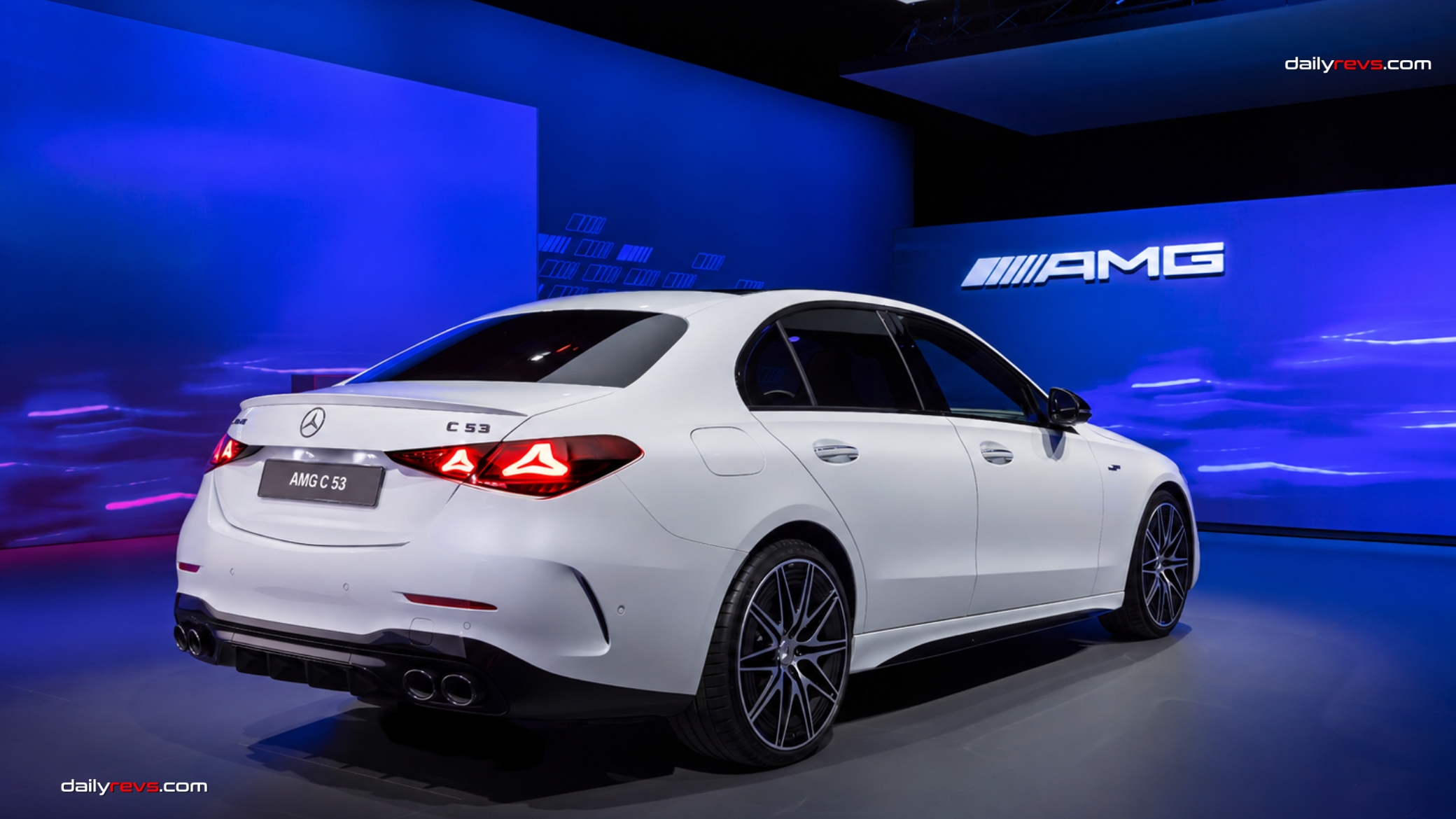
Rendering of C53 AMG's Rear view in white made by DailyRevs Internal Designer
The C53 appears to be heading in another direction: six cylinders, plenty of power and no large performance-hybrid battery to carry around. If AMG can keep the weight sensible, the result could slot neatly above cars such as the M340i and S5 without having to chase the M3 and RS5 horsepower for horsepower. It may even get close enough to the full-fat cars in everyday performance to make buyers wonder how much more they actually need. That doesn't make it an M3 killer, nor should Mercedes try to sell it as one. The appeal could be precisely that it isn't.
It Doesn't Need 671 HP To Be Fast
Mercedes' own range shows how little power a modern six-cylinder sedan actually needs to be seriously quick. The E450 manages impressive acceleration from a 3.0-liter inline-six producing 375 hp despite being a larger and heavier luxury sedan. The CLE53 takes the same basic idea much further with 443 hp, AMG Performance 4Matic+ and a considerably more focused chassis. Put that sort of powertrain into a C-Class and there isn't much reason to worry about whether the result will be fast enough.
The more important questions concern weight, steering, braking, suspension tuning and character. Those are also areas where reducing reliance on a large battery and electric drive system could potentially pay dividends.
We won't know whether AMG has succeeded until the C53 arrives, and its final curb weight will be particularly revealing. There is no point declaring it a lightweight before Mercedes publishes the numbers.
Still, there is something refreshingly straightforward about the idea of a C-Class with roughly 450-plus horsepower from a turbocharged straight-six. Twenty years ago that would have sounded completely outrageous. Today it somehow sounds sensible.
And the story becomes even more interesting when you look beyond the W206.
AMG Isn't Finished With The V8
The V8 isn't coming back to the current W206 C-Class, but that doesn't mean AMG is finished with eight cylinders. Mercedes is already developing a new generation of V8 engines designed to meet tougher emissions regulations, and company officials expect them to remain in production until at least 2035. Demand in markets such as North America and the Middle East gives Mercedes good reason to keep investing in them.
For the W206, however, time has effectively run out. Re-engineering the current C-Class around a V8 and homologating it for what remains of the car's lifecycle would require considerable investment for a relatively short production run. The upcoming six-cylinder C53 gives AMG a much easier way to see out this generation.
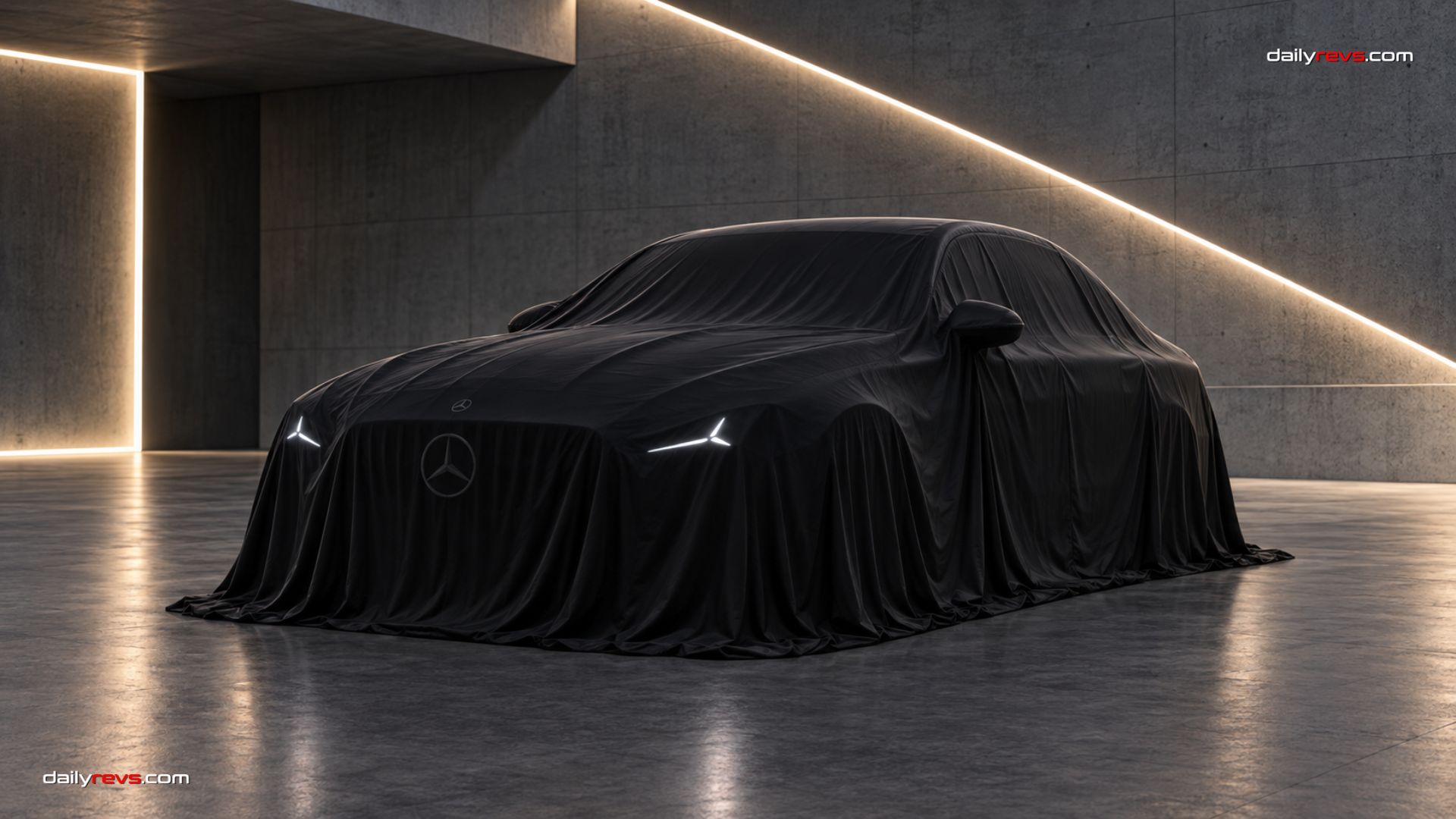
Independent DailyRevs rendering imagining a V8-powered AMG C63.
The next C-Class is another matter. By then, AMG will have a newer V8 developed around the emissions requirements of the coming decade. More importantly, when Mercedes-AMG development boss Steffen Rehkugler was asked about a V8 in the next-generation C-Class, he didn't rule it out. His argument against bringing the engine back was specifically about putting it into the current car this late in its lifecycle. That doesn't mean another V8 C63 is coming. Future emissions rules, electrification and simple economics could still send AMG in another direction. But this time, the engine itself may not be the obstacle.
The V8 may be finished with the W206. It isn't necessarily finished with the C-Class.
Perhaps The Next C-Class Is The One To Watch
There is a reasonable argument that spending heavily to put a V8 into the W206 now would be the wrong way to fix the C63. Mercedes would have to re-engineer an ageing platform, homologate the resulting car and recover that investment over a relatively short period. And all of that would be done to address criticism that has followed this generation almost since launch. The C53 offers AMG a much easier way to see out the W206.
Give it the six-cylinder engine many enthusiasts wanted in the first place, leave out the large performance PHEV system, and let it occupy its own space somewhere between cars such as the M340i and S5 and the more serious M3 and RS5. Then AMG can turn its attention to what the next C63 should actually be.
By the time the next C-Class is being developed, Mercedes will also have access to a new generation of V8 engines designed with the emissions requirements of the coming decade in mind. There is no guarantee one of them will find its way into a C-Class, but the opportunity is very different when the car can be engineered around that possibility from the beginning.
That makes considerably more sense than trying to squeeze a V8 into the final years of the W206. It also makes the current situation a little easier to accept. The W206 may never get the V8 many hoped would return, but it could still finish its life with a simpler six-cylinder AMG that shows less power and less complexity aren't necessarily bad things.
What happens after that is much harder to predict. AMG is keeping the V8 alive.
Mercedes is developing the engine for a future with tougher emissions requirements, and it hasn't closed the door on one eventually returning to a C-Class. So the V8 C63 may be finished for this generation. Whether it is finished for good is a much more interesting question.
Sources : Edmunds
Mercedes Benz


