Jaguar Type T Concept Finds Another Way Back to the E Type
By Hugo Mattson August 19, 2026

-
The E Type is the clearest influence, although the Type T avoids directly copying its most recognisable details.
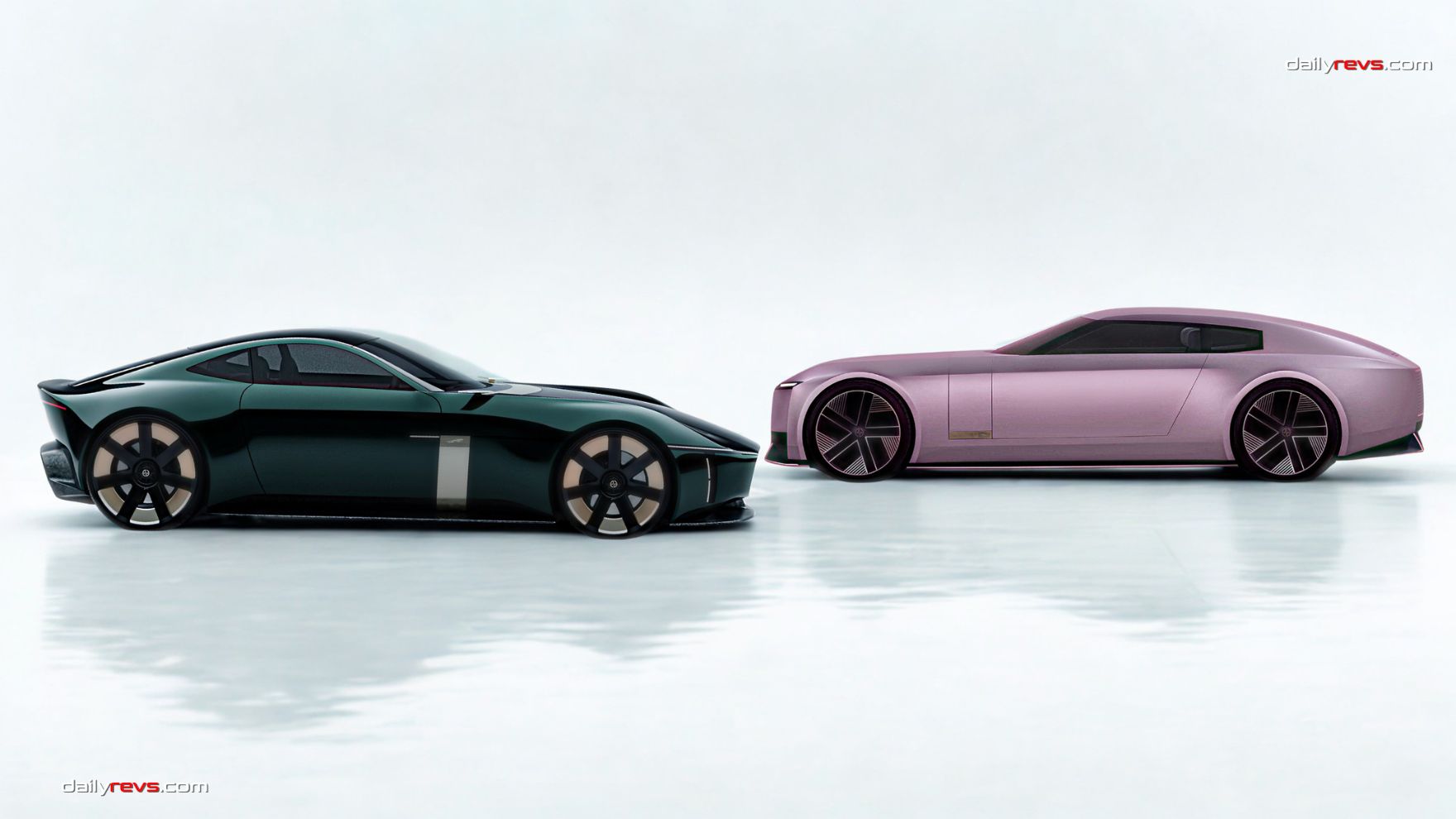
Gabriel Naretto’s Jaguar Type T Concept uses the long bonnet, rearward cabin and strong rear haunches associated with classic Jaguar sports cars.
The concept offers an interesting contrast with Jaguar’s new Type 00, with both designs using dramatic GT proportions but taking very different approaches to surfacing
Gabriel Naretto’s Jaguar Type T Concept uses the long bonnet, rearward cabin and strong rear haunches associated with classic Jaguar sports cars.
The E Type is the clearest influence, although the Type T avoids directly copying its most recognisable details.
The concept offers an interesting contrast with Jaguar’s new Type 00, with both designs using dramatic GT proportions but taking very different approaches to surfacing and identity.
When it comes to creating a brand new sports car for Jaguar, one can safely say that there is probably no other job that would be easier than this one.
The main issue is that the problem is not so much that of digging for inspiration as much as that of coming up with the right conclusion.
Going back in time is always a risky thing to do and can lead to the birth of another E-Type. Staying away from the history makes it difficult to understand the meaning of this vehicle’s name.
Gabriel Naretto has tried to figure the place between these two extremes in his Jaguar Type T Concept project.
What he has come up with is a massive vehicle, with a very long front end and cabin located way back. It seems that there are many references to the E-Type in its design, but you won’t see anything like closed headlights or chrome bumpers.
The E Type influence starts with the proportions
The easiest way of understanding the Type T is being seen from the side.
The front wheel is positioned ahead of the cabin, leaving a decent distance of body in between the two. The height of the roof is not very high, the cabin is compact and the body gets wider again over the rear wheels.
.jpg)
This is a well-known Jaguar formula.
The E Type was created by Malcolm Sayer, who was an aeronautical engineer by practice and hence approached the design of car with an analytical attitude. The company has described the shape of the E Type as characterized by stretched lines and prominent rear haunches and the recognizable arc of the rear windows. The need for simplicity and purity of the surfaces of the E Type shapes was stressed by a former Jaguar designer Ian Callum.
Naretto managed to make use of all of these features, rather than just copy some of them.
This is an important distinction.
The combination of light and the oval shape of the intakes is not enough for balancing the proportions of the vehicle. Most of the job already has been done by the lines of the silhouette.
The long bonnet is only part of the story
It would be simple to limit the Type T to the hood since it is prominent in nearly every angle of the front three-quarters view.
.jpg)
However, one can analyze further back, and soon enough, the more interesting aspect of the design will be apparent.
The cabin visually seems quite small compared to the body surrounding it. Behind the doors, the surfaces expand where the rear wheels are located but tighten near the rear end. Looking from the top view, the relationship becomes clearer, with a narrow glasshouse located on a much wider body.
This gives the vehicle the feeling of tension, which many of the classic front-engine sports cars have almost instinctively achieved thanks to their mechanical design.
.jpg)
The Type T also manages to be refreshingly free from the conventional character lines. There is a solid dark part running along the side while the upper body is generally left alone without any interference. Instead of having multiple creases trying to shape the look, the look does the most work itself.
Because of this, the rear three-quarters view can be considered the most impressive.
The rear fenders are big without appearing complicated while the top of the roof
The Type T does not try to be an E Type remake
This contrast is noticeable in the front.
The low grill has characteristics of a Jaguar, while the design as a whole seems very up to date. The designers have decided to use only thin horizontal and vertical lines to create the T shape that characterizes the model..jpg)
That means that the model is visually separated from the predecessors.
If circular headlights had been fitted on this body, then the car could have been considered retro. However, the lights look like the graphic elements on the body.
The same idea has appeared at the rear that consists of thin red elements which look like the T.
Thus, the model is provided with an important distinctive element.
The size of the car may remind of the E Type, but the light makes it clear that this is not the case.
Jaguar itself has taken a very different route
Just at this moment, Jaguar is grappling with the same question which renders the Type T a truly exciting undertaking.
How should a modern Jaguar look?
Their answer is Type 00 and altogether new design philosophy dubbed “Exuberant Modernism.jpg)
Type 00 could not be any more different from its predecessors. The surfaces are cleaner and more architectural; the nose sits vertically and horizontal design dominates the rear part instead of regular rear window and lights. Jaguar states that the design defies normal EV proportions, whereas the Type 00 comes with long bonnet, arched roof and fastback.
The assessment received was properly mixed.
Carscoops reckons that Type 00 represents a bold move ahead, while pointing out that its proportions still imbue it with a hint of E Type in its design.
This point is quite interesting when the Type 00 and Type T have to be considered together.
They do look different.
Despite that, they do not share some point of views opposing others.
Different ideas, similar proportions
While there is much talk about the Jaguar getting a fresh start with the Type 00 model, in terms of proportions, it is surprisingly traditional. The front is extremely long, the cabin is placed far back, and the wheels are located in the corners of the vehicle. Jaguar could have completely changed proportions by applying its electric architecture, but it decided not to do that. This approach remains for the production model GT as well.
Naretto has a more organic and lower style of the car. The Type T model also has displayed fenders and raised over the back wheels. The bonnet passes gradually towards the front of the car, whereas the hunches provide the silhouette with character.
The Type 00 features more architectural design. It has larger forms and cleaner volume. The design has all the surfaces flat and upright nose as well as solid horizontal forms.
This makes the comparative analysis more captivating than that of old versus new Jaguars. Both vehicles are based on the dimensions of a classic grand tourer. The Type 00 has gotten rid of most of the signature Jaguar design elements and invented something original. Meanwhile, the Type T retained much of the shapes and the visual tension of the earlier cars, which made those cars so recognizable in the first place.
Jaguar heritage was never just about a grille
What is intriguing about the Type T is that Naretto seems to be avoiding putting in any obvious allusions to old Jaguars. For instance, there is no attempt to replicate E Type's covered lights or give the car some retro look. Mostly, the connection lies in the shape itself.
.jpg)
This is quite relevant as to how the E Type came into existence. Malcolm Sayer took the body from the perspective of an aerodynamicist and used mathematics and geometry to develop it. Later on, Ian Callum argued that various aspects of beauty considered in the E Type were due to this purity as well as its unusual proportions.
Type T emphasizes much the same things. The elongated hood, compact cabin and pronounced rear end make the connection to Jaguar before grille, light or logo even come in play.
That means it represents not so much the revival of E Type as the investigation into the reasons why the original form worked so well in the first place.
The rear deserves a closer look
The rear of the Type T may actually demonstrate the idea better than the front.
From the rear three quarter angle, the body appears to wrap tightly around the cabin before spreading over the rear wheels. There is a strong horizontal emphasis across the tail, interrupted by the vertical part of the T shaped lighting.
.jpg)
The dark upper surface also helps visually separate the glasshouse from the green body below it.
There are traces of classic Jaguar thinking here, but nothing that could be described as a direct copy.
That matters because the E Type's character never came exclusively from its famous nose. Its narrow cabin, flowing roof and substantial rear body were just as important to the overall composition.
Naretto seems to have understood that.
Looking backwards without getting stuck there
As stated by Jaguar, their fresh design philosophy honors the past while not being restrained by it, and the Type 00 makes this concept come to life.
The Type T expresses the same philosophy but through a different approach. Instead of questioning Jaguar’s present design approach, Naretto studies how the proportions of its older sports cars can be meticulously composed.
Jaguar’s designers have covered the well-known grand touring proportions with a completely novel visual language. Staying closer to their heritage, Naretto looks back at the historical instances of Jaguar, specifically the E-Type.
The result is something which is not unrecognizable but isn’t a replica either. For someone young and working with a shape that is very highly recognized in the auto world, that is probably the best part.
And in spite of completely different approaches, there is still one common point, that is – a Jaguar looks stunning with a large bonnet.
Connect with Gabriel Brando Naretto
To explore more of Gabriel Brando Naretto’s work, including ongoing projects and portfolio highlights, you can follow or connect with him on the following platforms:
Related News
Mercedes AMG Uhlenhaut Shooting Brake by Gabriel Naretto
When Architecture Meets Car Design, You Get the Audi 20quattro Vision GT
Project Eterna Reworks the Carabo Without Turning It Into a Throwback
Disclaimer
These projects are creative explorations by young
car designers. In some cases, they were developed independently, while
in others they were created with guidance or mentorship from OEM design
studios, such as during internships. Unless otherwise noted, they are
not official works of the manufacturers or studios involved.
DailyRevs
does not claim credit for the vision or effort behind these projects
and receives no financial compensation for publishing them. Each feature
is shared with the consent of the designer following direct outreach
and agreement. We also welcome submissions from designers who wish to be
featured, provided the quality of the work meets our editorial
standards.


