Mercedes May Borrow BMW’s Heart — Because Geely’s Comes With Strings Attached
By Hugo Mattson August 22, 2025

Mercedes’ China-built 1.5-liter engine has run headlong into U.S. tariffs, turning what was once a cost-saving move into an expensive headache.
BMW’s B48 turbo four looks like the perfect escape hatch — Euro 7-ready, hybrid-capable, and already rolling off the lines in Austria.
And beneath it all, Mercedes seems eager to quietly loosen its dependence on Geely, a partner it doesn’t fully control.
Mercedes and BMW in Engine Talks: A Rivalry Reshaped by Geopolitics
Mercedes-Benz and BMW have defined German engineering rivalry for over a century. Their identities are built on not just luxury but also on the pride of building their own engines. Yet whispers from Stuttgart and Munich suggest a dramatic shift: Mercedes is in advanced talks to put BMW’s B48 four-cylinder engine under the hood of future models.
It sounds absurd at first — a company that once coined “The Best or Nothing” relying on a competitor for its powertrains. But once you peel back the layers, the deal makes sense. Tariffs, regulations, hybrid technology, and a little-discussed reliance on Geely all converge to make this rumored partnership more logical than it seems.
The Chinese-Built Engine That Became a Liability
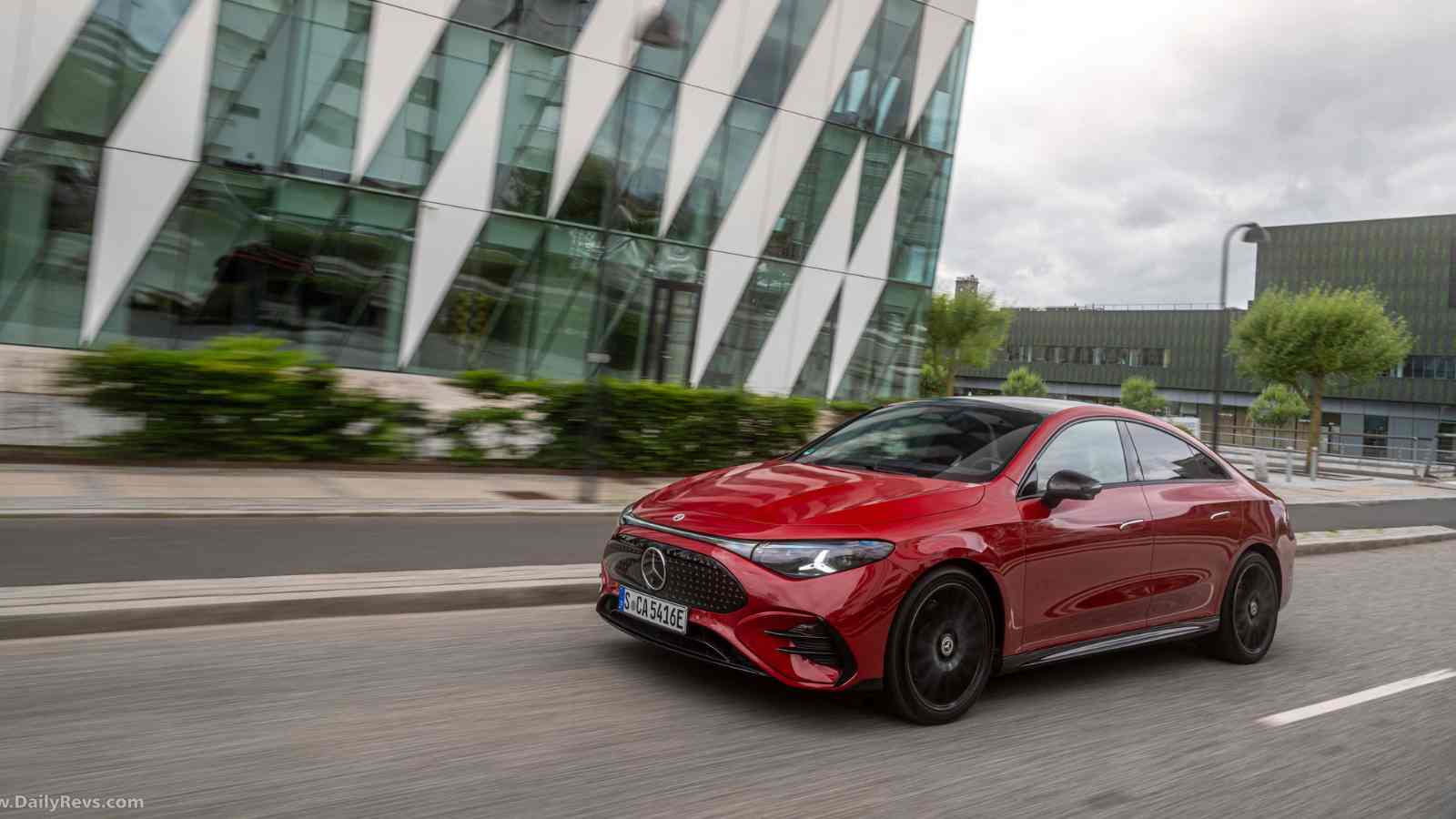
Mercedes’ 1.5-liter M252 engine, a unit meant for its smaller cars, isn’t really Mercedes’ anymore. It’s manufactured in China by Horse Powertrain, a Geely–Renault joint venture. At first, this arrangement looked clever: lower costs, shared R&D, and quick access to hybrid-capable tech.
But politics caught up with business. With U.S. tariffs on Chinese components climbing, that once-cheap engine suddenly became a financial millstone. Importing it for models like the CLA or GLA in America risks pricing them out of the market entirely.
Euro 7: The Deadline Mercedes Doesn’t Want to Pay For
The next blow comes from Europe itself. The Euro 7 emissions standard, arriving later this decade, demands significant upgrades to combustion engines. Mercedes faces a painful choice: spend billions developing a compliant small engine — or buy one that’s already there.
BMW’s B48 turbo four, built in Steyr, Austria, is already engineered to meet Euro 7. For Mercedes, borrowing it could be the cheapest ticket to regulatory survival.
Hybrids as the New Battleground
Electric cars may dominate headlines, but the market still leans heavily on hybrids as a bridge technology. This is where the M252 falls short. It was fine as a mild hybrid, but not designed to be the backbone of plug-in hybrid platforms.
BMW’s B48, in contrast, has been built from the start with PHEV integration in mind. As the EV transition slows and demand for efficient hybrids rises, Mercedes risks being boxed out unless it can plug the gap quickly.
The Untold Angle: Breaking Free From Geely
Most outlets stop at tariffs and Euro 7. But the bigger story is about who controls Mercedes’ engines. By leaning on Horse Powertrain in China, Mercedes effectively handed the keys to a partner it doesn’t fully control. Geely, after all, is not just a supplier — it’s also a Daimler shareholder with its own ambitions.
For Mercedes, shifting to BMW’s Austrian-built engine isn’t only about compliance or cost. It’s a strategic act of independence. Better to share powertrains with your fiercest German rival than to stay dependent on a Chinese partner at a time of rising geopolitical tension.
A Partnership That Would Rewrite the Rulebook
If the deal materializes, the B48 could find its way into everything from the C-Class and E-Class to a rumored baby G-Wagen. Production would likely remain at BMW’s Steyr facility, with discussions underway for a U.S. plant to completely sidestep tariff risks. An announcement could come before the end of 2025, with engines appearing in Mercedes models by 2027.
More Than Just an Engine Swap
This isn’t simply a quirky cost-cutting move. It reflects how deeply global politics, regulations, and shifting consumer demand are reshaping even the most iconic names in the car business. If Mercedes and BMW go through with this, it won’t just be a headline about rivals collaborating — it will be remembered as the moment when Mercedes quietly realigned itself away from Geely, and toward a future where survival means making peace with your oldest enemy.
BMW’s Quiet Discipline Becomes Its Advantage
The irony in all this is that BMW’s refusal to spread itself thin now looks like foresight. While Mercedes leaned on Geely in China and Renault’s Horse venture for small engines, BMW kept its core powertrain work close to home. Yes, both brands rely on Force Motors in India to assemble engines for local production, but that’s a question of manufacturing scale, not engineering dependence. The difference is subtle but decisive: Mercedes outsourced its autonomy, BMW guarded it. And today, it’s BMW’s Euro 7-ready, hybrid-friendly B48 that’s strong enough to power not just Munich’s future, but Stuttgart’s too.
Sources : BMW Blog