Genesis Revenant Is A Wild Step Beyond The Magma GT
By Hugo Mattson November 4, 2026

Designer Joosuk Kang has imagined the Genesis Revenant, a Dracula-inspired hypercar with proportions borrowed from LMP1 endurance racers.
The independent design study takes things further than Genesis' upcoming mid-engined Magma GT, at least when it comes to styling.
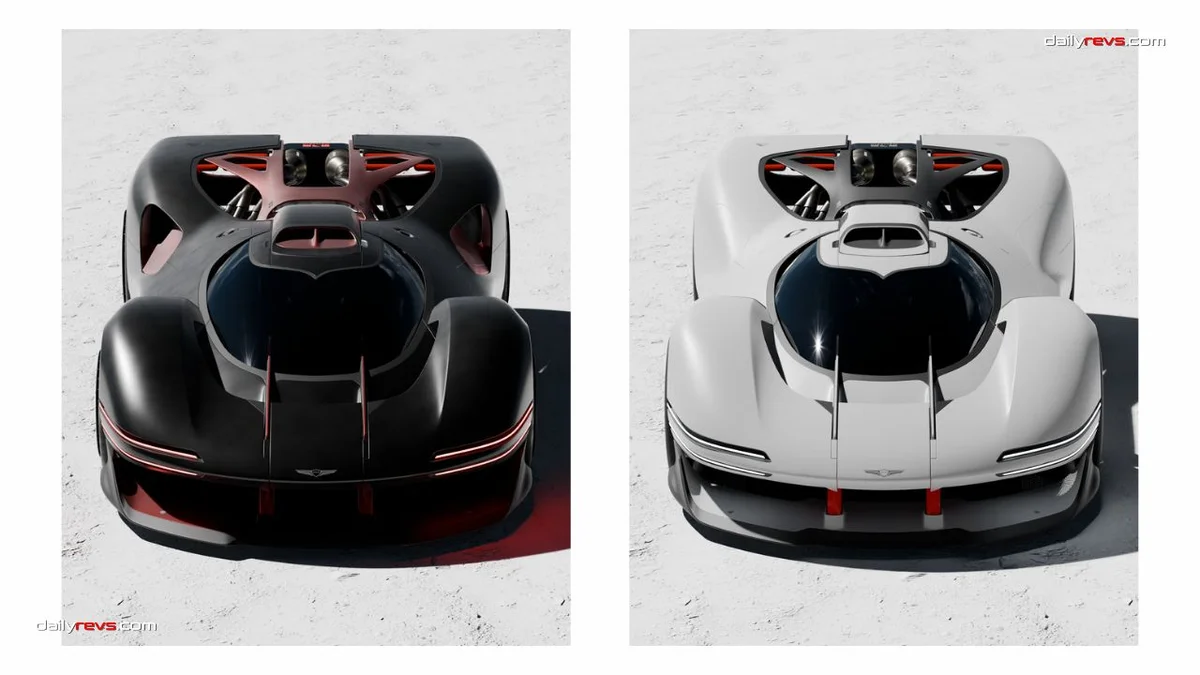
Two versions are shown, including the white Revenant and a black-and-red Nocturne with exposed mechanical components.
Genesis has been getting increasingly ambitious with its performance cars, but designer Joosuk Kang apparently thinks the Korean luxury brand could use a little supernatural assistance.
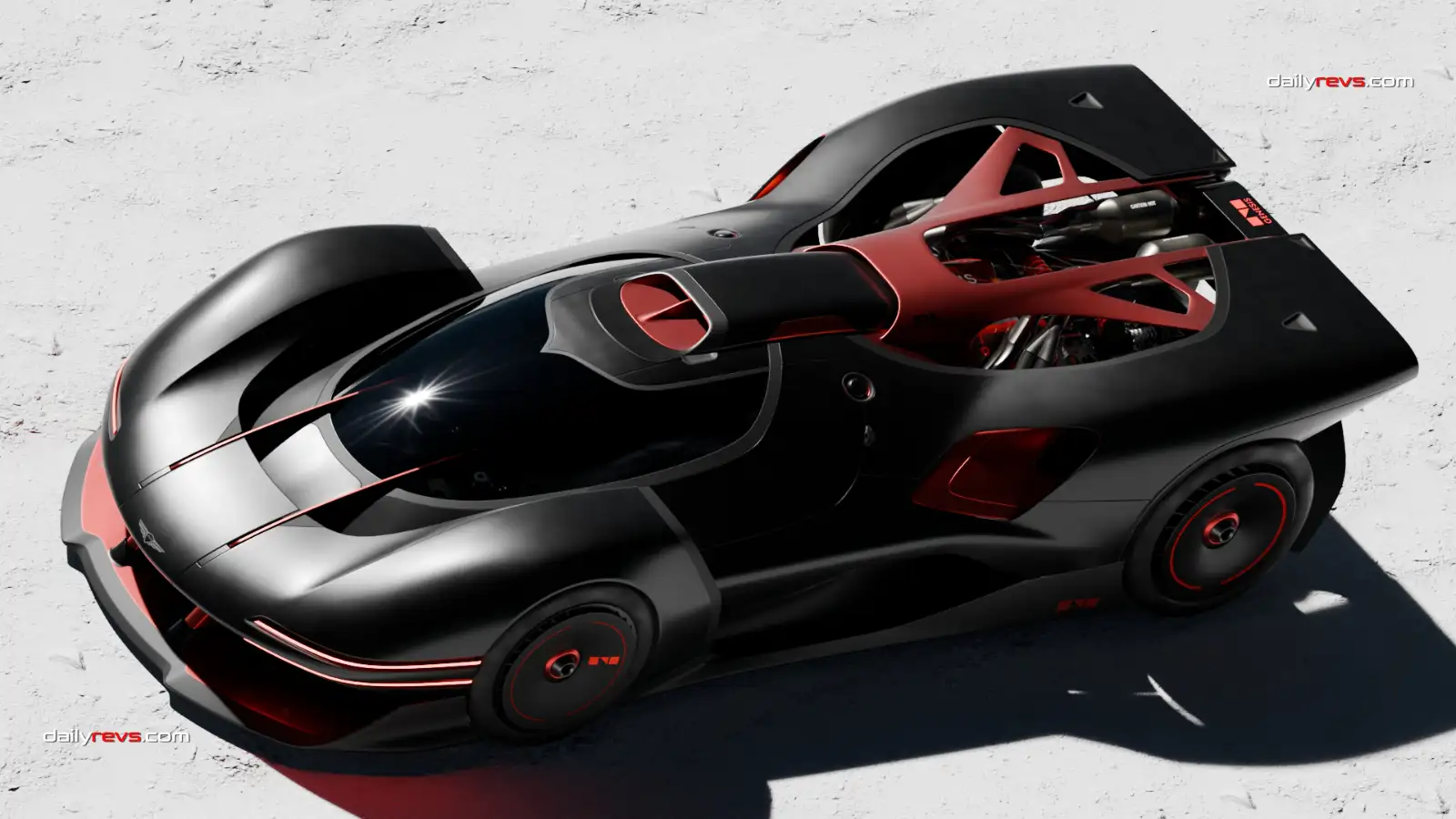
His latest creation, the Genesis Revenant, takes inspiration from Count Dracula, combining the proportions of an LMP1 endurance racer with the sort of styling you'd expect from a vampire with a rather expensive taste in automobiles. And yes, there are actual fangs involved. The independent Genesis hypercar concept comes in two flavors.
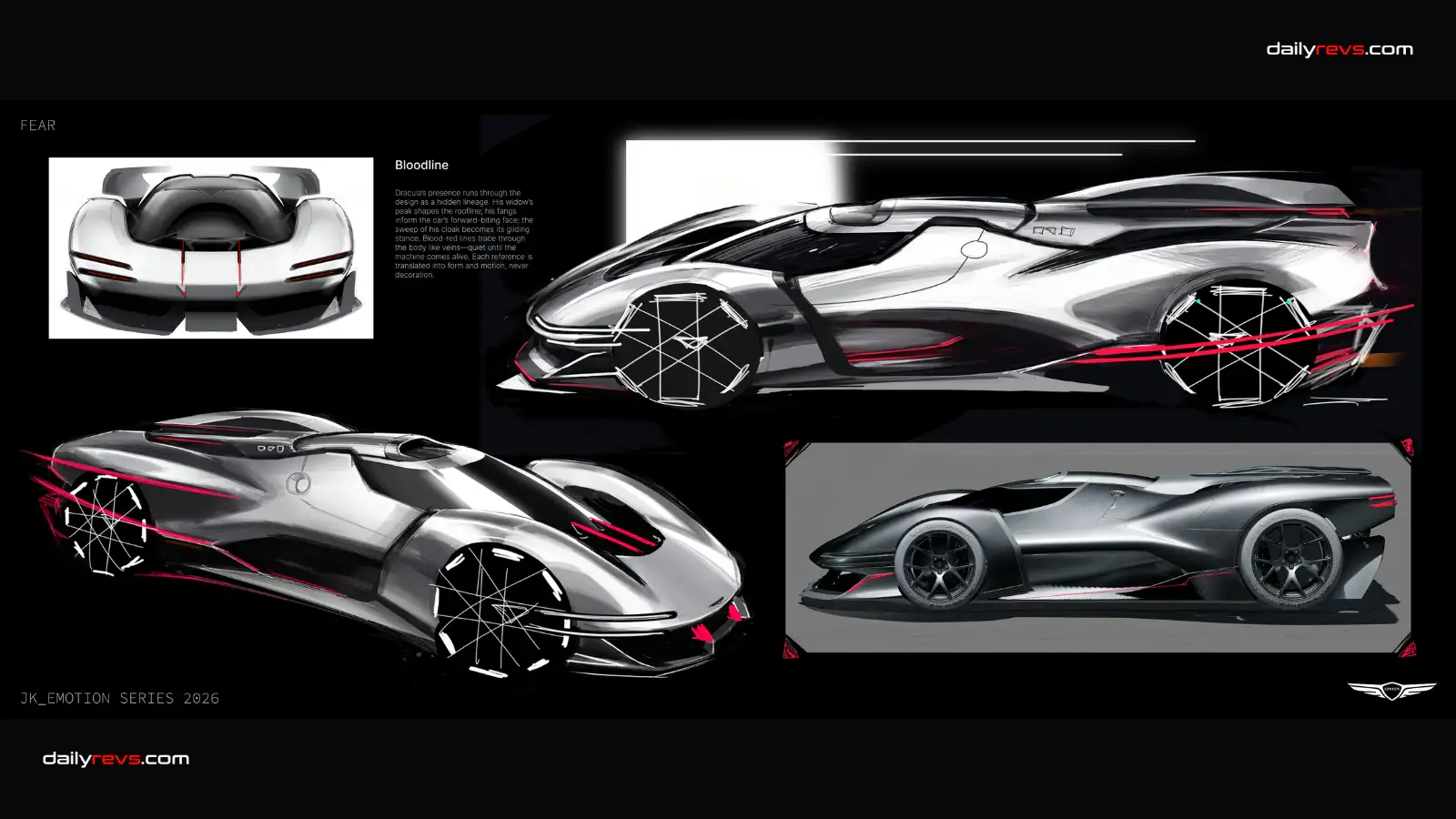
There's a relatively restrained white version called Revenant, along with a considerably more sinister black-and-red interpretation named Nocturne. Both share the same basic shape, but the differences become much more interesting once you get around to the back. Kang hasn't simply painted a racing car black and added a few gothic decorations, either. Dracula's hairstyle, cloak and even his theatrical movements have influenced specific parts of the design.
Genesis Has A Supercar Coming, But This One Has Fangs
The timing is interesting. Genesis unveiled its mid-engined Magma GT Concept in November 2025, giving us a look at the sports car it wants to build as part of its expanding performance ambitions.
That was followed by the Magma GT3 Conceptin June 2026, complete with wider bodywork, enlarged cooling ducts and the aerodynamic hardware expected of a dedicated racing machine.
Both look suitably serious, although neither goes quite as far into hypercar territory as Kang's creation. The Genesis Revenant sits extraordinarily low, with its tiny cockpit squeezed between two enormous front fenders.
Its nose barely rises above the front splitter, while the rear bodywork stretches well beyond the cabin. Those proportions owe plenty to endurance racing prototypes.
The raised front wheel arches, narrow central body and deep channels along the sides wouldn't look entirely out of place on a Le Mans-inspired machine.
Kang has also retained enough Genesis styling to make the badge believable.
The headlights are reduced to two exceptionally thin horizontal strips on either side of the nose, recalling the brand's familiar two-line lighting signature. The broad rear shoulders also have something in common with the Genesis X Gran Berlinetta, although the Revenant takes the idea to a considerably more extreme level.
Then we get to the Dracula references. Look closely at the front bumper and you'll find two pointed red elements connecting the central nose to the splitter.
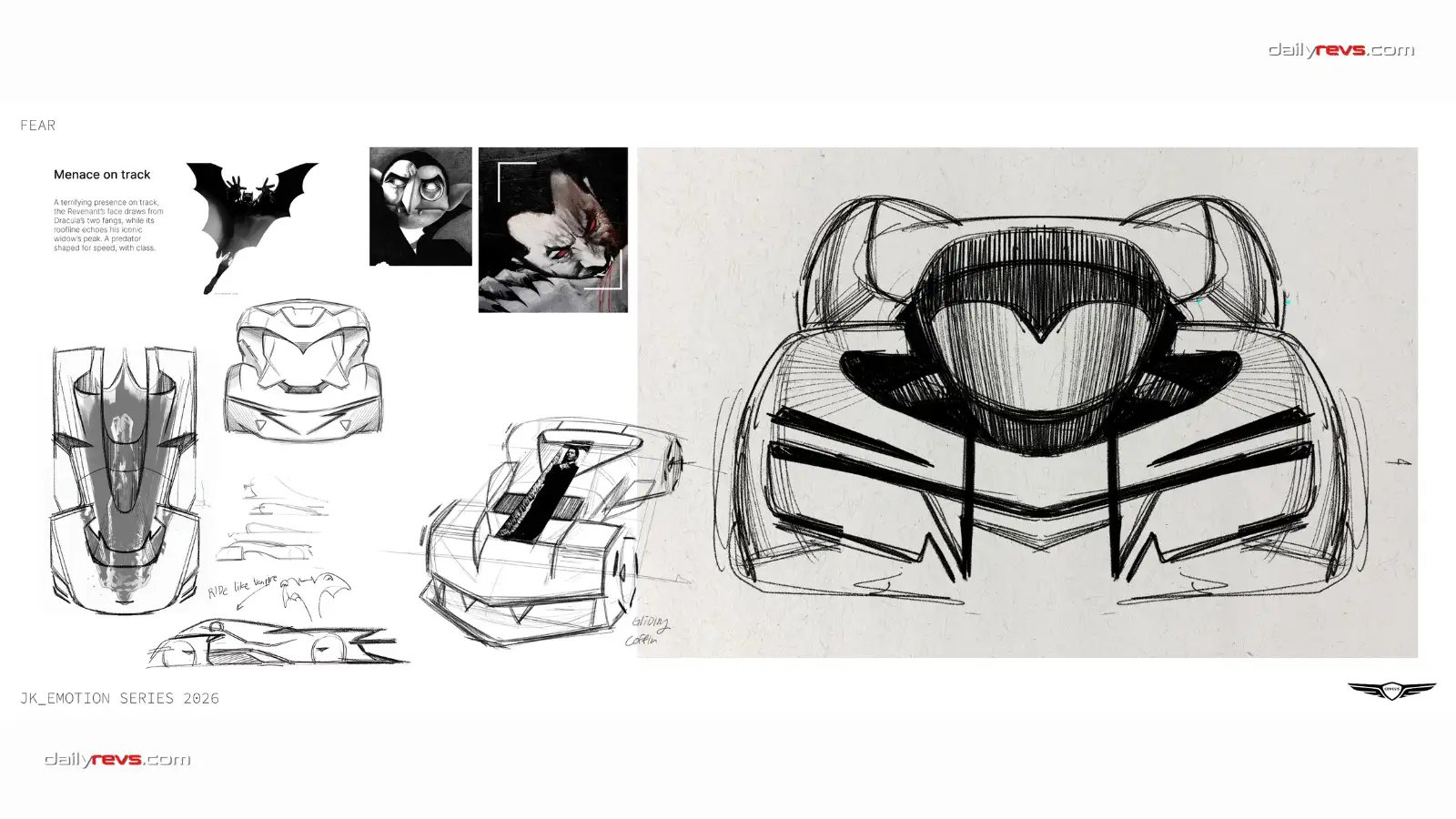
They're meant to resemble the vampire's fangs, which is probably a first for a Genesis design proposal. The red detailing continues into the lower bodywork, where Kang uses it to suggest blood vessels running beneath the exterior.
There's an even stranger reference above the cockpit.
The narrow canopy features a pointed roof treatment inspired by Dracula's distinctive widow's peak hairstyle. A central intake rises behind the windscreen, with the surrounding surfaces sweeping backward toward the rear deck.
Kang also borrowed the shape of Dracula's cloak for the bodywork. The front fenders flow into the doors before the surfaces widen dramatically around the rear wheels. The effect is particularly obvious from above, where the car's elongated body and narrow cabin give it a distinctly unusual silhouette. Even the doors get involved.
Kang explored an opening movement inspired by Dracula spreading his cloak, although the sketches don't establish how such a mechanism would actually work. Of course, none of this comes with the usual engineering details.
There are no confirmed dimensions, aerodynamic figures or drivetrain specifications, so the Revenant's LMP1 influence should be understood as a styling reference rather than a promise of race-car performance.
White For The Day, Black For The Night
The white Genesis Revenant is the cleaner of the two designs, with smooth bodywork, silver multi-spoke wheels and black aerodynamic sections running beneath the doors.

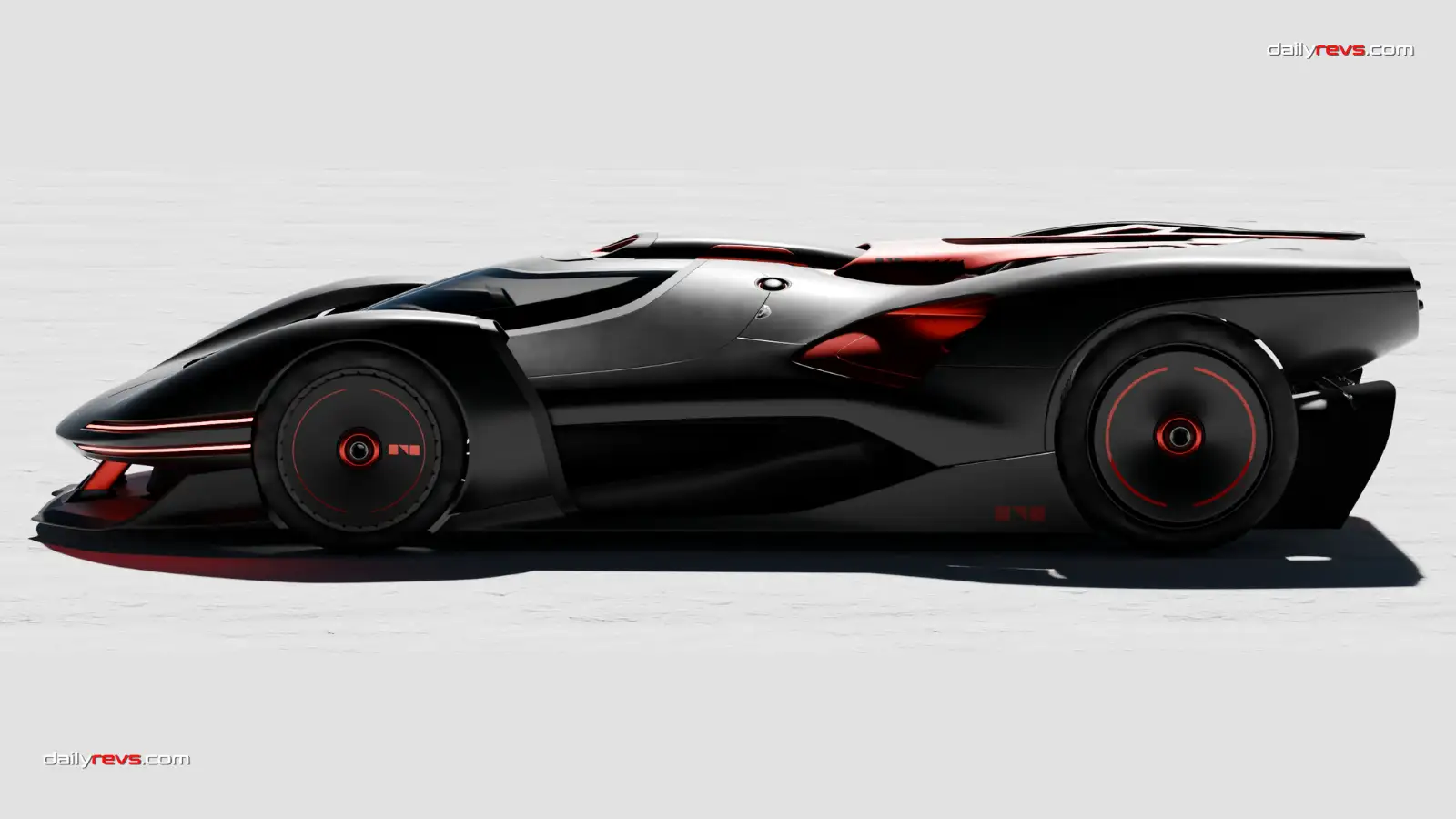
It's also the version that best shows off Kang's surfacing. The front fenders rise above the nose before dropping toward the cabin, while a deep undercut separates the doors from the lower body.
Behind the cockpit, the shoulders swell around the rear wheels and continue into a long, tapering deck.
There's plenty going on underneath, too.
Large openings run along the sides, and the rear bodywork leaves part of the central mechanical compartment exposed.
Even in its relatively restrained specification, the Revenant looks more like an experimental endurance racer than something intended for a Sunday drive. The Genesis Nocturne, however, has apparently decided that subtlety is overrated.
Its bodywork is finished in black, the silver wheels have been replaced by dark aerodynamic covers, and red accents appear around the headlights, splitter and front wheel openings.
Those changes are noticeable enough, but the real spectacle is at the back. Instead of hiding everything beneath smooth panels, Kang has exposed much of the rear mechanical structure.
A bright red framework stretches across the compartment, creating a series of triangular openings around the components beneath it.
The arrangement takes inspiration from the red lining of Dracula's cloak, which becomes visible when the vampire opens his arms.
Two large circular exhaust outlets sit near the center of the tail, surrounded by visible piping and structural elements. Below them is an enormous diffuser with deep vertical channels and substantial outer sections extending rearward.
The taillights are arranged as narrow horizontal red strips across the rear bodywork, providing another connection to Genesis' signature lighting design. From above, the differences between the two cars become especially apparent.
The white Revenant draws attention to its sculpted body panels and flowing rear deck. Nocturne puts the red framework and exposed mechanical components on display, giving the impression that someone has removed the bodywork from a racing prototype and decided it looked better that way.
The enclosed wheels add to that impression, particularly alongside the black bodywork and red detailing.
Neither version is exactly discreet, but Nocturne would probably have the better chance of securing a parking space outside Dracula's castle.
From The Drawing Board To Dracula's Garage
Kang has shared a substantial collection of sketches showing how the Genesis Revenant developed, and some of the early proposals look quite different from the finished car.
Several feature large rear wings, sharply angular bodywork and more conventional racing-car proportions. Others experiment with separated front fenders and a much narrower cockpit. As the drawings progress, the rear bodywork becomes longer, the wheel arches more rounded and the canopy increasingly compact.
The Dracula references also become more prominent. One of the presentation boards carries the title Fear Engineered, while others examine the character's hairstyle and the movement of his cloak. Kang used those references to develop the pointed roof, flowing body sides and proposed door movement.
The red structural elements eventually became a defining feature of the Nocturne version. There's even a fictional DC Comics-inspired presentation, complete with a Revenant comic cover and illustrations placing the car inside a Genesis research facility. It's all part of Kang's personal design project, rather than an official collaboration with Genesis or DC Comics.
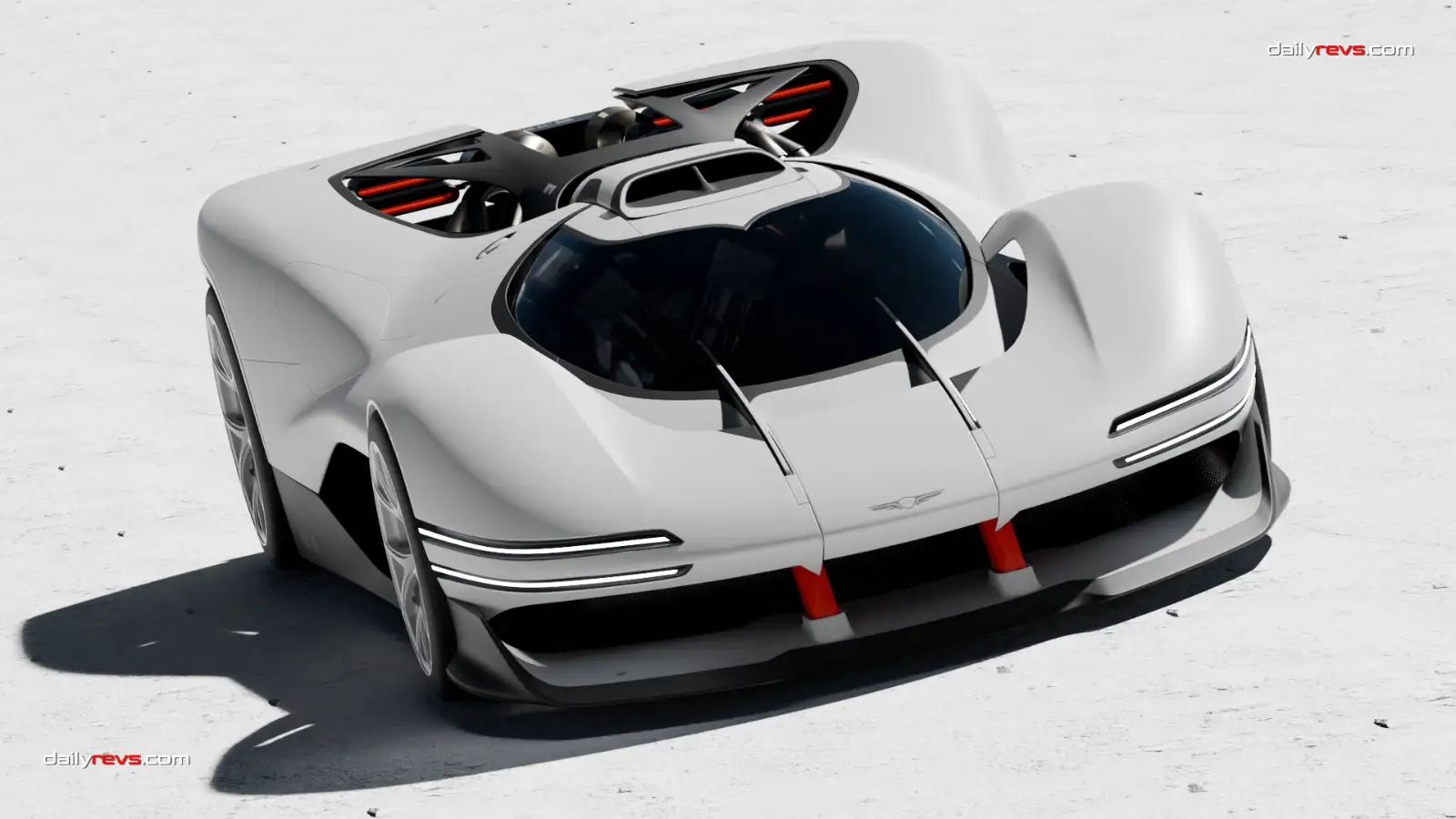
The finished renders retain much of the original racing-car inspiration, particularly the raised front fenders, narrow cockpit and extensive aerodynamic openings.
However, the large conventional rear wings seen in some early sketches have disappeared. Kang instead relies on the long rear bodywork and exposed mechanical sections to give the car its distinctive appearance.
Whether any of this could be turned into a functional hypercar is another matter. There's no information about the engine, transmission, chassis or performance, and the extreme cockpit proportions would present their own challenges for a road-going vehicle. Genesis, meanwhile, has an actual performance program to worry about. The Magma GT Concept points toward a future mid-engined sports car, while the Magma GT3 study explores the racing side of the equation.
The Genesis Revenant doesn't have those responsibilities. Kang has imagined what might happen if Genesis decided to build something even more outrageous than its Magma GT, with an endurance racer as the starting point and Dracula handling the design brief.
The result is certainly memorable. And while Genesis probably won't be putting fangs on its next supercar, we wouldn't complain if a few of Kang's ideas found their way into a future concept.
Connect with Joosuk Kang
To explore more of Joosuk Kang ’s work, including ongoing projects and portfolio highlights, you can follow or connect with his work, including ongoing projects and portfolio highlights, you can follow or connect with him on
Related News


