BMW Ethos Revives the DNA of the M1, i8, and Nazca M12
By Hugo Mattson July 3, 2025

BMW Ethos explores the future halo character of the brand with subtle homage to iconic former design trends like 503, 507, and Nazca M12.
-
The styling balances sculptural elegance with hostile intersecting forms, executed using Blender from inception to completion.
-
Designed independently by Sebastiano Ciarcià, the project is both a portfolio piece and a manifesto of digital competence.
A Designer's Self-Commission to Reimagine BMW's Future Hero Car
Sebastiano Ciarcià, a Göteborg-based exterior designer, wanted to test himself. Not with an OEM studio- or design consultancy-briefed assignment, but with a personal mission: design BMW's next halo car. One that doesn't merely invoke the brand's ethos in name, but reimagines its personality in visual and sculptural terms. The outcome is the BMW Ethos, a lesson in proportion, purity, and personal transformation.
This show car had no relation at all to market testing. It was an experimental vehicle for Ciarcià's emerging 3D modeling abilities, namely his switch from NURBS to polygonal modeling using Blender. What was initially a technical challenge turned into a philosophical one: how to reinterpret brand heritage and transform it into something forward-thinking without invoking the trap of nostalgia.
You can explore more of Sebastiano Ciarcià's Ethos concept, right at the end of this article.

From Icons to Ideas: Rebuilding the Halo
The project task was defined early on: to conceptualize the future halo car for BMW. A brand with a legacy of innovation, performance, and artistic flair—symbolized by legends like the M1 and i8, and lesser-quoted but equally fitting, the BMW Nazca M12.
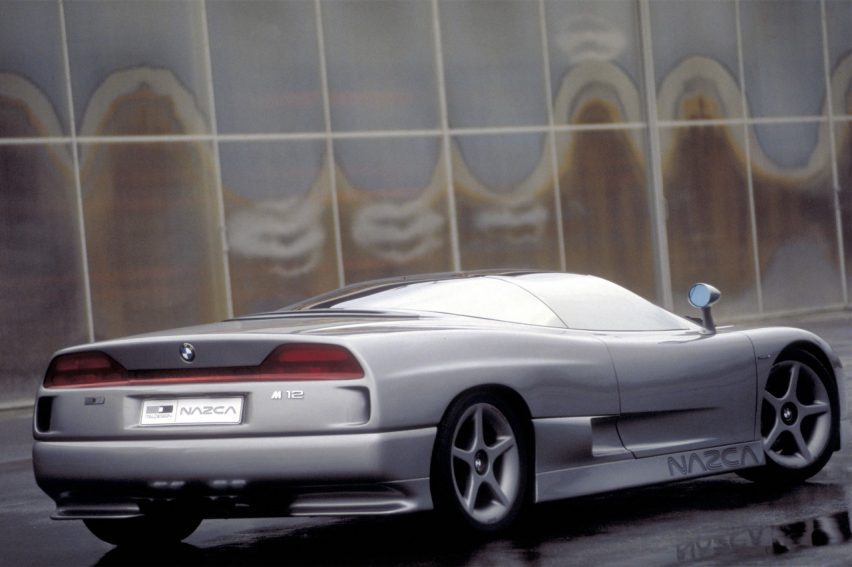
The Nazca M12, introduced in 1991 by Italdesign, is one of BMW's most extreme and unusual proposals. With its V12 engine, canopy of glass, and aerodynamic bodywork, the Nazca was a conceptual imagination of BMW performance beyond its factory lines. Ethos shares the same essence, but through a fully digital process. While the Nazca was a physical product born out of coachbuilding, Ethos is a theoretical idea forged through human will and computer design aids.
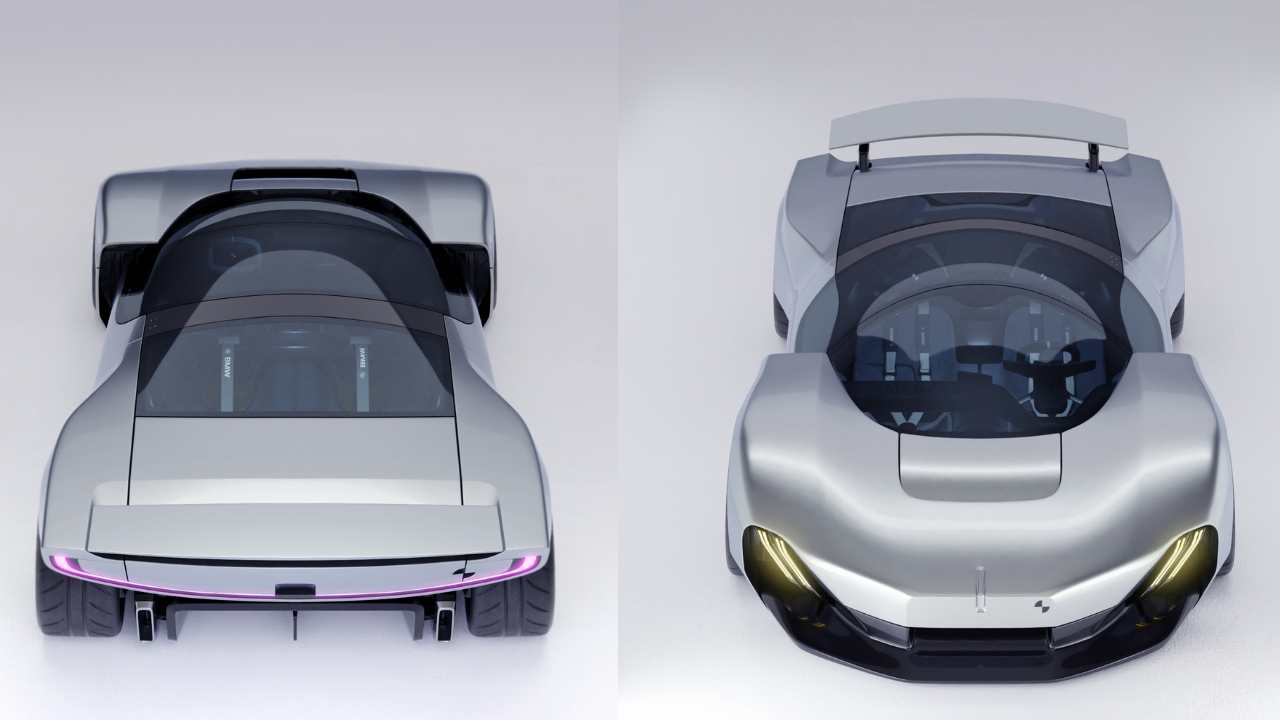
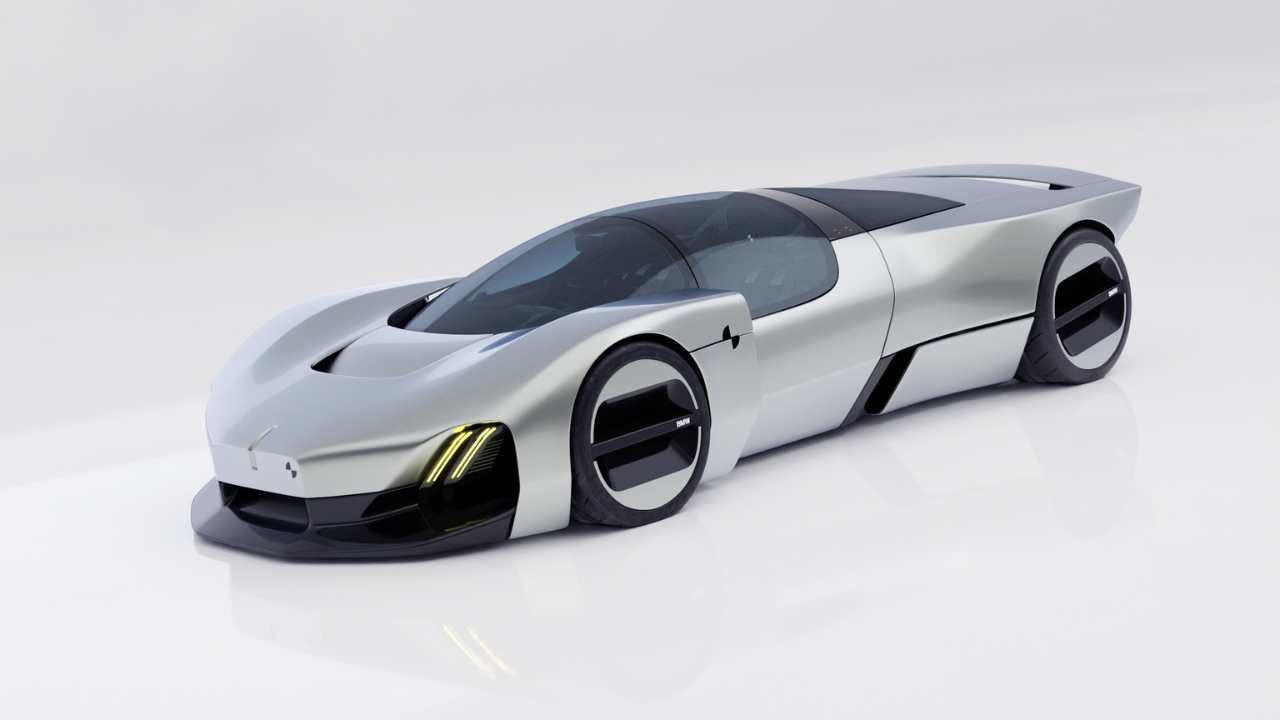
The ratios are unequivocally halo-worthy: low, wide, and elegant. But they are defined not by extravagance, but by intersecting geometry and intentional sculpting. Every surface serves a purpose. Every soft-to-hard edge reveals an inner rationale.
Sculpting the Surfaces with Intention
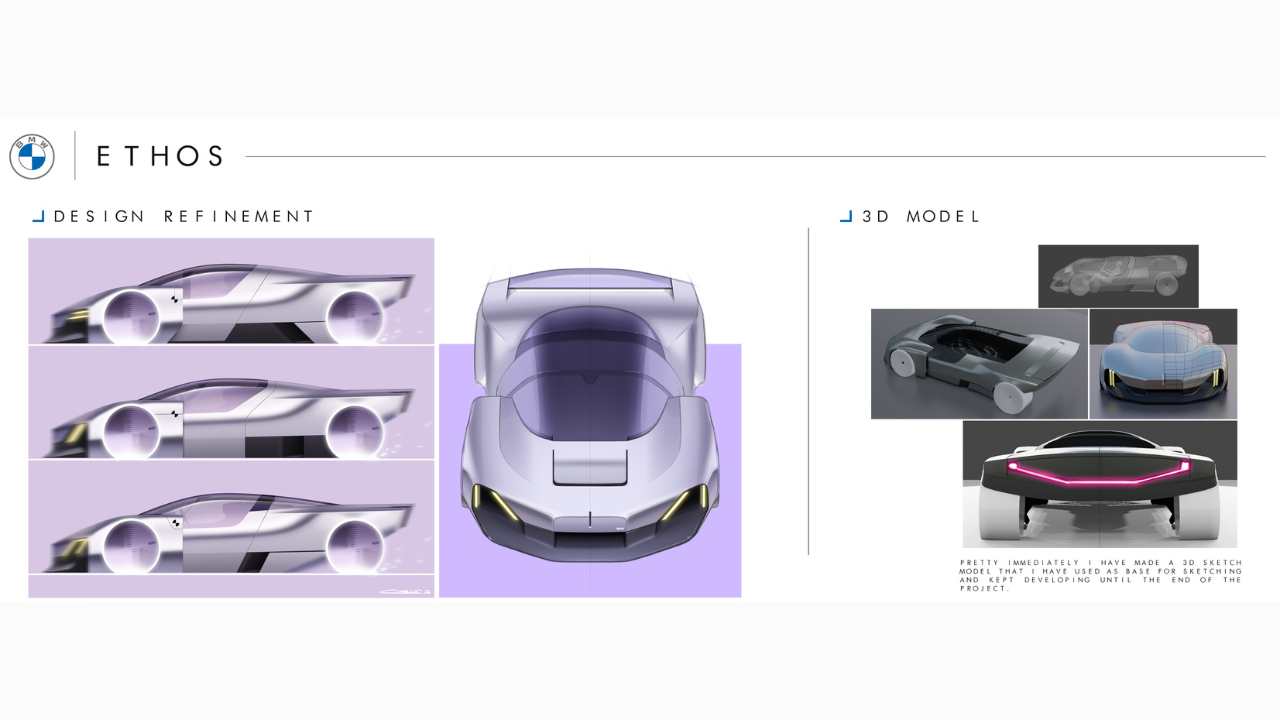
The process began with hand drawings to achieve the proportions and silhouette, then Photoshop and finally a full 3D model in Blender—designed and iteratively perfected.
The appearance of the car is contrast-driven. The collision of soft and hard forms is intentional and tightly controlled. From the projected wheel arches to the scooped greenhouse, all breaks in line and surface are intentionally exposed. This form language assurance is a sign of no-nonsense concept legend status, as demonstrated in the Nazca.
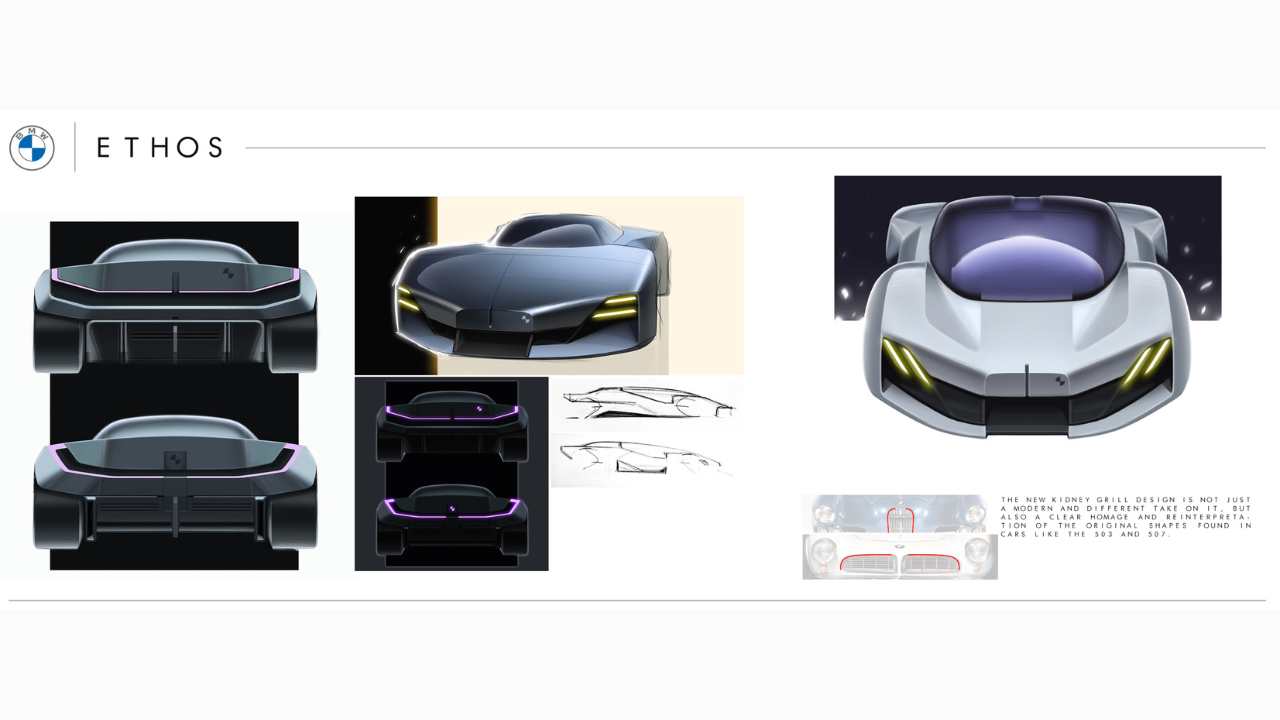
At the front, a minimalist reworking of the kidney grille avoids literal copy-interference borrowing. It is an echo rather than a continuation of the 503 or 507. The same goes for the lean, muscular body wrapping tightly around the wheels, short overhangs, and sharp, dramatic surfacing, which emphasizes the car's performance mission.
Refinement Through Iteration and Intention
Early computer-generated sketch models laid the basis for further design development. Logic, not extravagance, guided the choice in this phase. Aerodynamic capability was hinted at, not exaggerated—scoops and slats give way to more precise intersections of shape.
Lighting design matured with the surfacing. The vertically triple-slash headlight signature is stark without being over-the-top. It is a contemporary interpretation of BMW identity, not an overstylized design flourish.
Spyshots Rendered for Believability
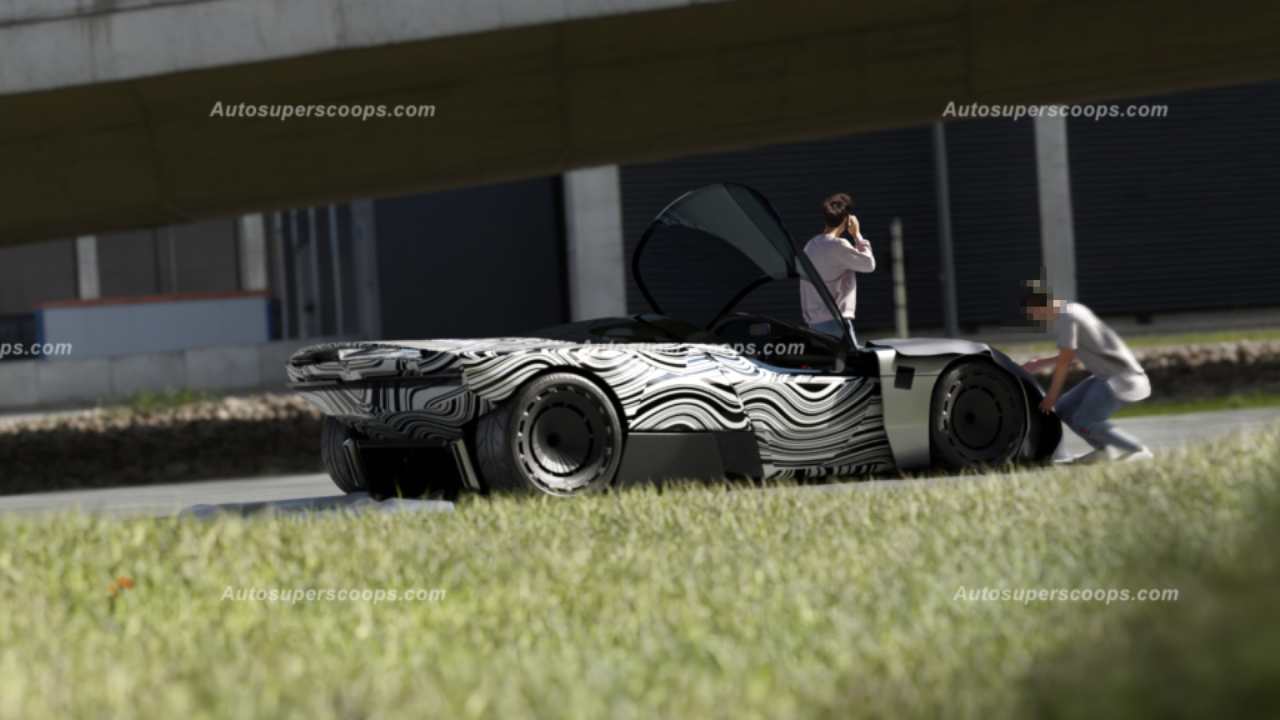
To build anticipation for the unveiling, Ciarcià presented a sequence of photographs that evoke actual development spills. The images have the BMW Ethos draped in digital camouflage, photographed in typical roadside and trackside environments, with onlookers and blur-stamped identification stickers.
By crossing the vocabulary of real on-road automotive prototype sightings with computer precision, he created a rollout that mimics real car development phases. Spyshot-type drawings does more than highlight the design; they test its veracity. If the Ethos can be confused for a camouflaged prototype, then it must be well-proportioned and situationally plausible.
It's a clever choice—one that puts the viewer within the fiction that such a thing does exist not just as a concept, but as an object waiting to be found.
A Disciplined Expression of Confidence
Where other digital concepts overflow with stylistic excess, Ethos restraint. Its lines confident, but never loud. The surface vocabulary cohesive. Nothing added in the name of complexity.
The combination of taut lines and deep cutouts provides the car with a distinct visual cadence. There even seems to be movement in static renderings. That is where Ciarcià's knowledge of BMW's historic aesthetic rigor surfaces. It shies away from shallow gestures and communicates intent with simplicity.
Timelessness in Tension and Simplicity
Ethos doesn't follow this season's latest. No overcompensating pixels, no massive air intakes, no theatrics for theatrics' sake. Rather, it is guided by timeless principles: muscle in tight rein, precise overhangs, and a greenhouse that is integrated, not perched.
The synergy of the delicate upper body and rugged aerodynamic lower surfaces makes the design readable and simple. The light signature, three vertical slashes, is distinctive without overdoing it. From every angle, the car sends one message.
This is not a design to impress in a scroll. It is one to endure.
Contextual Relevance in a Digital-First Era
Initiatives like Ethos are only more meaningful in a world where design testing no longer requires a wind tunnel or a life-size clay model. Ciarcià's work speaks to how personal projects become in the larger corpus of automobile design thought.
By choosing BMW, a brand with strict conventions and rich visual vocabulary, he imposed limitations on himself—and still managed to create something new, if not quite entirely plausible. That is the plausibility that takes this project from a student sketch into a plan deserving of thought in a real application.
See Also
-
Morris Garages' Past Meets the Future in Hanum Jeong’s EXE:ION Concept
-
McLaren Short Tail Concept Prioritizes Agility Over Power
About the Artist
Sebastiano Ciarcià is an exterior car designer currently living in Göteborg. This BMW Ethos project evolved from a desire to learn how to use Blender and hone his design voice through autonomous learning. What has resulted is a strong portfolio piece that demonstrates technical seriousness along with conceptual acuity.
You can explore more of his work here:
Behance
Instagram
Disclaimer
This design idea is an original design project and is not BMW Group licensed. The work is presented here with the permission of the designer and is entirely credited to Sebastiano Ciarcià. DailyRevs makes no claim to authorship or commercial benefit from sharing these photographs.


