2027 Ferrari Amalfi Spider
By Lorenzo Bianchi March 13, 2026
640 hp twin-turbo V8 with 0–100 km/h in 3.3 seconds and 320 km/h top speed.
Fabric soft top opens in 13.5 seconds at speeds up to 60 km/h.
Front-mid-engine 2+ convertible designed for performance and everyday usability.
A New Open-Top Grand Tourer From Maranello
The 2027 Ferrari Amalfi Spider arrives as the open-roof counterpart to the Amalfi coupe, carrying forward Ferrari’s front-mid-engine grand touring formula. It is a 2+ convertible built around a twin-turbocharged V8 and a fabric roof, intended to deliver the familiar Ferrari driving character without abandoning everyday practicality.
Ferrari positions the car as a balance between performance and usability. Despite the open arrangement, the Amalfi Spider maintains the coupe's dimensions and profile; this choice informed much of the car's engineering and design.
Design Shaped Around Proportions and Surface Simplicity
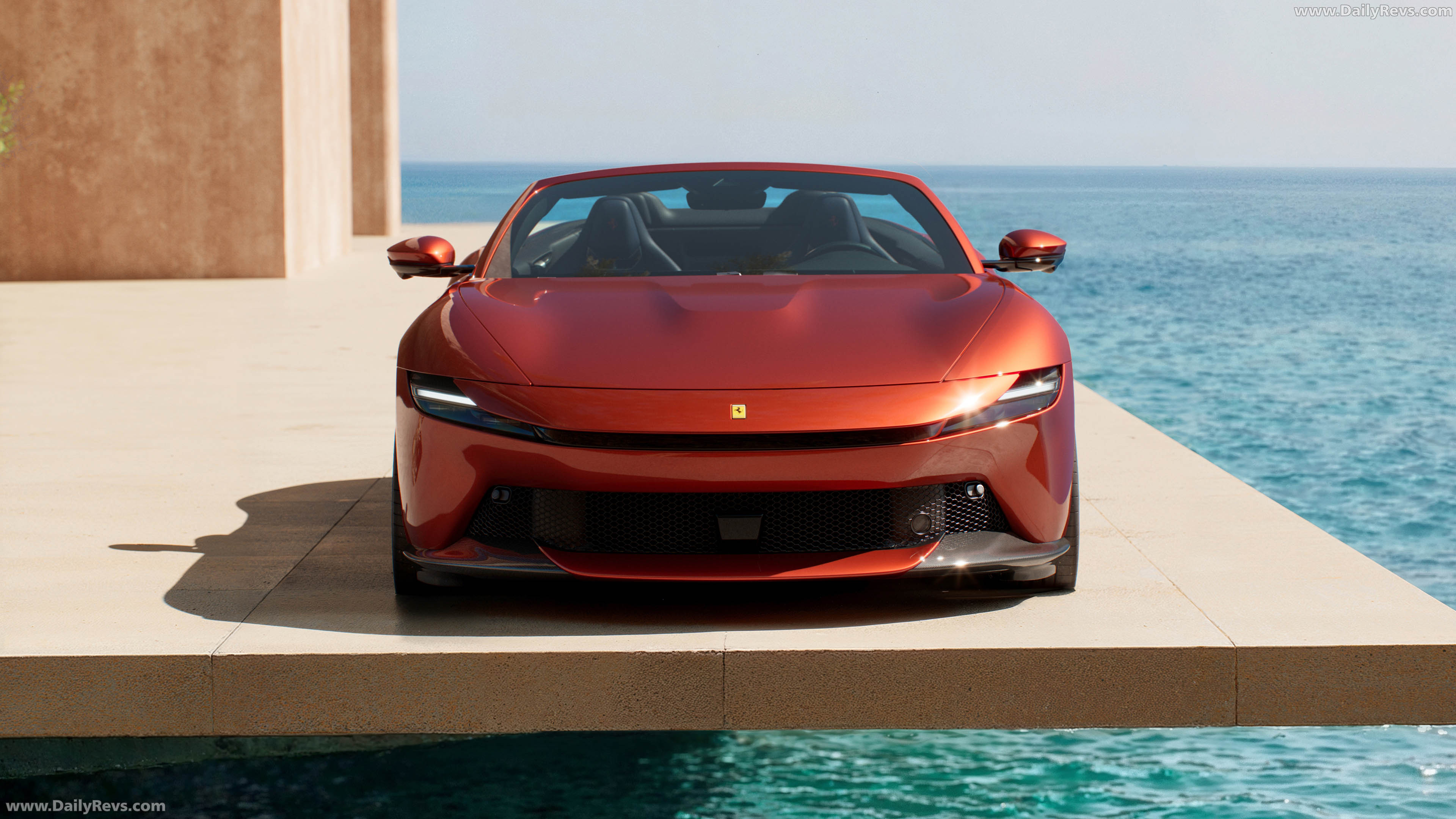
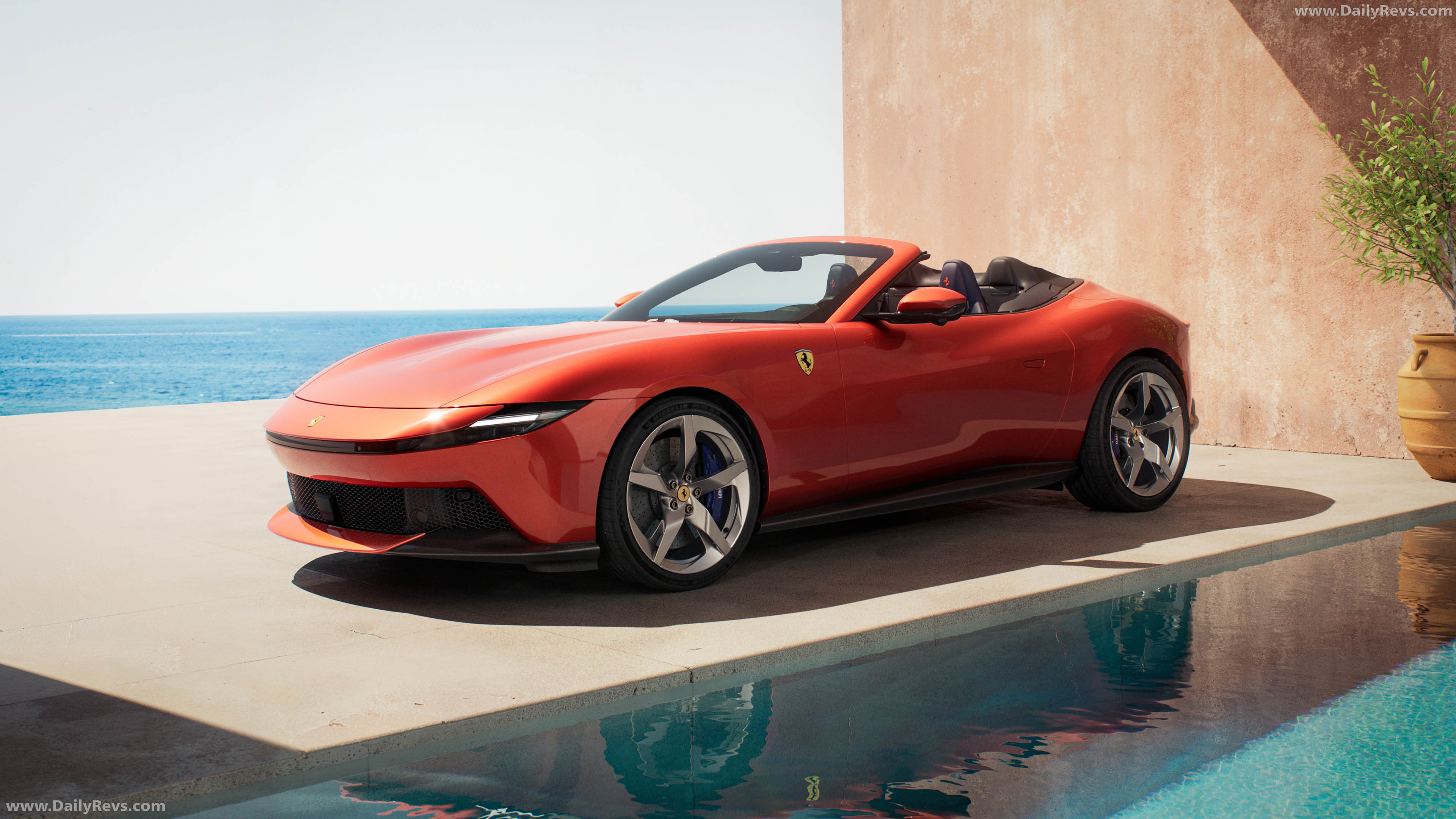
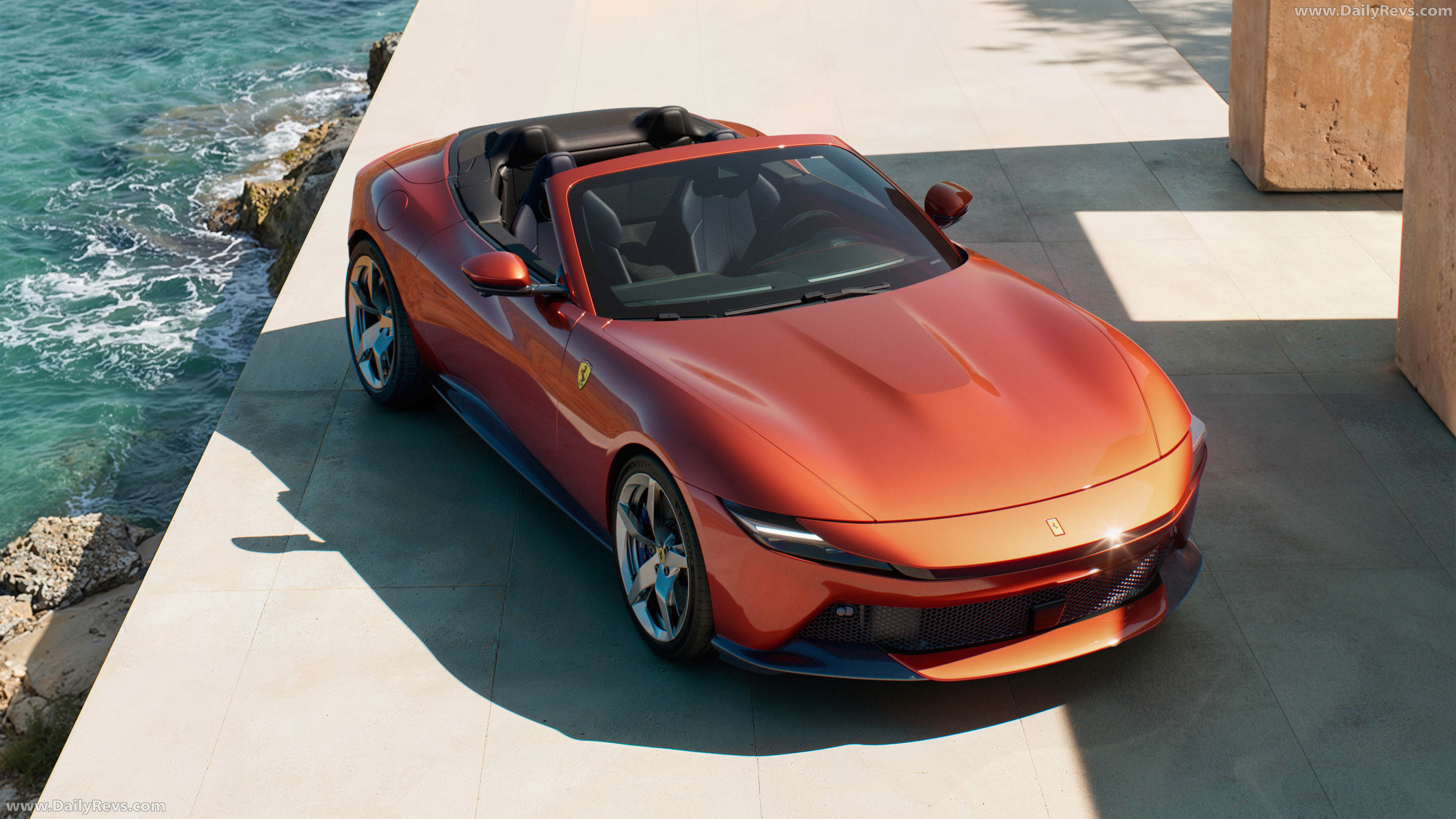
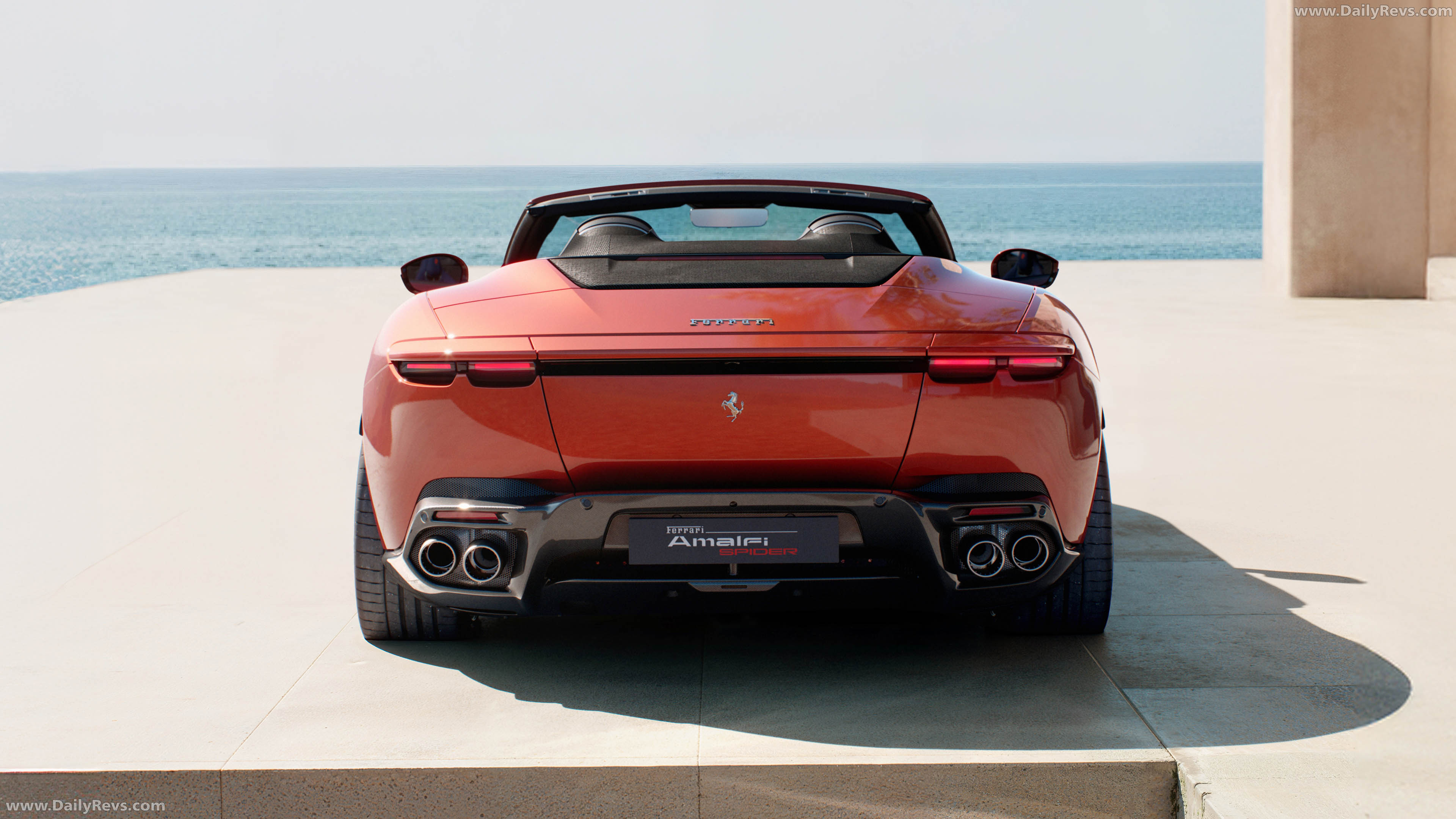
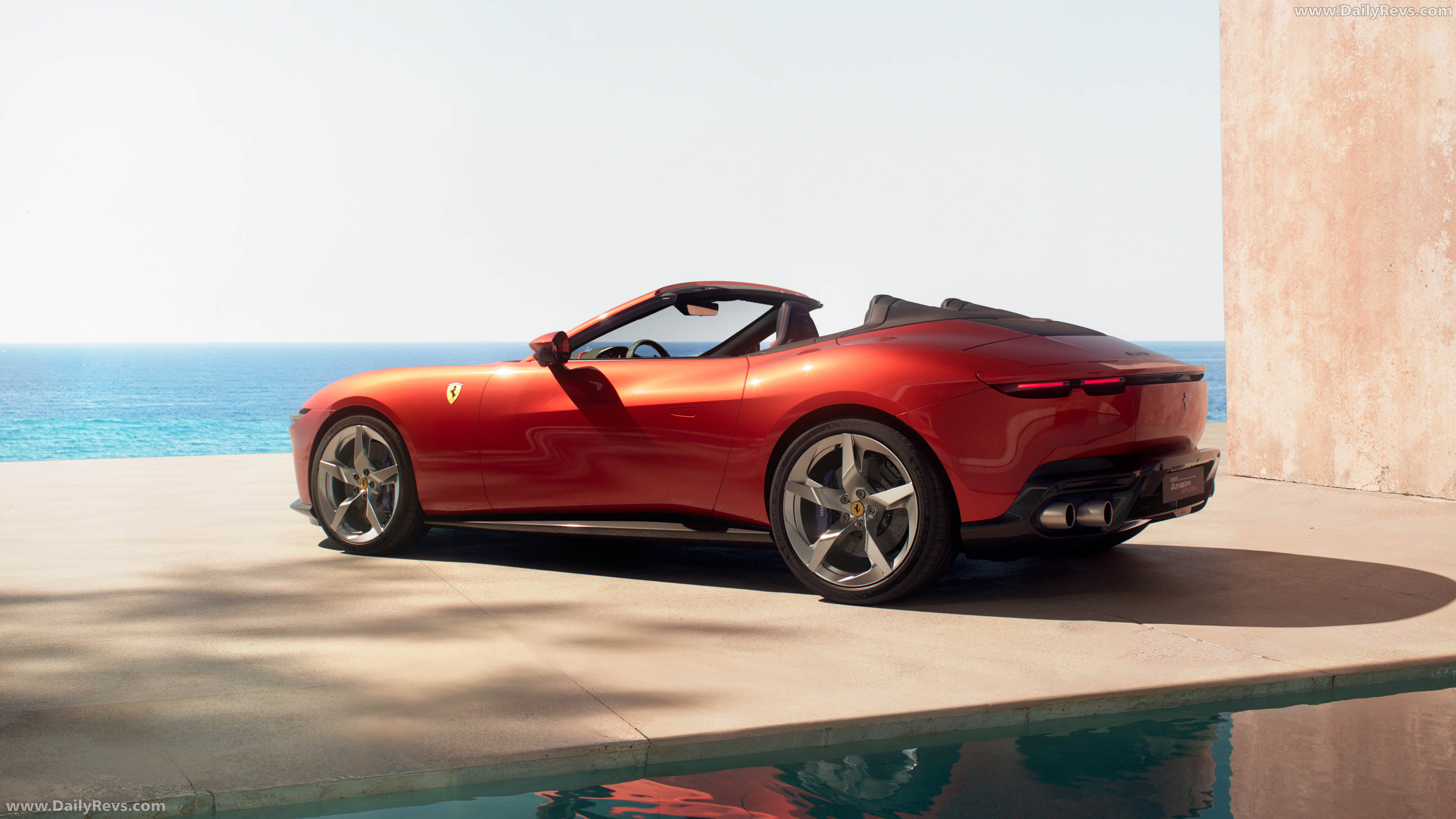
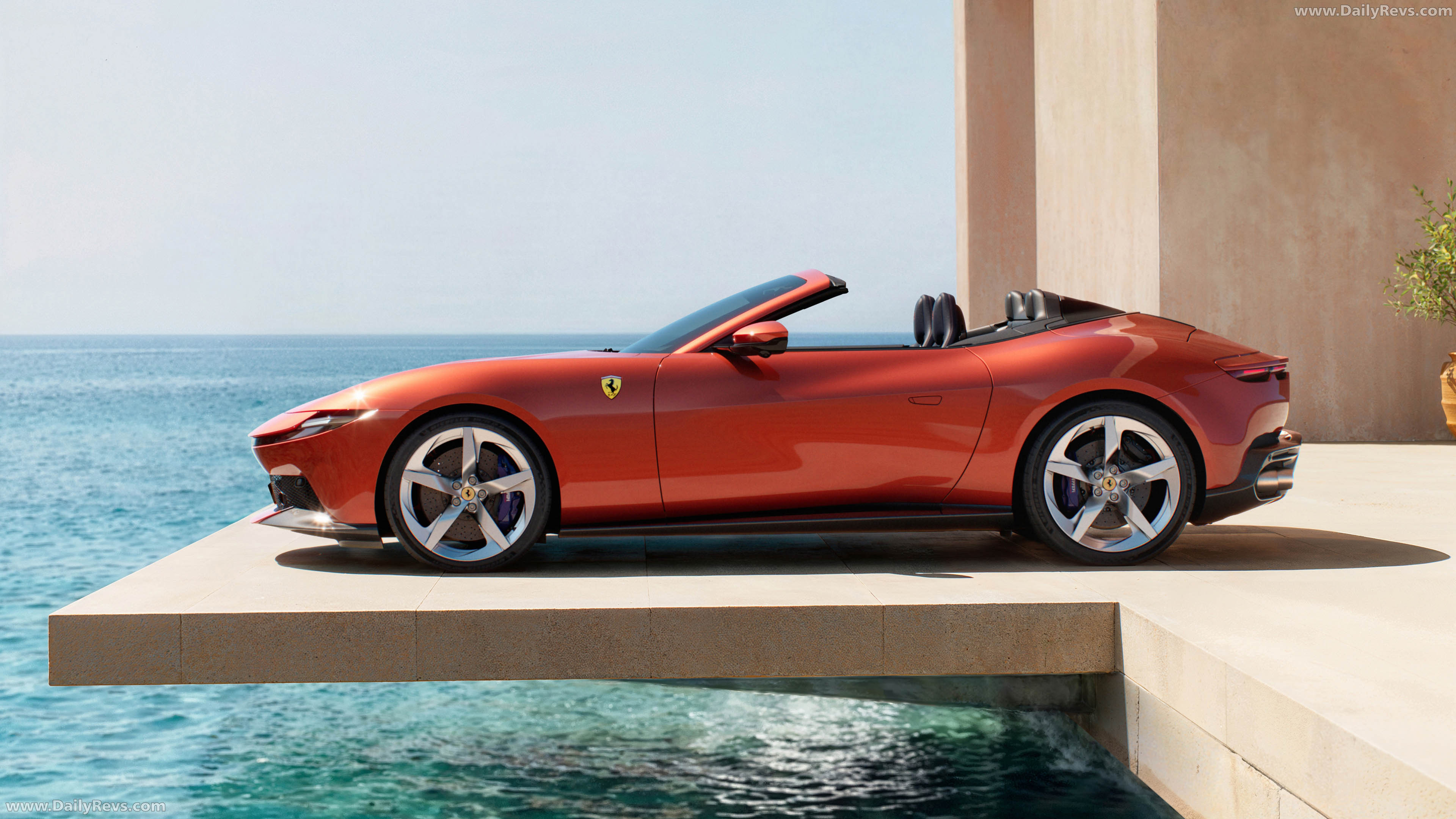
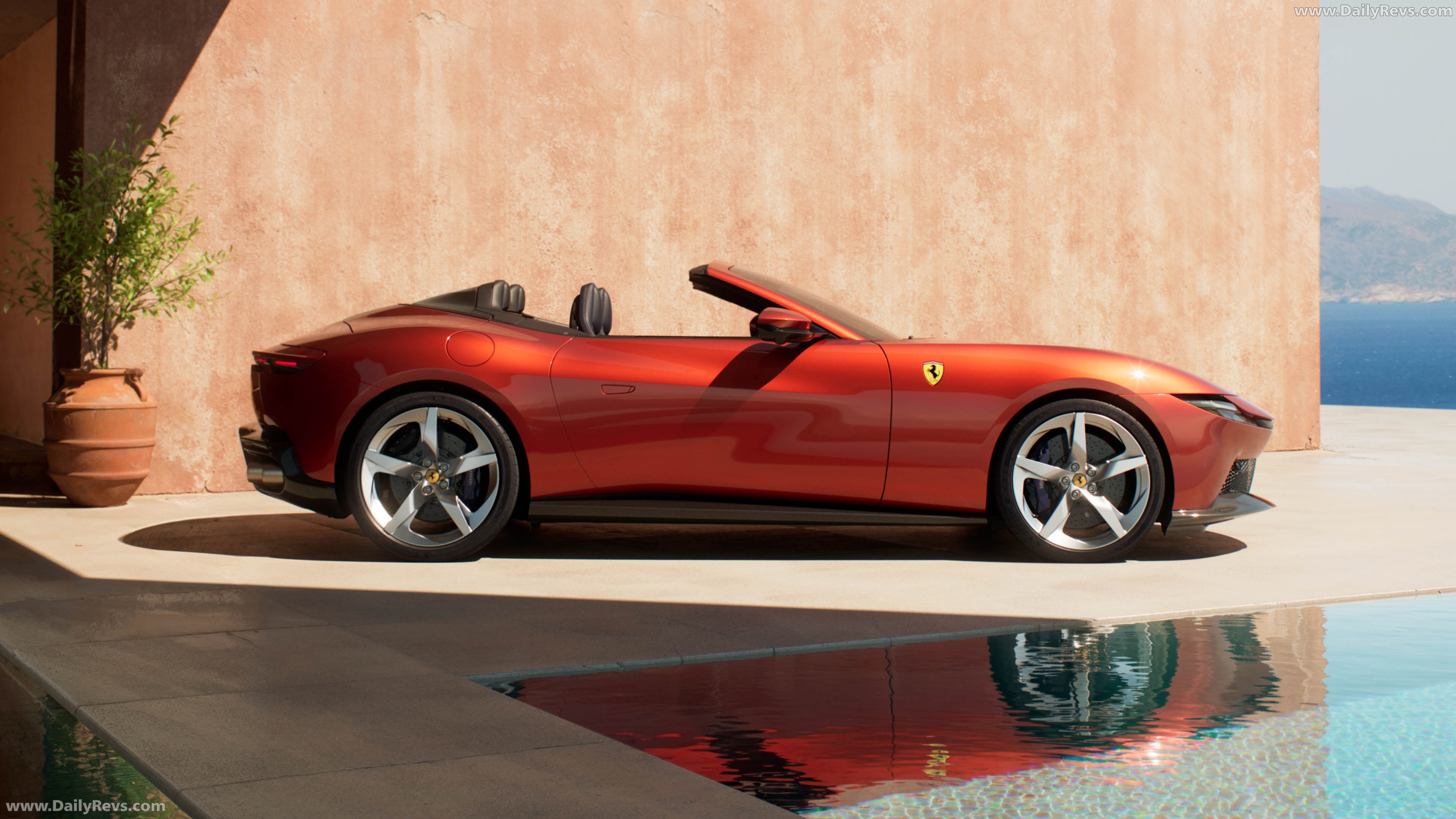
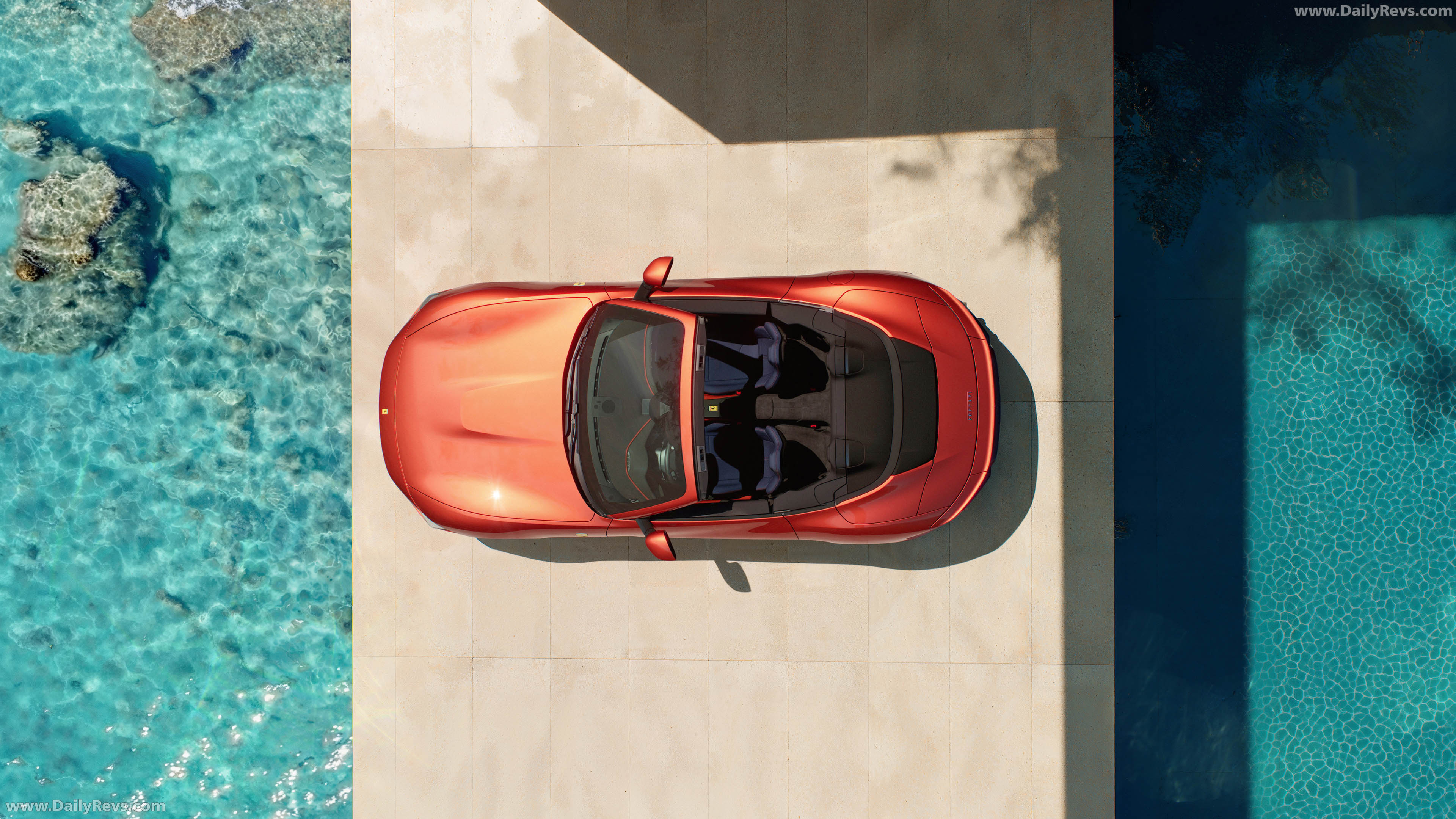
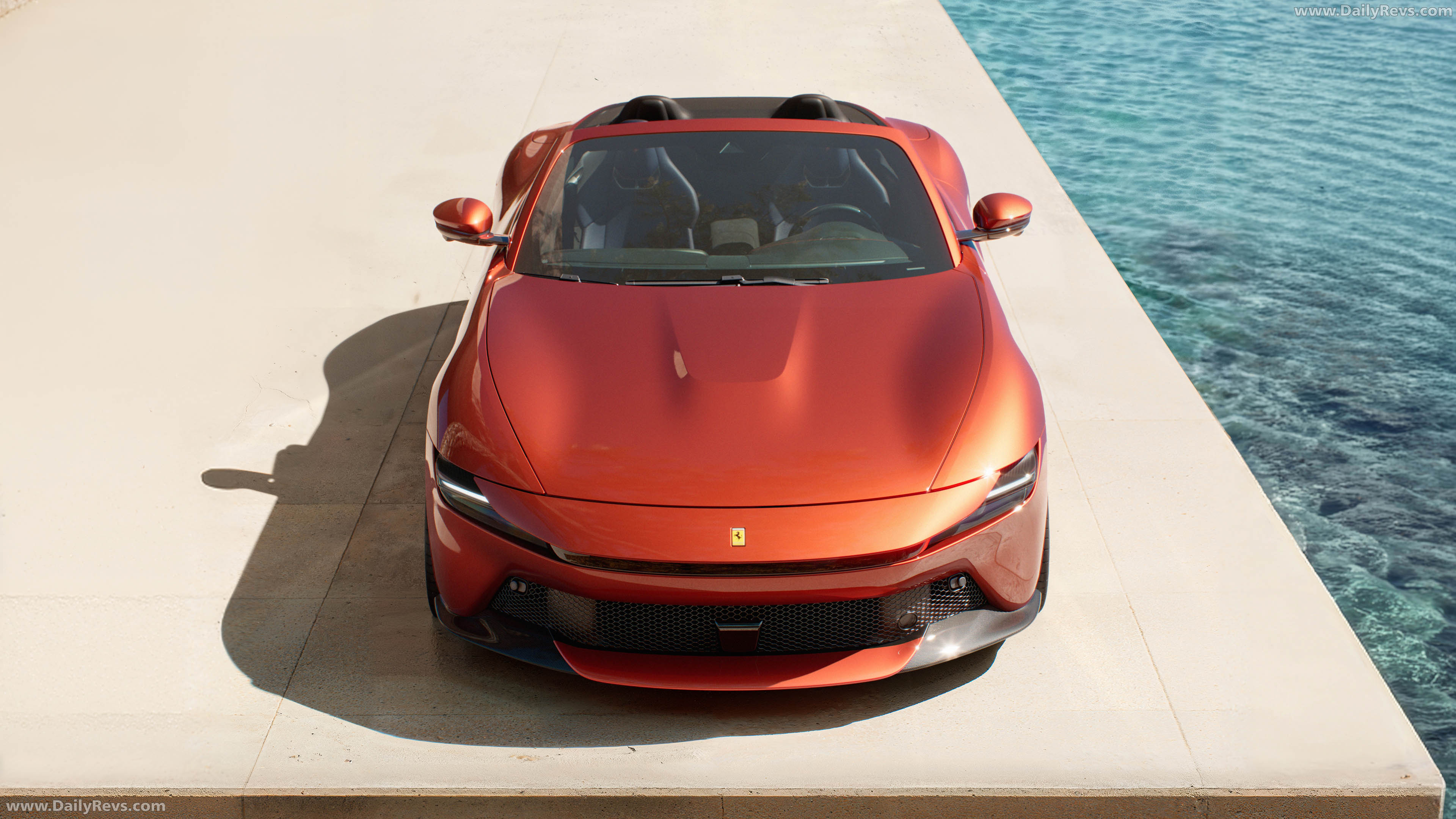
Seen in the official reveal photos, the Amalfi Spider carries a restrained but deliberate design language. Long hood, compact cabin, and a tightly drawn rear deck. The stance is classic front-engine Ferrari.
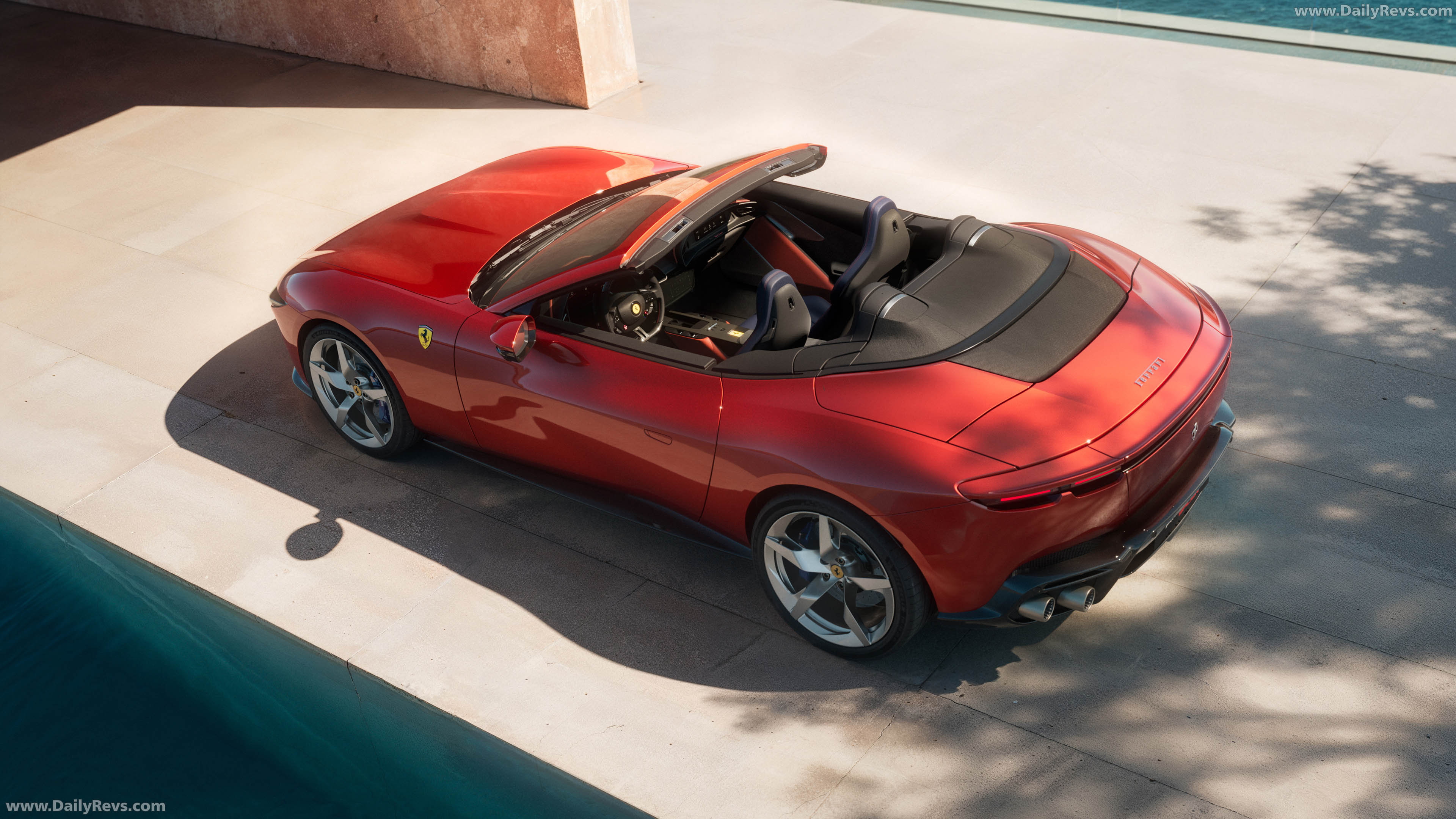
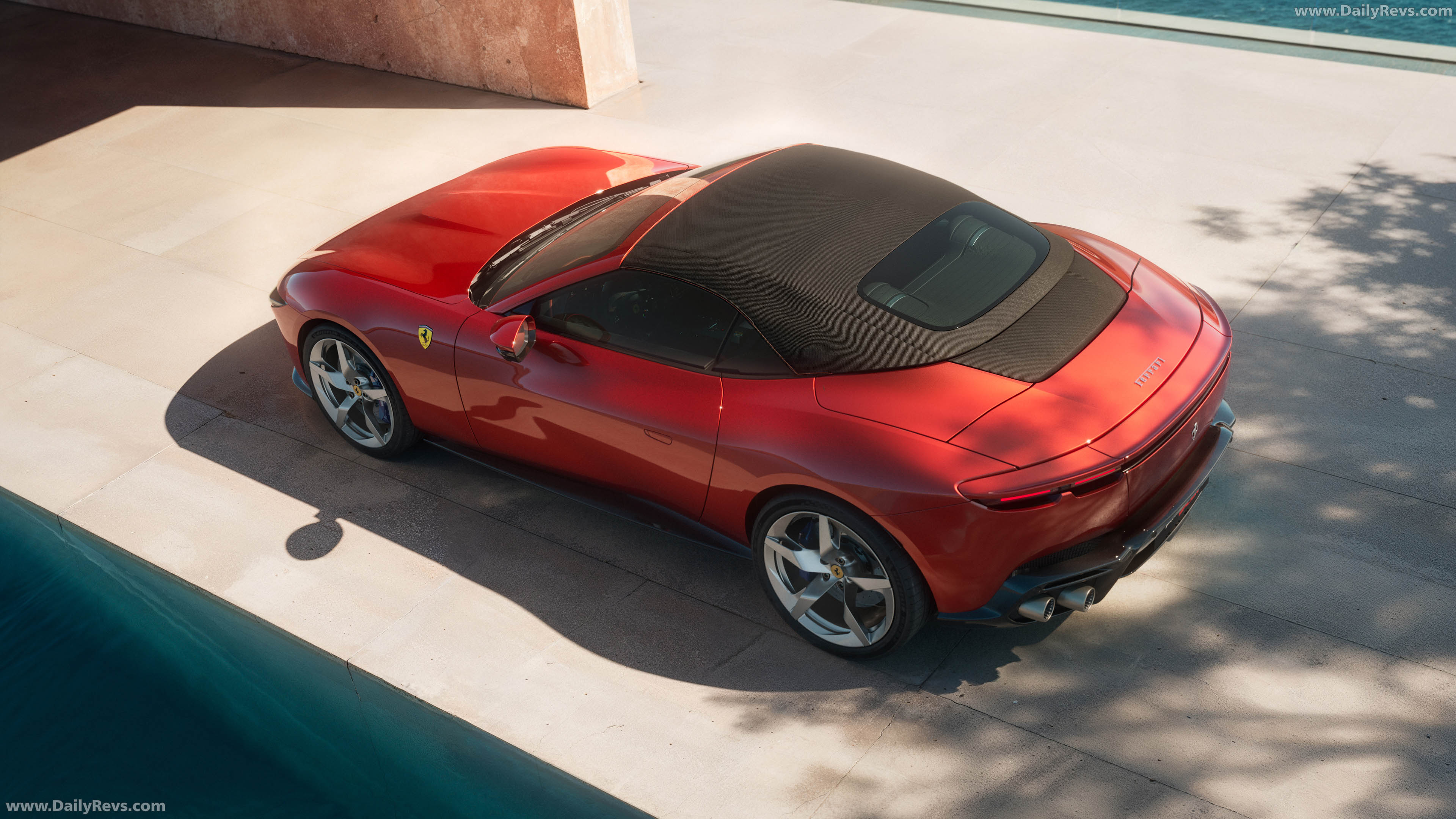
Ferrari’s design team focused on maintaining the coupe’s flowing profile even with the roof removed. The heavier retractable hardtop commonly found in convertibles is replaced by a fabric soft top, preserving the vehicle's low, flowing shape.
Clean and sculpted, the surfaces are characterized more by curve and light than by crisp creases.
At the front sits a large central intake and a long bonnet housing the
V8. The rear incorporates an integrated active spoiler and carbon-fiber
detailing, elements that underline the car’s performance intent.
Ferrari also introduces a new exterior colour called Rosso Tramonto, a deep red tone inspired by the shifting colours of the Amalfi Coast at sunset.
Fabric Roof Engineered for Usability
The convertible roof is central to the Amalfi Spider’s concept. Ferrari developed a lightweight Z-fold mechanism allowing the fabric roof to open in 13.5 seconds and operate at speeds up to 60 km/h.
When folded, the roof occupies only 220 mm of space, helping preserve cargo capacity. The car offers 255 litres of luggage space with the roof closed and 172 litres with it open, a practical detail unusual in the segment.
A five-layer acoustic fabric structure provides insulation comparable to Ferrari’s retractable hardtop systems, reducing noise when the roof is raised.
Dual-Cockpit Interior and Digital Interface
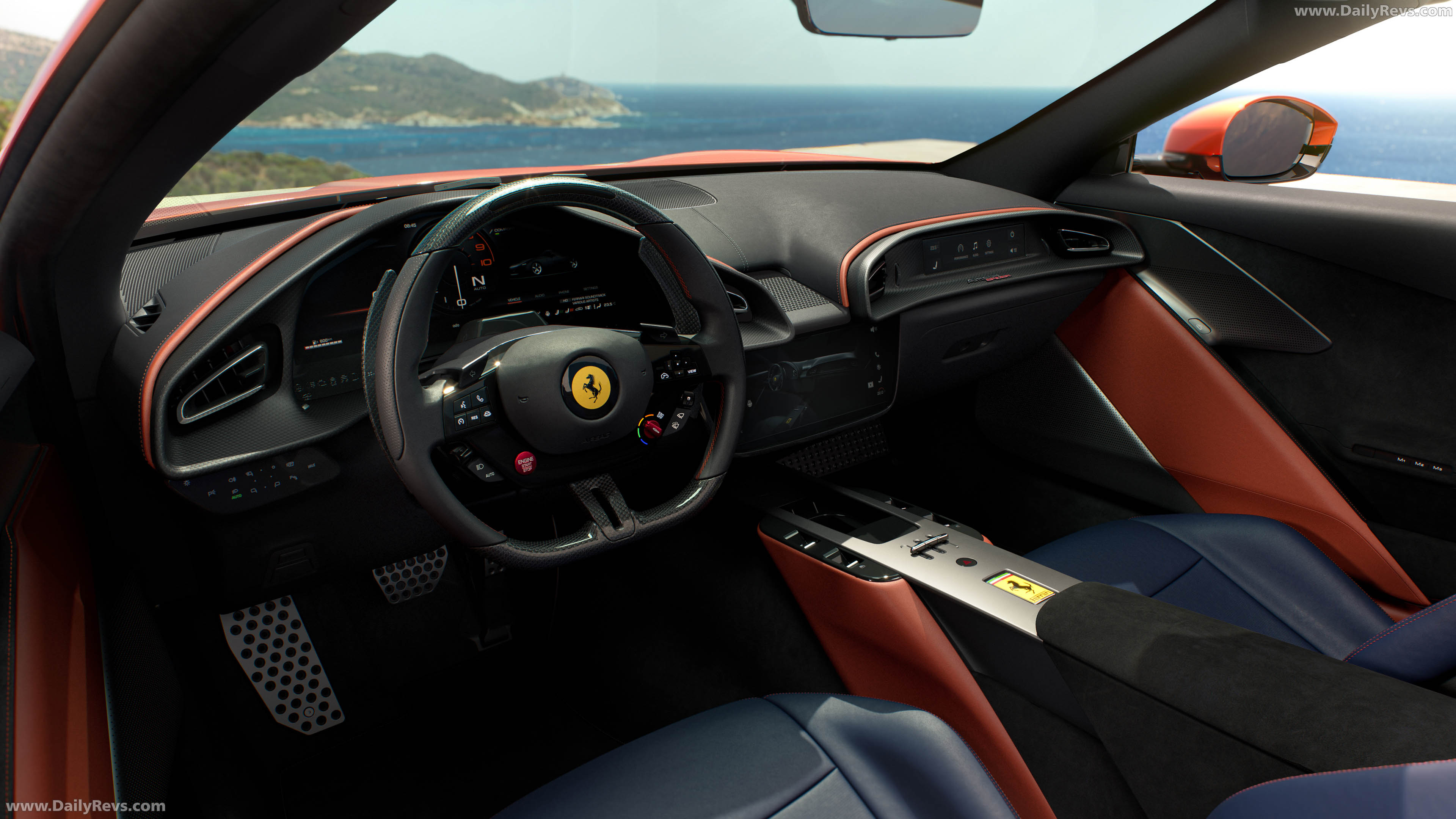
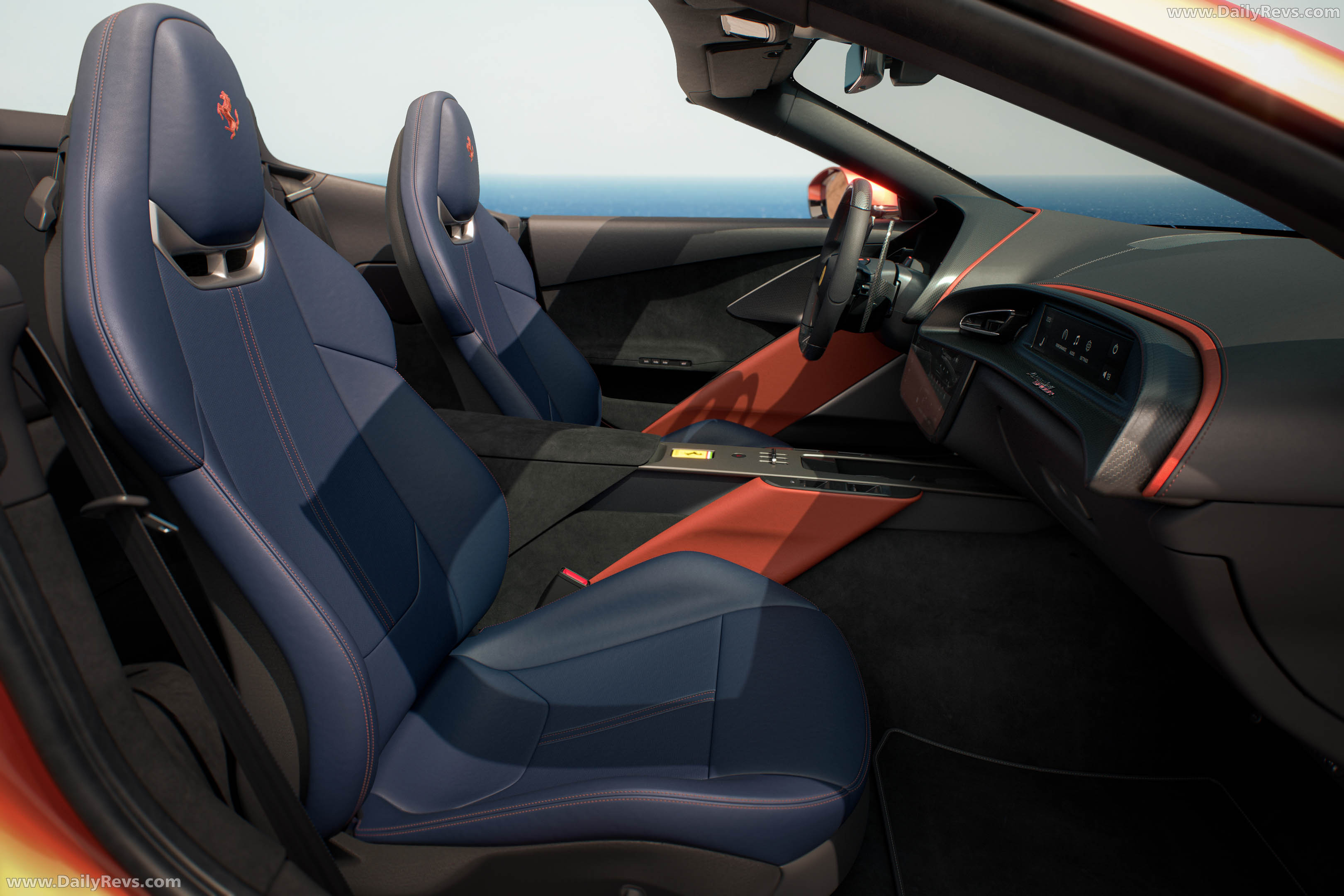
Inside, the Amalfi Spider adopts Ferrari’s dual-cockpit layout, visually separating driver and passenger zones.
The digital interface centers on three displays: a 15.6-inch instrument cluster, a 10.25-inch central touchscreen, and an 8.8-inch passenger display capable of showing performance data such as revs and G-forces.
Ferrari also reinstates physical controls on the steering wheel, including the aluminium start button. The change reflects a return to tactile interaction after several years of touch-sensitive interfaces.
Rear seats provide limited passenger accommodation but also extend cargo flexibility.
Twin-Turbo V8 Performance
Power comes from a 3.9-litre twin-turbo V8 from Ferrari’s F154 engine family. In the Amalfi Spider it produces 640 hp at 7,500 rpm and 760 Nm of torque.
The engine pairs with Ferrari’s eight-speed dual-clutch transmission, delivering a claimed 0–100 km/h time of 3.3 seconds and a top speed of 320 km/h.
Ferrari revised turbo management and engine calibration to sharpen throttle response while maintaining a progressive power curve across the rev range.
Active Aerodynamics and Updated Chassis Technology
Aerodynamics play a central role in the Spider’s stability. A three-position rear wing adjusts automatically between low-drag and high-downforce settings. In its most aggressive configuration it can generate up to 110 kg of additional load at 250 km/h.
The chassis also introduces brake-by-wire technology and Ferrari’s ABS Evo system, integrated with the Side Slip Control platform to manage braking and traction across different grip conditions.