2011 Ferrari 599XX Evo
By Lorenzo Bianchi November 7, 2011
2011 Ferrari 599XX Evo added 20 hp over the 599XX, totaling 750 hp.
Introduced active aerodynamics later seen in production Ferraris.
Generated 440 kg of downforce at 200 km/h, doubling the original model’s grip.
Engineering for the Track, Not the Road
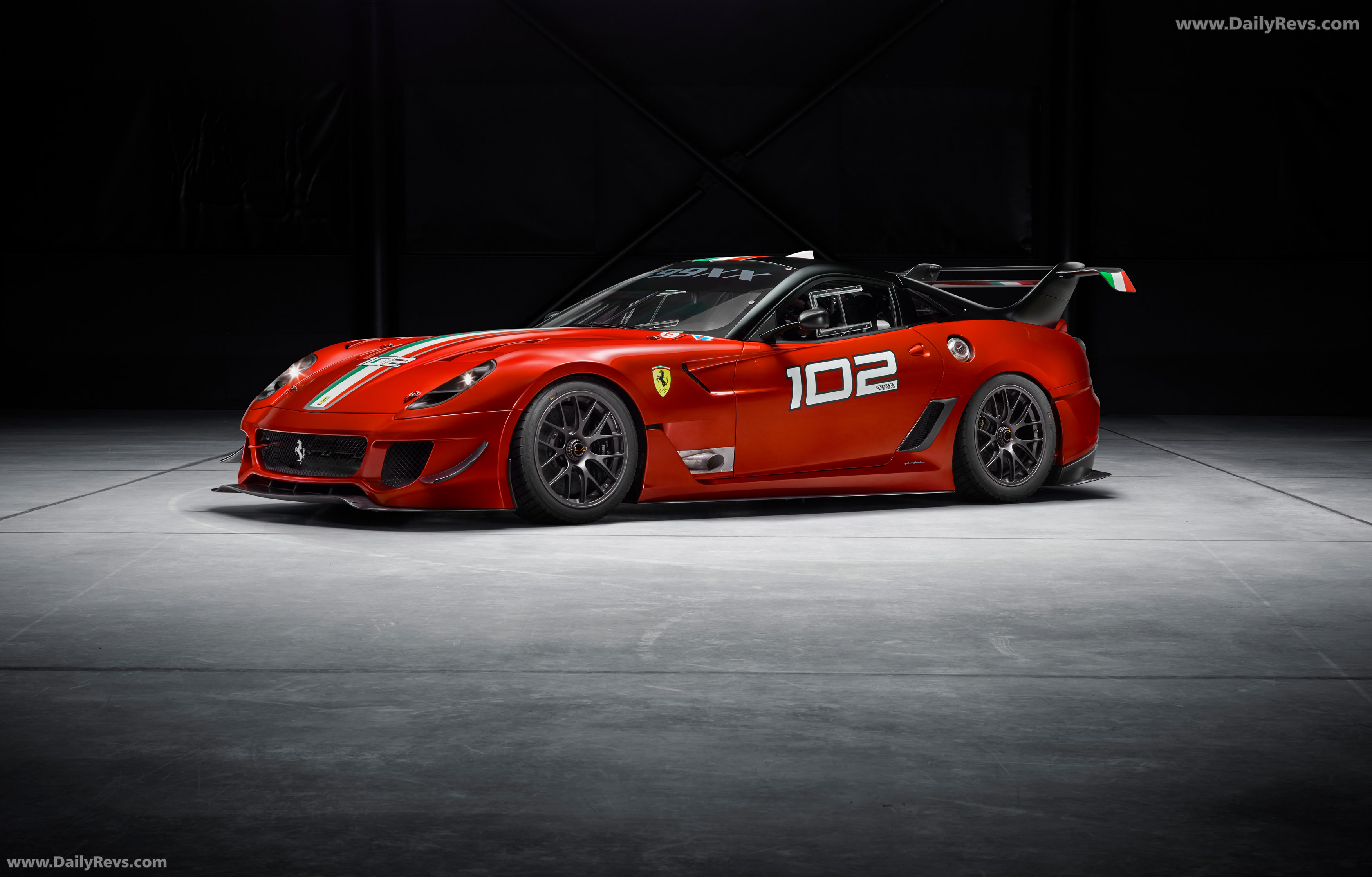
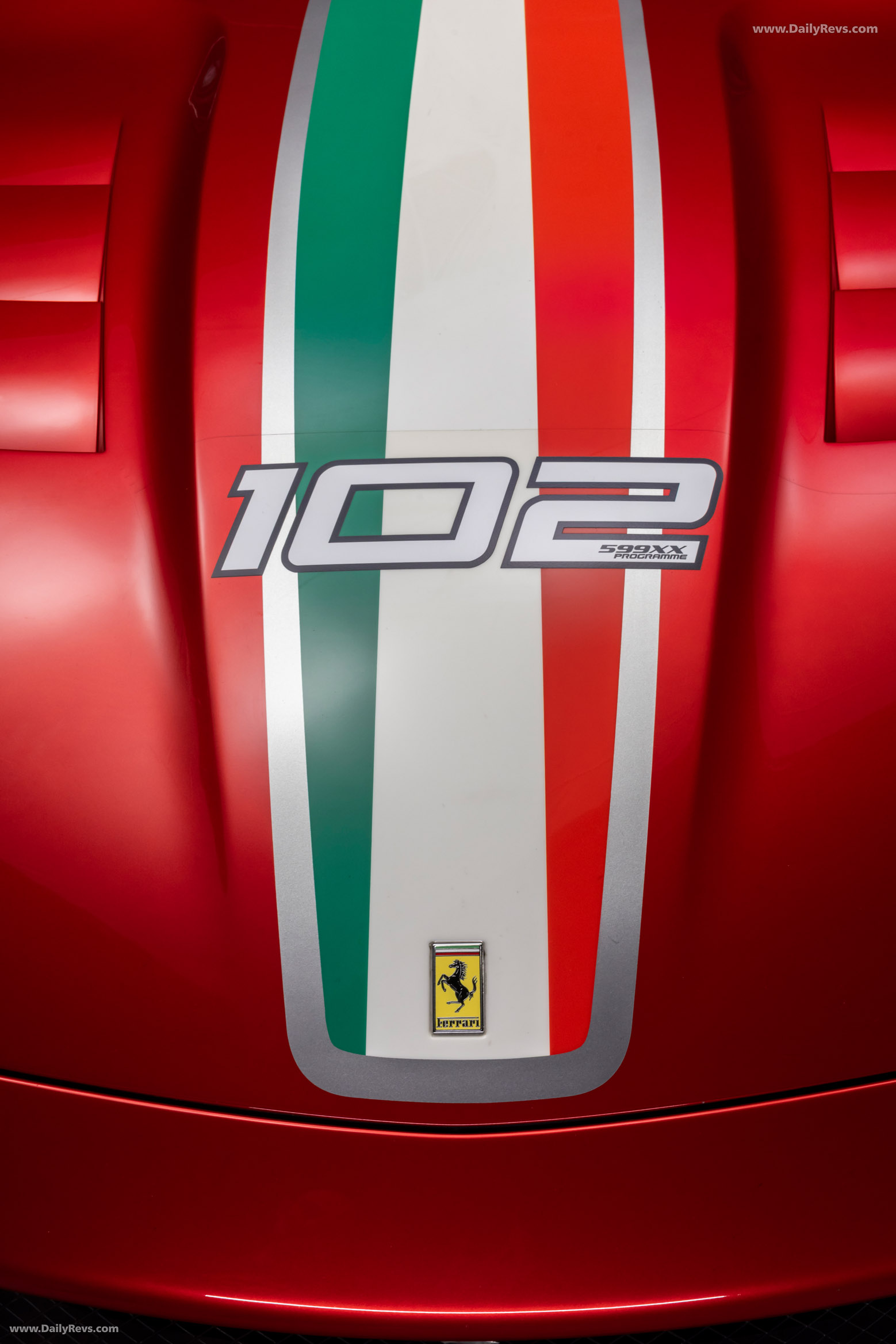
The 2011 Ferrari 599XX Evo represents one of Maranello’s most focused engineering exercises — a laboratory on wheels where data, not trophies, was the goal. It arrived as an evolution of the 2010 599XX, itself derived from the 599 GTB Fiorano, and it became the first front-engine machine to define the boundaries of Ferrari’s XX Programme, an exclusive track-only development initiative for the brand’s most dedicated clients
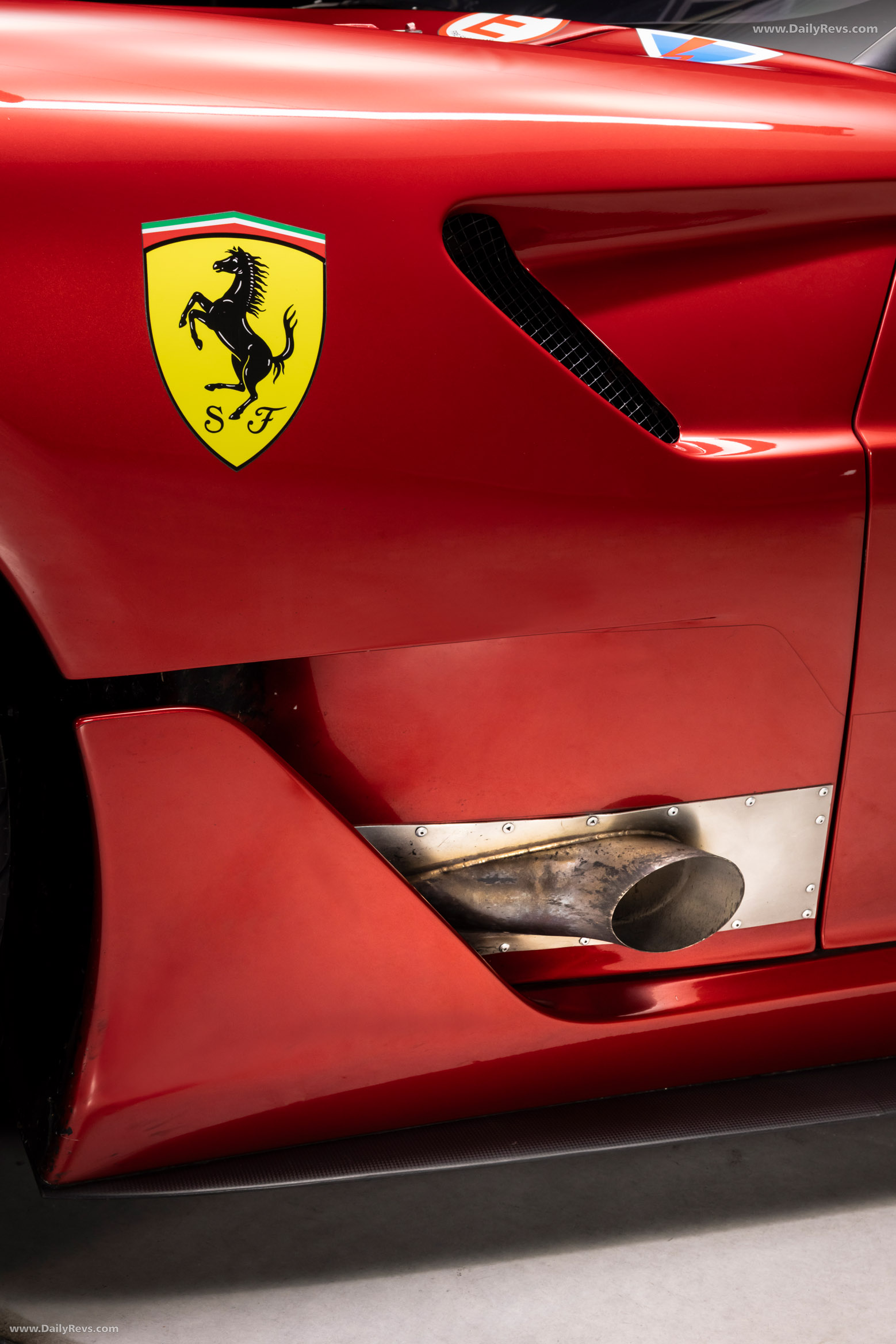
Ferrari’s approach with the XX Programme has always been unique — offering owners access to prototypes too extreme for competition, monitored in real time by factory engineers. Each lap contributes to the next generation of performance road cars. The 599XX Evo was a perfect embodiment of that philosophy.
Design That Works as Hard as It Looks
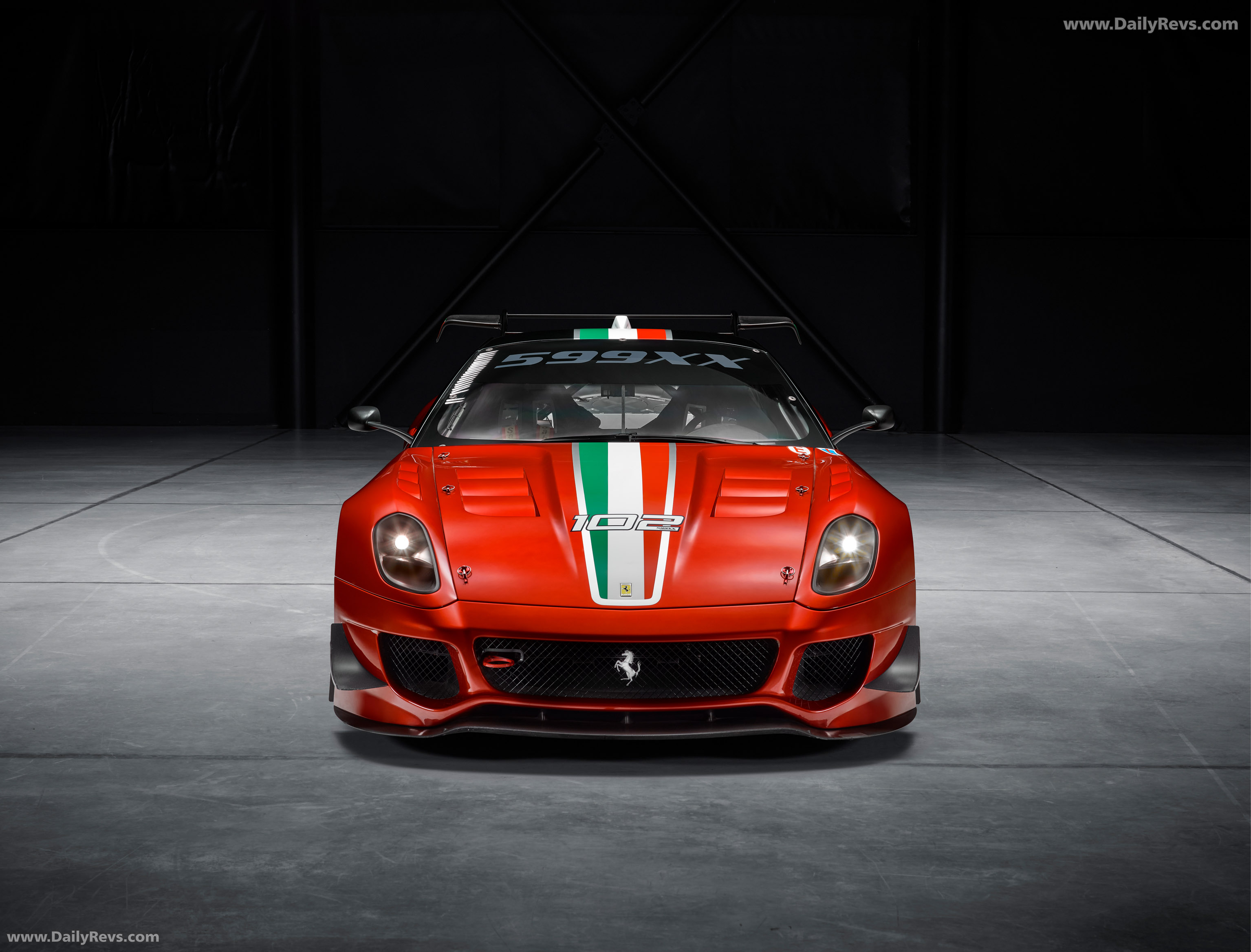
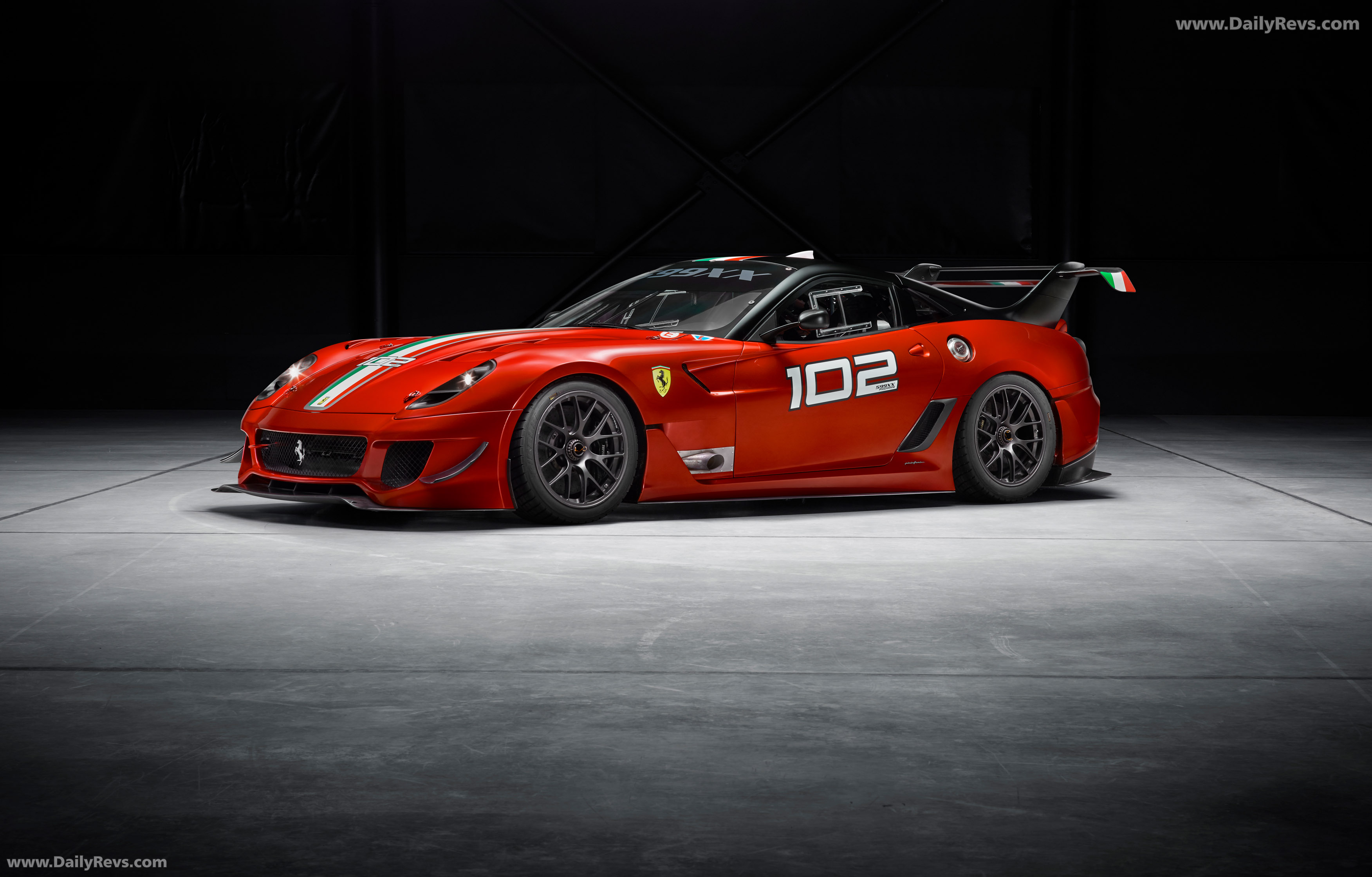
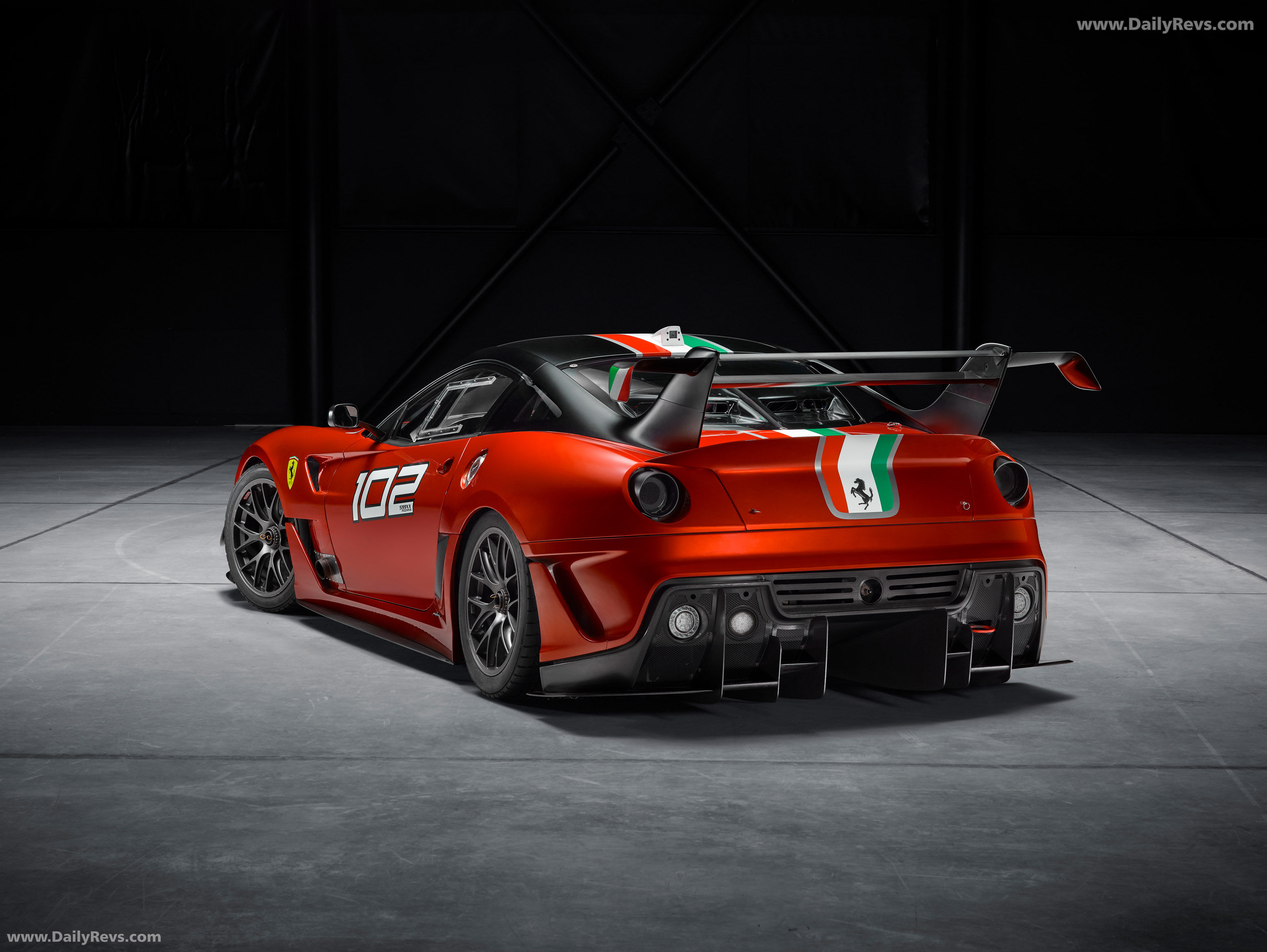
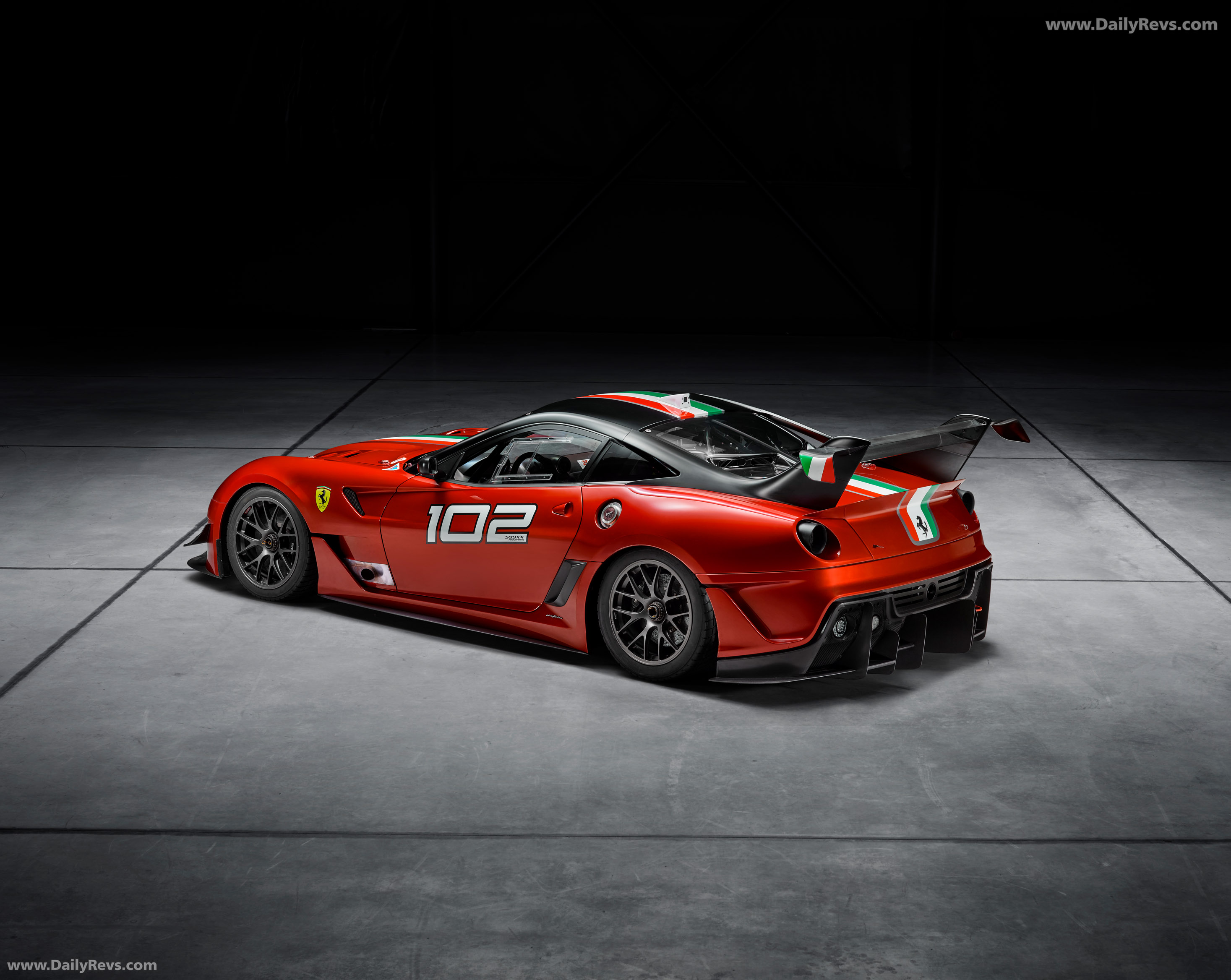
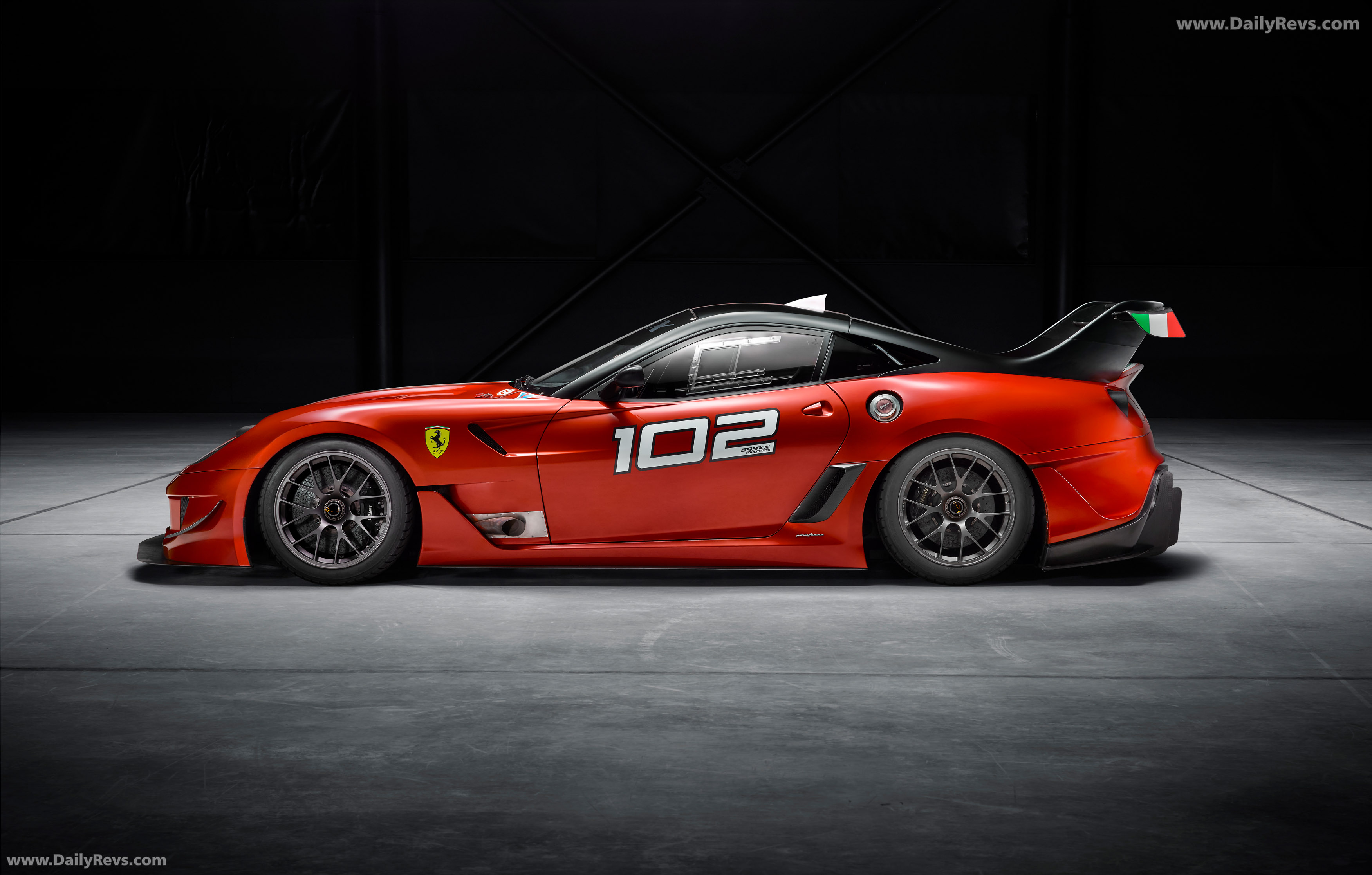
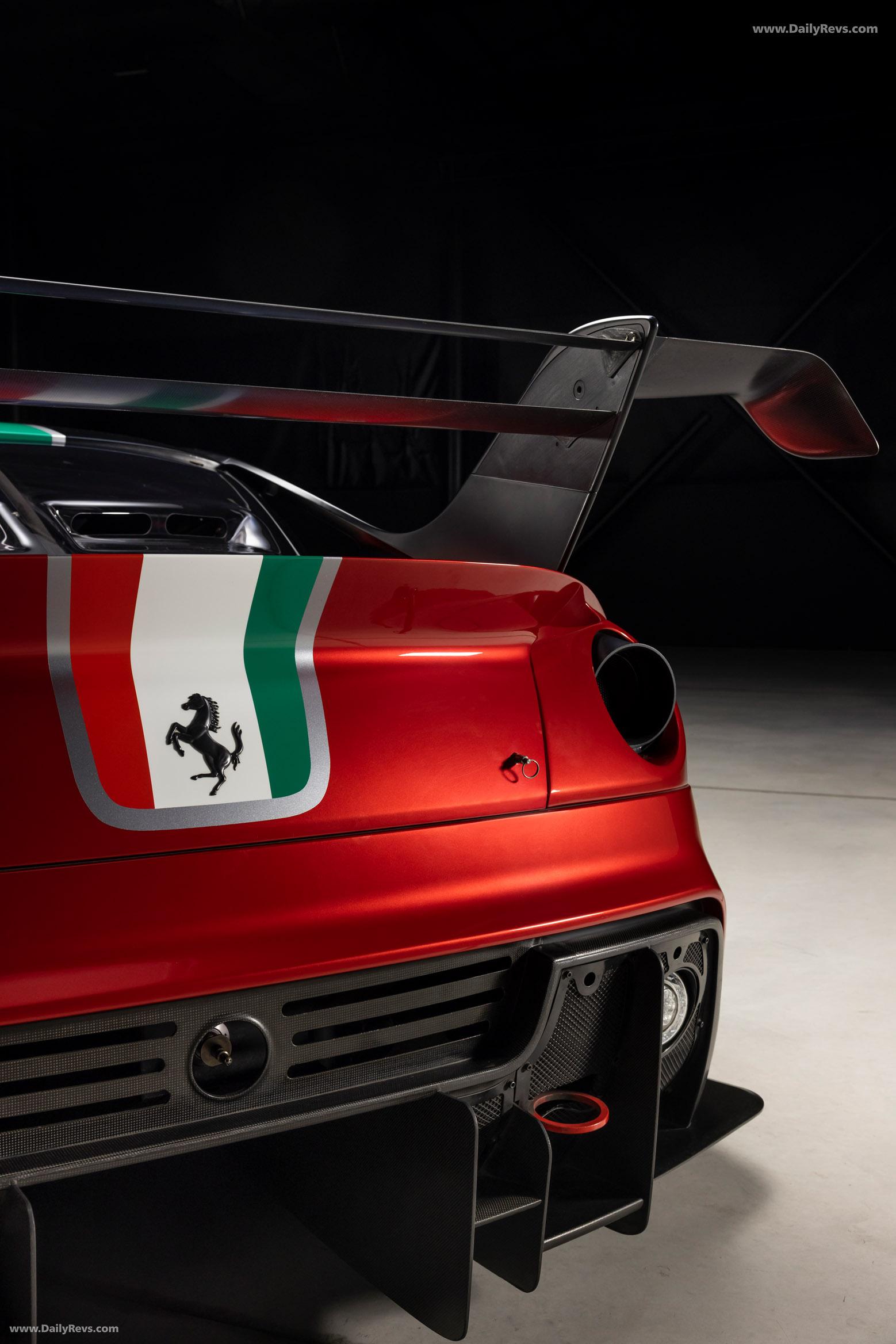
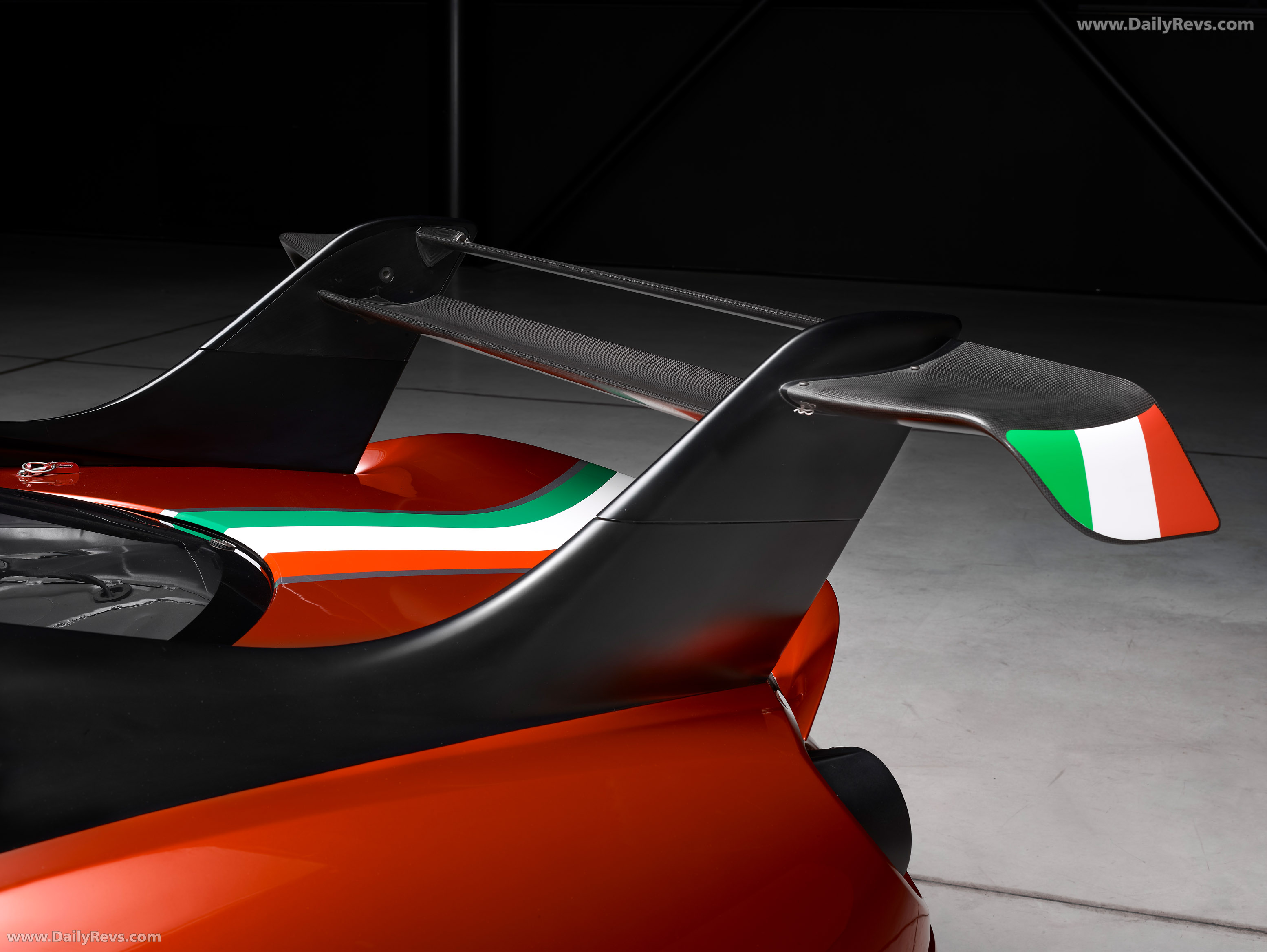
Visually, the 599XX Evo turned the already menacing 599XX into something close to a GT3 racer in spirit. The most striking feature was its rear wing — a twin-element “opening gap” design inspired by Formula 1. This active aerodynamic system varied downforce between the front and rear axles, adapting in real time to speed and cornering forces. It could generate 440 kilograms of downforce at 200 km/h, double that of the base 599XX
Up front, subtle canards and reprofiled intakes fine-tuned airflow, while the carbon-fiber underbody continued to feature the Actiflow System, channeling air through the diffuser to reduce drag. The result was a car that didn’t just look like a racer — it behaved like one, with sharper turn-in and greater stability at speed.
Power and Precision
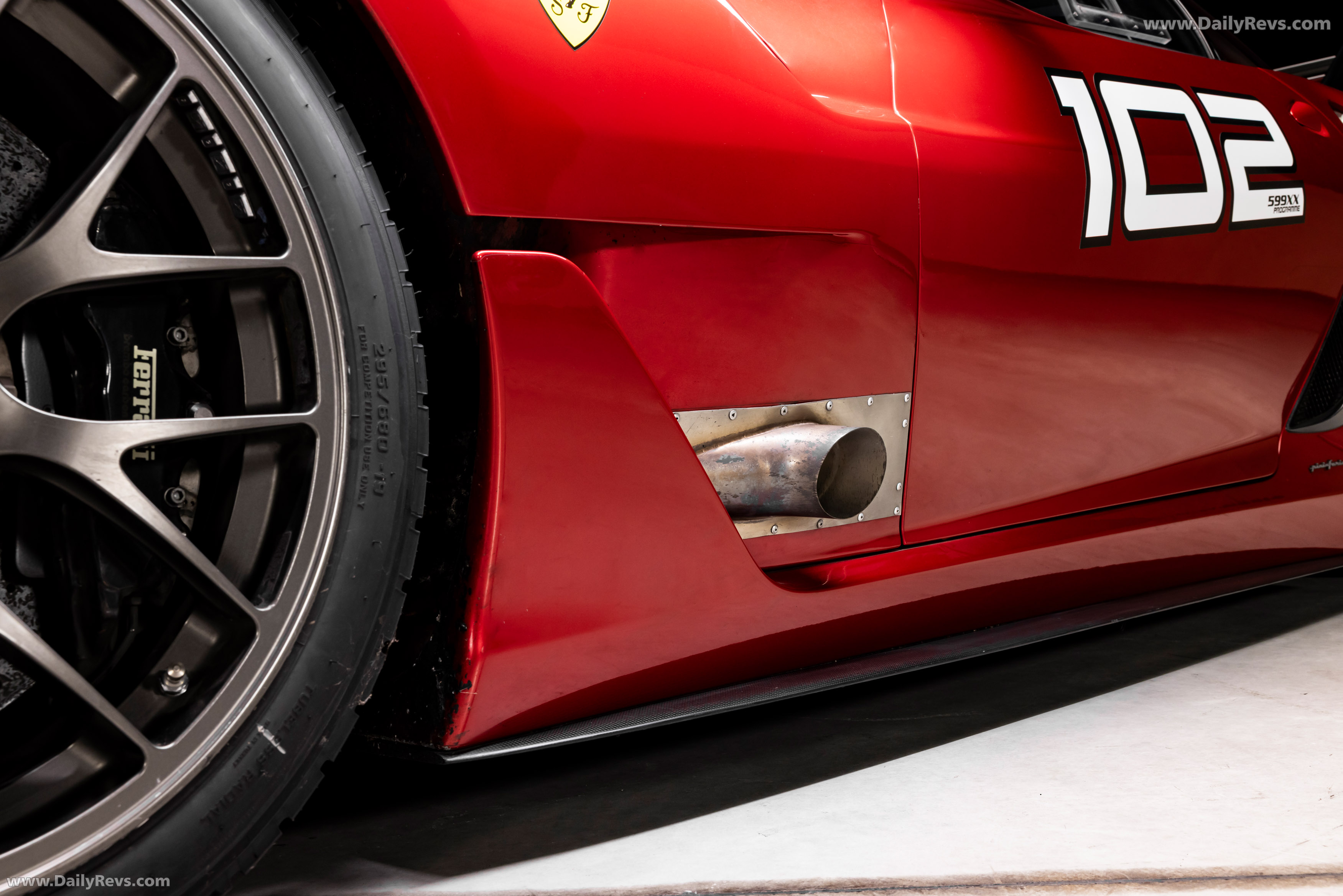
Under the long hood, the 6.0-liter naturally aspirated V12 gained an extra 20 horsepower, taking output to 750 hp, along with a modest 14 Nm torque increase. Power was delivered through an F1-derived six-speed sequential gearbox, capable of upshifts in under 60 milliseconds. Despite being heavier than Ferrari’s mid-engine XX models, the Evo’s balance — 48:52 front-to-rear — made it surprisingly agile.
The High Performance Dynamic Concept system, a pioneering control architecture, linked traction, damping, and stability into a single, adaptive framework. It was also the first Ferrari equipped with a “virtual race engineer”, a digital telemetry interface that guided drivers toward optimal performance lap after lap.
Legacy of the XX Era
When it debuted, the 599XX Evo wasn’t built to chase lap times, but it inevitably made history. With its predecessor already having cracked the seven-minute barrier at the Nürburgring, the Evo’s data-driven upgrades confirmed Ferrari’s command of active aerodynamics and electronic control long before those ideas became road-car standards.
More than a decade later, its influence is visible across Ferrari’s high-performance lineage — from the F12tdf to the 812 Competizione. The Evo was a bridge between mechanical purity and digital intelligence, a rare example of motorsport engineering made accessible only to a handful of Ferrari’s most loyal clientele.
Technical Specifications
Engine and Powertrain
- Type: Naturally aspirated 65° V12
- Displacement: 5,999 cc
- Maximum Power: 750 hp (559 kW) at 9,000 rpm
- Torque: 700 Nm (516 lb-ft)
- Transmission: 6-speed sequential F1-style gearbox
- Shift Time: 60 milliseconds
- Drive Type: Rear-wheel drive (RWD)
- Redline: 9,000 rpm
Performance
- Lap Record: 6:58.16 at Nürburgring Nordschleife (standard 599XX)
- Power-to-Weight Ratio: Approximately 2.1 kg/hp
- Weight Reduction: 35 kg lighter than 2010 599XX
Chassis and Dimensions
- Chassis: Aluminum spaceframe with composite bodywork
- Body Materials: Extensive use of carbon fiber and lightweight composites
- Dry Weight: 1,415 kg (reduced from 1,450 kg on 599XX)
- Weight Distribution: 48% front / 52% rear
- Front Track: 1,710 mm
- Rear Track: 1,610 mm
Aerodynamics
- Downforce: 440 kg at 200 km/h
- Active Aerodynamics: Twin-profile adjustable rear wing with F1-style drag control
Aero Systems:
- Revised front splitter and canards
- Carbon-fiber undertray with Actiflow system
- Enlarged rear diffuser
- Cooling: Improved brake and engine air management
Brakes, Suspension, and Tyres
- Brakes: Brembo carbon-ceramic (CCM2) discs
- Suspension: Magnetorheological adaptive dampers
- Tyres: Pirelli racing slicks (track-spec compound)
- Wheels: Lightweight forged aluminum
Electronics and Data Systems
- Dynamic Control: High Performance Dynamic Concept (HPDC) integrates traction, suspension, and stability systems
- Data System: Ferrari Virtual Race Engineer (VRE) for real-time performance feedback
- Telemetry: Integrated live data capture for Ferrari Corse Clienti engineers
Interior and Configuration
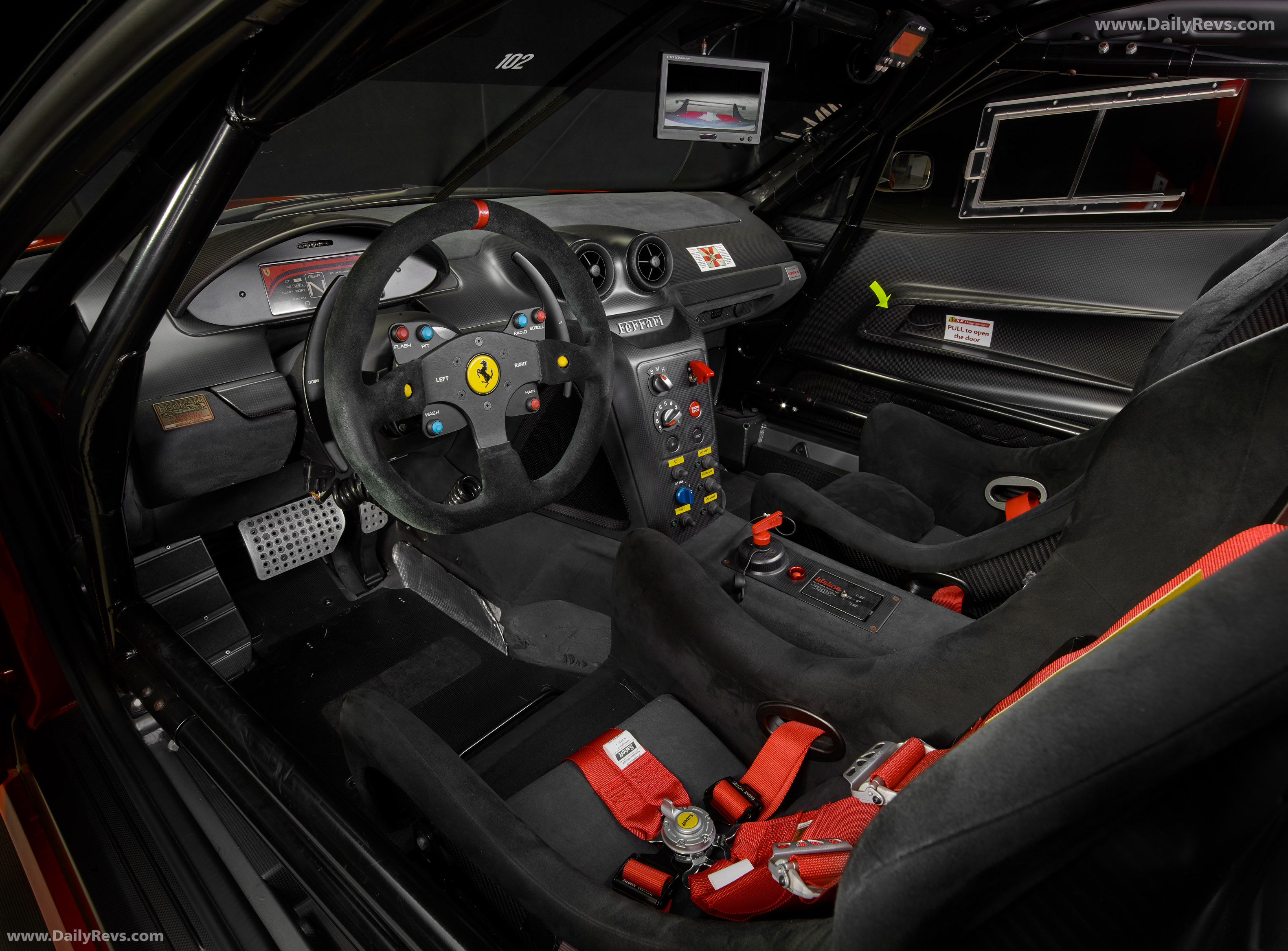
- Cockpit: Single-seat setup with integrated roll cage
- Steering Wheel: F1-derived with mode selectors and digital controls
- Display: Race-spec digital instrument cluster with data telemetry readouts
Production and Programme
- Production Period: 2011–2012
- Units Built: 29 (including conversions from existing 599XX models)
- Programme: Ferrari Corse Clienti XX Programme
- Successor: Ferrari FXX-K (2014)