1948 Aston Martin DB1
By Lorenzo Bianchi November 6, 1948
The 1948 Aston Martin DB1 debuted as the Two Litre Sports at the London Motor Show, becoming the first production model introduced under David Brown's ownership.
A 1,970cc four-cylinder engine developed by Claude Hill produced 90 bhp and was paired with a four-speed manual gearbox.
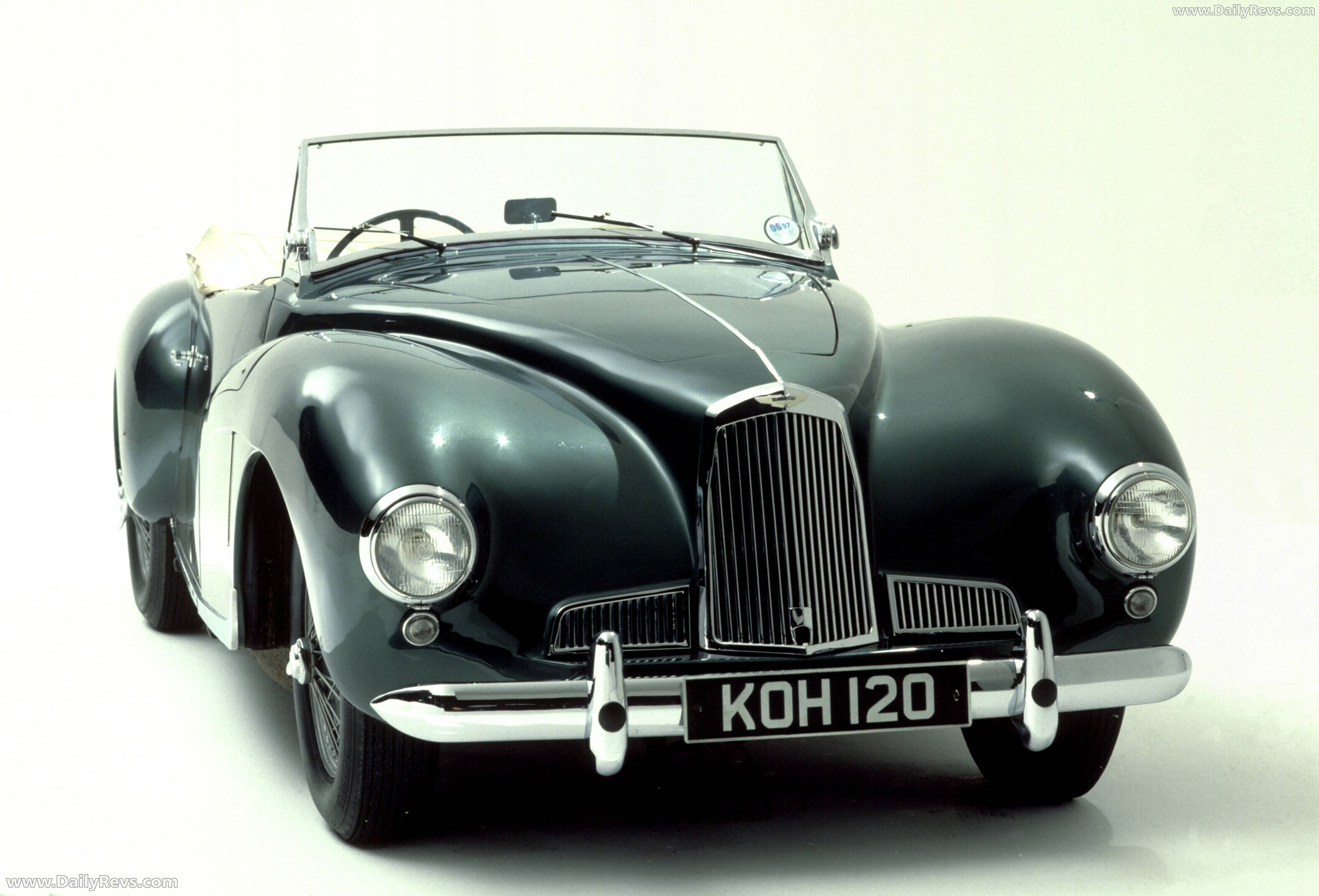
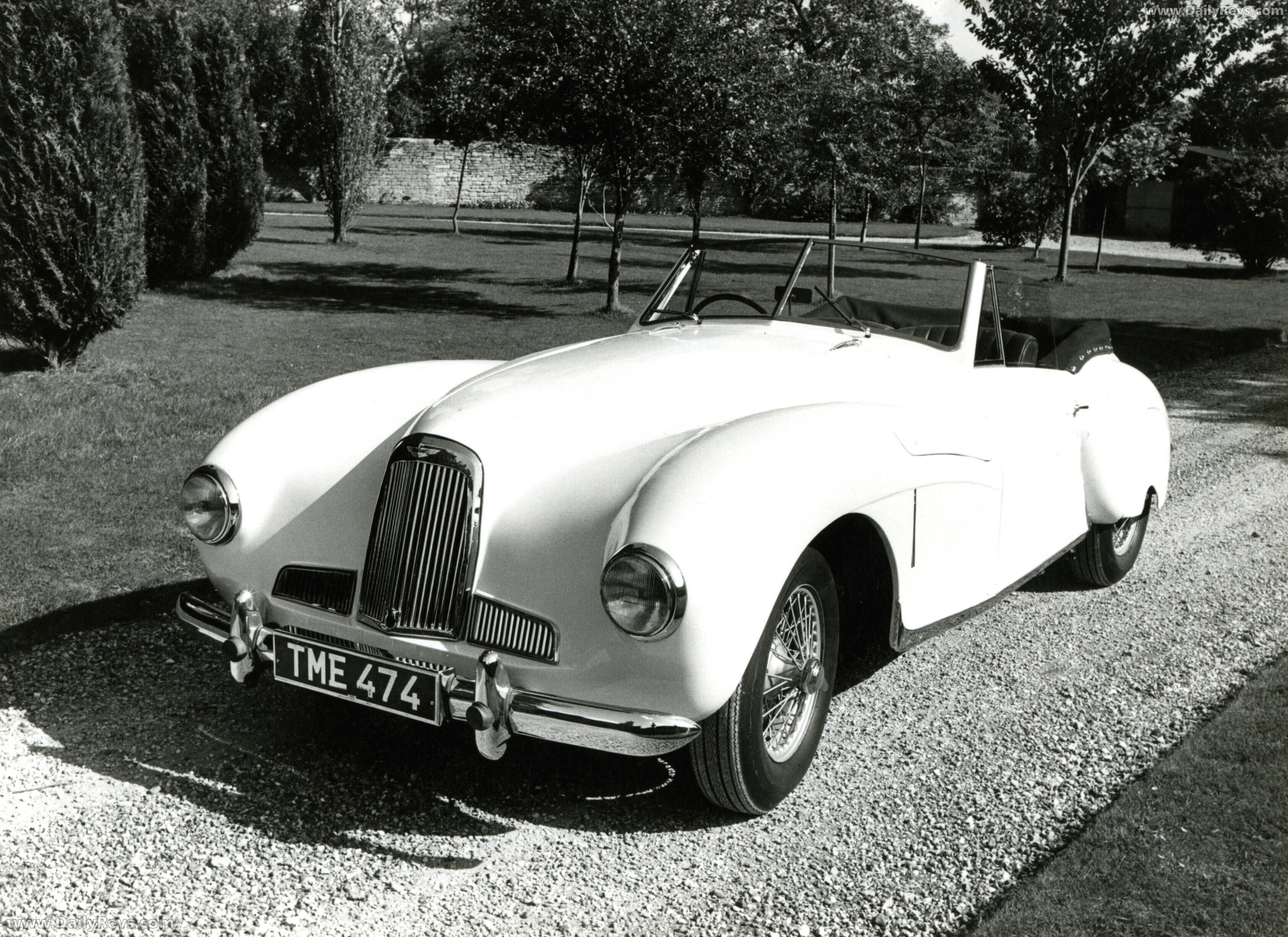
The DB1 featured Frank Feeley's open two-seat bodywork, independent front suspension and a three-piece radiator grille that anticipated later Aston Martin designs.
1948 Aston Martin DB1 Begins the David Brown Era
The 1948 Aston Martin DB1 marked the beginning of a new period for the British manufacturer. Introduced at the London Motor Show, the car was originally called the Two Litre Sports and became the first production Aston Martin developed under David Brown's ownership.
Brown had acquired Aston Martin in 1947, followed by Lagonda, bringing additional engineering and design resources into the company.
The Two Litre Sports combined Aston Martin's existing mechanical development with new coachwork by Frank Feeley, who had previously worked for Lagonda.
The DB1 name was applied retrospectively following the introduction of the DB2 in 1950.
Frank Feeley Bodywork and Three Piece Front Grille
The DB1 adopted an open two-seat body with flowing front wings, a long bonnet and a relatively low passenger compartment.
Its front design featured a distinctive three-piece radiator arrangement, with a central grille accompanied by smaller openings on either side.
This treatment became an early expression of the grille design later associated with Aston Martin.
Round headlights were integrated into the front wings, while the rear bodywork incorporated rounded surfaces and a folding convertible roof.
Unlike the earlier Atom prototype, the DB1 was presented as a finished roadgoing sports car.
Tubular Chassis and Independent Front Suspension
The DB1's chassis was developed from the engineering principles established by Aston Martin's pre-war Atom prototype.
Claude Hill's tubular construction provided the foundation for the new model.
Independent front suspension used short trailing arms and coil springs, supported by a transverse torsion bar.
At the rear, a live axle was located by parallel links and a Panhard rod, with coil springs providing suspension movement.
Girling drum brakes were fitted at all four wheels.
The arrangement contributed to the car's contemporary reputation for controlled handling and ride comfort.
Open Two Seat Interior and Touring Equipment
The Two Litre Sports was designed as an open two-seat touring car rather than a competition-only machine.
Its cabin featured conventional instruments and a right-hand-drive arrangement.
Surviving examples show traditional upholstery, a simple dashboard and a folding soft top.
The convertible body provided the open-air driving experience expected from a British sports car of the late 1940s.
Interior colours and individual trim details varied between vehicles.
1970cc Four Cylinder Engine and Manual Gearbox
Power came from Claude Hill's 1,970cc overhead-valve four-cylinder petrol engine.
Equipped with twin SU carburettors, the engine produced approximately 90 bhp at 4,750 rpm.
A four-speed David Brown manual gearbox transmitted power to the rear wheels.
The DB1 had a quoted maximum speed of approximately 93 mph.
Although the chassis was well regarded, its modest power output and relatively substantial body limited outright performance.
Limited Production and the Arrival of the DB2
The DB1 remained in production from 1948 until 1950, with only a small number of examples completed.
Its high purchase price restricted demand. Aston Martin listed the Two Litre Sports at £1,498 before purchase tax, bringing the total British price to £2,331 14s 6d.
The DB2 subsequently introduced a six-cylinder engine developed by Lagonda, establishing the direction of Aston Martin's next generation of grand touring cars.
The DB1 remains significant as the first production Aston Martin of the David Brown era.