1939 Aston Martin Atom
By Lorenzo Bianchi November 6, 1939
The 1939 Aston Martin Atom was developed under Gordon Sutherland and Claude Hill, with its construction patented in March 1939 and the prototype completed in early 1940.
Its engineering incorporated rectangular steel-tube framing, aluminium body panels, independent front suspension and a four-speed Cotal electromagnetic transmission.
Only one Atom was built. The prototype covered approximately 90,000 miles in Gordon Sutherland's wartime service between 1940 and 1947 and influenced Aston Martin's post-war development.
Aston Martin Atom Introduced a Different Approach to Car Design
The 1939 Aston Martin Atom was an experimental saloon developed during a period when the British manufacturer was reconsidering how its future road cars should be built.
Conceived under company owner Gordon Sutherland and engineer Claude Hill, the project moved away from the traditional construction methods associated with Aston Martin's earlier sports cars.
Its design was patented in March 1939, shortly before the outbreak of the Second World War. The finished prototype was completed in early 1940.
Unlike the marque's established open sports cars, the Atom was a fully enclosed four-door, four-seat saloon intended to combine comfort, performance and efficient construction.
Streamlined Aluminium Body and Unusual Proportions
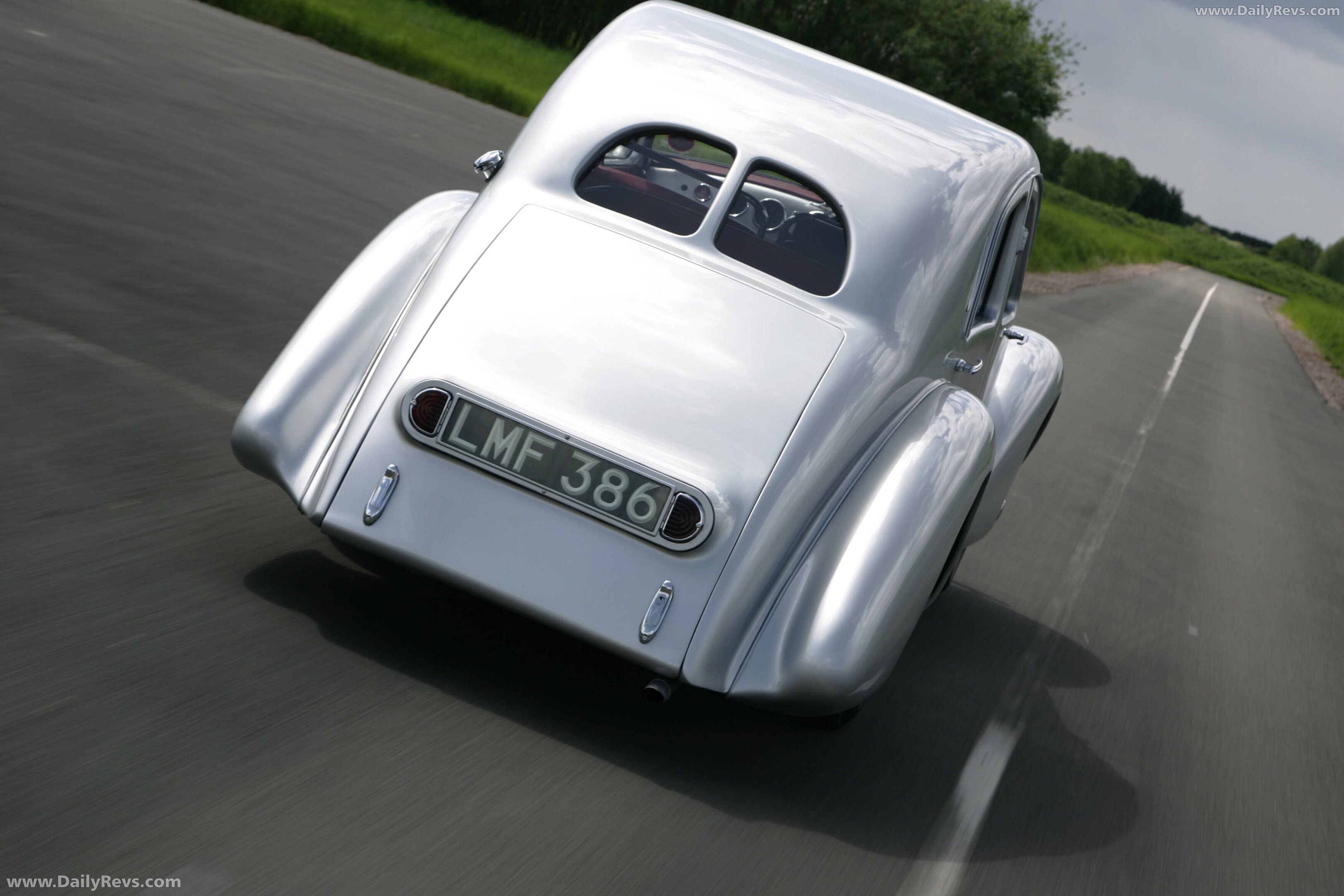
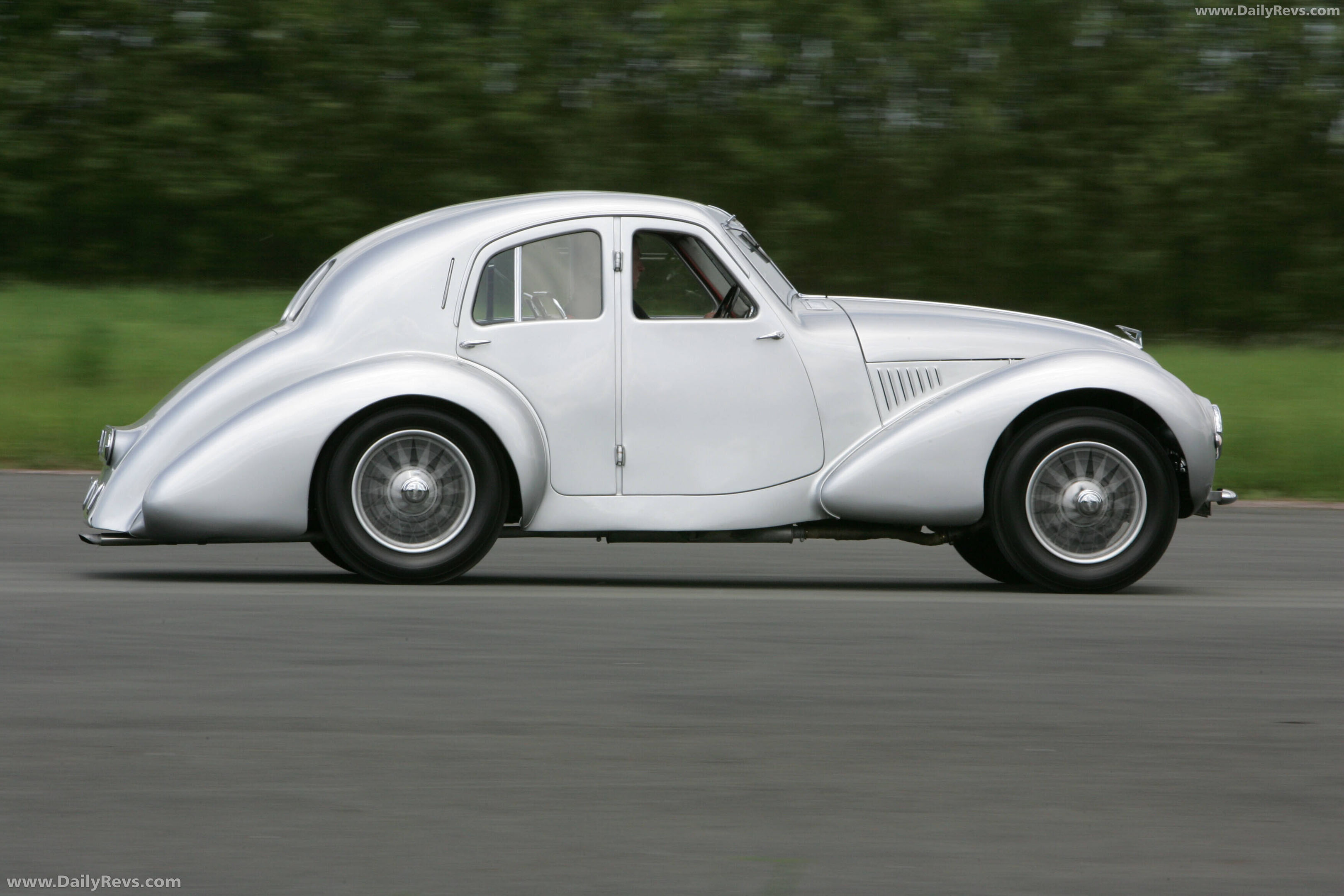
The Atom's exterior looked considerably different from Aston Martin's earlier models.
Its rounded front wings, enclosed passenger compartment and tapering rear bodywork gave the prototype a distinctive aerodynamic appearance.
The design retained separate headlights and a narrow front grille, while the roof extended over a four-seat cabin.
A long bonnet and curved rear section established proportions closer to an experimental touring saloon than a conventional sports car.
The exterior panels were made from lightweight aluminium, attached to the underlying structure through specialised mounting points.
Rectangular Steel Spaceframe and Independent Suspension
The Atom's main engineering departure was its integrated body and chassis structure.
Rectangular steel tubes formed a rigid framework, with different tube sections selected according to the stresses they were required to withstand.
This construction was patented by Aston Martin and Claude Hill in March 1939.
The chassis also introduced independent front suspension using trailing links and coil springs.
At the rear, a live axle was supported by semi-elliptic leaf springs.
Hydraulic drum brakes completed a mechanical arrangement intended to deliver improved handling and road comfort.
Four Seat Interior and Functional Cabin
The prototype accommodated four occupants through two side doors on each side.
Its cabin was developed as part of the wider effort to create a practical, comfortable touring car rather than another competition-focused roadster.
Period descriptions identify suspended hammock-style seating as one of the more unusual interior features.
The Atom's limited wheelbase restricted rear passenger accommodation, and Aston Martin acknowledged that a production version would have required additional space.
Two Litre Engine and Cotal Transmission
The Atom initially used Aston Martin's 1,950cc four-cylinder single-overhead-camshaft engine.
A four-speed Cotal electromagnetic semi-automatic transmission was fitted, providing an unusual alternative to a conventional manual gearbox.
In 1944, the prototype received a different 1,970cc four-cylinder engine designed by Claude Hill.
Aston Martin records a maximum speed of approximately 90 mph during the vehicle's development.
Wartime Testing and Postwar Influence
Despite the interruption caused by war, the Atom remained in regular use.
Gordon Sutherland covered approximately 90,000 miles in the prototype between 1940 and 1947.
Its construction and handling characteristics influenced Aston Martin's subsequent road-car engineering, particularly the post-war Two Litre Sports.
Only one Atom was constructed. The surviving prototype remains an important example of the company's pre-war experimental work.