Polestar Tri Aero Feels Like the Evoque Coupé Reborn as an EV
By Hugo Mattson September 23, 2025

The Tri Aero is defined by three modules that lock into a single aerodynamic flow.
Its clean surfaces and sharp geometry give SUV coupé design rare clarity.
Modularity doubles as a design language and a smarter way to build cars.
.jpg)
A Coupé SUV That Actually Earns Its Shape
The SUV coupé is one of the industry’s least loved formats. Too often, it feels like a compromise — an SUV with a lower roofline that trades practicality for a silhouette. Designer Gabriel Naretto’s Polestar Tri Aero doesn’t follow that script.
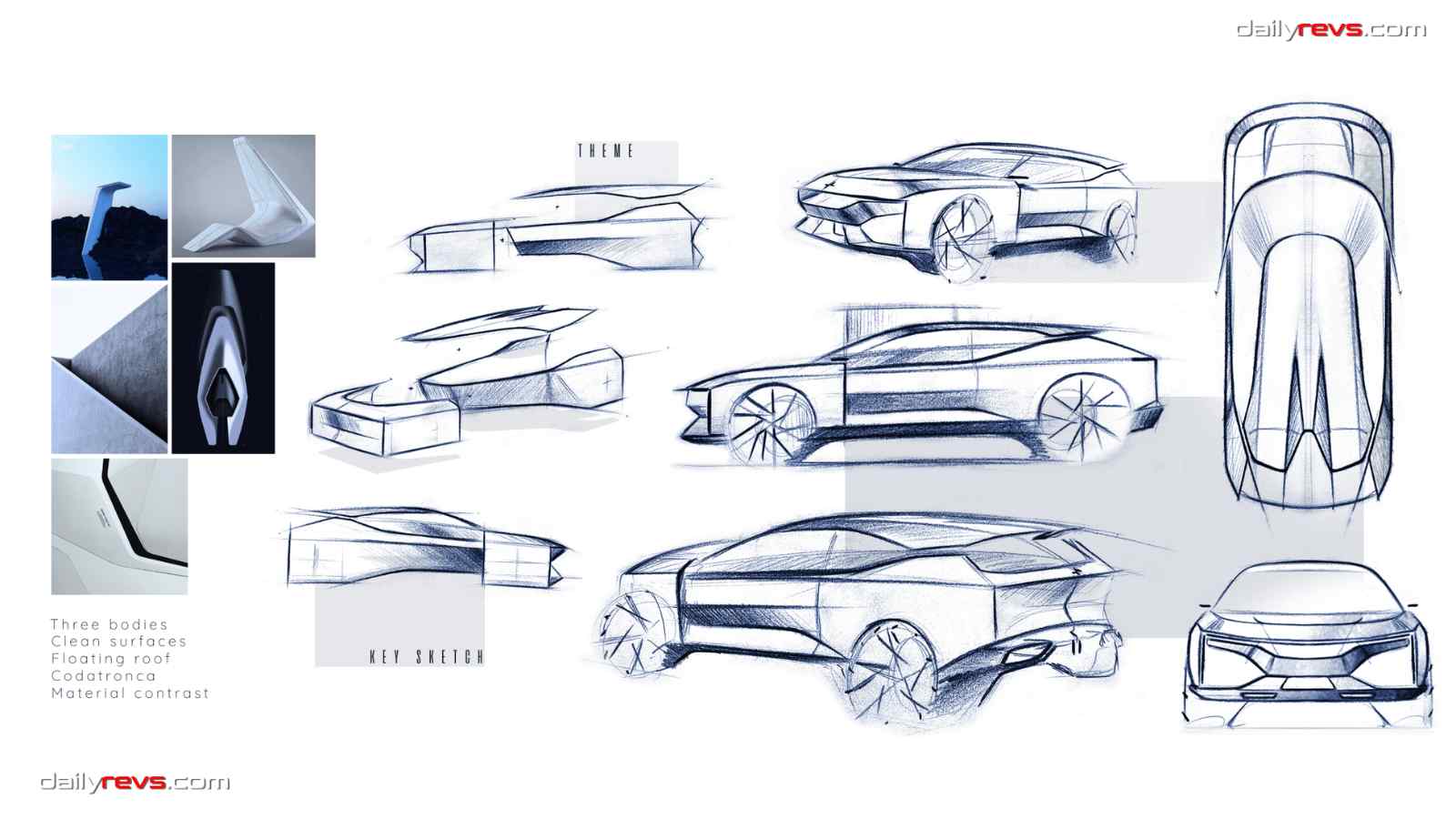
Instead of tapering a single body into shape, Naretto splits the car into three parts: hood, cockpit, and tail. Each works as its own volume, but together they create a single aerodynamic system. It’s the design principle he calls Three Bodies, One Breath.
That’s what gives the Tri Aero its sense of discipline. The modules aren’t decorative. They’re functional pieces that guide the car’s stance, airflow, and balance. Where most SUV coupés fight their proportions, this one organizes them.
Design That Balances Clarity and Aero
The Tri Aero doesn’t chase attention with curves or excess surfacing. Its body is made of broad planes and sharp cuts, closer to modern architecture than the soft lines of traditional crossovers. The floating roof makes the profile lighter, while the inverted-cone wheels add rhythm and channel heat away.
Aerodynamics aren’t an afterthought here. The cockpit guides air cleanly overhead, and the tail manages the exit with a diffuser, splitter, and air curtain. Even the stance feels carved by airflow. The whole shape works as one continuous aerodynamic object.
That clarity is what makes the car memorable. It’s minimal, but it isn’t timid. By stripping the design down to what matters, the Tri Aero feels sharper than many concepts weighed down by decorative drama.
.jpg)
Materials and the Cabin
Polestar has built its brand on sustainability, and Naretto carries that through without making it a slogan. The Tri Aero uses recycled fabrics, technical finishes, and lightweight alloys where they’re needed, not sprinkled around for effect. Contrasting surfaces — matte bases, crisp painted panels, and metallic highlights — reinforce the three-part structure.
The interior follows the same principle of focus. A low driving position, a defined center tunnel, and tactile finishes put the driver at the center. It’s a 2+2, so there’s some practicality, but the cockpit never pretends to be a lounge. This is minimalism sharpened for driving.
More Than a Concept
The Tri Aero is not just about looks. By designing the hood, cockpit, and tail as separable units, Naretto suggests a smarter way of building cars. Each section could be manufactured, tested, or even replaced independently. A damaged rear wouldn’t mean rebuilding the whole car. An updated hood could be slotted in without redesigning everything else.
That modular logic gives the Tri Aero more weight than the usual concept SUV coupé. It feels like a proposal, not just a sketch. And that’s why it sticks. Instead of chasing spectacle, it shows that clarity and restraint can be more radical than another round of exaggerated shapes.
Check out the full gallery featuring the sketches and rendering of this concept car at the end of this article.
Related News
Scintìa by Automobili Mignatta: A Young Designer’s V12 Tribute to 1960s Italy
Connect with Gabriel Brando Naretto
To explore more of Gabriel Brando Naretto’s work, including ongoing projects and portfolio highlights, you can follow or connect with him on the following platforms:
Disclaimer
These projects are creative explorations by young
car designers. In some cases, they were developed independently, while
in others they were created with guidance or mentorship from OEM design
studios, such as during internships. Unless otherwise noted, they are
not official works of the manufacturers or studios involved.
DailyRevs
does not claim credit for the vision or effort behind these projects
and receives no financial compensation for publishing them. Each feature
is shared with the consent of the designer following direct outreach
and agreement. We also welcome submissions from designers who wish to be
featured, provided the quality of the work meets our editorial
standards.


