Mercedes-Benz Bets on 18 New Models to Close the Gap with BMW
By Hugo Mattson August 8, 2025

Mercedes-Benz will launch 18 new models in 2026 to accelerate its electric vehicle strategy.
BMW’s Neue Klasse platform debuts in 2025 with a clean-sheet design built for next-generation EVs.
The luxury EV race is now a contest between Mercedes’ scale and BMW’s platform innovation.
The next iteration of one of the automotive world's greatest rivalries is set to get underway
BMW and Mercedes-Benz have always written about change differently. One goes hard on performance DNA and precision engineering. The other fuses cutting-edge technology with luxury in volume. Now, as the two brands both turn electric, those nuances are becoming more extreme.
In 2026, Mercedes-Benz is scheduled to introduce 18 new models—a product launch it describes as the biggest in its history. It's an aggressive strategy meant to speed up its electrification plan, regain lost sales momentum, and battle more forcefully with BMW in every segment.
BMW, on the other hand, is taking the long term. Its new Neue Klasse platform, arriving at the end of 2025, is a complete overhaul of how an EV needs to be constructed—from battery design to cabin technology. BMW isn't releasing torrents of new models. Rather, it's building the groundwork better.
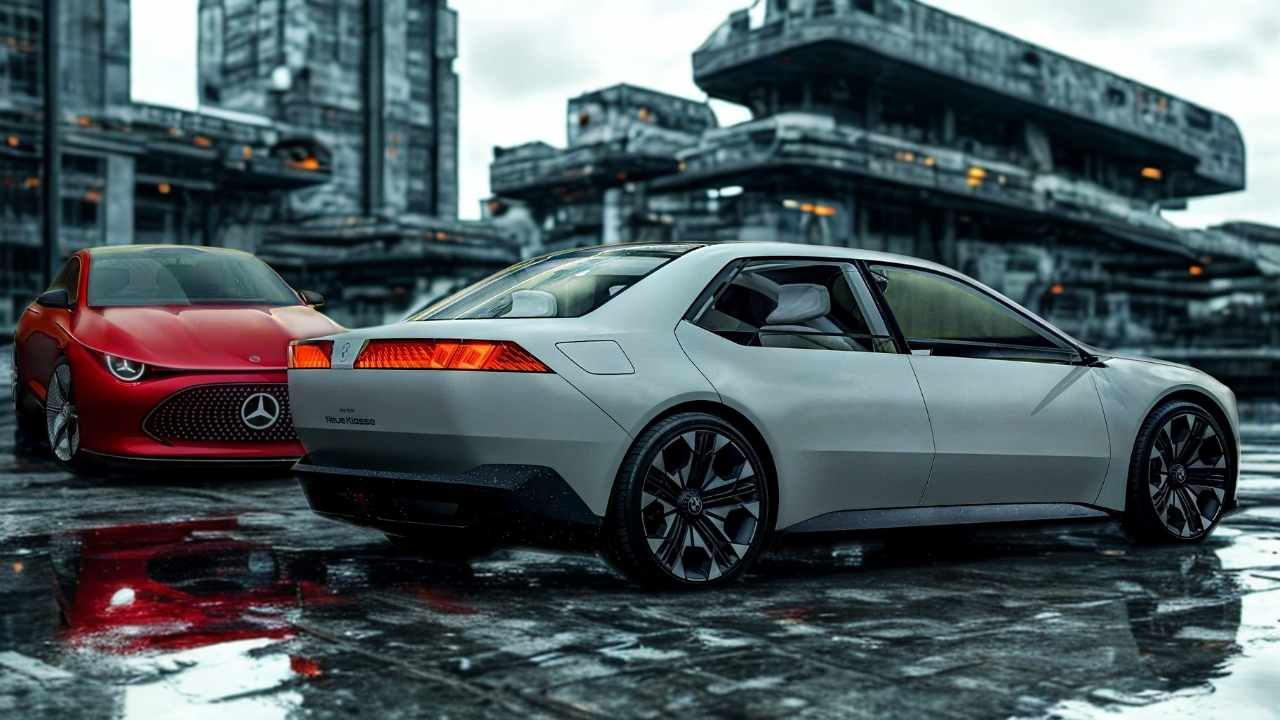
Mercedes is going broad, and quick
The figures do the talking. Mercedes-Benz has announced that it will launch 18 models by itself in 2026 alone, of which 15 are either all-new EVs or major EV overhauls. The rollouts cover the gamut from small crossovers to AMG high-performance sedans and revised luxury flagships such as the EQS.
This plan demonstrates a desire for momentum. Following a 3 percent sales decline in 2024 and an additional 6.2 percent drop in the first half of 2025, Mercedes feels compelled to recapture volume and visibility in a rapidly shifting environment.
Instead of holding out for a new EV platform to come of age, Mercedes is proceeding with a combination of architectures—some developed over adapted combustion platforms, others from fresh electric-first designs. Concurrently, the brand is streamlining the design language across its range, eliminating the EQ sub-brand's unique look in favor of one, more unified appearance.
It’s an aggressive push. And it comes with risk. Relying on multiple architectures can complicate production and limit long-term efficiencies. But the payoff, if executed well, could be substantial—especially in markets like China and Europe where EV demand continues to grow.
BMW is taking its time—for a reason
While Mercedes is going wide, BMW is going deep. Its response to the future is Neue Klasse—a brand-new, EV-exclusive platform that will serve as the foundation for everything from midsize sedans to SUVs and possibly even future M cars.
Neue Klasse is more than a product plan. It's a clean-sheet redesign of what BMW vision is for its EVs. The platform will reportedly provide as much as 30 percent greater range, quicker charging, and vastly improved efficiency compared to BMW's current EVs. Neue Klasse also features a new digital-first cabin experience with a panoramic head-up display and a reimagined infotainment system.
The first to debut will be a compact sedan comparable to the 3 Series, followed by a subcompact SUV. BMW then will roll out the Neue Klasse lineup gradually, as production builds through 2026 and 2027.
What BMW gains in model size, it hopes to recoup in technical prowess. The company is wagering that producing fewer cars on a smarter, purpose-designed platform will put it ahead of rivals cobbling together mixed architectures.
Different roads, same destination
Both companies are targeting the same milestones by the end of the decade: a target of about 50 percent of global sales as electric or plug-in hybrids by 2030, and complete carbon neutrality by the early 2040s. But their methods couldn't be more apart.
Mercedes-Benz is committed to reach—getting electric alternatives in front of as many buyers as possible, at all types of price points and body styles. Its product ramp-up in 2026 is meant to keep the nameplate in the game in all markets.
BMW is wagering on refinement, meanwhile. The Neue Klasse is focused on long-term performance, cost-effectiveness, and digital integration. It's a slower launch, but one that might bring deeper rewards as the EV market matures.
The competition goes on—with new rules
It's not merely a product competition. It's a philosophical divide in the way traditional automakers are responding to the most dramatic change the industry has witnessed in decades.
If Mercedes' approach works, it will demonstrate that size and adaptability remain relevant even in an EV-led era. If BMW's Neue Klasse fulfills its potential, it will demonstrate that platform simplicity and long-term engineering can beat hustle-first growth.
By 2027, both will have laid their cards fully on the table. Until then, everyone's watching to see how this latest chapter of the BMW vs Mercedes saga plays out—not on the Nürburgring, but in boardrooms, software development facilities, and battery factories.