How RAM 1500s Ended Up Launching Iranian Drones From Russia
By Hugo Mattson July 23, 2025

Civilian trucks repurposed for the battlefield: RAM 1500 vehicles are being used as launch points for Iranian-produced loitering munitions by Russian troops.
Tactical agility through mobility: The trucks enable rapid relocation and deployment of drones, making them difficult to intercept and detect.
Sanctions in question: The presence of the trucks in conflict areas brings into sharp focus serious questions regarding dual-use exports and enforcement loopholes.
Converting Civilian Pickups into Combat Tools
Video and photographic footage from the battlefield has authenticated that Dodge RAM 1500 pickups are being outfitted to deploy makeshift launch racks in their beds to launch Geran‑2 drones—Russia's localized term for the Iranian Shahed‑136. Such trucks are one of an increasing trend: the tactical militarization of civilian platforms.
Their presence in recognizable North American models implies they were either diverted from legal civilian supply chains or purchased through unofficial channels that evade international sanctions. Howsoever they got there, their combat deployment has been well documented.
Why Ram 1500 Is a Tactical Fit for Drone Warefare
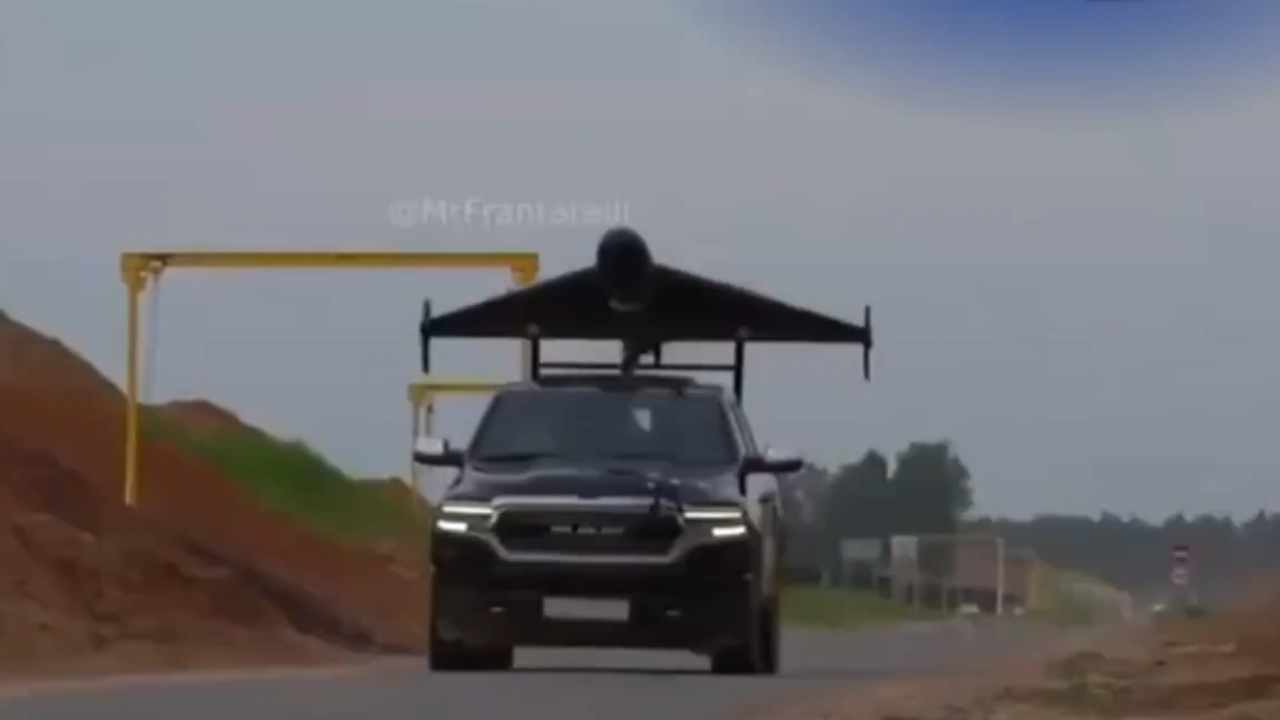
Quick Deployment Without Detection
The design of the RAM 1500—broadly nondescript and widely distributed—allows it to become all but invisible in local traffic until deployment time. Its application provides the surprise factor, reducing visual warnings that would otherwise inform overhead surveillance or forward observers.
Mobility That Undermines Defense Systems
As opposed to stationary drone launchers, a mobile platform can be relocated following every launch. This renders targeting much more challenging and exacerbates the pressure on defense systems that have to geolocate strike sources. It introduces a time and space factor in drone warfare that numerous conventional systems weren't equipped to handle.
Affordability and Readiness
A brand-new RAM 1500 can be bought for under the price of many tactical vehicles—but its battlefield utility, particularly in drone-carrying capacity, is that of much more costly systems. When added to the low unit cost of the Geran‑2 drones, the system presents a rapid, repeatable, and low-cost attack system.
Pathways Into the Conflict Zone
Although RAM trucks are produced in North America and are mostly marketed in civilian markets, their availability in a military situation reflects the end-use monitoring failure. Such trucks can have filtered through third-party countries or private dealers with lenient or non-existent export controls.
Real or Cloned Platforms?
Despite some speculation that the cars may be replicas or altered domestic models, visual data such as trim and bodywork coincide heavily with authentic RAM 1500 trucks. The evidence is consistent with the idea that original trucks, not copies, are currently in Russian use.
Unclear Scale of Use
Currently, there is no obvious information on how many trucks are being used, or if the tactic is being ramped up. What is certain, though, is that these are not isolated incidents. The trend of deployment across various zones indicates an evolving standard rather than an ad-hoc improvisation.
From Pickup Bed to Drone Bay: The Technical Adaptation
RAM 1500s are being equipped with launch frames installed directly in their beds. The racks stabilize and incline the Geran‑2 drones—loitering munitions that utilize rocket-assisted launching systems. After takeoff, the drones fly at intermediate altitudes using pre-programmed coordinates or active targeting assistance.
This loading, launching, and moving process can be done within a matter of minutes. Commenters observe that the mobility also improves survivability, enabling the platform to escape counter-battery fire or surveillance drones trying to track launches.
Shifting Battlefield Dynamics
Constantly Moving Launch Sites
The capacity for drones to be launched from arbitrary and mobile sites makes many conventional means of targeting useless. Rather than sweeping for fixed launching facilities, the latter have to contend with moving platforms, often disguised as civilian vehicles.
They are not specially designed military vehicles. Their presence on the battlefield muddles the distinction between civilian infrastructure and war-time logistics, obscuring supply chain enforcement and danger in every dual-use product life cycle.
Surge in Tactical Innovation
Geran‑2 drone is already low-cost and impactful. Coupling it with mobile, throwaway platforms such as RAM 1500s increases operational reach, strike frequency, and launch team survivability. More generally, it represents a transition toward decentralized and scalable drone warfare.
How Authorities and Militaries Might Respond
Tighter Export Oversight on Civilian Vehicles
This advancement will probably spur tighter export monitoring, especially for vehicles that are considered high-risk for modification. Nations that are typical transit hubs will have to endure renewed attention or outright pressure to limit re-exportation.
Field Intelligence Will Have to Adapt
If drones are deployed from vehicles that cannot be differentiated from run-of-the-mill trucks, visual identification will need to change its standards. AI-powered image recognition, review of drone footage, and heat-mapping could become crucial in identifying altered launchers within traffic.
Preventing Launches Before They Happen
Operationally, the focus may shift toward stopping the truck before it launches its drone. This could involve surveillance of roads near known storage sites, interdiction of vehicle convoys, or disruption of logistical hubs where such modifications occur.
The Broader Implications of Mobility and Stealth
Consumer vehicles integration into combat operations represents a quiet but fundamental change in contemporary conflict. Tactical mobility is no longer the exclusive purview of costly military fleets. Commercial availability, logistical ease, and deniability make platforms such as the RAM 1500 a force multiplier for asymmetric strategy.
This transformation is indicative of a new phase in hybrid warfare—one that is more difficult to track, more difficult to forecast, and increasingly harder to counter with conventional military responses.
The Road Ahead
While drone warfare evolves, it is not only the drones that are worth paying attention to. The vehicles they deploy from—particularly when masqueraded as unassuming civilian vehicles—will dictate the tactics and destinies of contemporary battlefields. The RAM 1500, then, is no longer merely a work van. It is part of an operational paradigm predicated on stealth, scalability, and velocity.
Look for future combat reports and satellite evaluations to not only highlight payloads, but what's sitting next to them—and how those platforms arrived in the first place.
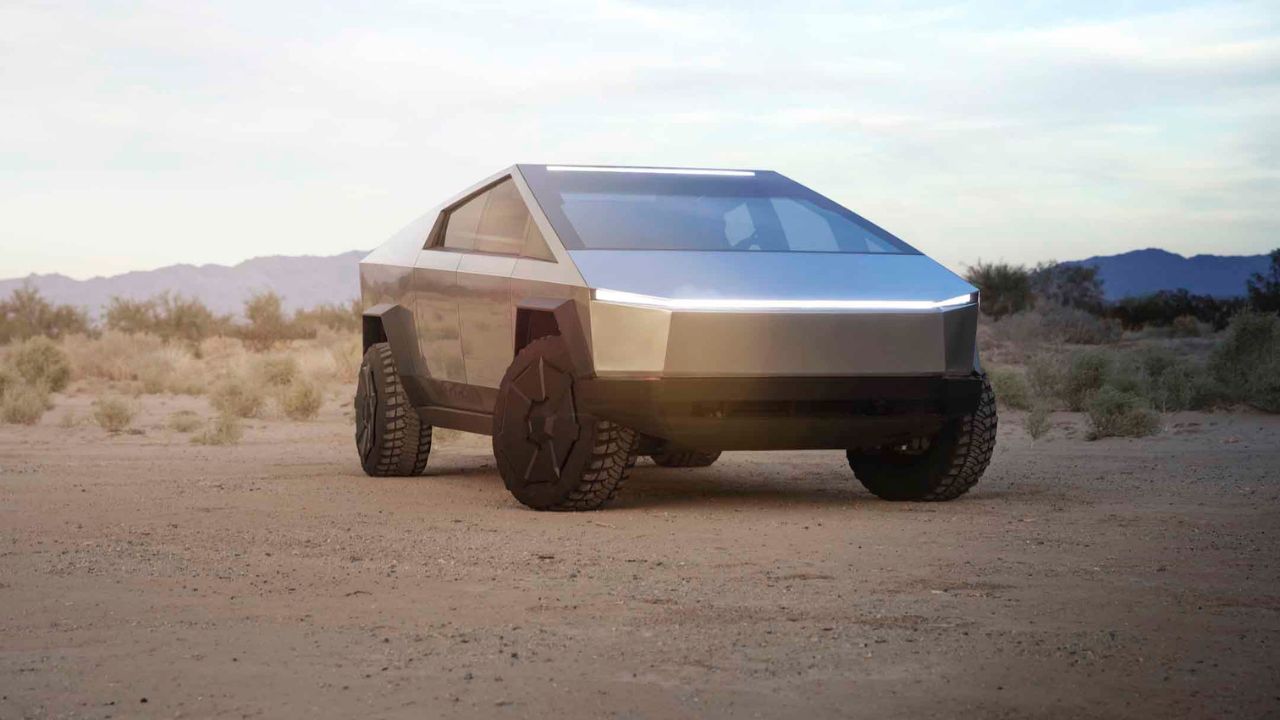
Not All American Trucks Are Battle-Ready in Russia
RAM 1500s are secretly converted for drone deployment in real combat areas—but not all high-profile "battle vehicle" appearances result in use. Such as the highly publicized Cybertruck owned by Chechen leader Ramzan Kadyrov, which had a reported rooftop machine gun mounting. The video is of him standing with the vehicle, but no record of its frontline deployment exists. Instead, it looks more like an authorized flex than a strategic tool—one that was purportedly disabled by Elon Musk before it could even exit the garage. As RAMs are deploying drones, this Cybertruck appears to have been kept on the ground by optics, not armaments.
Sources :
YouTube