GAC NEXUS Concept Gives China's Sedans a Wild New Look
By Hugo Mattson November 4, 2026

The GAC NEXUS concept is a four-door fastback with a large glass roof, sculpted doors and a low, wide stance.
Its exterior features geometric wheels, full-width LED lighting and a rear end with distinctive vertical light elements.
Designed by Mehran Cheraghi, NEXUS offers an independent interpretation of future GAC styling.
Chinese automakers have been showing some unusual concept cars lately, but the GAC NEXUS concept comes from outside the manufacturer's own design studios.
Created by independent automotive designer Mehran Cheraghi, it imagines a low, four-door fastback with a huge glass roof and bodywork that looks quite different from anything currently wearing a GAC badge.
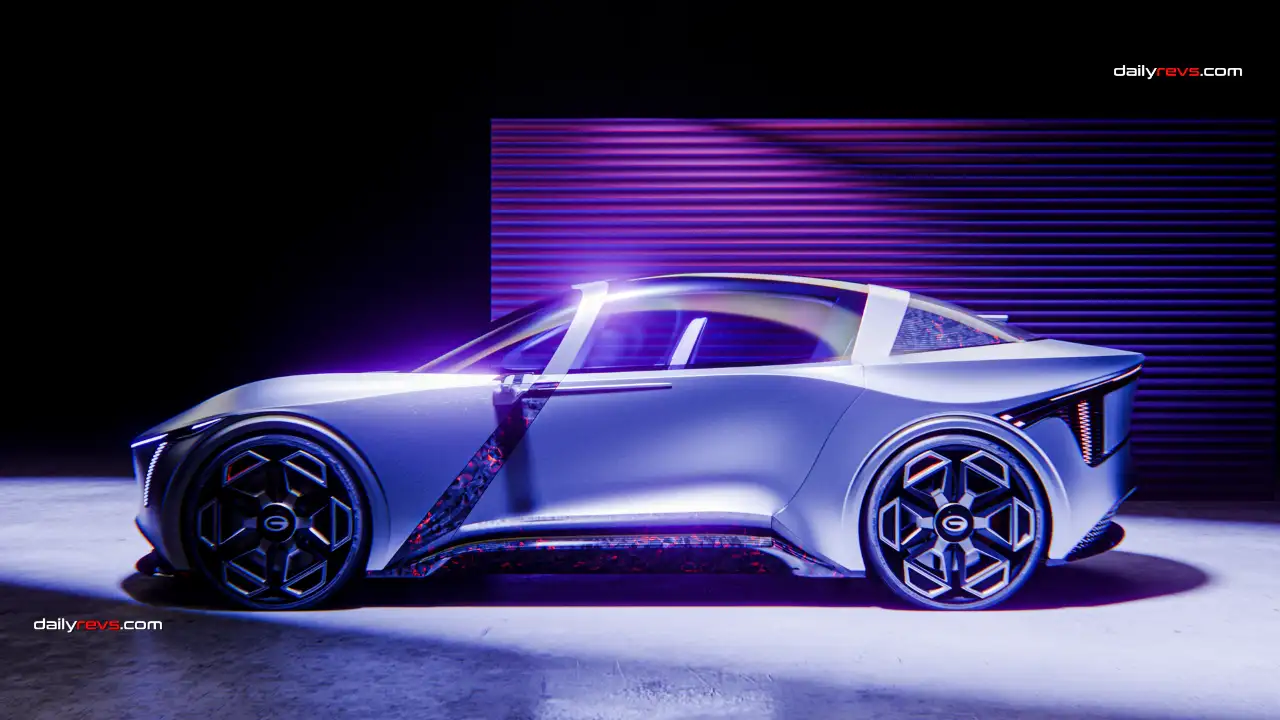
The side profile is the first thing worth looking at. A long glass canopy stretches over the cabin, while the doors feature deep recesses and a diagonal section running toward the sills.
At the front, the bodywork is relatively simple. At the back, the lighting and patterned surfaces are considerably more elaborate.
There's plenty to look at here, particularly for anyone interested in automotive design.
A Fastback With a Very Different Side Profile
NEXUS has four doors, a short bonnet and a roofline that extends toward a raised rear deck. Its proportions are those of a fastback sedan, although the glass canopy and prominent roof bands recall the Porsche 911 Targa.
It's a particularly attractive detail, borrowing some of the Targa's character without making the two cars look alike. The windscreen flows into the roof glazing, which extends across much of the passenger compartment. Two broad bands cross the roof, while the rear glass slopes down toward the tail. Viewed from above, a patterned section separates the glass panels.
The dark rear glazing follows the curve of the roof before meeting the short boot lid. The doors are where the GAC concept gets more interesting. Instead of the usual horizontal creases, the upper panels are almost completely smooth. A diagonal strip begins beneath the side windows and runs down toward the sill, dividing the front and rear sections. Below it, the bodywork curves sharply inward. The recessed area stretches between the wheels, giving the lower doors a scooped-out shape.
The effect changes considerably depending on the angle. In profile, the diagonal section stands out against the smooth doors. From a three-quarter view, the depth of the lower panels becomes much more apparent.
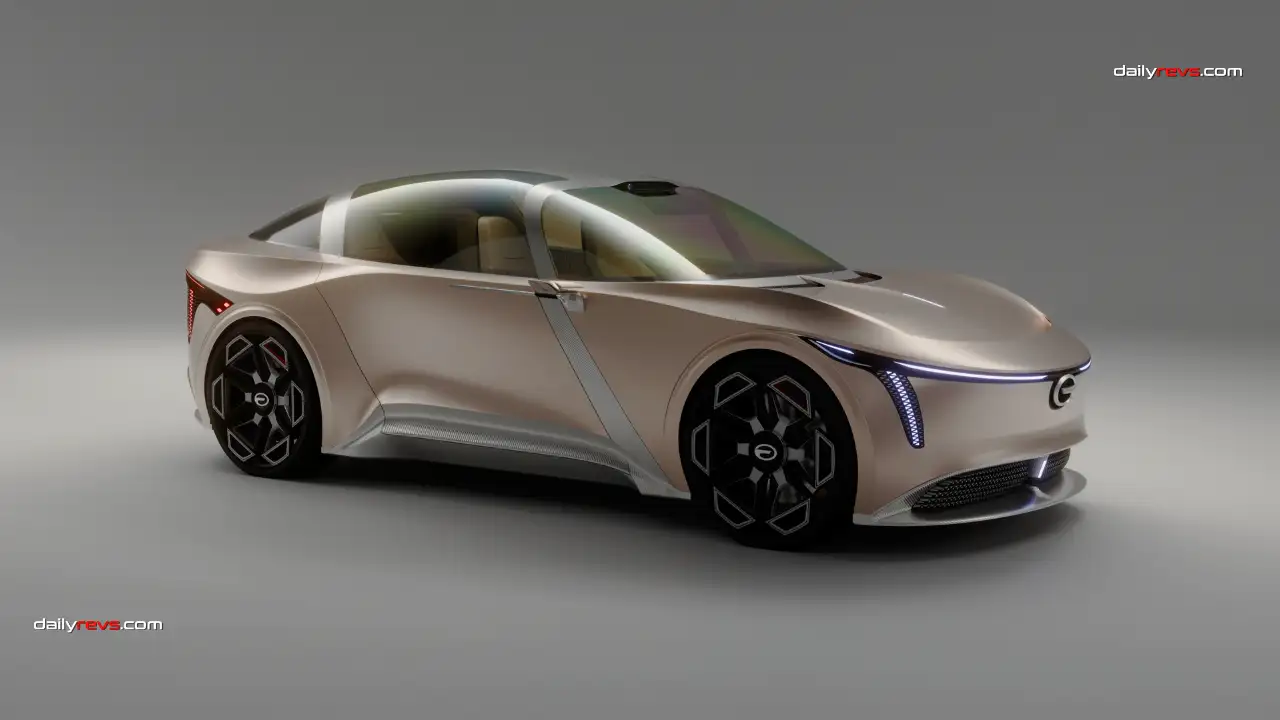
The wheels have angular spokes with large geometric openings and metallic outlines. Their design picks up some of the shapes used elsewhere on the car, particularly around the lighting and lower body.
Small, angular mirrors sit near the front windows, while slim door-release details keep the sides relatively uncluttered.
A Clean Front and a Much Busier Rear
The front of the GAC NEXUS concept is surprisingly simple. A thin LED strip runs across the nose, bending slightly toward the centre. The GAC emblem sits below it on a smooth panel, while narrow vertical lights extend down either side. The vertical elements feature a repeating triangular pattern, which also appears in the wide lower bumper opening.
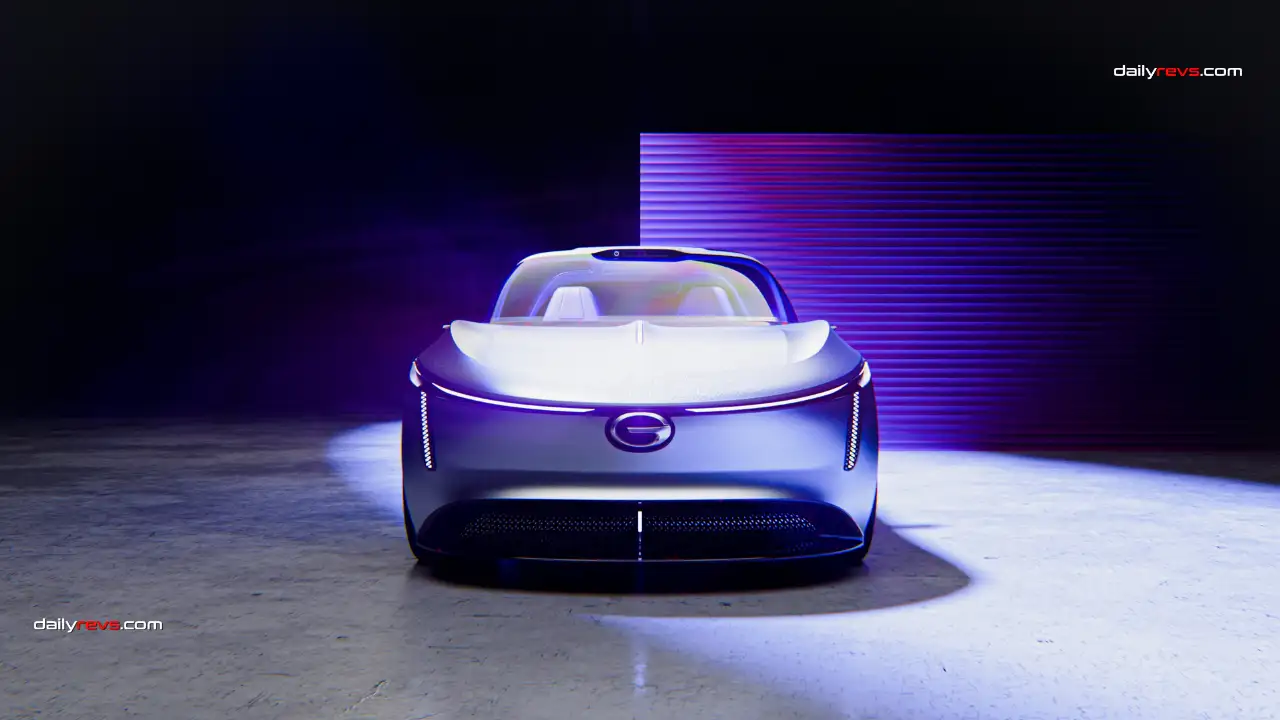
The bonnet has gently raised outer edges and a subtle central detail leading toward the windscreen. There's little else to distract from the broad, low front end. It's a familiar approach in Chinese concept cars, where slim lighting and largely enclosed front panels have become increasingly common.
The rear is considerably more elaborate. A red light strip stretches across the tail, with NEXUS lettering incorporated into the upper section.
The GAC name sits beneath it on a broad panel that curves around the corners. At either end, vertical lights drop into deep recesses filled with triangular detailing.
The pattern continues across the lower bumper, where another wide opening occupies much of the rear. The rear three-quarter views show how the body rises over the wheel arches before narrowing toward the tail.
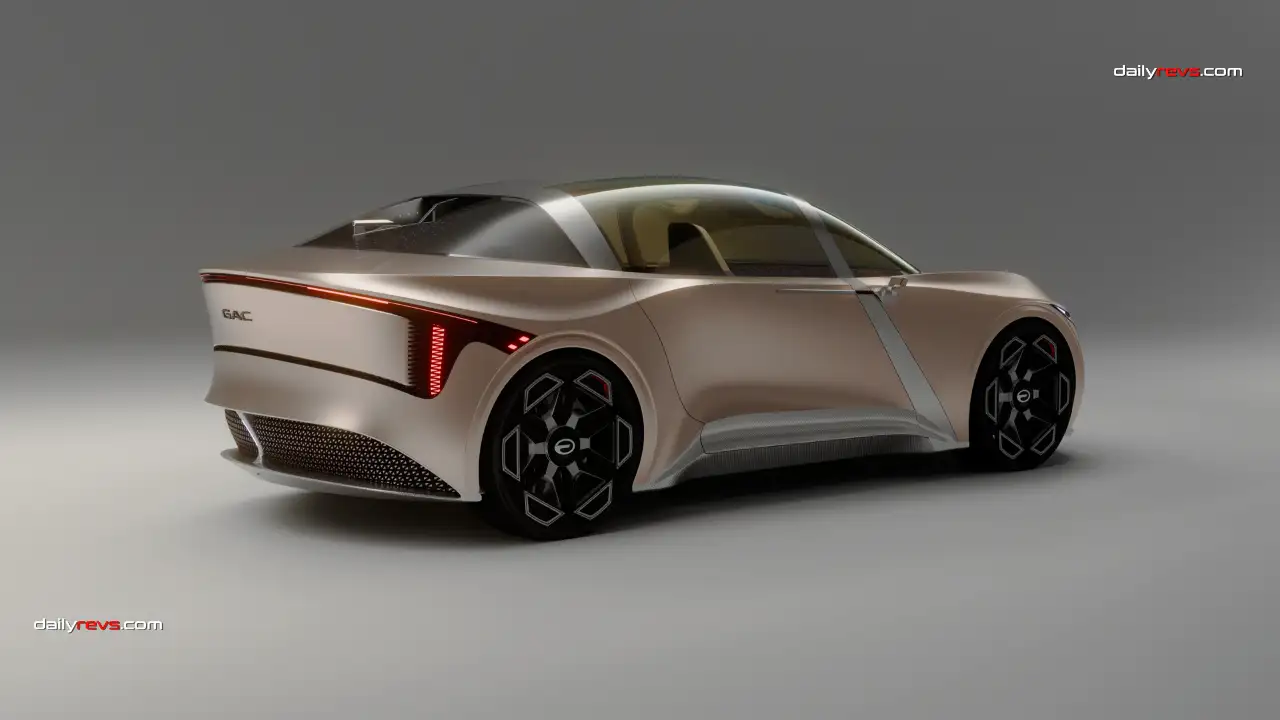
The pronounced shoulders give the car a broad stance, while a small integrated spoiler adds definition to the short rear deck. The horizontal light bar keeps the upper section relatively simple, leaving most of the detailing around the corners and lower bumper.
It's quite a contrast to the front, although the matching lighting patterns connect the two ends.
That Porsche Targa-Inspired Roof
The glass canopy deserves a closer look because it has a major influence on the car's appearance. Its broad structural bands are reminiscent of the Porsche 911 Targa's distinctive roof treatment, but the resemblance is limited to the arrangement of the glazing and supporting sections.
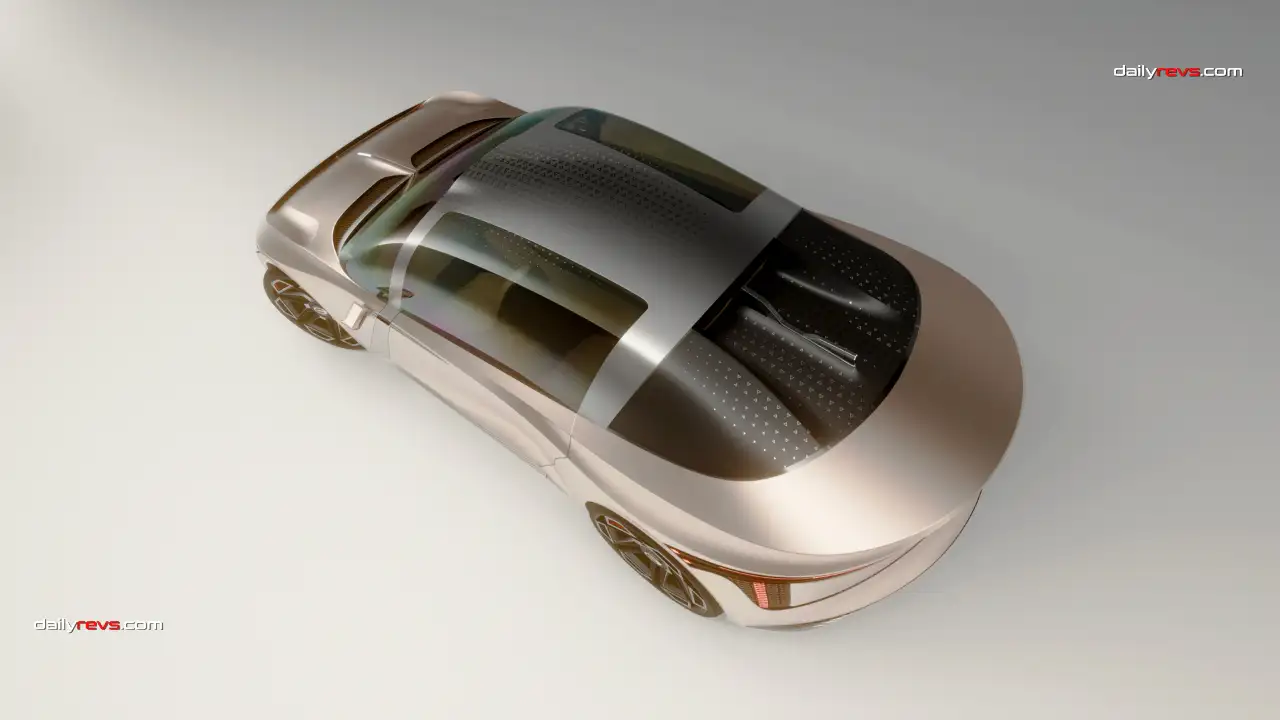
On NEXUS, the idea has been adapted to a much longer, four-door body. The front windscreen extends into a large glass section above the front seats.
A broad band crosses the roof, followed by another glazed area over the rear passengers.
A patterned section separates the roof panels, while the rear glass slopes toward the boot. From the front three-quarter angle, the dark glazing contrasts with the light bodywork and makes the roof appear relatively low.
The side windows also extend far back, giving the cabin a long, tapered appearance.
The overhead renderings are particularly useful here. They show how the different glass sections fit together and how the central roof detailing follows the width of the body.
Through the tinted glazing, individual seats can be seen inside the cabin. The roof also works well with the side design. Its smooth, continuous shape sits above the deeply sculpted doors, making the lower bodywork appear even more pronounced.
The Thinking Behind NEXUS
According to its creator, the intention was to reconsider familiar styling methods rather than introduce unusual details simply to make the car look different.
"Throughout the process, the focus was not necessarily on creating something unfamiliar for the sake of being different, but on questioning established approaches and discovering new possibilities through experimentation."
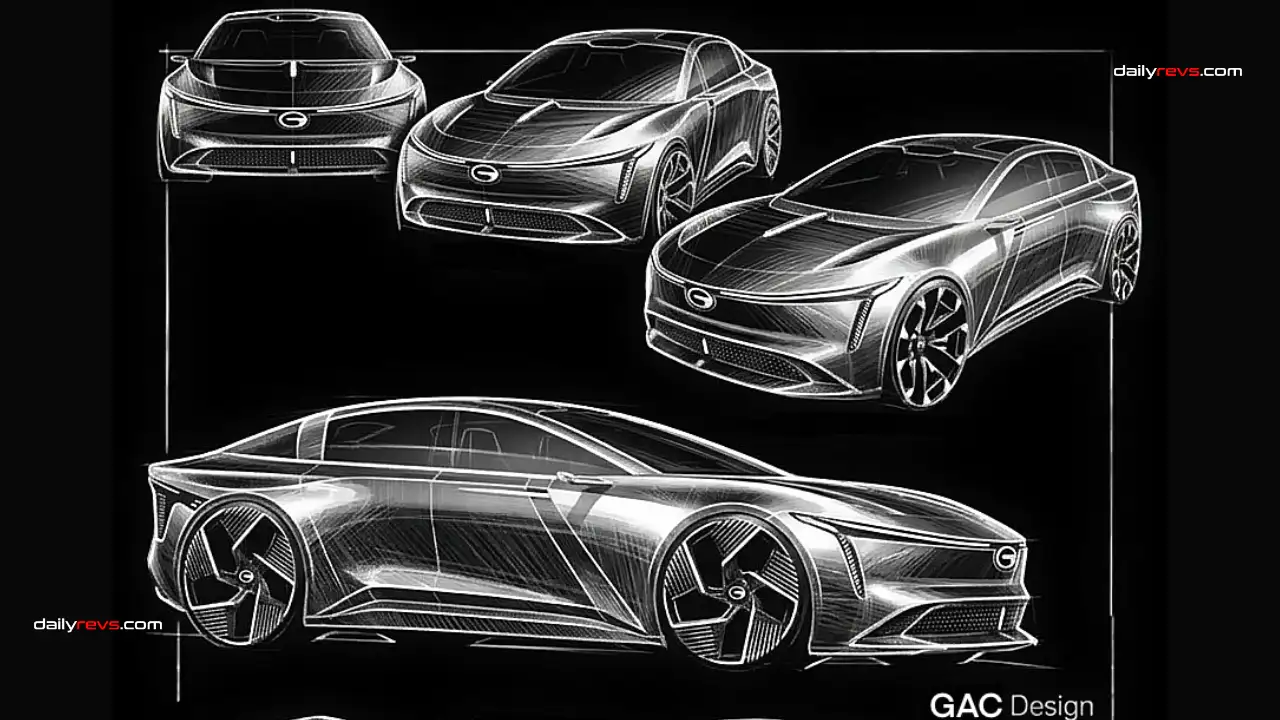
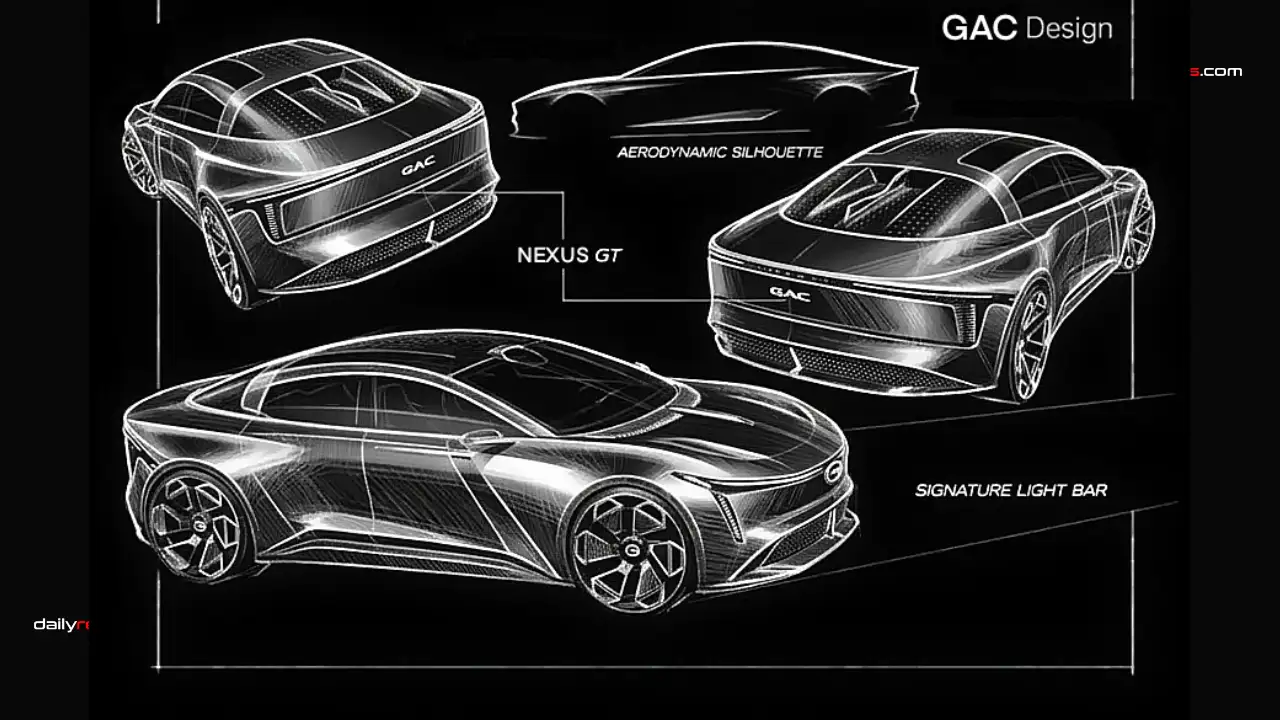
That approach is most apparent in the doors. The diagonal section and deep lower recesses are quite different from the character lines normally found on sedans.
The roof is another departure, particularly in the way its glass panels and structural bands have been arranged. The front and rear also take different approaches to detailing. The nose has relatively few elements, while the tail uses a much more elaborate lighting arrangement.
NEXUS follows an earlier project by the same designer, the Mercedes-Benz Vision-E concept, previously featured on DailyRevs.
That car imagined a modern electric coupe influenced by former Mercedes-Benz design chief Bruno Sacco.
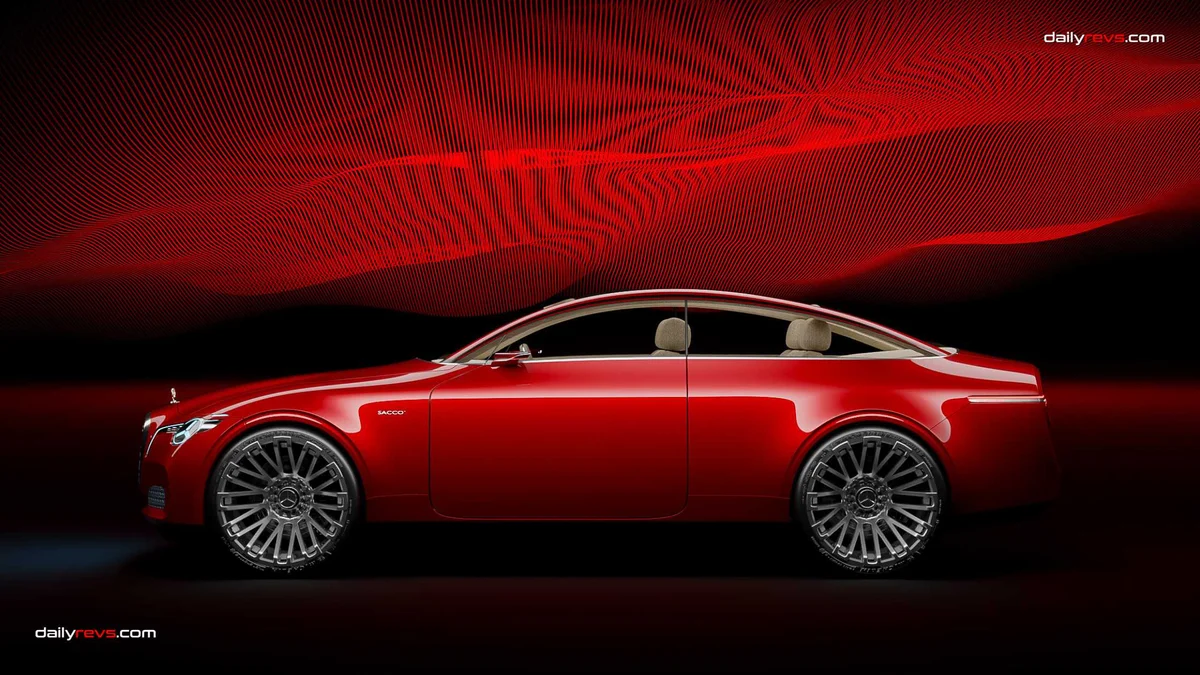
Its styling was much more restrained, with simple surfaces and proportions recalling older Mercedes models. The GAC project takes a different direction, particularly in its treatment of the doors, roof and lighting.
A Different Take on Future GAC Design
GAC has produced several interesting concepts of its own, including the SPACE and ERA.
The SPACE explored a different approach to passenger accommodation, while the ERA featured a streamlined exterior and a flexible cabin.
NEXUS takes the form of a four-door fastback, but its exterior has little in common with GAC's current sedans. The low bonnet, long glass roof and raised rear deck give it the proportions of a sporty grand tourer.
The sculpted lower doors are especially distinctive, as are the patterned vertical lights at the back. The design also looks different depending on the viewing angle. From the front, it's a relatively simple shape with a wide lighting signature.
In profile, the diagonal door sections and glass canopy dominate. From behind, the broad shoulders and intricate lighting become the main features.
Those differences make the car interesting to examine across the full set of renderings. For anyone following future car design and the growing variety of Chinese concept cars, NEXUS offers a distinctive interpretation of a GAC fastback.
The Porsche Targa-like roof is a particularly appealing detail, while the deeply sculpted doors give the side profile a character of its own.
The rear is perhaps the most adventurous part of the design, with its vertical lighting and triangular patterns extending across much of the lower body.
Taken together, those features make NEXUS an interesting addition to the growing collection of independent automotive design projects exploring what tomorrow's Chinese cars might look like.
Connect with Mehran Cheraghi
To explore more of Mehran Cheraghi’s work, including ongoing projects and portfolio highlights, you can follow or connect with him on the following platforms:
Disclaimer
These projects are creative explorations by young
car designers. In some cases, they were developed independently, while
in others they were created with guidance or mentorship from OEM design
studios, such as during internships. Unless otherwise noted, they are
not official works of the manufacturers or studios involved.
DailyRevs
does not claim credit for the vision or effort behind these projects
and receives no financial compensation for publishing them. Each feature
is shared with the consent of the designer following direct outreach
and agreement. We also welcome submissions from designers who wish to be
featured, provided the quality of the work meets our editorial
standards.


