Faster Than Rimac: Yangwang U9 Track Edition at 472.41 km/h Rivals Bugatti Territory
By Hugo Mattson August 28, 2025

The Yangwang U9 Track Edition set a new world EV speed record at 472.41 km/h (293 mph).
Its quad motors, 1200V architecture, and adaptive suspension made the record-breaking run possible.
The achievement establishes Yangwang as a serious hypercar brand and highlights China’s growing presence in performance cars.
Yangwang U9 Track Edition Shatters EV Top Speed Record
On August 8, 2025, the Yangwang U9 Track Edition set a new world EV speed record, reaching 472.41 km/h (293 mph) at Germany’s ATP Automotive Testing Papenburg circuit. The record, which many thought unattainable for electric hypercars, shattered the dream of only a handful of contenders before it.
Record Snapshot
Top Speed: 472.41 km/h (293 mph)
Date: August 8, 2025
Location: ATP Papenburg, Germany
Driver: Marc Basseng
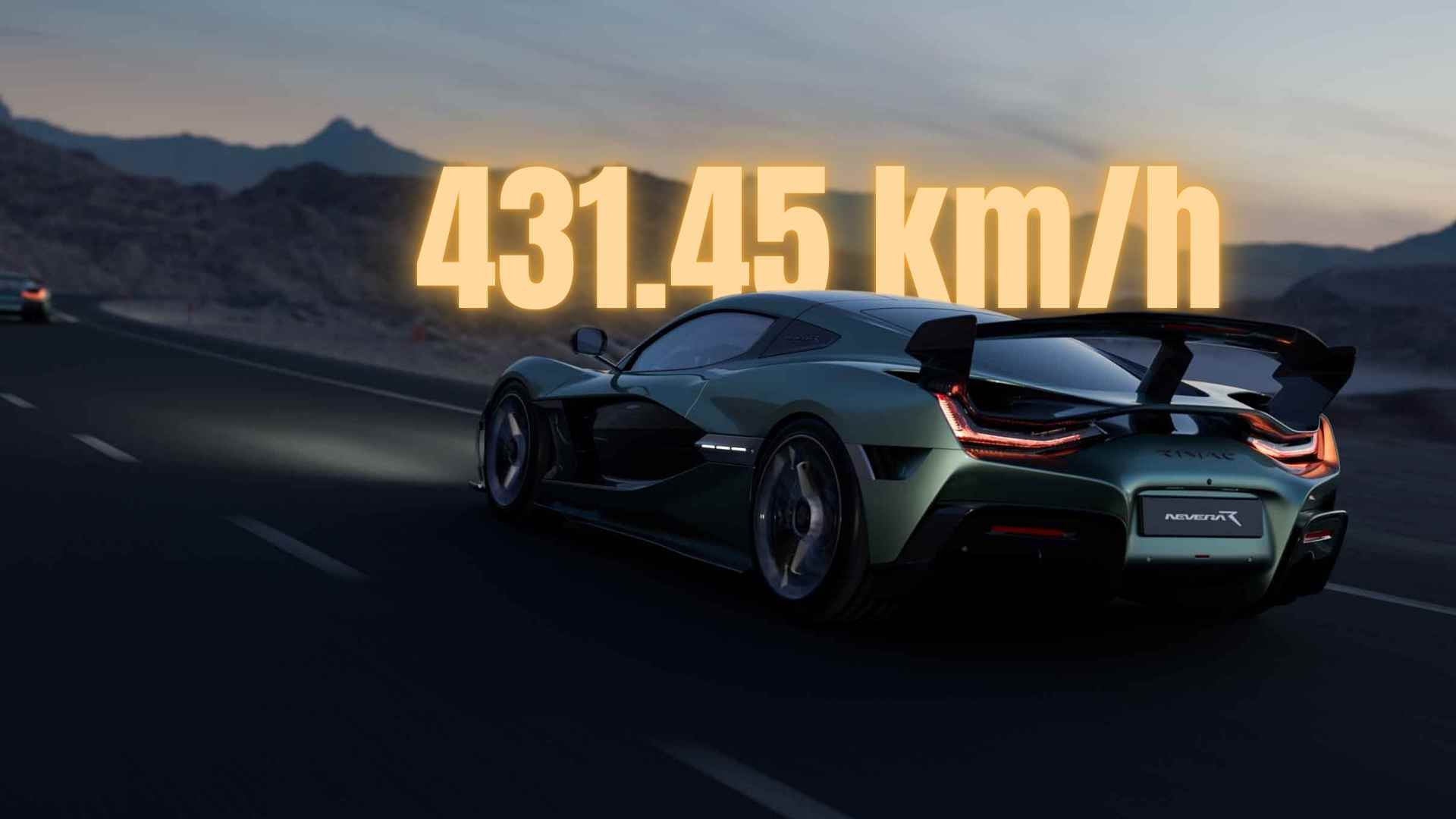
Previous Record: Rimac Nevera R – 431 km/h (268 mph)
Powertrain and Technology
The secret to the U9's record-breaking feat is its quad-motor electric powertrain, with each motor delivering 555 kW (744 hp) of power, and a collective output of nearly 3,000 hp. The car runs on BYD's e⁴ platform, which can deliver millisecond-level torque vectoring to all wheels.
The system is supplemented by DiSus-X body control, which adjusts suspension as much as 100 times per second. This delivers stability that is stable even when aerodynamic forces and tire loads approach levels that few production cars ever experience.
Yangwang U9 also breaks new ground with a 1200-volt electrical system, highest in a production car. Such architecture maximizes the power transfer efficiency, reduces energy loss at high loads, and keeps thermal management in check. For a car racing at nearly 300 mph, these advancements are between stability on a record run and instability.
Aerodynamics and Tire Engineering
The U9 Track Edition is designed with one goal: velocity. Abandoning the massive rear wing of its road version, the Track Edition employs low-drag bodywork in the guise of a front splitter made from carbon fiber. Sacrificing maximum downforce for a smoother profile that reduces drag, it pursues pure velocity.
The tire technology was also of the highest priority. Developed in conjunction with Giti Tire, the U9's high-speed semi-slick tires are reinforced with rim knurling to prevent the tire from slipping and treated with high-viscosity lubricants to deal with extreme centrifugal forces. These requirements allowed the car to remain stable on its record-breaking drive by Basseng.
The Human Factor
Marc Basseng's involvement was crucial. With his history of past attempts at speed records, he was chosen to verify the safety and engineering of the U9 up to its capability. His remaining calm and composed during a nearly-300 mph sprint gave confidence that the record was as much a function of doing as it was technology.
Market Implications
BYD's Yangwang brand, launched as a performance-driven luxury division, also is quite young compared to the likes of Rimac or Koenigsegg. That notwithstanding, by setting the EV speed record so quickly, Yangwang has squarely entered the role of serious player in the hypercar segment.
This achievement also speaks to the rate of acceleration in China's automotive industry. Ten years ago, Chinese companies were regarded as volume players alone. Now, with almost 3,000 hp electric hypercars that can leave Europe's best behind, the narrative is altogether different.
The record does more than just make headlines. It provides Yangwang with global credibility and will actually attract attention from wealthy performance seekers who might otherwise have counted the brand as unproven.
The Larger Picture Of This Record Breaking Performance:
Breaking the speed record serves to highlight a vital reality of electric mobility. EVs are no longer relegated to simple city run-about or close-range practicality. Instead, they've broken into the outer limits of performance.
The Yangwang U9 Track Edition shows that electric power is not only about acceleration — where EVs have enjoyed a long advantage — but about providing high-speed performance on demand. Having reached nearly 300 mph, the U9 has achieved what had seemed until now to be the preserve of combustion-based hypercars.
Source: BYD