2027 Toyota Yaris Cross Facelift: Could Japan Get A Unique Crown-Inspired Design?
By Hugo Mattson October 26, 2026

-
The 2027 Toyota Yaris Cross facelift is official in Europe, introducing redesigned LED headlights, a body-coloured honeycomb grille and revised equipment, with the Hybrid 130 powertrain standard in the UK.
Japan could receive a different Toyota Yaris Cross facelift in 2027, potentially becoming the first Asian market to introduce a distinctive front-end design for the TNGA-based SUV, although Toyota has confirmed no such plan.
DailyRevs' independent 2027 Toyota Yaris Cross rendering explores a Crown Signia-inspired design, featuring slender LED daytime running lights, distinctive black extensions toward the bonnet and a more sophisticated front fascia.
The 2027 Toyota Yaris Cross facelift has already arrived in Europe, bringing a sharper appearance to one of the brand's most successful compact SUVs. But what if Toyota has something different in mind for Japan?
The Japanese automaker has never been particularly rigid about giving every market the same vehicle. From the Corolla Cross to the Camry, Toyota has repeatedly adjusted exterior styling, interiors and specifications to suit regional preferences.
The Yaris Cross itself is an even stronger example. Japan and Europe share a TNGA-based model, while several Southeast Asian countries receive a completely different DNGA-based SUV under the same name.
With Japanese automotive publications discussing a possible major Yaris Cross update in 2027, there's an interesting opportunity for Toyota to introduce a distinctive domestic-market design rather than simply copying Europe's new front end.
Our latest independent digital rendering explores one such possibility: a 2027 Toyota Yaris Cross facelift inspired by the larger Crown Signia.
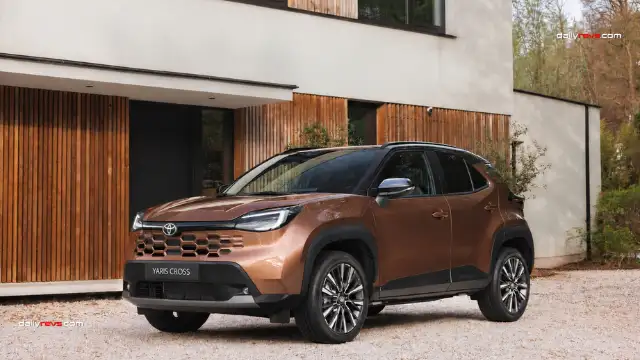
The 2027 Toyota Yaris Cross Facelift Is Already Official In Europe
Toyota revealed the refreshed European Yaris Cross in April 2026, introducing a more substantial exterior redesign than the model's previous equipment updates.
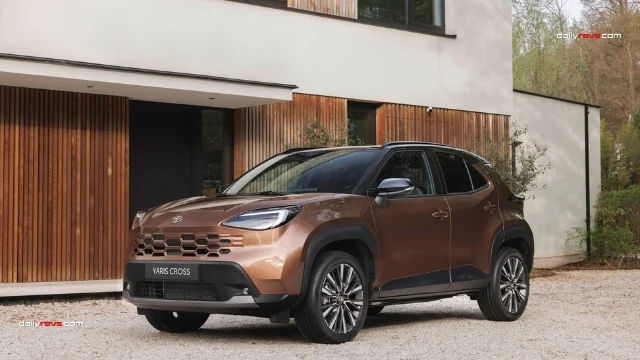
The biggest changes are concentrated at the front.
A new body-coloured honeycomb grille replaces the previous treatment, creating a cleaner relationship between the bumper and surrounding bodywork. Redesigned LED headlights incorporate the daytime running lights, while a contrasting black lower section preserves the SUV's rugged character.
The GR Sport receives its own bumper design with pronounced side pods beside the recessed fog lights, emphasizing a wider and more athletic appearance.
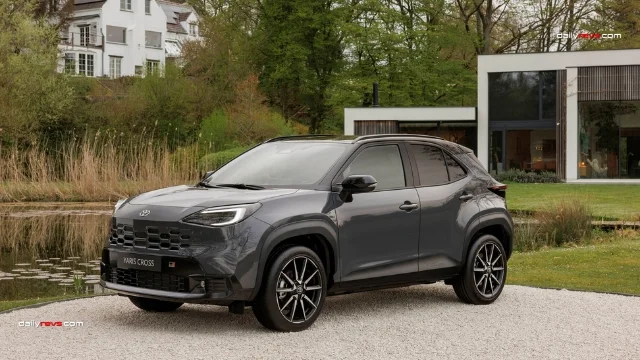
Toyota has also introduced revised alloy wheels, additional exterior finishes and equipment improvements.
In the UK, the facelifted model is marketed as the 2027 Toyota Yaris Cross, with the Hybrid 130 powertrain now standard across all grades.
Producing 130 DIN horsepower, or approximately 129 bhp, the updated hybrid system gives British buyers a more consistent powertrain lineup.
Toyota's UK announcement also confirms that the refreshed model is already available to order.
However, none of this automatically means the Japanese-market Yaris Cross will receive an identical facelift.
Could Japan Get Its Own 2027 Toyota Yaris Cross Facelift?
Japan has followed a different update schedule.
In 2026, Toyota introduced equipment and specification improvements for the domestic-market Yaris Cross without adopting the new European front fascia.
Japanese automotive publications have subsequently discussed the possibility of a more extensive redesign arriving in 2027.
One theory is that Toyota could bring the European facelift to Japan, potentially extending the existing generation's lifespan before introducing an entirely new model.
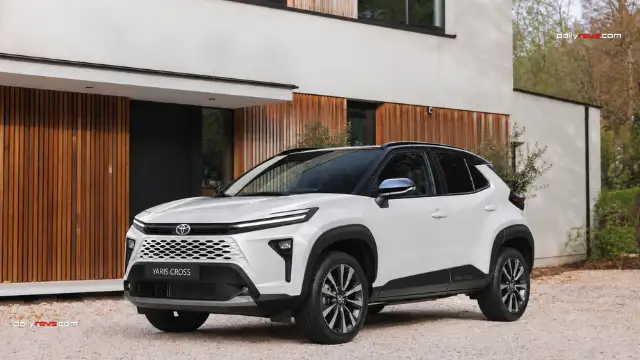
That would be a straightforward approach.
But there's another possibility worth exploring.
What if Japan became the first Asian market to receive a distinct 2027 Toyota Yaris Cross facelift, developed around a different front-end styling treatment?
Such a strategy wouldn't necessarily require a new platform or substantial changes to the existing body.
Instead, Toyota could introduce a unique combination of headlights, grille and bumper surfaces to give the domestic model its own identity.
The idea remains speculative. Toyota has not announced a Japan-exclusive facelift, confirmed its styling or established a 2027 release date.
Nevertheless, the company's recent product history offers several reasons why regional design differentiation is a credible possibility.
Toyota Already Builds Different Cars For Different Markets
The most convincing evidence comes from Toyota's own lineup.
The Yaris Cross Already Has Two Different Identities
The Yaris Cross sold in Japan and Europe is based on Toyota's TNGA GA-B architecture.
However, the Yaris Cross introduced for Indonesia and other Southeast Asian markets in 2023 is an entirely different vehicle built on the Daihatsu New Global Architecture.
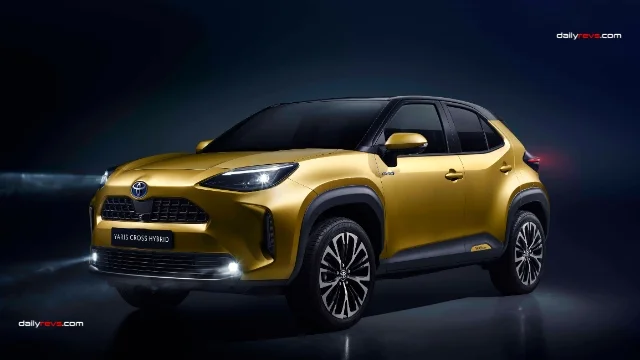
The ASEAN-market model has different proportions, exterior panels, lighting arrangements and overall styling.
Its taller-looking body and more pronounced grille treatment give it a different visual character from the Japanese and European versions.
Toyota therefore already treats the Yaris Cross name as a flexible regional product identity rather than a single global design.
This distinction also matters when discussing a possible Japan-first facelift: it would concern the TNGA-based Yaris Cross, not necessarily the separate SUV sold in Southeast Asia.
The Corolla Cross Demonstrates Regional Styling Flexibility
The Toyota Corolla Cross offers another recent example.
When Toyota introduced the updated European Corolla Cross in 2025, the company specifically described the exterior redesign as tailored to European customer preferences.
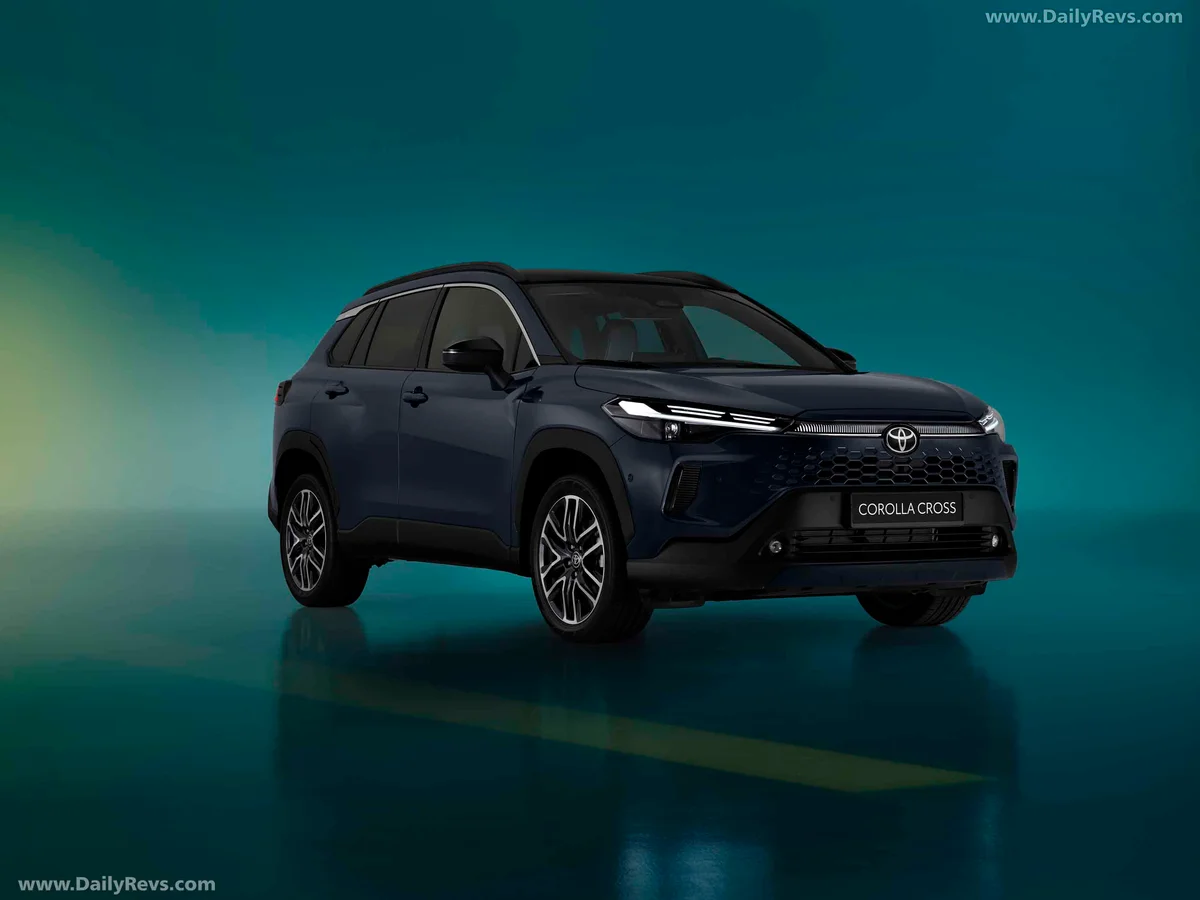
Its revised front end featured a body-coloured honeycomb grille, integrated lighting elements and cleaner bumper surfaces.
In the United States, the 2026 Corolla Cross adopted different front-end treatments for gasoline and hybrid variants.
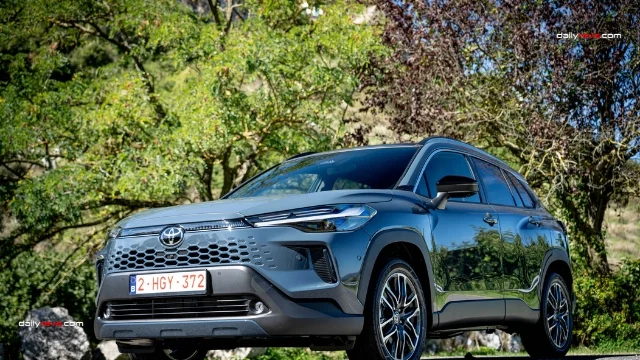
The gasoline model received a more conventional, rugged-looking grille, while the hybrid featured a body-coloured design.
Although those differences also distinguish powertrains, they demonstrate Toyota's willingness to offer more than one styling interpretation of the same vehicle.
The Camry Shows How Regional Preferences Influence Design
Toyota's Camry provides a further example of regional customization.
The Chinese-market sedan has received distinctive styling and equipment treatments, including a revised cabin with a larger central touchscreen for the 2026 model year.
Such changes reflect Toyota's approach to different competitive environments, where customer expectations for digital interfaces, interior presentation and exterior character can vary considerably.
These examples don't establish that Toyota is planning a unique Japanese Yaris Cross.
They do, however, demonstrate that regional differentiation is an established part of the company's product strategy.
What If The 2027 Toyota Yaris Cross Facelift Borrowed From The Crown Signia?
Rather than simply reproducing the European facelift, our independent rendering imagines a different styling direction inspired by the Crown Signia.
The larger crossover provides an interesting reference because its front end combines slender lighting elements with a relatively clean upper section and carefully integrated grille surfaces.
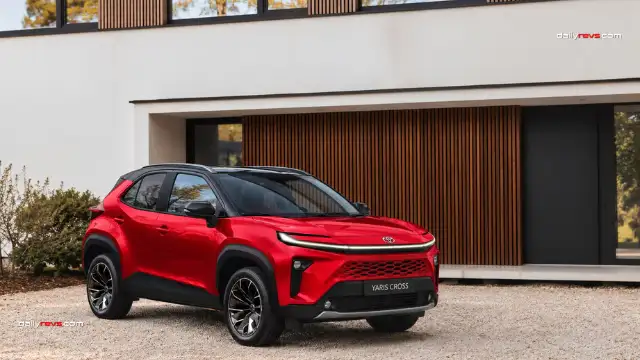
For the Yaris Cross, we've adapted those ideas to the existing compact SUV's proportions.
The most noticeable change is the headlight treatment.
The original arrangement has been replaced by slim LED daytime running lights extending toward the centre of the vehicle.
A narrow gloss-black horizontal element connects the lighting units, with the Toyota emblem positioned between them.
This creates a stronger visual emphasis on width, making the compact SUV appear more planted without changing its track or overall dimensions.
Unlike the official European facelift, our interpretation uses a more pronounced upper lighting graphic inspired by Toyota's broader Hammerhead design language.
The result is a sharper-looking Yaris Cross that still retains its familiar silhouette.
The Black Headlight Extensions Give The Design Its Character
One of the most distinctive elements of our rendering is the black trim surrounding the outer edges of the daytime running lights.
Rather than ending abruptly at the headlights, these dark elements extend backward toward the bonnet.
Their triangular shape creates a visual connection between the lighting assemblies, upper fenders and bonnet surface.
It's an important detail because it changes how the front end is perceived.
On the existing Yaris Cross, the headlights are relatively independent visual elements.
In our interpretation, the extensions help integrate the lighting into the surrounding bodywork, giving the fascia a more technical and deliberate appearance.
The contrast is particularly effective against the white exterior finish.
These details also prevent the design from becoming a straightforward miniature Crown Signia.
The inspiration is recognizable, but the execution has been adapted to the smaller vehicle.
A Honeycomb Grille That Looks More Integrated
Below the slim lighting signature, our rendering introduces a body-coloured honeycomb grille.
Toyota has already adopted a similar general approach for the official European Yaris Cross facelift, but our interpretation combines it with a different headlight arrangement and upper fascia.
The repeating geometric pattern adds texture without relying on an oversized black grille opening.
A substantial lower intake remains, preserving the visual toughness expected of a compact SUV.
Dark vertical elements at the outer corners frame the bumper and provide additional definition.
Together, the three main elements—the narrow upper lighting signature, body-coloured grille and black lower intake—create a more structured front-end composition.
It's a relatively restrained redesign, but one that gives the Yaris Cross a noticeably more contemporary appearance.
Why The Rest Of The Yaris Cross Remains Unchanged
A realistic mid-cycle facelift doesn't necessarily require a complete exterior transformation.
The Yaris Cross already has recognizable proportions, with short overhangs, pronounced wheel arches and a relatively upright cabin.
Our rendering retains those features.
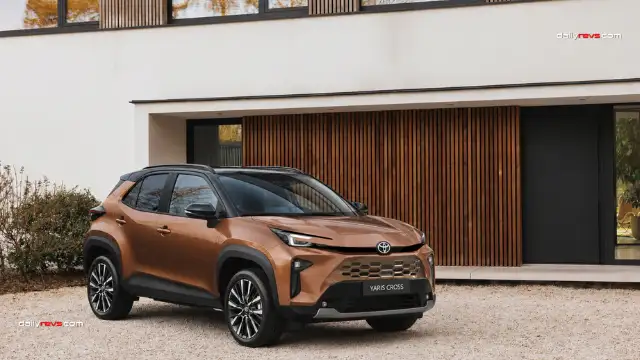
The doors, windows, roofline, wheel arches and alloy wheels remain essentially unchanged, as do the contrasting black roof and lower-body cladding.
The objective was to explore how much difference a carefully executed front-end redesign could make while preserving the existing vehicle's identity.
This is also consistent with the general philosophy behind many production facelifts.
Manufacturers can update bumpers, lighting assemblies and exterior trim without necessarily developing an entirely new body structure.
Of course, translating our rendering into a production vehicle would still require engineering changes, including headlight packaging, mounting points, regulatory compliance and pedestrian-protection considerations.
The images are a styling exercise rather than a production-ready proposal.
Could Japan's 2027 Yaris Cross Also Receive The Hybrid 130?
A future Japanese-market facelift could potentially bring mechanical improvements alongside revised styling.
In the UK, the official 2027 Toyota Yaris Cross facelift makes the Hybrid 130 system standard across the range.
Japan currently offers its Yaris Cross with 1.5-litre gasoline and hybrid powertrains.
A more powerful hybrid variant could therefore be an interesting addition, particularly if Toyota decides to position a future update as a more substantial improvement.
However, there is no official confirmation that the European Hybrid 130 specification will be introduced in Japan.
Nor has Toyota announced a new Japanese-market powertrain specifically for a 2027 facelift.
Our rendering is limited to exterior styling and does not imply any mechanical changes.
Could Japan Influence The Next Yaris Cross Design Across Asia?
The broader question is whether Toyota could use Japan as the starting point for another regional interpretation of the Yaris Cross.
The company already maintains different Yaris Cross products for different markets, and recent updates to the Corolla Cross show that regional styling preferences continue to influence its design decisions.
A Japanese-specific front end could therefore be a plausible alternative to simply adopting the European facelift unchanged.
Whether such a design would later appear in other Asian markets would depend on the versions sold there, local production arrangements and Toyota's regional product plans.
For markets already using the separate DNGA-based Yaris Cross, a Japanese TNGA-based facelift would not necessarily have any direct implications.
Nevertheless, the possibility of a distinct Japanese design remains interesting.
And our Crown Signia-inspired rendering demonstrates one way Toyota could approach it.
The 2027 Toyota Yaris Cross Facelift Doesn't Have To Look The Same Everywhere
Europe's refreshed Yaris Cross shows how Toyota can give an established compact SUV a substantially different appearance without abandoning its familiar proportions.
Japan could eventually receive the same treatment.
But Toyota's history of regional styling also leaves room for another possibility: a distinctive Japanese facelift that draws inspiration from the company's newer domestic-market design themes.
Our independent rendering explores that alternative through a Crown Signia-inspired front end, complete with slender LED daytime running lights, black extensions sweeping toward the bonnet and a more integrated honeycomb grille.
The result retains the Yaris Cross's recognizable proportions while introducing a sharper visual identity.
Toyota has not confirmed whether Japan will receive a major facelift in 2027, let alone a unique design.
But if the company decides to differentiate its compact SUV once again, there's certainly precedent for doing so.
Would you prefer Japan to adopt the European 2027 Toyota Yaris Cross facelift, or should Toyota introduce a distinctive Crown-inspired design for its home market?
Editorial note: The accompanying DailyRevs images are independent digital renderings. They do not depict an official Toyota design, leaked prototype or confirmed future production model.


