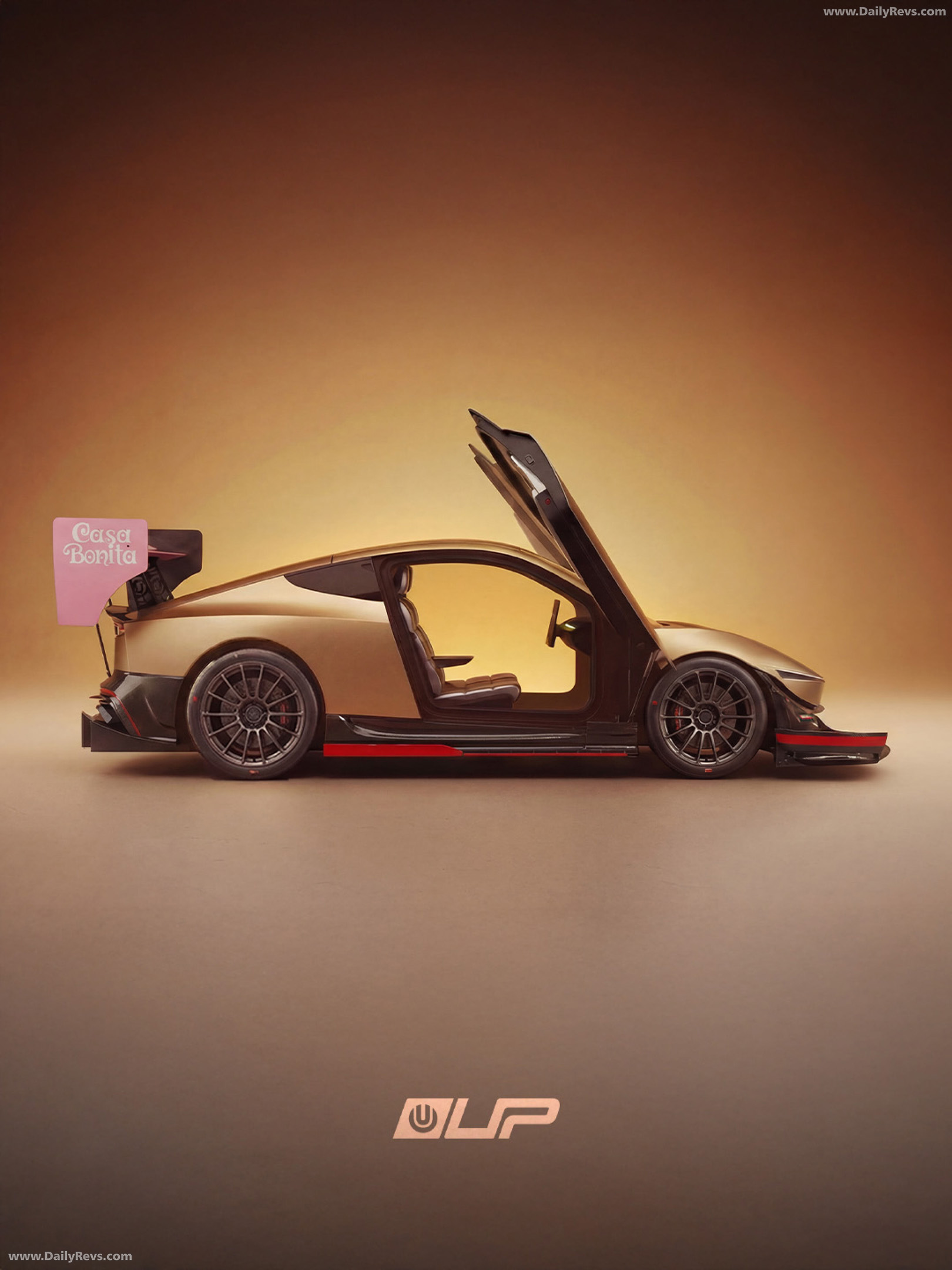
2026 Unplugged Performance Goldmember
By Lorenzo Bianchi April 3, 2026
Autonomous race car based on Tesla Cybercab platform.
Tri-motor setup delivers 1,020 hp and 1,050 lb-ft.
Over 4,000 lbs of downforce at 150 mph.
A race car built without a driver in mind
The 2026 Unplugged Performance Goldmember doesn’t follow the usual script. It’s a purpose-built hill climb machine designed for Pikes Peak, but there’s no seat time involved. No driver, no steering wheel in the traditional sense. Just software, sensors, and a full race setup underneath.
That alone changes how the car is approached. Everything here is engineered around autonomy first, performance second, and spectacle somewhere in between.
Design looks extreme, but every piece has a job
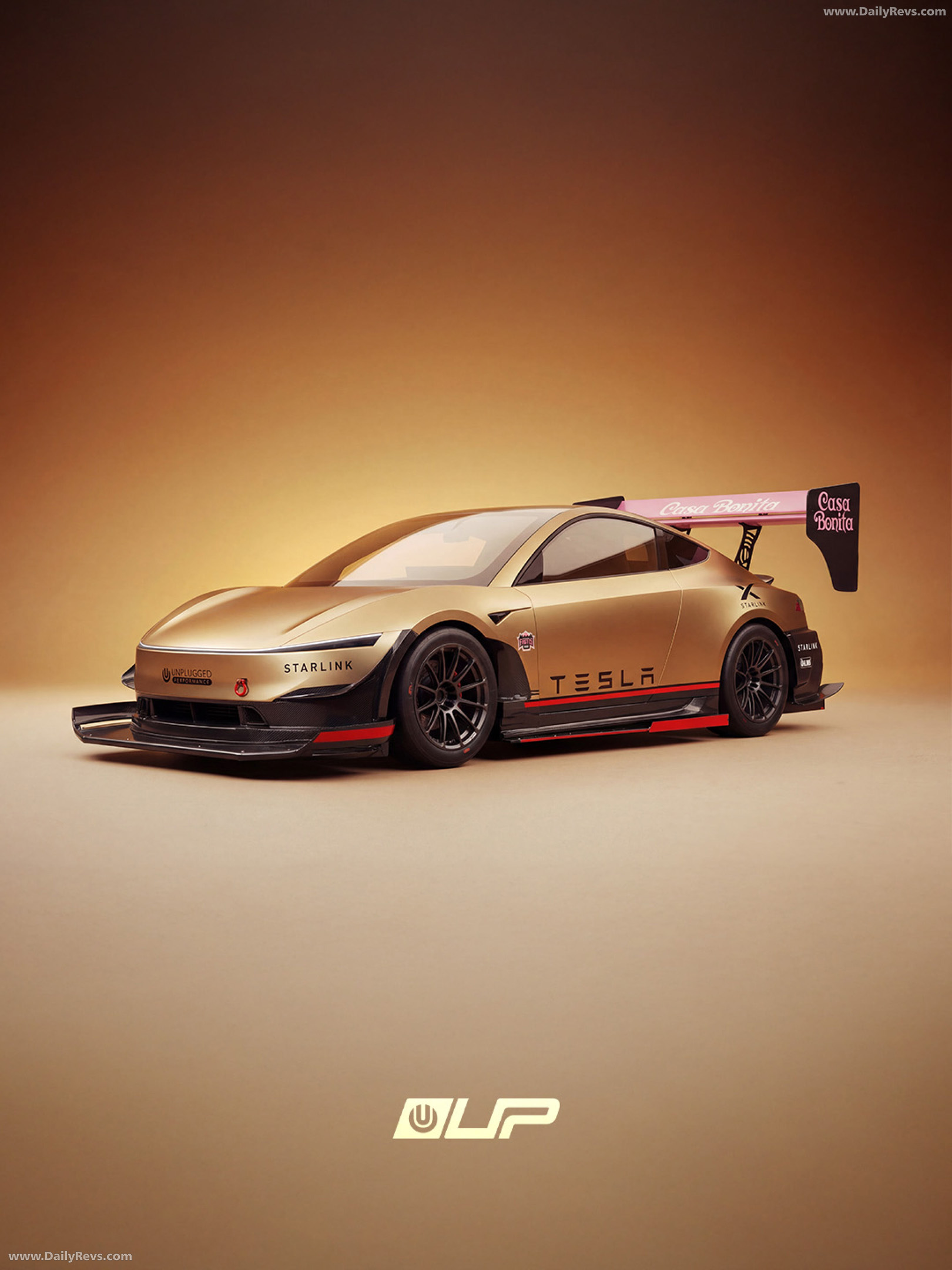
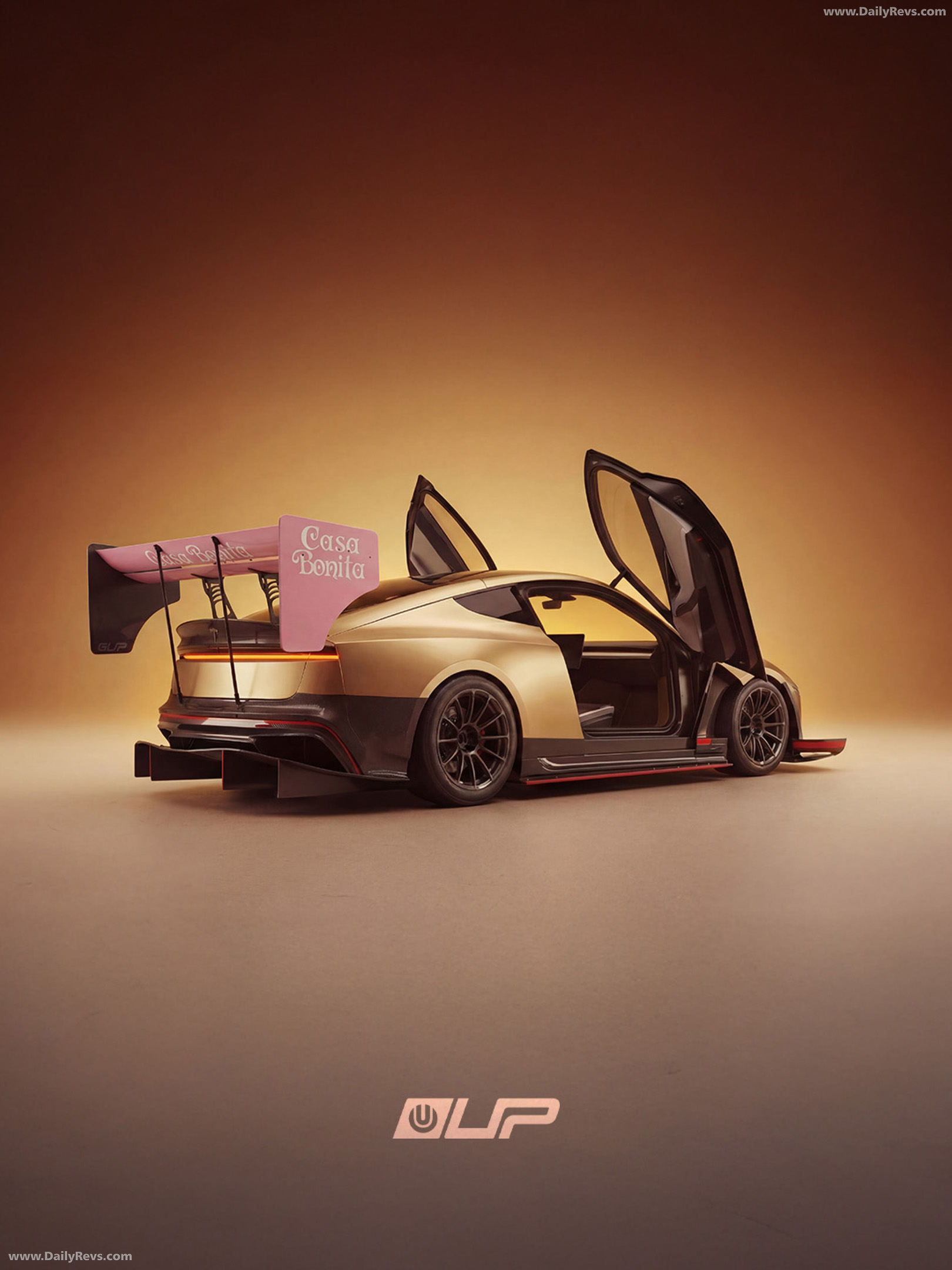
Visually, Goldmember feels almost exaggerated. The gold-finished body, the towering rear wing with its pink livery, and the aggressive aero surfaces make it look more like a concept than something built to run up a mountain. But none of it is decorative.
The entire aerodynamic package comes from Unplugged Performance’s earlier Pikes Peak program. Large carbon-fiber splitters, side skirts, canards, and a full diffuser all work together to manage airflow and generate grip. At speed, the car produces over 4,000 pounds of downforce. That’s nearly equal to its own weight, which tells you how heavily it relies on aero to stay planted, especially at altitude.
Proportions shaped by function, not form
The base platform comes from Tesla’s upcoming Cybercab, which gives the car a compact footprint. That shorter wheelbase helps in tight switchbacks, something Pikes Peak is full of. The overall weight sits around 4,200 pounds, which isn’t light, but expected given the battery and tri-motor layout.
Everything about the proportions is tied back to the course. Stability, grip, and direction changes matter more than anything else.
No traditional cabin, just systems
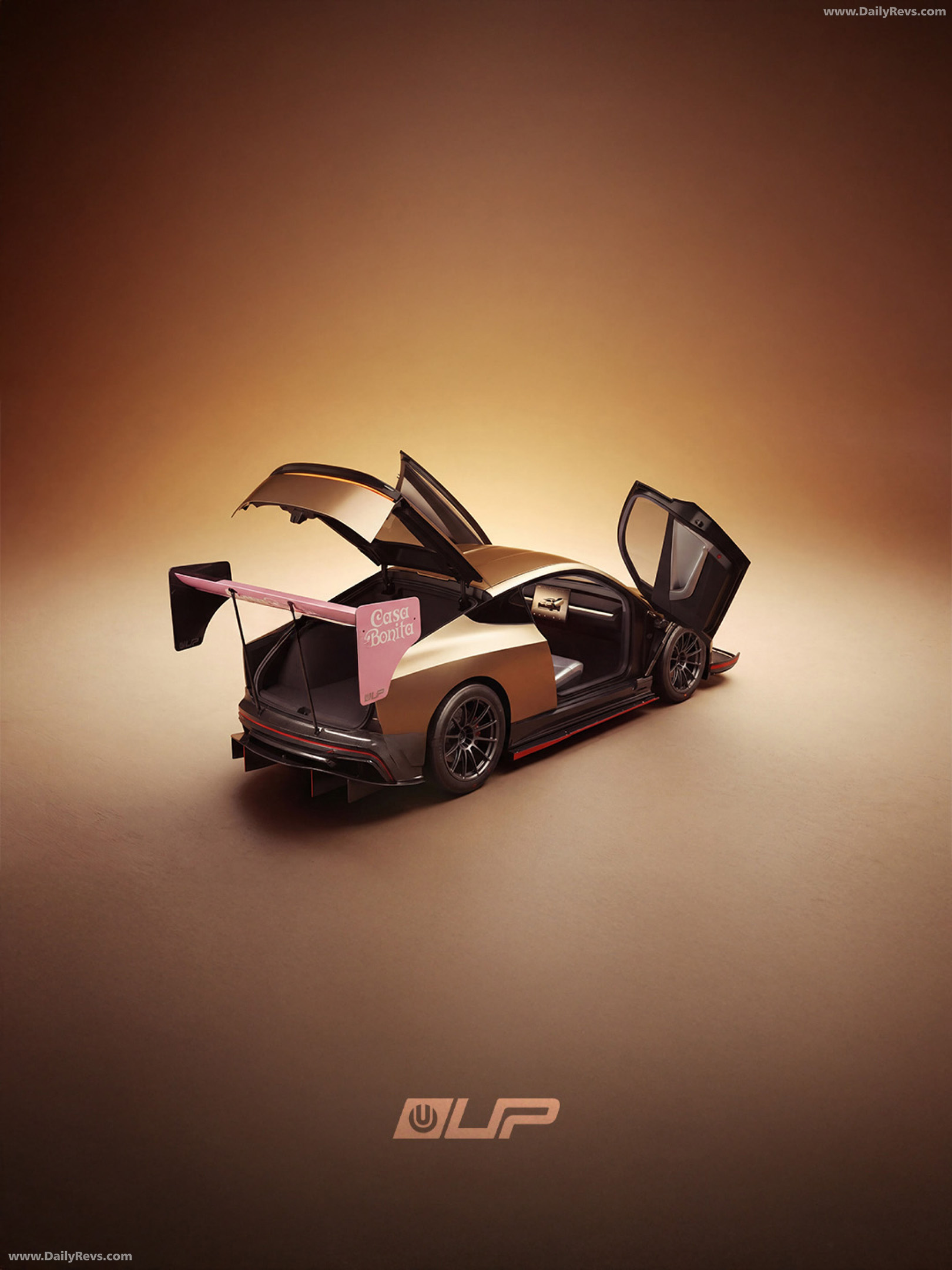
There isn’t a conventional interior to talk about. Instead of focusing on seating or displays, the cabin is replaced by sensors, computing hardware, and safety structures. A full FIA-certified roll cage is integrated into the chassis, even without a driver onboard.
Fire suppression systems, remote shutdown capability, and telemetry systems all take priority over comfort or usability. It’s a different definition of “interior,” one built entirely around function.
Powertrain delivers extreme output
Underneath, the numbers are hard to ignore. Goldmember runs a tri-motor setup producing 1,020 horsepower and 1,050 lb-ft of torque. Acceleration from 0 to 60 mph is claimed at under 1.5 seconds.
That level of performance puts it alongside some of the quickest EVs currently built, even before considering its racing purpose.
Grip comes from a combination of wide forged wheels, specialized Yokohama hill climb tires, and a fully adjustable suspension setup developed specifically for Pikes Peak.
Built for one specific challenge
This car exists for a single purpose. Pikes Peak’s 12.42-mile course, with 156 turns and significant elevation gain, demands consistency as much as outright speed. Goldmember is tuned for that environment, from its aero package to its suspension calibration.
Even the braking system is designed for repeated high-speed stops without fade, using carbon-ceramic components and dedicated cooling ducts.
Autonomy becomes the main story
The defining feature sits in its software. Unplugged Performance calls it “Full Self-Driving: Hillclimb,” a system designed specifically to handle the complexities of the course. Cameras, sensors, and onboard computing work together to guide the car through every corner.
The idea is straightforward. If an autonomous system can manage something as demanding as Pikes Peak, everyday driving becomes easier by comparison.
Positioned as a glimpse into what could come next
The 2026 Unplugged Performance Goldmember isn’t a production car. It’s more of a test case. A way to explore how autonomy and motorsport might intersect in the future.
There’s a level of experimentation here, even in how it’s presented. The concept itself was revealed with a degree of humor. [Inference]
Still, the underlying engineering is serious. And if nothing else, it shows that performance and autonomy don’t have to exist separately.