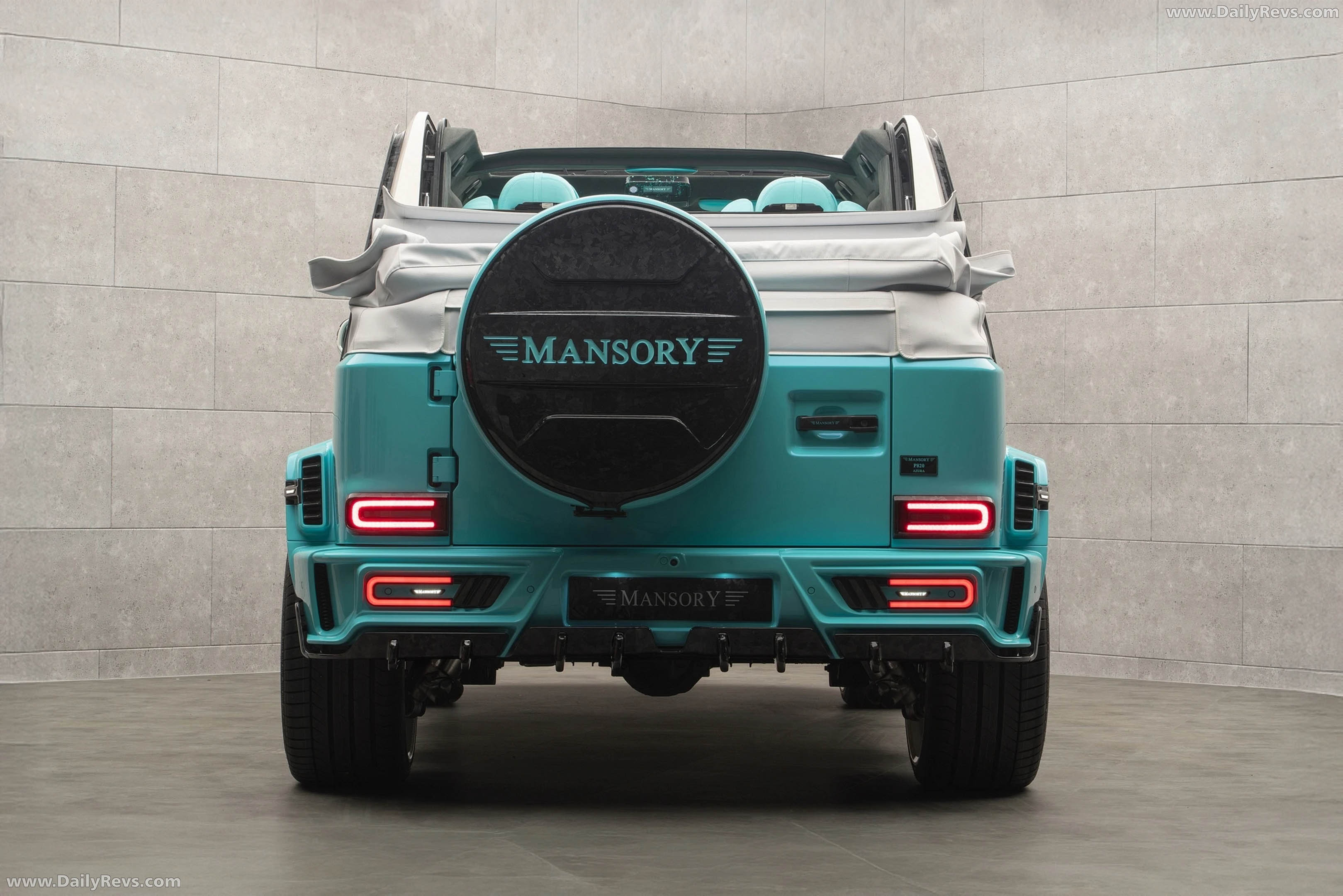
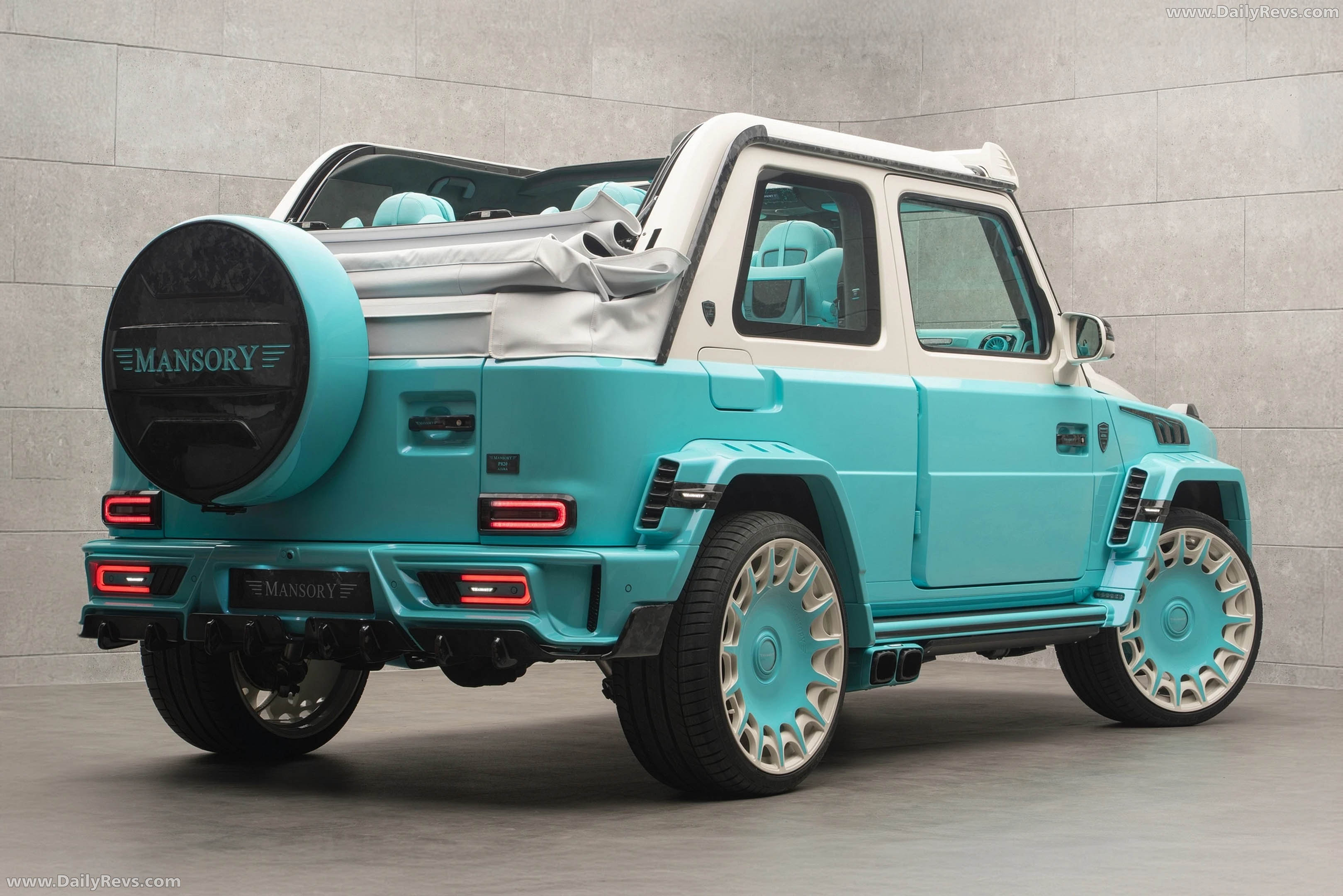
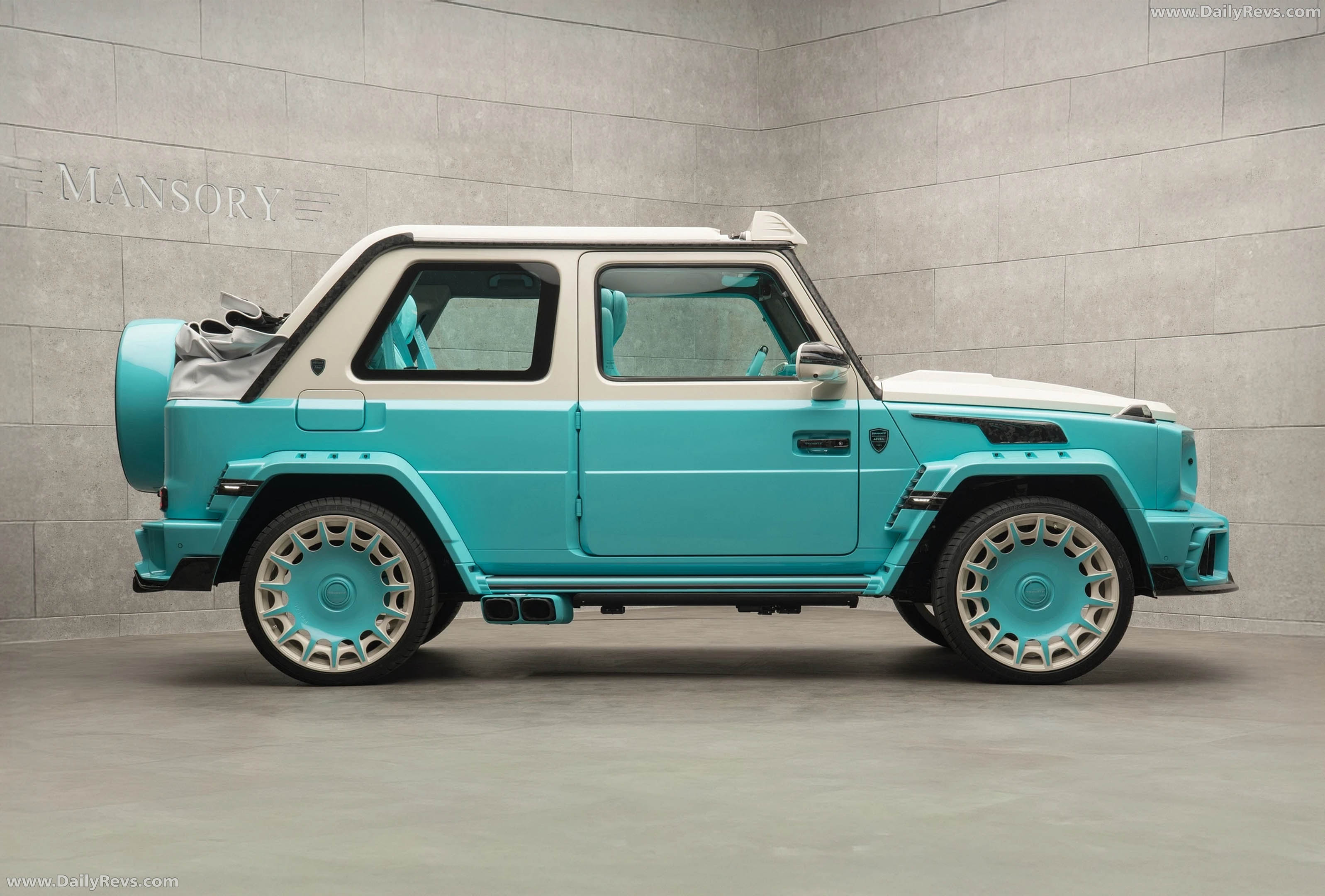
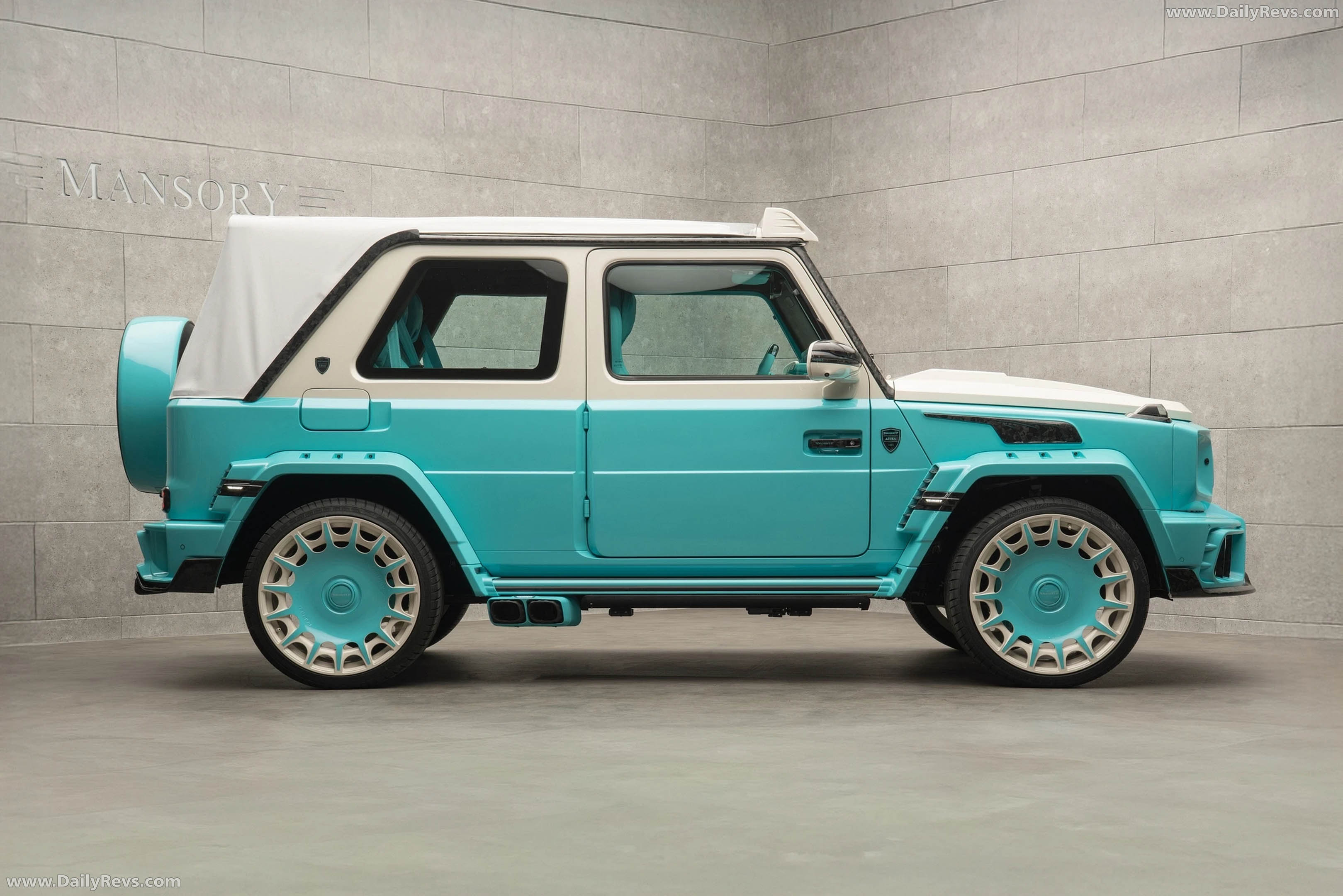
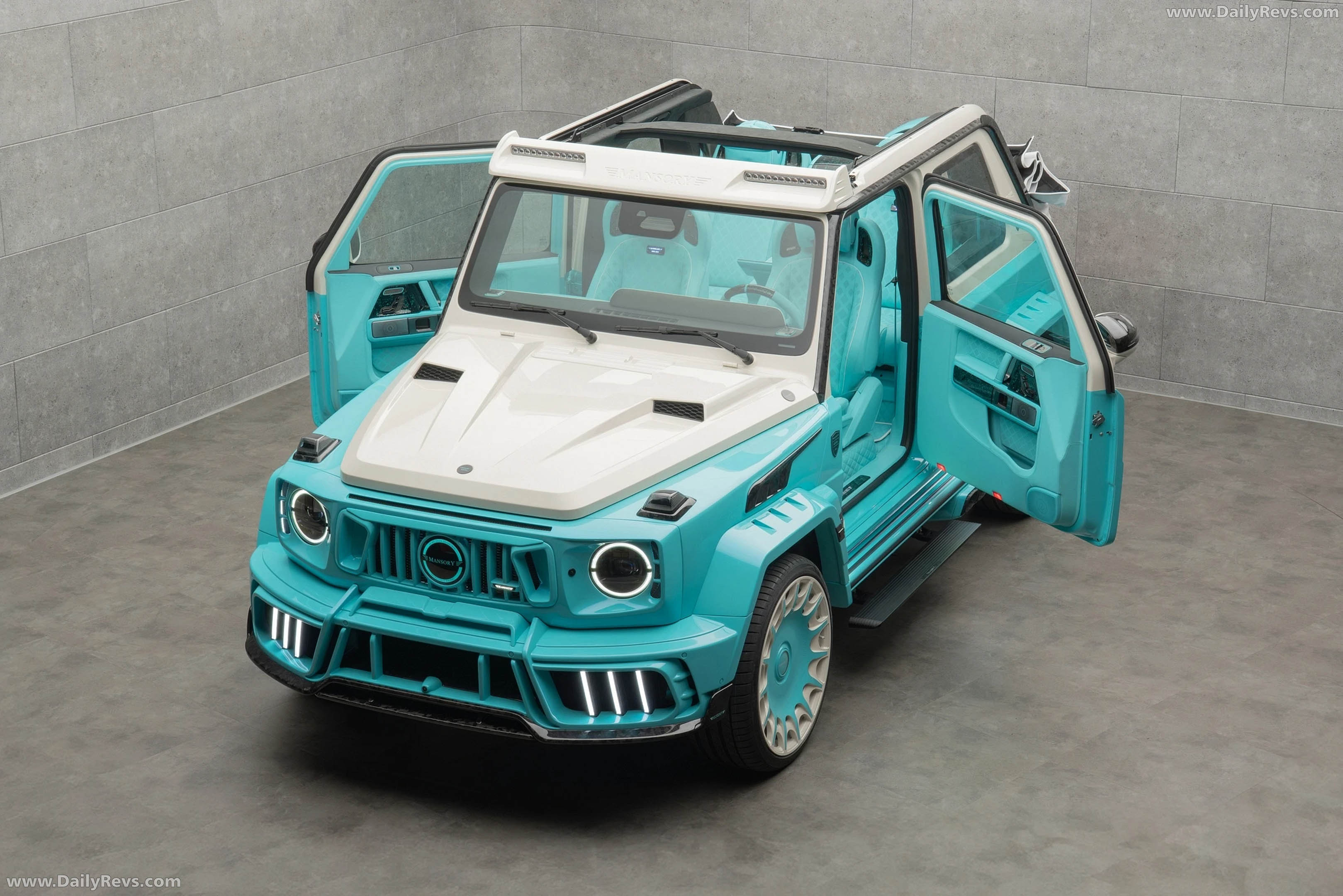
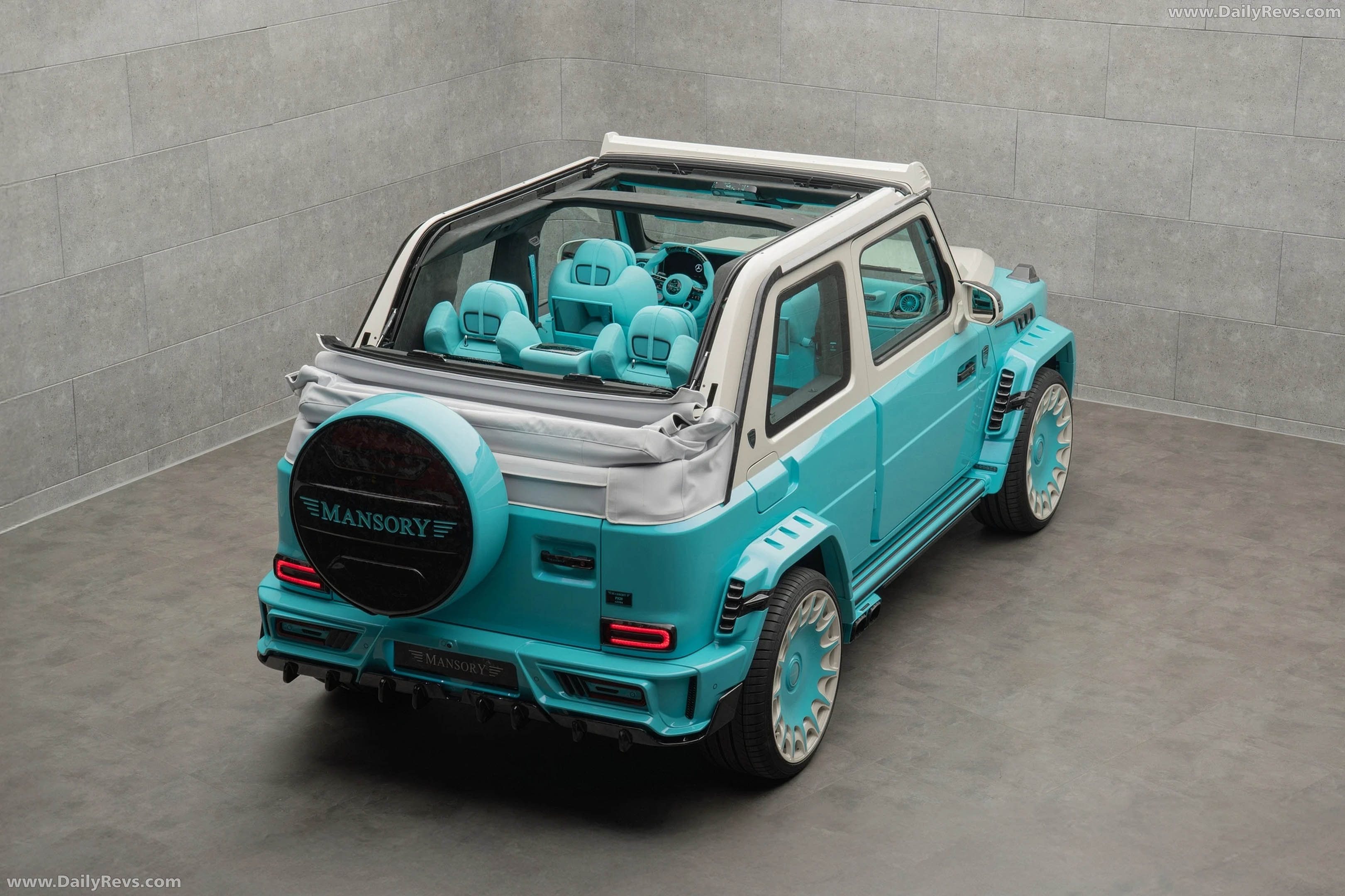
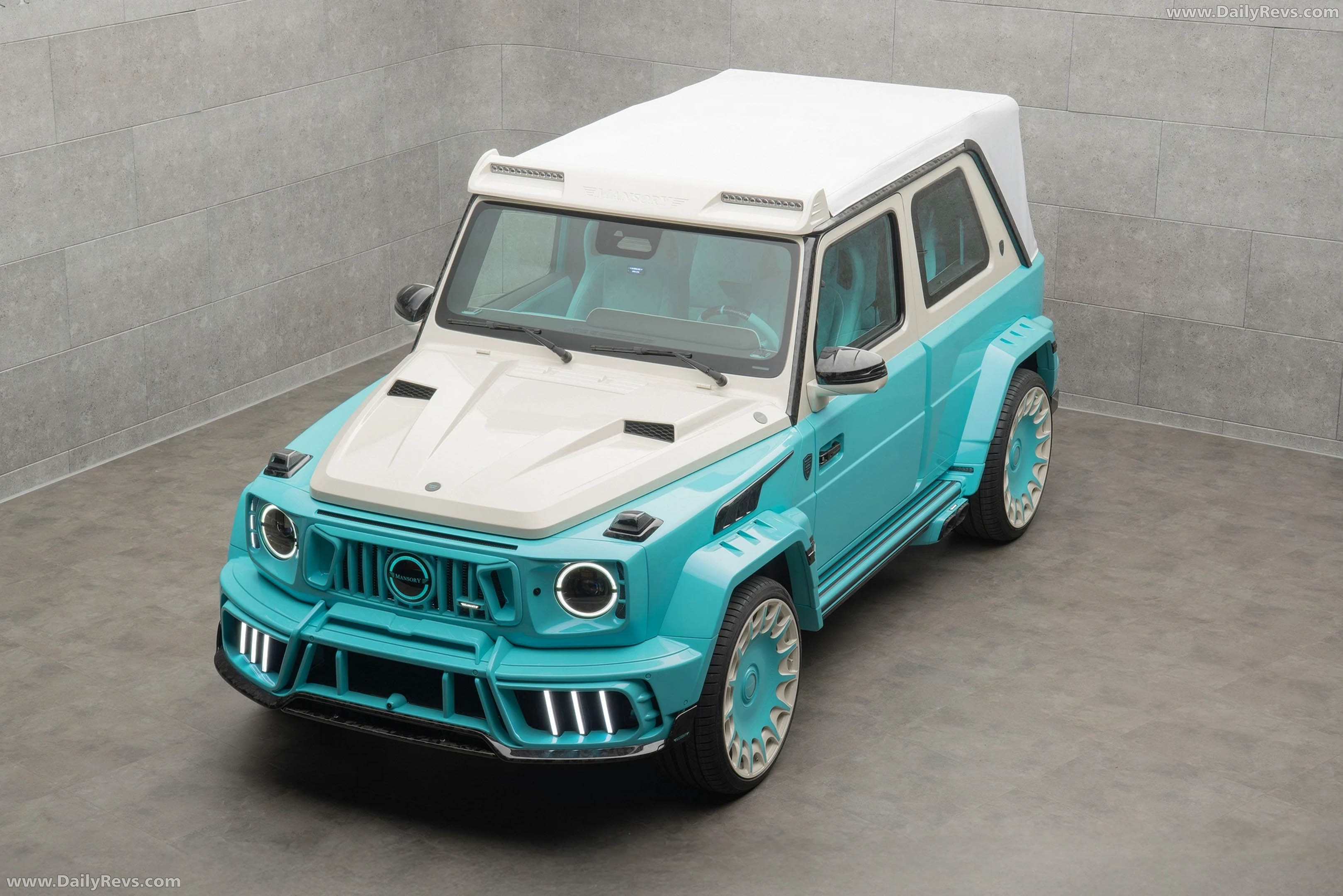
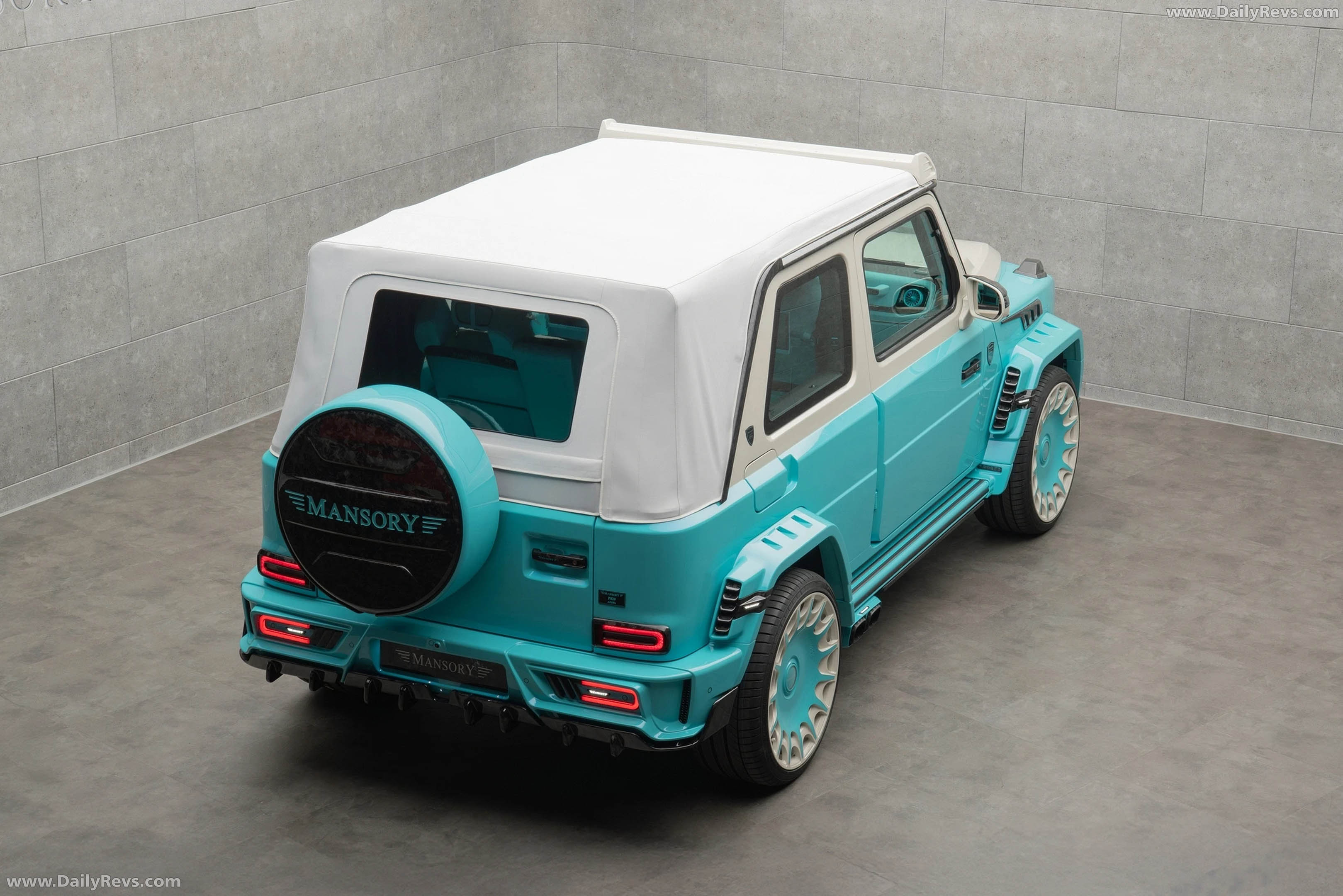


2026 Mansory Azura Cabrio
By Lorenzo Bianchi May 7, 2026
Mansory converts the G-Class into a two-door soft-top convertible.
Twin-turbo V8 upgraded to 820 hp and 1,150 Nm of torque.
Rear-hinged “suicide” doors and custom interior built to OEM standards.
Mansory turns the G-Class into something far stranger
The 2026 Mansory Azura Cabrio starts with a Mercedes-Benz G-Class, though by the time Mansory finishes with it, very little of the original vehicle’s personality remains untouched.
This is not simply a styling package or a power upgrade.
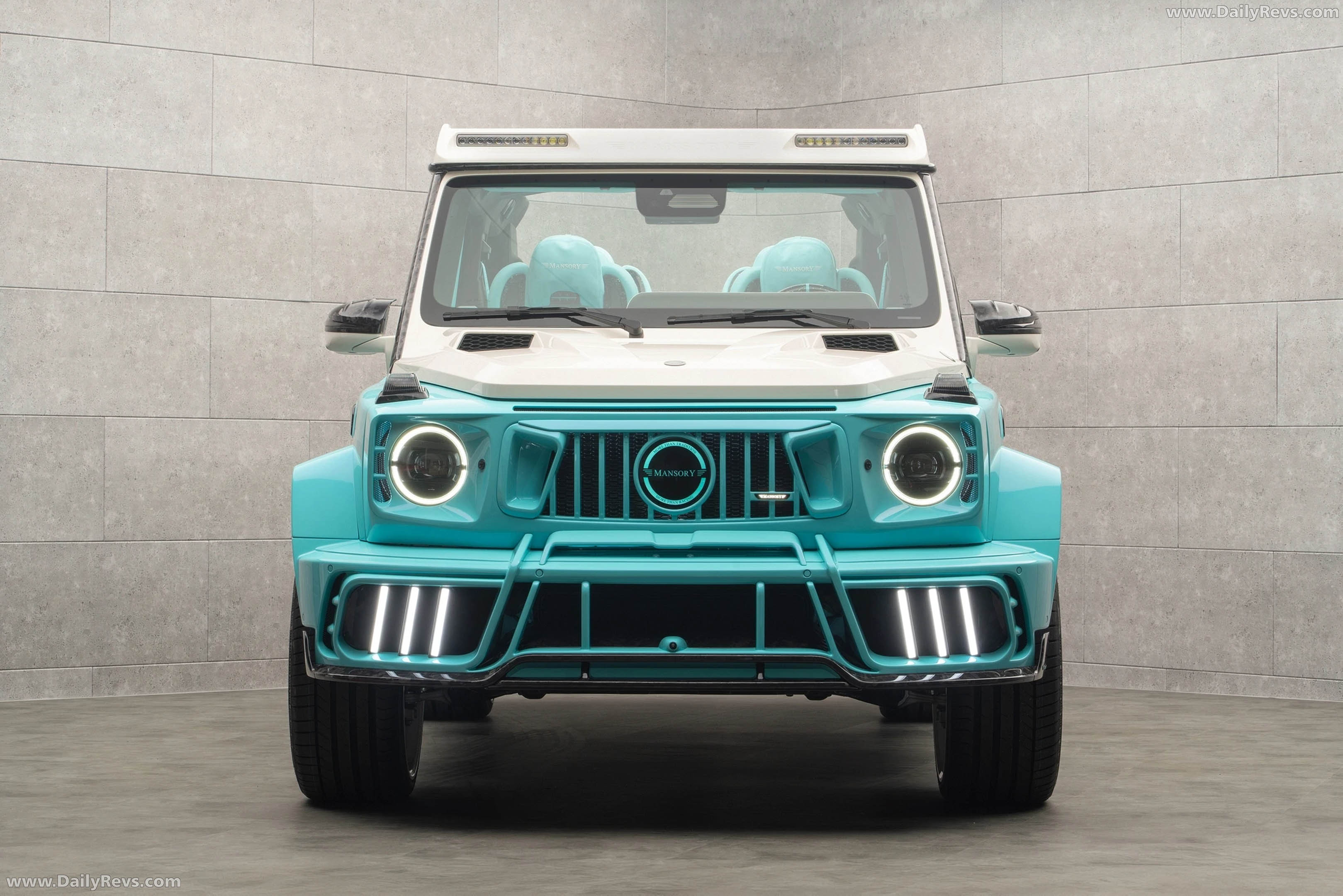
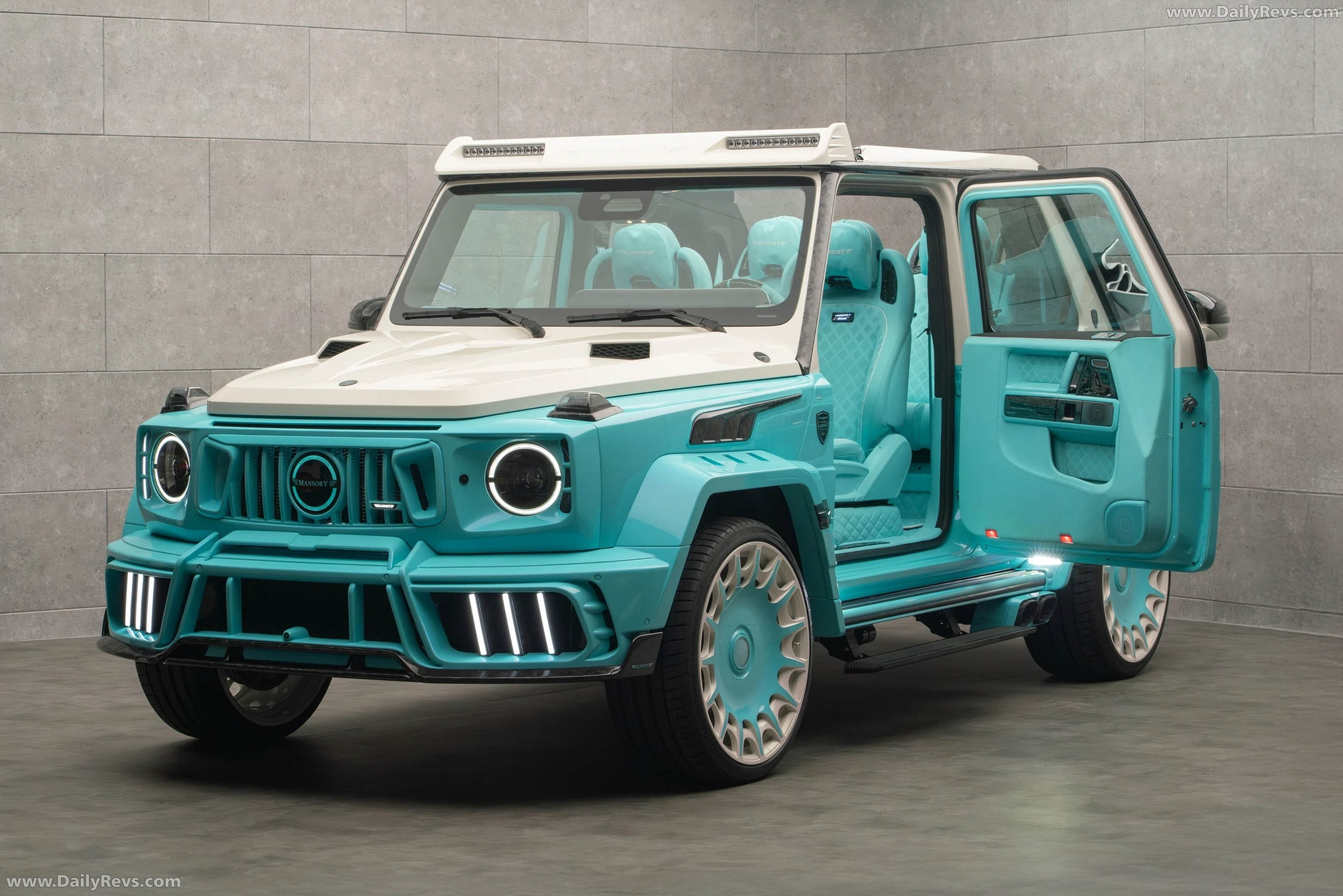
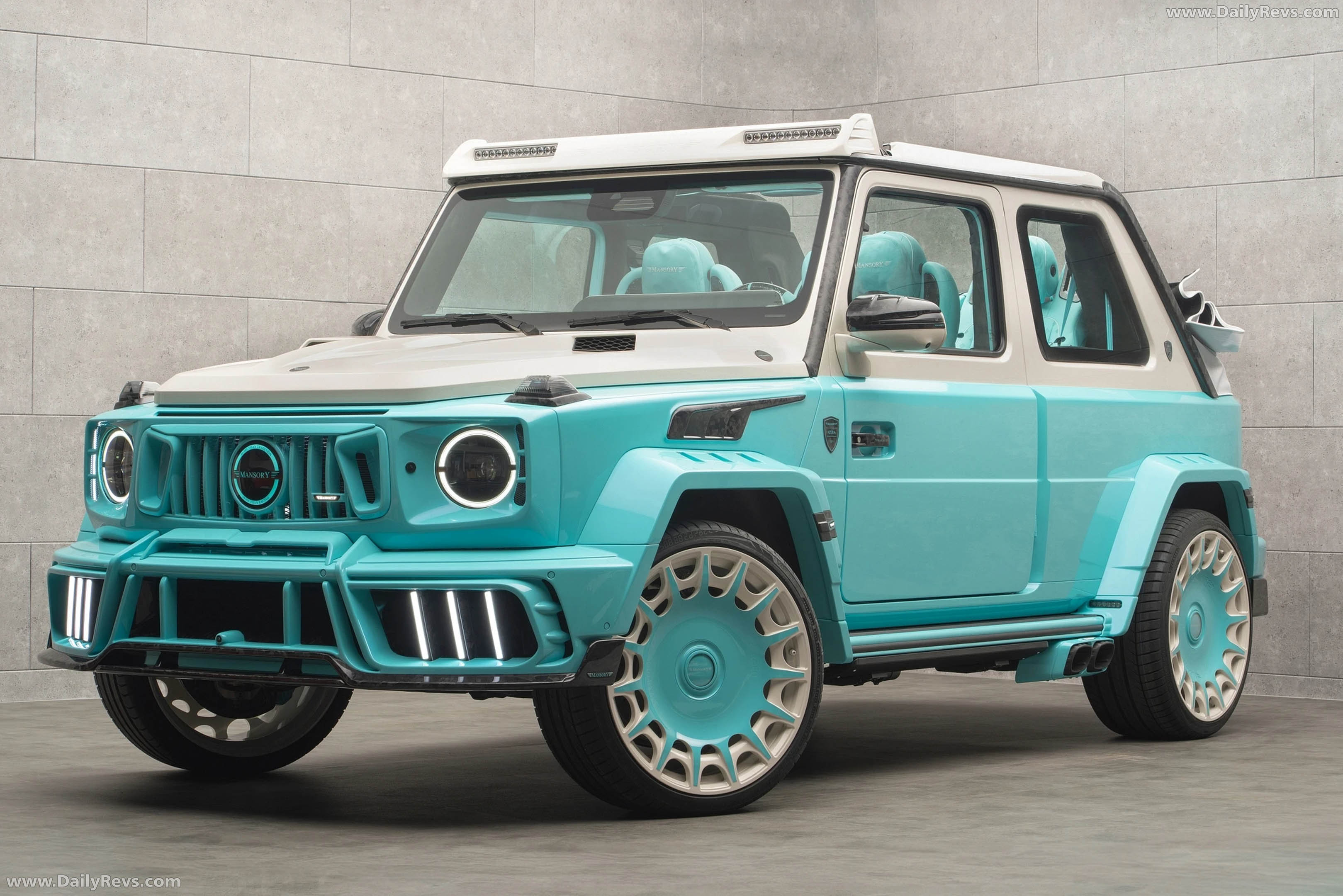
The Azura is a full coachbuilt conversion that transforms the current-generation G-Class into a two-door convertible complete with rear-hinged doors, a custom electrically operated fabric roof, and extensive structural changes underneath.
Even in a market already flooded with extravagant luxury SUVs, the Azura feels unusually theatrical.
That seems intentional.
The bodywork required major reconstruction
Converting a modern G-Class into a convertible is not a small engineering exercise.
According to Mansory, the Azura required extensive modifications to the body shell, not only to remove the roof but also to redesign the doors entirely. The standard four-door layout disappears in favor of elongated two-door proportions with rear-hinged “suicide” doors mounted behind the B-pillar.
The proportions become dramatically different as a result.
Without the fixed roof structure, the G-Class takes on a lower and more stretched appearance, though it still retains the upright silhouette and squared-off surfaces that define the original design. The soft top itself is fully electric and available in multiple fabric colors. Mansory also says the roof is insulated for year-round usability rather than being a fair-weather-only setup.
It looks expensive. Extremely expensive.
But there’s also a surprising amount of engineering hidden beneath the visual drama.
Interior customization borders on unlimited
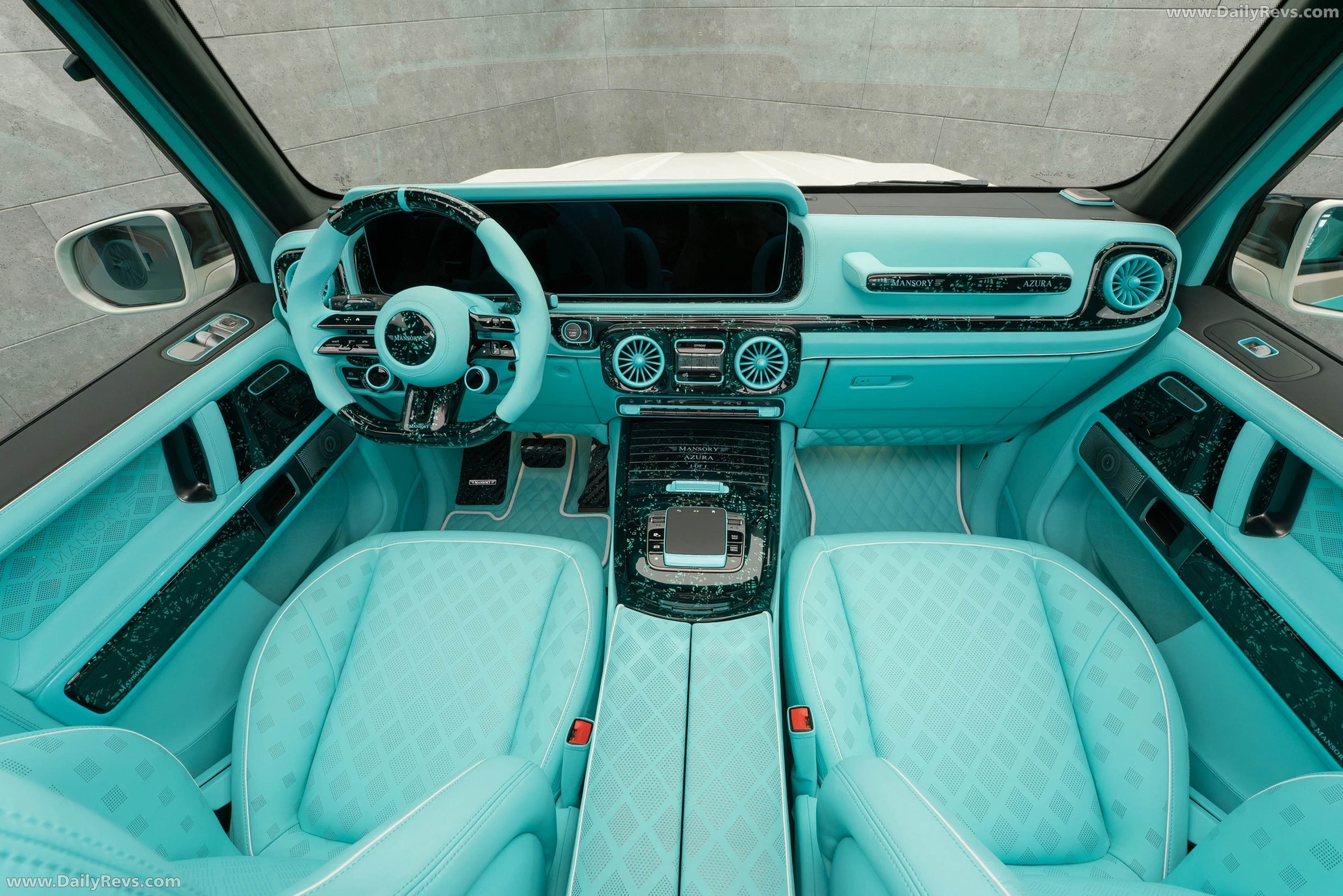
Inside, the Azura follows the usual Mansory philosophy: almost everything can be changed.
Customers can specify individual leather types, stitching patterns, color combinations, and carbon-fiber finishes throughout the cabin. Mansory notes that the conversion required extensive reworking of the vehicle’s seals, electronics, and interior trim pieces in order to match the altered body structure.
The company claims the work was completed to OEM standards, which matters more here than it might on a standard body kit project. Removing the roof from a modern luxury SUV creates countless secondary challenges involving rigidity, weather sealing, electrical systems, and cabin refinement.
Mansory clearly wants buyers to see the Azura as more than a visual showpiece.
Whether that fully succeeds probably depends on how much someone enjoys driving a convertible luxury SUV with rear-hinged doors and massive carbon trim pieces.
The twin-turbo V8 now produces 820 horsepower
The mechanical upgrades are substantial.
Mansory fits larger turbochargers, revised engine management software, and a new high-performance exhaust system with redesigned downpipes. The result is 820 hp from the 4.0-liter twin-turbocharged V8, up from the standard G-Class’ 585 hp. Torque rises to an enormous 1,150 Nm.
Performance figures are predictably dramatic.
Mansory claims the Azura reaches 100 km/h in just 4.0 seconds despite its size and weight, while top speed is electronically limited to 250 km/h.
That combination of towering SUV proportions and supercar-level output has become increasingly common in this segment. Still, few vehicles approach it with quite this level of visual intensity.
Luxury SUVs keep getting more theatrical
The Azura arrives in a world where high-end customization has become almost as important as the vehicle itself.
Brands like Brabus, Urban Automotive, and Mansory continue pushing large SUVs into increasingly niche territory, targeting buyers who want something impossible to ignore. The Azura fits directly into that space.