
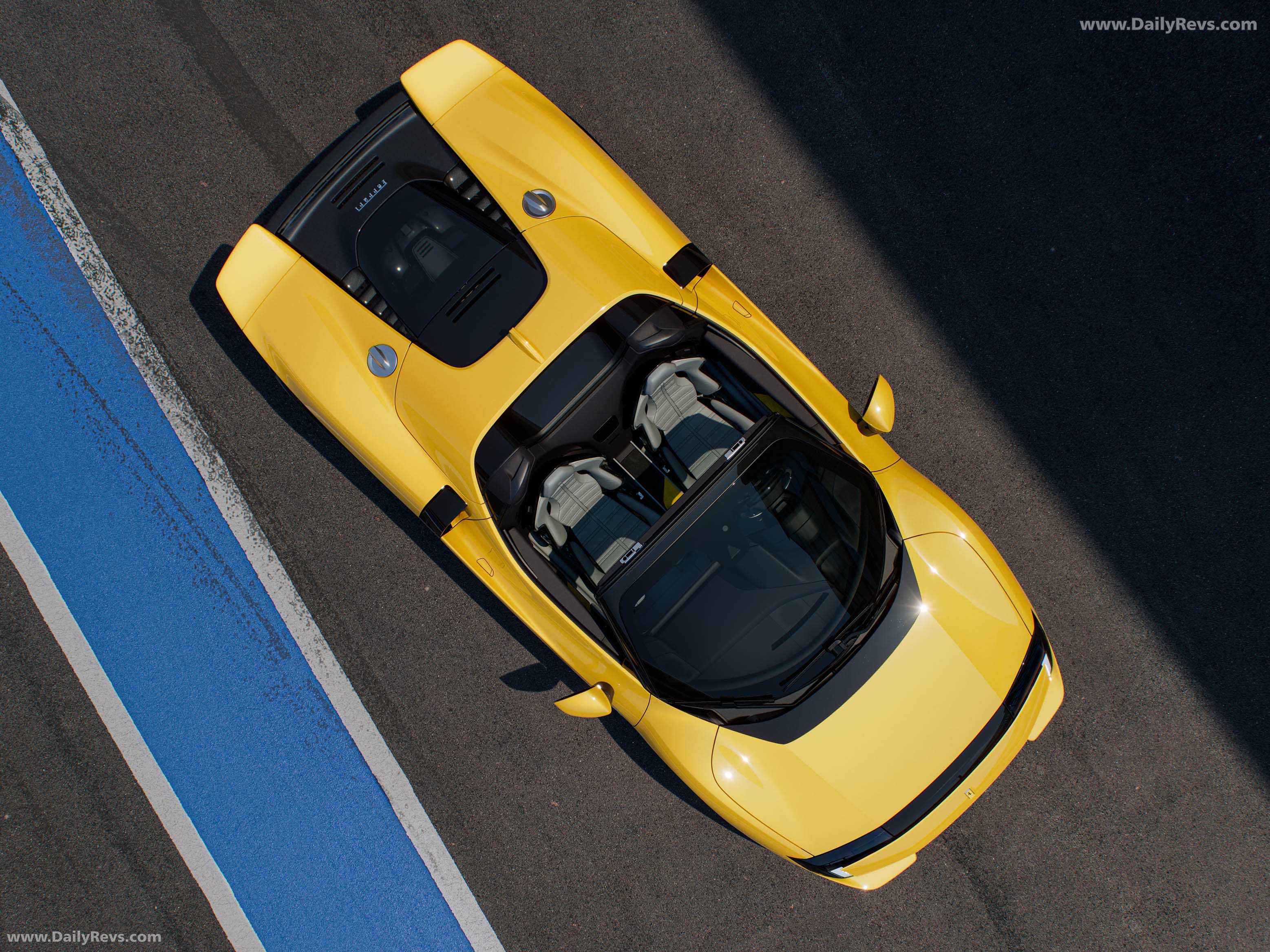


2026 Ferrari 849 Testarossa Spider
By Lorenzo Bianchi September 10, 2025
Most powerful Ferrari spider yet: 1,050 cv from a re-engineered V8 and three electric motors.
Shaped by aerodynamics: Active spoiler, twin-tail architecture, and revised underbody generate 415 kg of downforce.
Heritage in the name: Testarossa returns, recalling Ferrari’s 1950s racers and the 1984 road car icon.
Ferrari chose Milan in September 2025 to show its new flagship spider to the world. The 849 Testarossa Spider is a direct replacement for the SF90 Spider, but the changes go far deeper than a nameplate swap. At its heart is a comprehensively revised twin-turbo V8 delivering 830 cv, backed by three electric motors that add a further 220 cv. Together they bring output to 1,050 cv, the highest figure ever for a Ferrari road-going spider
The car is designed to work as both coupé and spider. Its retractable hardtop opens or closes in 14 seconds, even at speeds up to 45 km/h, and Ferrari has added a new wind-catcher behind the seats to tame turbulence when the roof is stowed
Engine and Hybrid System
Ferrari’s 3,990 cc V8, internally codenamed F154FC, is the latest evolution of a family that has won multiple International Engine of the Year awards. In the Spider it produces 830 cv at 7,500 rpm and 842 Nm of torque at 6,500 rpm. The gains come from a new turbo — the largest ever fitted to a Ferrari production car — along with reworked heads, lighter camshafts, titanium fixings, and optimized manifolds.
The hybrid system adds serious flexibility. Two motors on the front axle provide all-wheel drive and torque vectoring, while a third motor on the rear axle draws directly from Ferrari’s Formula 1 know-how. A 7.45 kWh lithium-ion battery supplies energy, good for 25 km of eDrive range. Four modes are selectable through the eManettino: eDrive, Hybrid, Performance, and Qualify. In the most aggressive setting, the Spider delivers maximum output continuously, enough for 0–100 km/h in under 2.3 seconds and 0–200 km/h in 6.5 seconds
Ferrari paid close attention to the soundtrack. The new V8 has been tuned to sharpen harmonics across the rev range, with a fuller note in the mid-band and a rising, urgent tone all the way to the 8,300 rpm limiter. Gearshifts take a cue from the SF90 XX Stradale, with calibration that intensifies the exhaust crack on upshifts when the car is driven hard
Aerodynamic Profile
Aerodynamics are where the Spider most clearly shows Ferrari’s racing influence. The car generates 415 kg of downforce at 250 km/h, 25 kg more than its predecessor, while cooling performance rises by 15%.
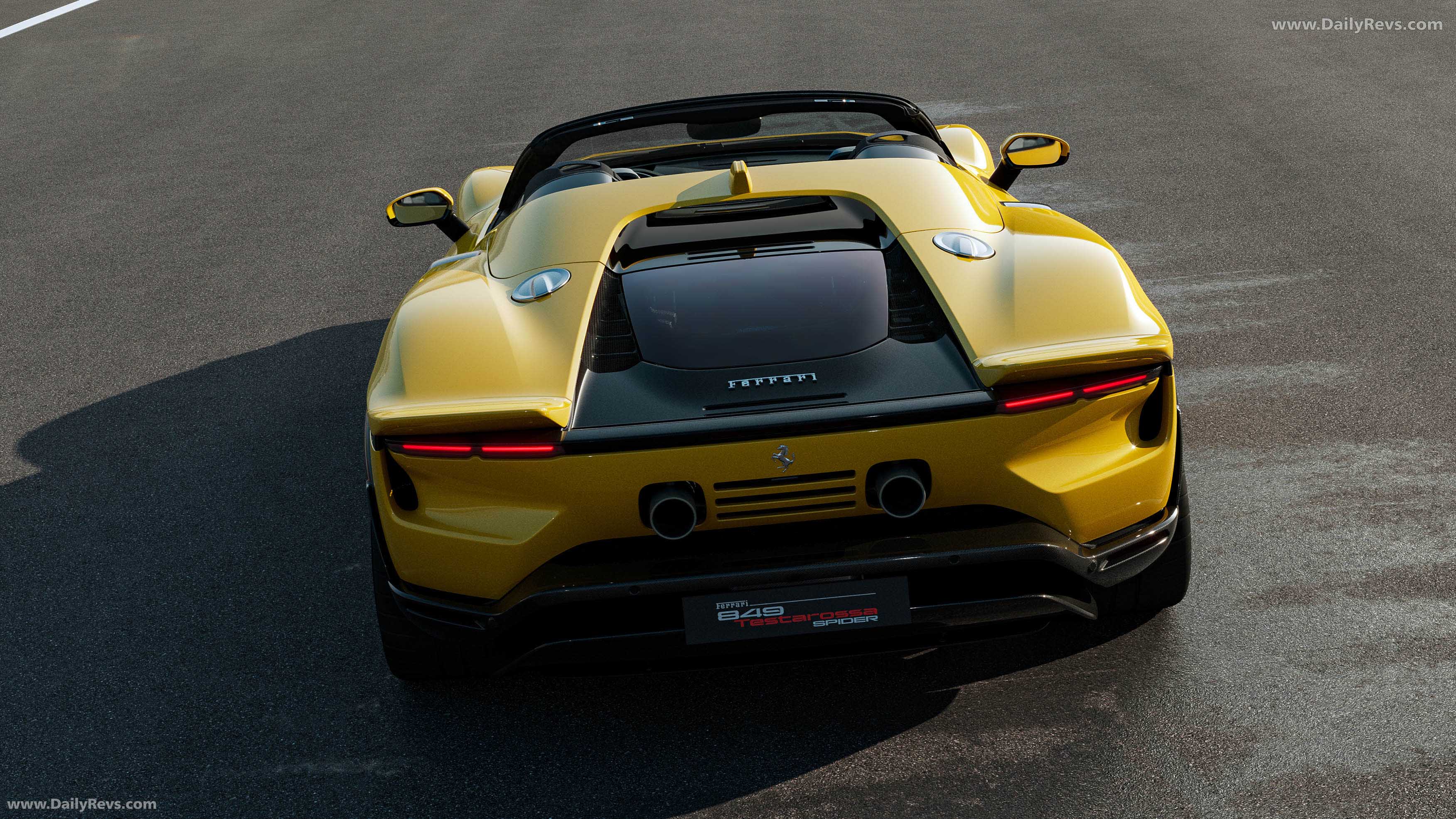
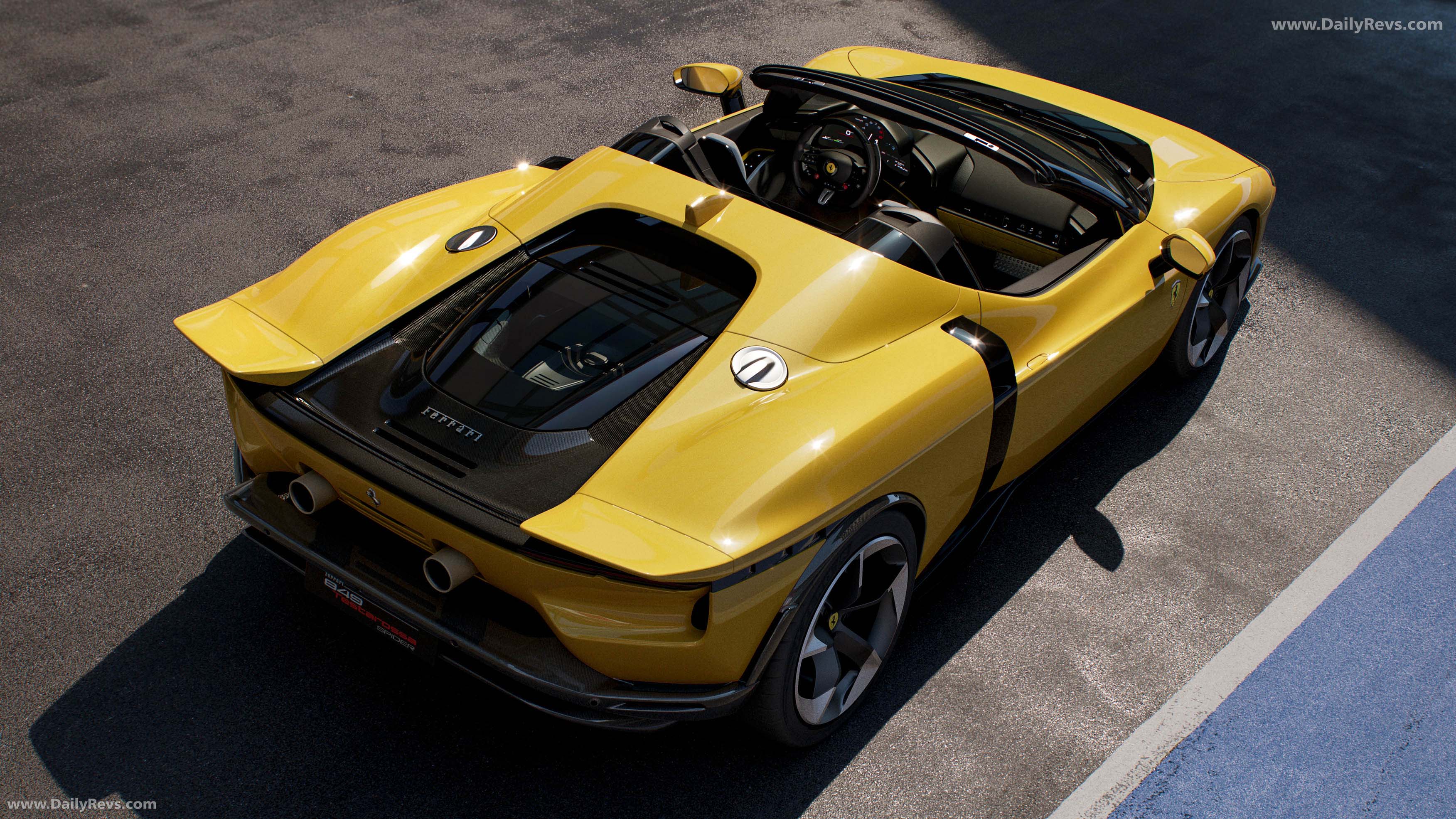
Up front, a new underfloor with vortex generators produces 20% more downforce. At the rear, a twin-tail design inspired by 1970s prototypes integrates an active spoiler that can switch between low-drag and high-downforce settings in under a second. Multi-level diffusers and sculpted side intakes feed more air to the brakes and intercoolers, raising efficiency across the board
Dynamics and Control
Ferrari has fitted the ABS Evo system and the latest FIVE (Ferrari Integrated Vehicle Estimator). FIVE essentially builds a real-time digital twin of the car, feeding precise data into braking, traction, and stability systems. Combined with a revised suspension set-up and lighter springs, the Spider improves lateral grip by 3% and reduces roll by 10%.
Despite packing extra hardware, weight remains in check. At 1,660 kg dry, the Spider matches the SF90 Spider, thanks to widespread use of lightweight components. The result is the best power-to-weight ratio of any Ferrari spider so far: 1.58 kg per cv
Exterior and Styling
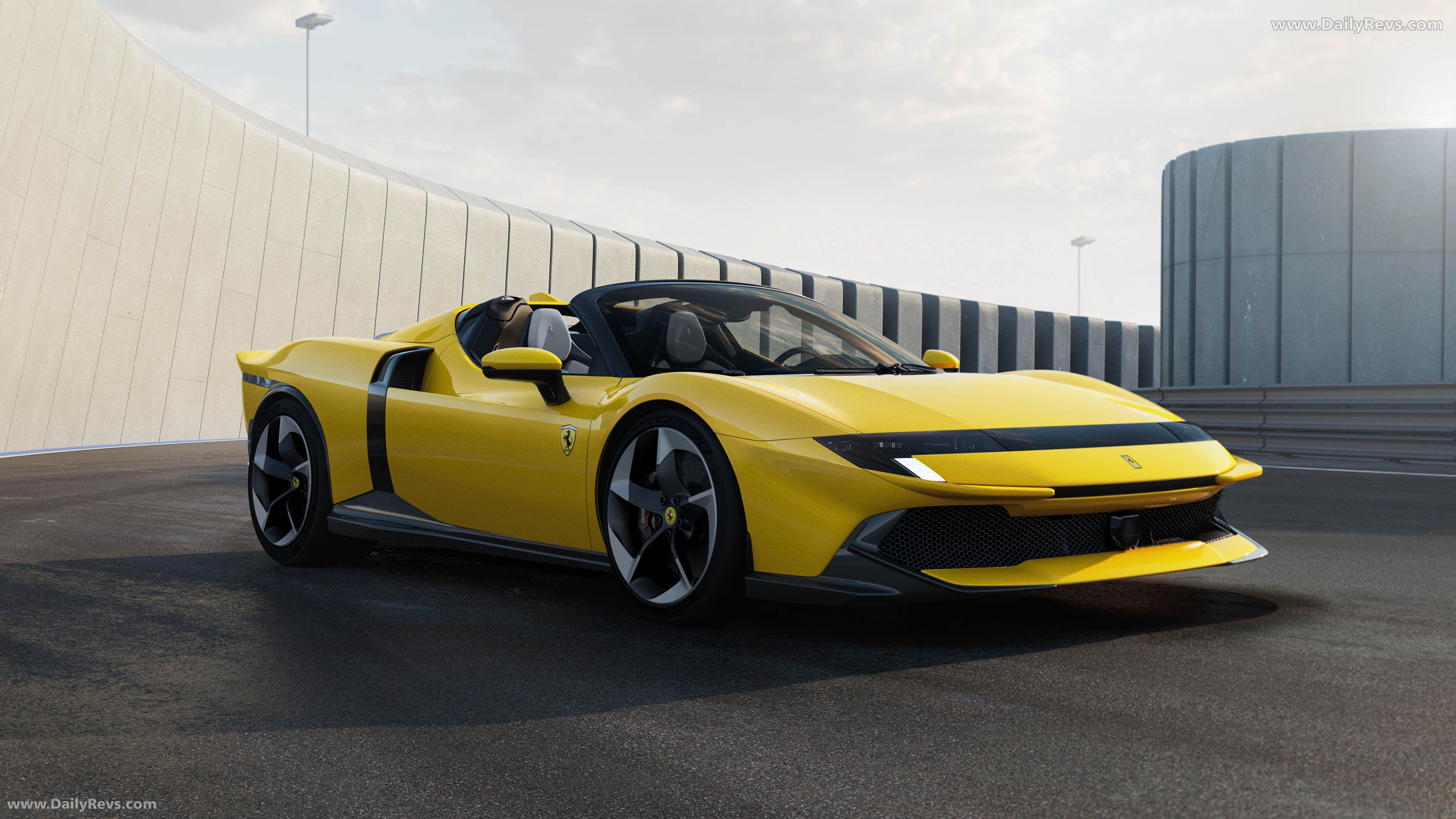
Flavio Manzoni’s design team has given the Spider sharp, geometric lines inspired by Ferrari’s 1970s sports prototypes. With the roof closed, the car carries the volumes of the berlinetta 849 Testarossa. With it open, the twin-tail architecture dominates, setting the Spider apart visually.
The front fascia borrows cues from the Ferrari 12Cilindri, with a bridge-like bar linking the headlights. Doors are deeply sculpted and double as aerodynamic ducts, feeding intercoolers and brakes. At the rear, a broad diffuser frames twin round tailpipes, emphasizing width and stance
Forged wheels, developed in tandem with the aerodynamics team, use protruding fins to manage airflow from the wheel wells. They are available in multiple finishes and can be customized to taste.
Cabin and Controls
Inside, the layout balances berlinetta horizontality with single-seater influence. The dashboard uses floating C-shaped vents, an integrated passenger display, and an F80-inspired gear-gate motif.
Seats come in comfort or carbon-fibre racing designs, both shaped for ergonomics and lateral support. The steering wheel mixes physical buttons — including the traditional Engine Start — with a digital cluster for configuring hybrid modes. Connectivity includes Apple CarPlay®, Android Auto®, wireless charging, and the MyFerrari Connect app
Assetto Fiorano
For clients seeking maximum track focus, Ferrari offers the Assetto Fiorano package. This spec cuts weight by 30 kg through titanium springs, carbon seats, and 20-inch carbon wheels. Aerodynamic tweaks add larger front flicks and replace the twin tails with twin wings, tripling downforce compared to the standard car. Suspension is handled by Multimatic dampers, and Michelin Cup 2 tyres can be specified
Personalization and Service
Ferrari has prepared two new exterior finishes: Rosso Fiammante, a metallic take on Rosso Corsa, and Giallo Ambra, a deep amber-inspired shade. Inside, a new Giallo Siena Alcantara® trim joins the catalogue.
As with all current models, the 849 Testarossa Spider is covered by Ferrari’s seven-year maintenance program, alongside extended hybrid warranties that can stretch up to 16 years and include free high-voltage battery replacement at certain intervals.
849 TESTAROSSA SPIDER
HYBRID POWERTRAIN
- Maximum power 1,050 cv
INTERNAL COMBUSTION ENGINE
- Layout Twin-turbo V8 – dry sump
- Total displacement 3,990 cc
- Bore & stroke 88 x 82 mm
- Maximum power* 830 cv @ 7,500 rpm
- Maximum torque 842 Nm @ 6,500 rpm
- Maximum speed 8,300 rpm
- Compression ratio 9.54:1
- Specific power 208 cv/l
ELECTRICAL SYSTEM
- Maximum power in eDrive mode 163 cv
- Battery capacity 7.45 kWh
- Maximum range in eDrive mode 25 km
DIMENSIONS AND WEIGHTS
- Length 4,718 mm
- Width 2,304 mm
- Height 1,186 mm
- Wheelbase 2,650 mm
- Front track 1,678 mm
- Rear track 1,673 mm
- Dry weight* 1,660 kg
- Dry weight/power ratio 1.58 kg/cv
- Weight distribution 45% front / 55% rear
- Tank capacity 68 litres
- Trunk capacity 74 litres
TYRES AND WHEELS
- Front 265/35 R20 J9.5
- Rear 325/30 R20 J11.5
BRAKES
- Front 410 x 223 x 38 mm
- Rear 372 x 233 x 34 mm
TRANSMISSION AND GEARBOX
- 8-speed dual-clutch F1 gearbox
ELECTRONIC CONTROLS
- Side Slip Control (SSC) 9.0, TC, eDiff, SCM, FDE 2.0, EPS, FIVE, ABS Evo and performance EBD in all positions of the Manettino
PERFORMANCE
- Maximum speed >330 km/h
- 0-100 km/h <2.3 s
- 0-200 km/h 6.5 s
- 100-0 km/h 28.5 m
- Fiorano lap time 1’ 18” 100