2025 Zenos E10 RZ
By Lorenzo Bianchi September 25, 2025
Zenos E10 RZ debuts with 380bhp, 510Nm and a remarkable 500bhp per tonne.
Features a carbon tub, extruded aluminium spine and pushrod suspension.
Production capped at under 50 units for the first year, around £140,000 OTR.
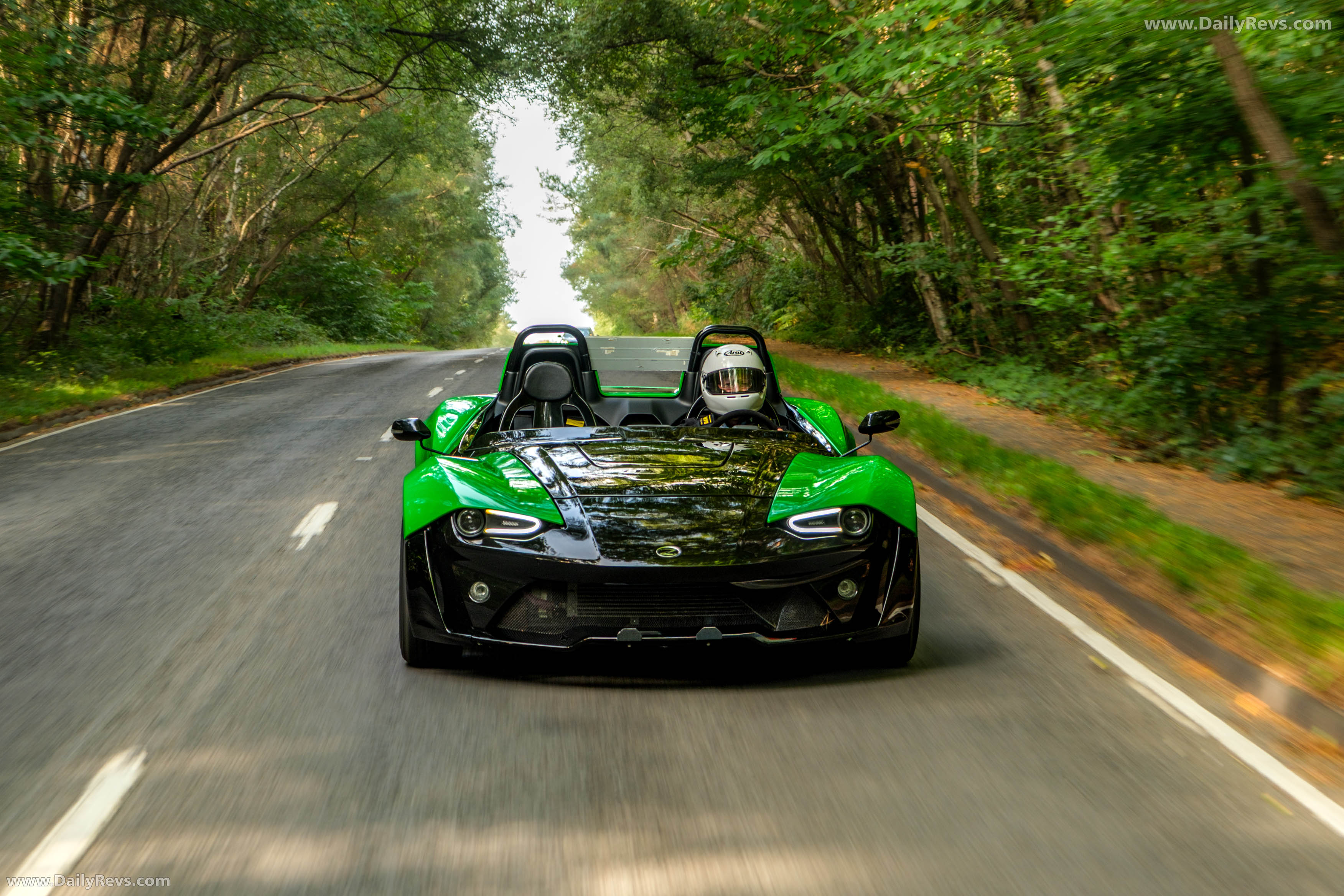
Zenos has always built cars for purists. Lightweight, uncomplicated, and more about driving than anything else. The new E10 RZ sticks to that recipe but dials it right up. Production kicks off in early 2026, though only around 50 cars will be made in the opening year.
The RZ heads a new family of Zenos models, sitting above the forthcoming E10 R2. It’s not just an update of the original 2014 E10 — it’s a reminder that Britain still knows how to craft a raw, lightweight sports car in an era dominated by heavy EVs and SUVs.
Built Around Lightness
The bones of the car tell the story. A large extruded aluminium spine runs the length of the chassis, joined by a full carbon-fibre tub to keep rigidity sky-high and weight down to just 790kg. That’s the figure that makes everything else possible.
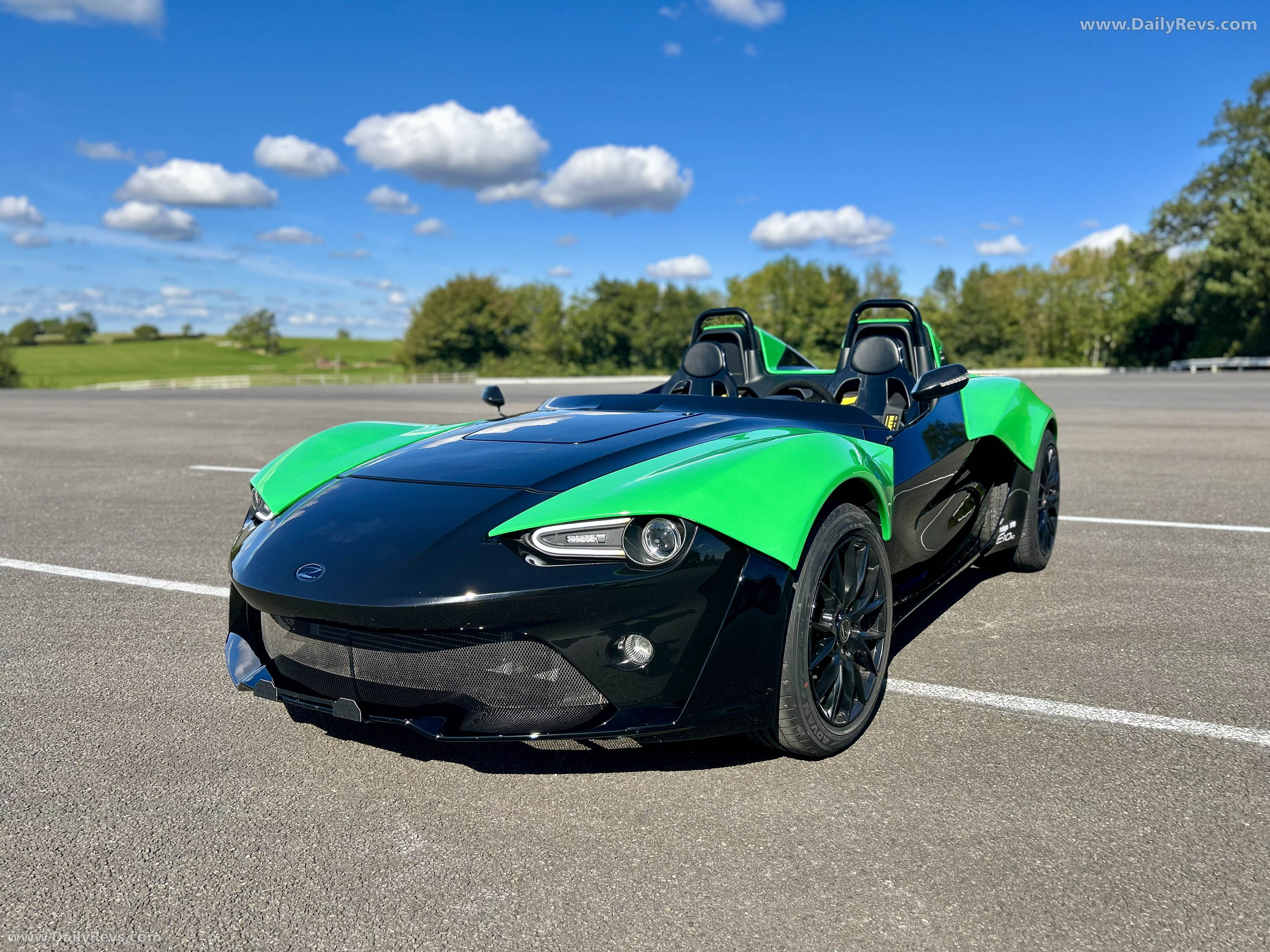
The tracks front and rear are wider than before, the stance lower, the balance better. With the engine and gearbox mounted inboard of the axles, the RZ’s proportions promise the kind of agility usually reserved for track specials.
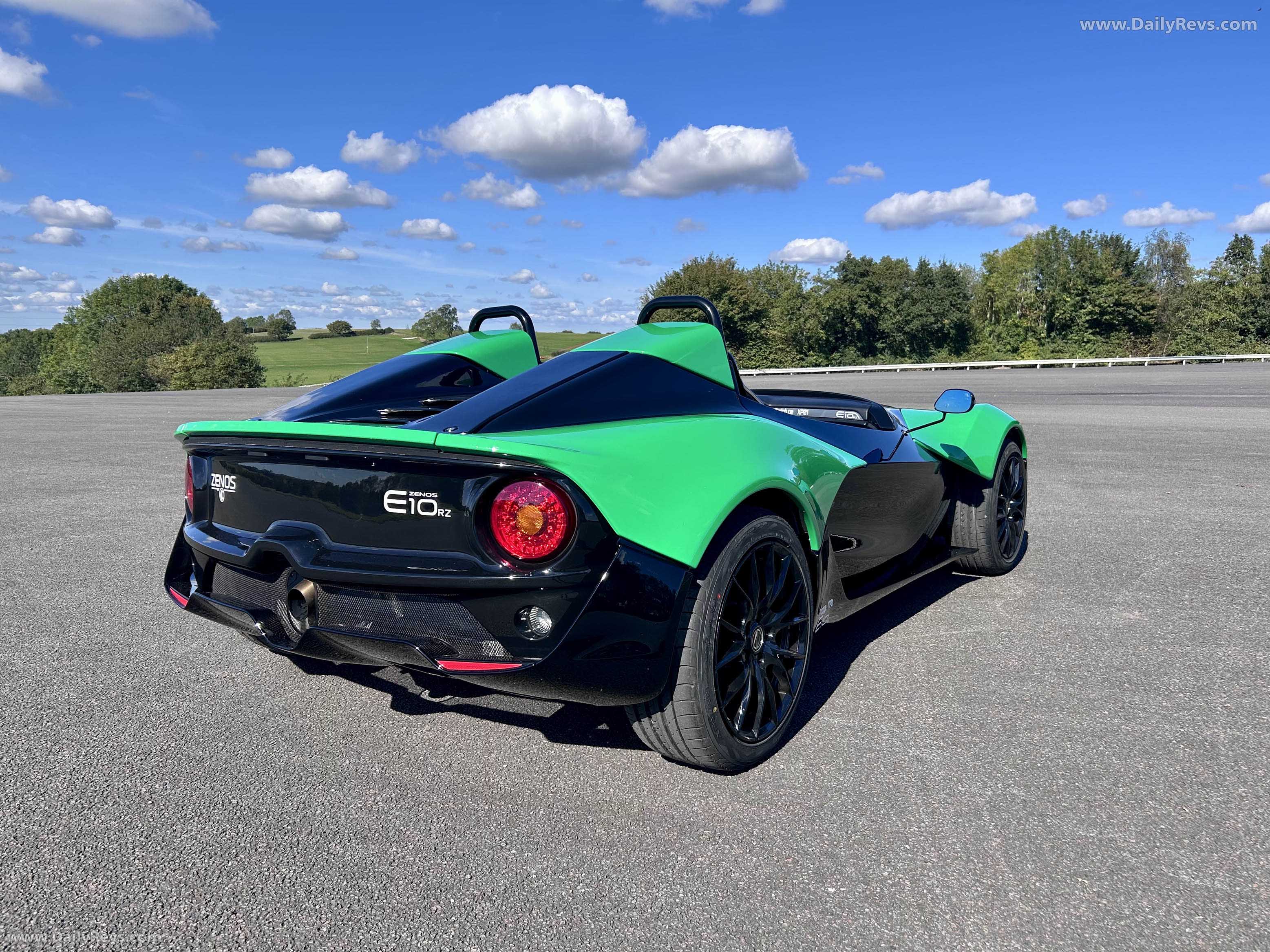
Bodywork is, again, entirely carbon fibre. Made in the UK, the panels can be painted, left bare in weave, or customized depending on the buyer’s taste. It looks functional, but also theatrical — a car designed to cut through air and turn heads.
Engine with Serious Punch
At the heart of it sits a 2.0-litre turbocharged four-cylinder, tuned to produce 380bhp at 6,000 rpm and 510Nm between 3,000 and 4,500 rpm. Those numbers don’t sound wild until you remember the 790kg kerb weight. The result: a blistering 500bhp per tonne, putting the E10 RZ in rarefied company.
On paper, that means 0–100 km/h in about 3.2 seconds and a top speed nudging 150 mph. Power goes straight to the rear wheels through a six-speed manual gearbox, exactly the kind of old-school touch enthusiasts crave. A limited-slip differential is standard to help keep things tidy when the turbo wakes up mid-corner.
Suspension and Brakes
Zenos hasn’t just chased power; the chassis has been thought through. Up front, there’s a pushrod-operated independent suspension system, with inboard dampers tucked out of the airflow to reduce drag. It’s the sort of detail you’d normally expect on race machinery.
At the back, conventional coil-over dampers do the work, tied into a tubular steel subframe that holds the engine and gearbox. Braking is supplied by two-piece discs and four-piston calipers at the front, two-piston units at the rear. The wheels are modest by today’s standards — 16 inches front, 17 rear — shod in 195/50 R16 and 225/45 R17 tyres. Lightweight and focused, like the rest of the car.
Inside the Cabin
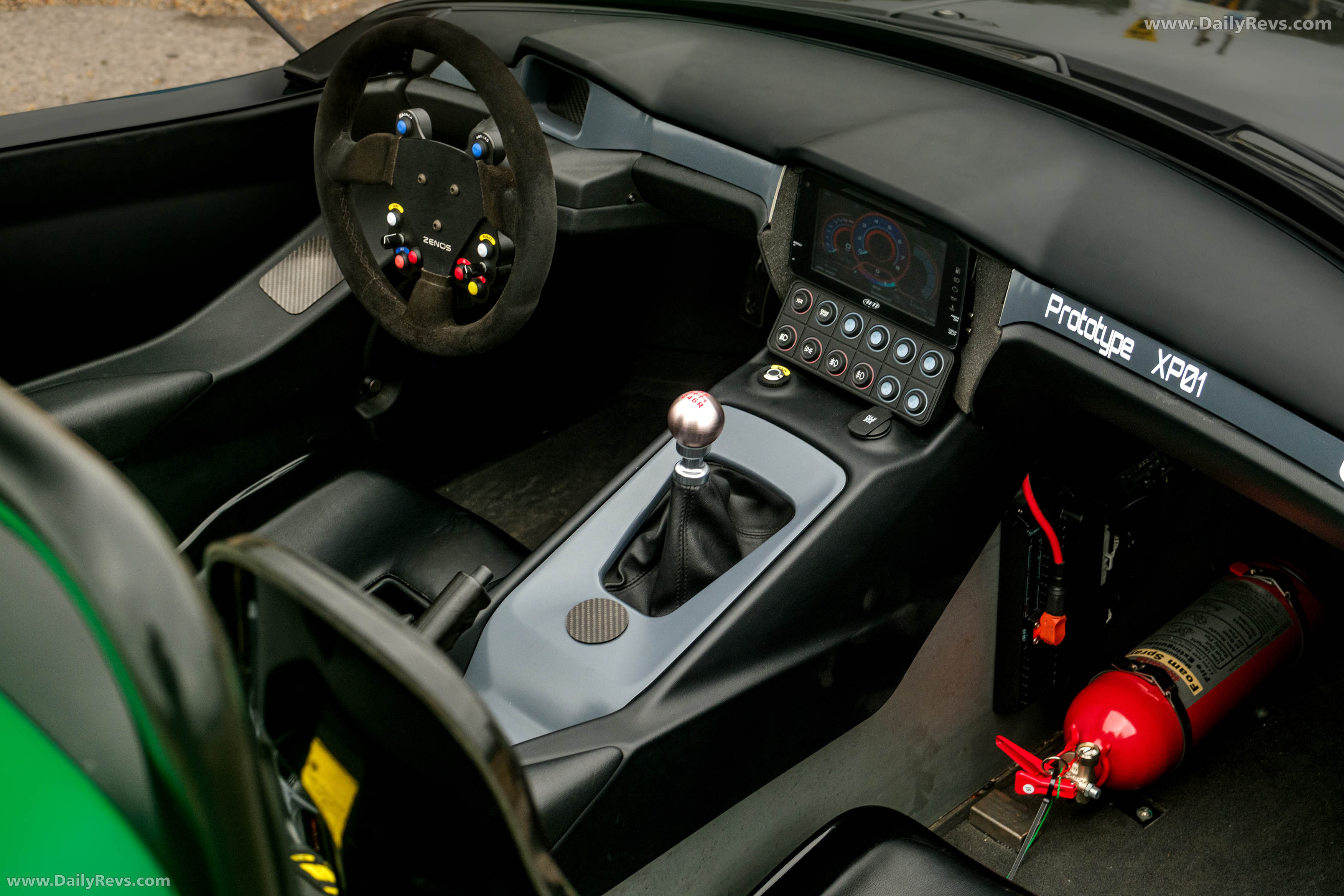
The interior strips out the frills. Carbon bucket seats, bespoke finishes, and just enough instrumentation to keep the driver informed. It’s more cockpit than cabin, but that’s the point. Carbon detailing carries through, adding to the impression that every gram has been considered.
It isn’t luxury in the traditional sense, but for those buying one, immersion and support matter more. This is a car that prioritizes feel over comfort.
Zenos won’t stop with the RZ. A second model, the E10 R2, is due about three months later. It’ll carry a 2.3-litre turbo engine producing 325bhp, still featherweight, still rapid — roughly 400bhp per tonne — and with a price closer to £120,000 OTR. Think of it as the slightly less extreme sibling.
The lightweight sports car niche isn’t huge, but it’s passionate. The E10 RZ squares up against names like Caterham, Ariel, and Radical, but it brings something they don’t — a full carbon tub and that staggering 500bhp per tonne.
At around £140,000 OTR, it won’t be cheap. But it isn’t meant to be. It’s aimed at drivers who want raw, rare, and uncompromising machines. And with fewer than 50 set for the first year, exclusivity is baked into the deal.
Technical Specification
- Engine: 2.0-litre turbocharged inline-four
- Power Output: 380bhp at 6,000 rpm
- Torque: 510Nm between 3,000–4,500 rpm
- Transmission: Six-speed manual
- Drivetrain: Rear-wheel drive with limited-slip differential
- Kerb Weight: 790 kg
- Power-to-Weight Ratio: 500bhp per tonne
- Acceleration (0–100 km/h / 0–62 mph): 3.2 seconds (approx.)
- Top Speed: 150 mph (approx.)
- Chassis: Extruded aluminium spine with carbon-fibre tub
- Bodywork: Full carbon fibre
- Front Suspension: Pushrod-operated independent with inboard dampers
- Rear Suspension: Independent with coil-over dampers
- Brakes (Front): Two-piece discs with four-piston calipers
- Brakes (Rear): Discs with two-piston calipers
- Wheels: 16-inch front, 17-inch rear alloys
- Tires: 195/50 R16 front, 225/45 R17 rear
- Seating: Carbon-fibre bucket seats with bespoke finishes
- Production Numbers: Fewer than 50 units in the first year
- Estimated Price: £140,000 OTR