2025 Toyota Tacoma H2 Overlander Concept
By Lorenzo Bianchi November 4, 2025
The 2025 Toyota Tacoma H2 Overlander Concept combines hydrogen fuel cell and battery-electric power.
Produces 547 hp with zero tailpipe emissions and dual EV charging capability.
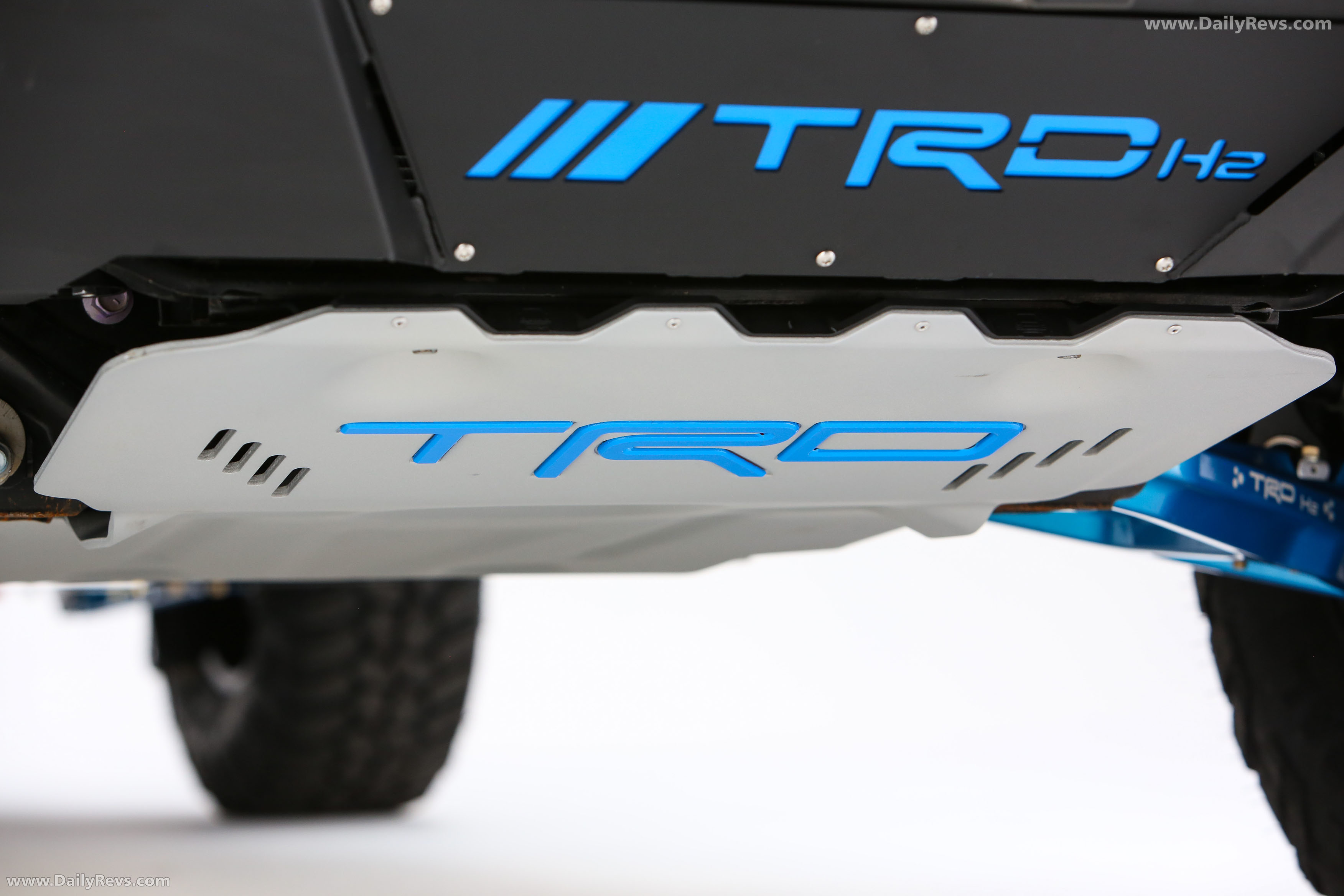
Features TRD-engineered suspension, 35-inch tires, and a water recovery system for remote utility.
Toyota Experiments with Hydrogen Off-Roading
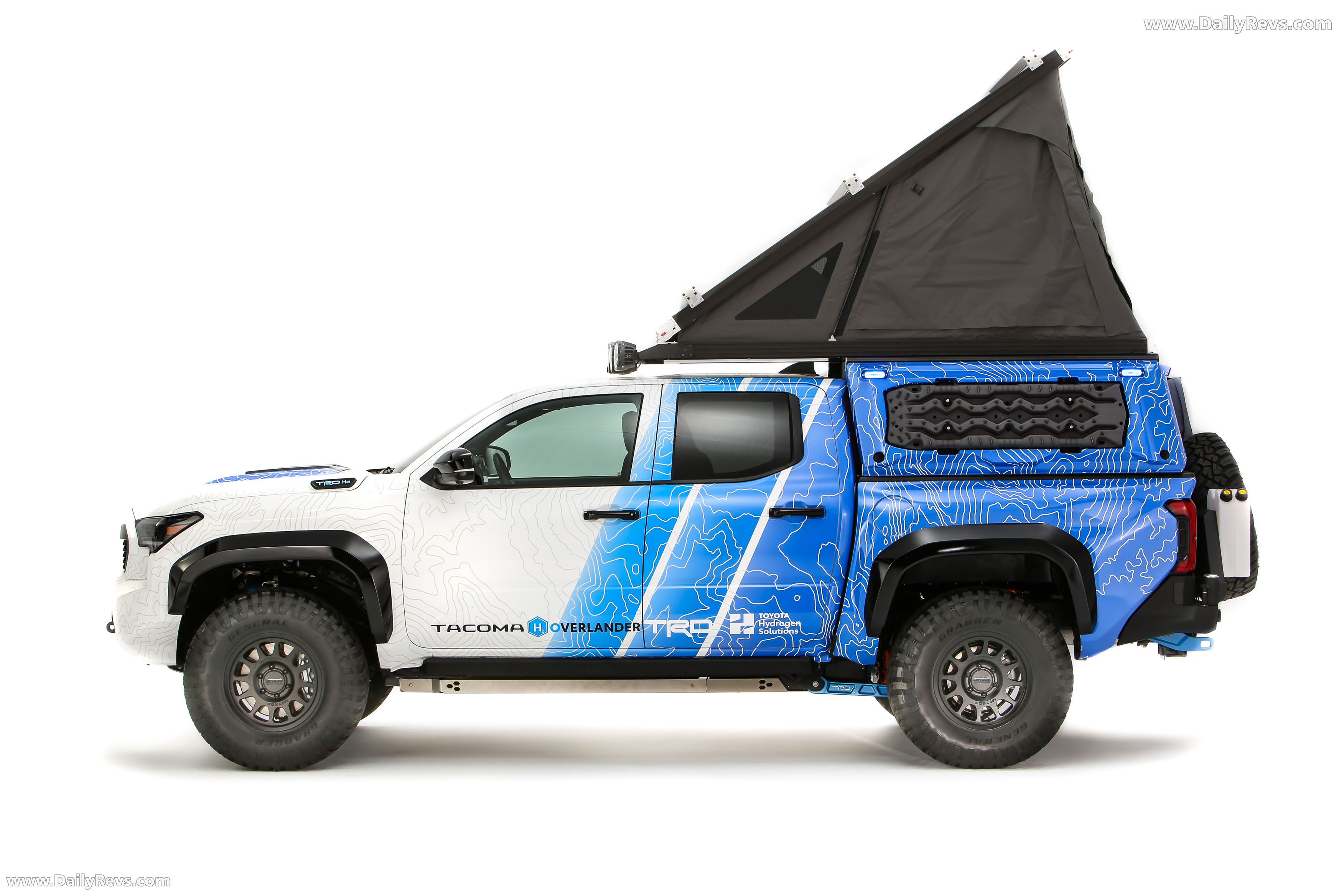
At the 2025 SEMA Show in Las Vegas, Toyota unveiled what might be its most forward-thinking truck yet — the 2025 Toyota Tacoma H2 Overlander Concept. Developed by Toyota Racing Development (TRD) teams in California and North Carolina, the concept reimagines the Tacoma as a self-sustaining hydrogen-powered overlanding rig built for remote, zero-emission exploration.
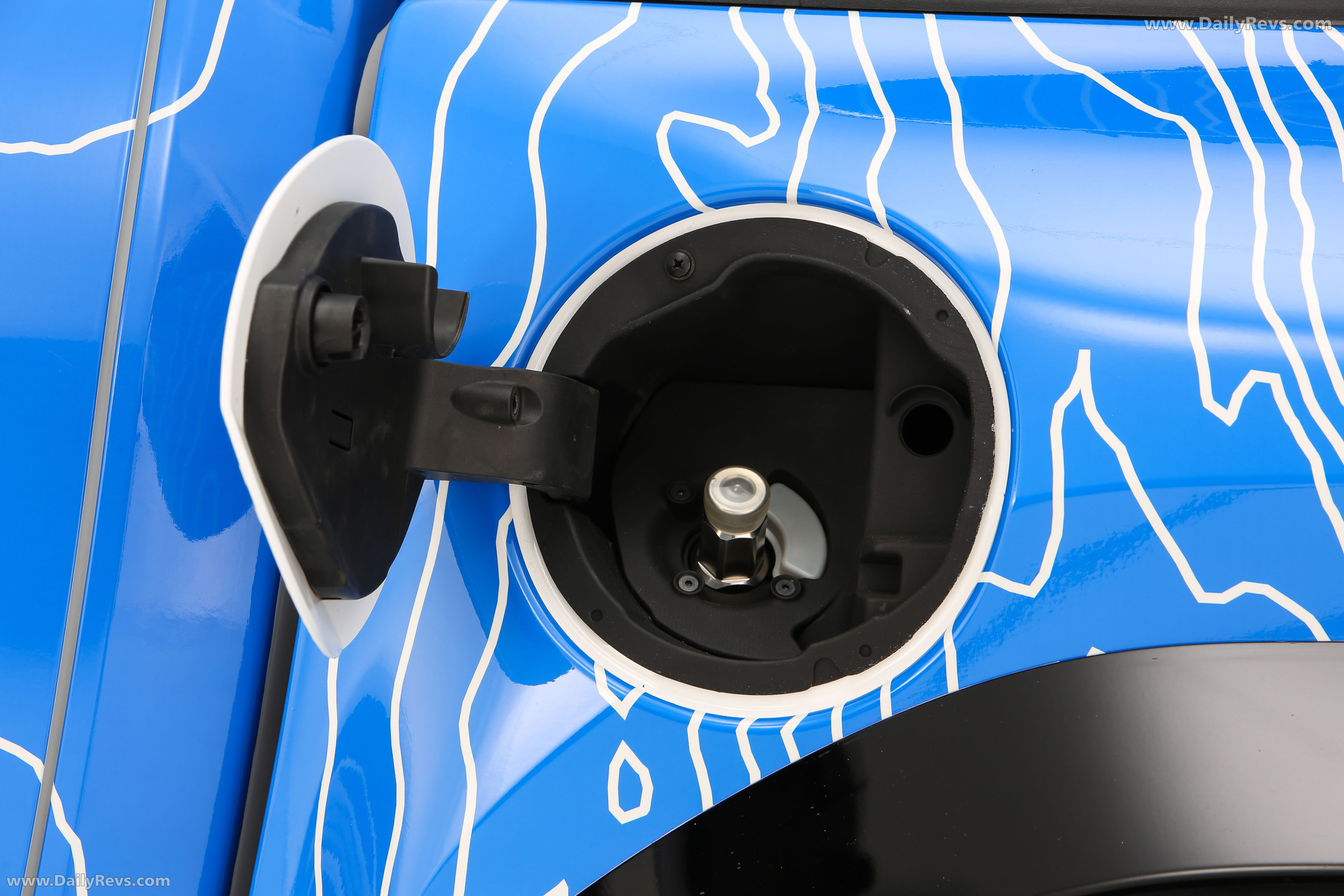
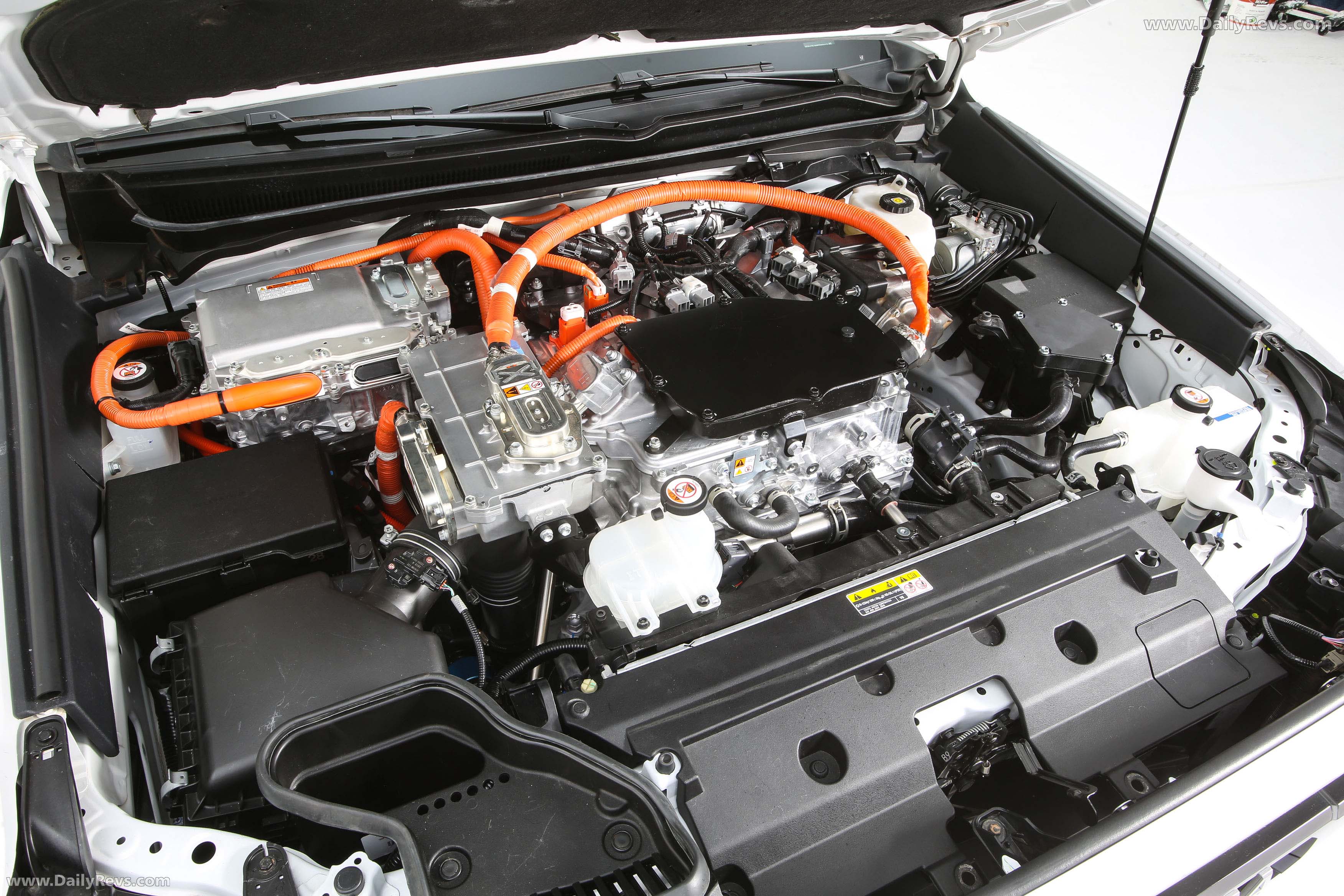
It’s powered by a hydrogen fuel cell electric system adapted from the Toyota Mirai, supported by three onboard hydrogen tanks with a 6-kg capacity. Together with a 24.9-kWh lithium-ion battery, the truck delivers 547 horsepower via twin electric motors — a 225-kW front motor and a 188-kW eAxle. The result is an immediate, near-silent surge of power more akin to a performance EV than a traditional pickup.
Capable, Clean, and Clever
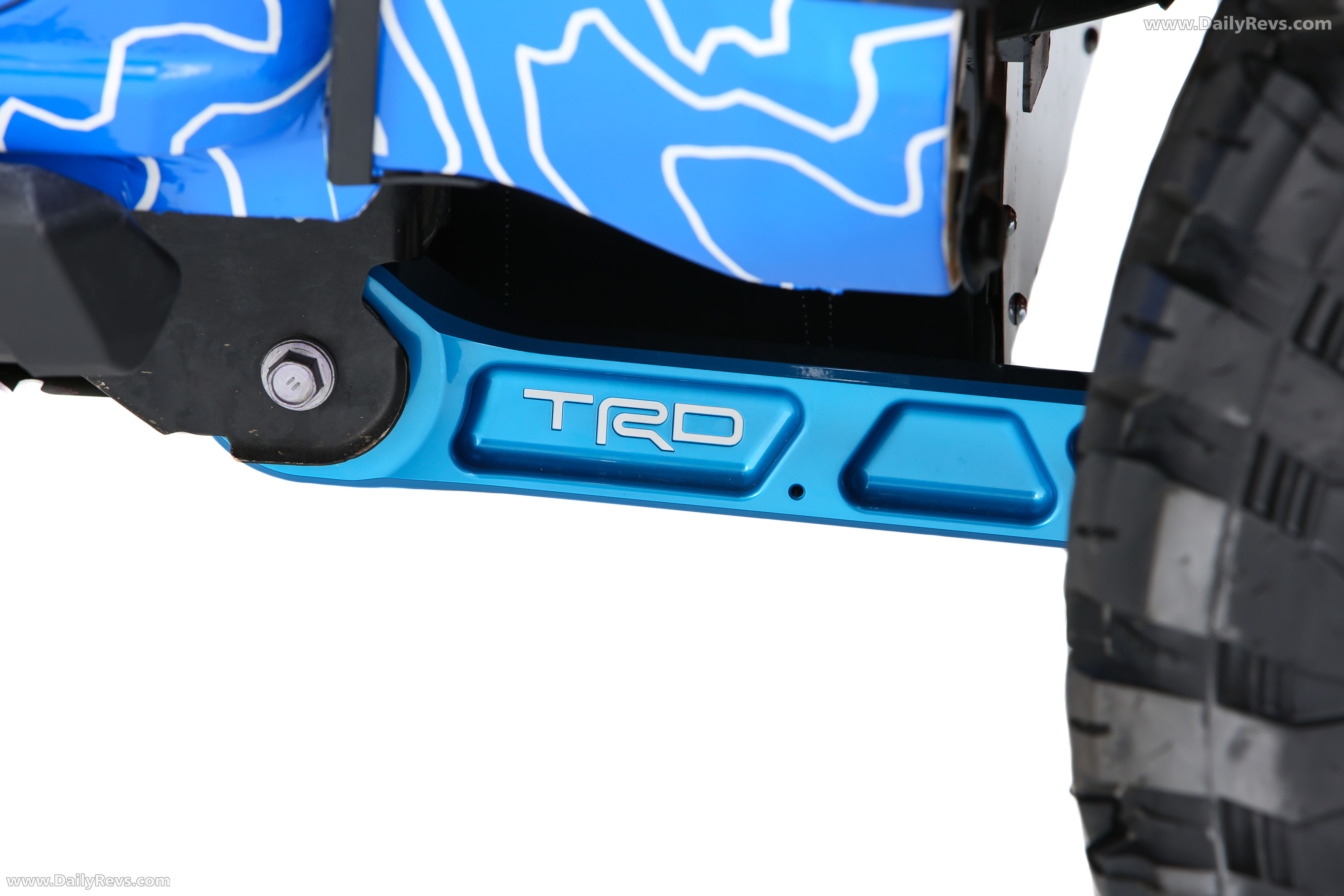
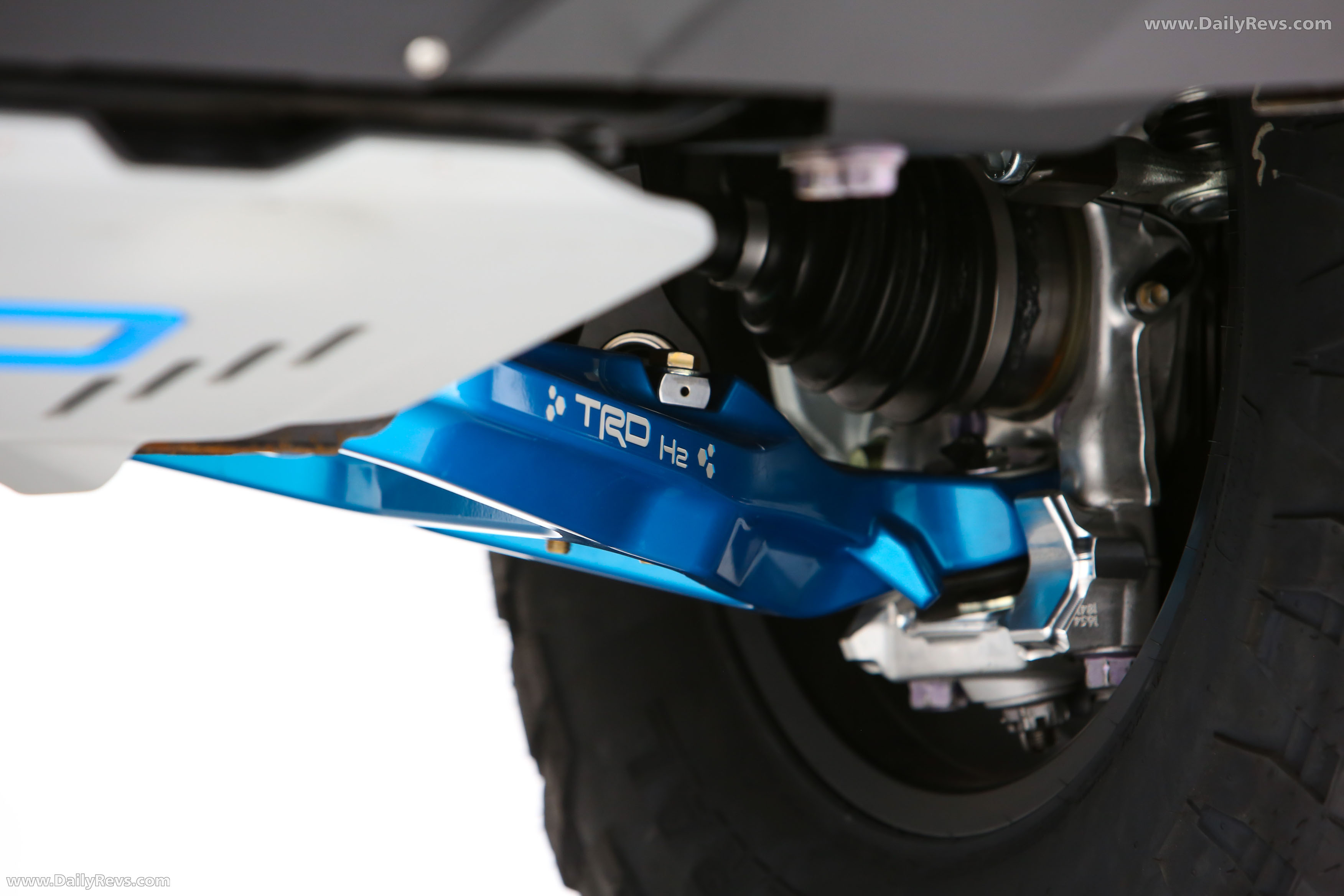
The concept retains the body-on-frame TNGA-F architecture but swaps its gasoline engine for a fully electrified hydrogen drivetrain. TRD reinforced the chassis with a billet long-travel suspension kit, heavy-duty Fox 2.5 Performance Elite shocks, and 35-inch off-road tires mounted on custom 17-inch alloy wheels. A front limited-slip and rear electronic locking differential handle traction, while upgraded Tundra-sourced brakes ensure confident stopping.
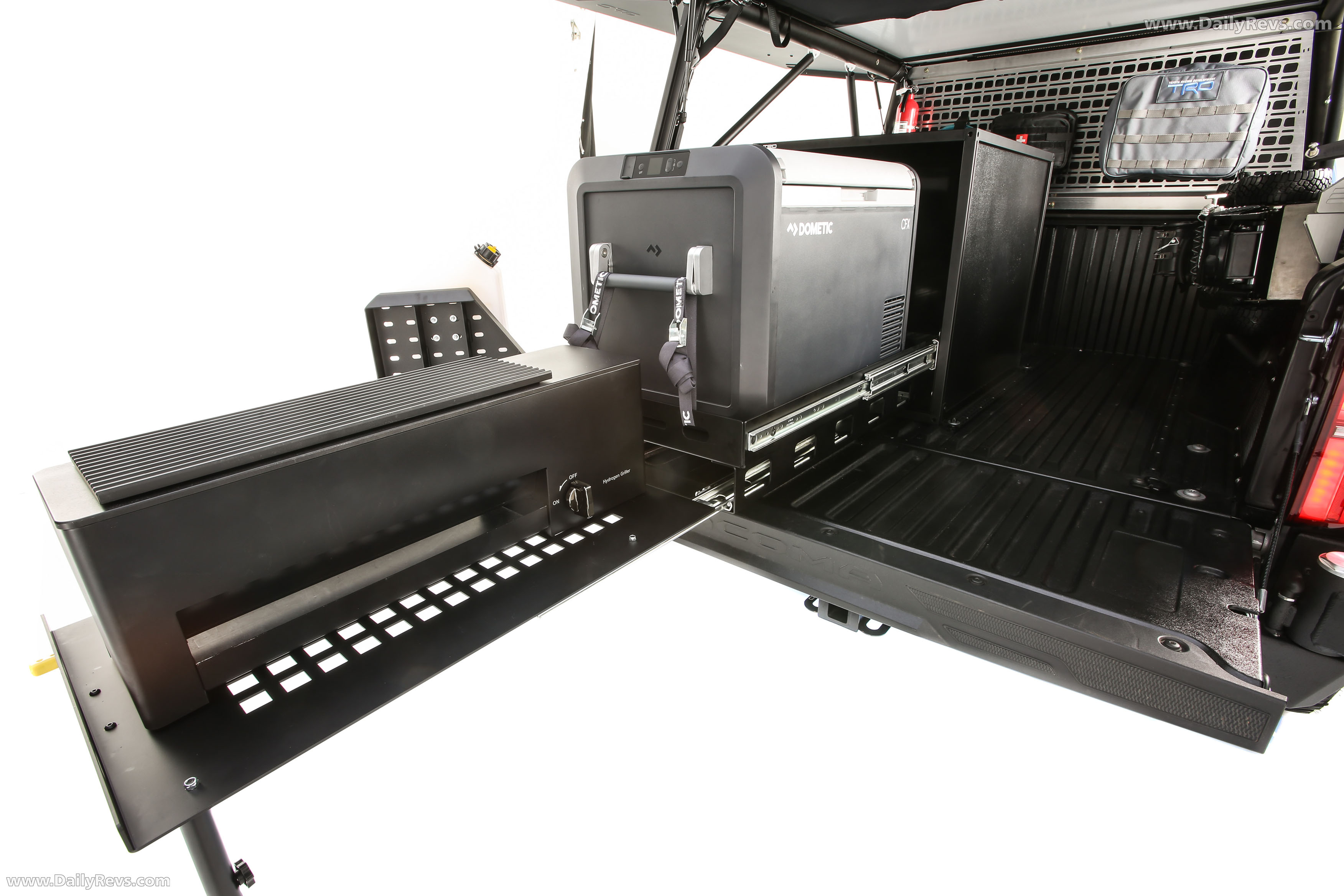
But performance is only half the story. The truck’s engineering demonstrates a wider vision — that hydrogen can serve not only as propulsion but also as off-grid power. Its 15-kW power takeoff system can run household-level equipment or charge two EVs simultaneously via dual NEMA 14-50 outlets.
In true overlanding fashion, the Tacoma’s hydrogen system also generates one precious resource: water. TRD developed a patent-pending water recovery system that filters and captures the hydrogen stack’s only byproduct, storing it for washing or showering. The water is distilled and mineral-free — not drinkable, but invaluable when far from civilization.
Built by TRD, Shaped by Ingenuity
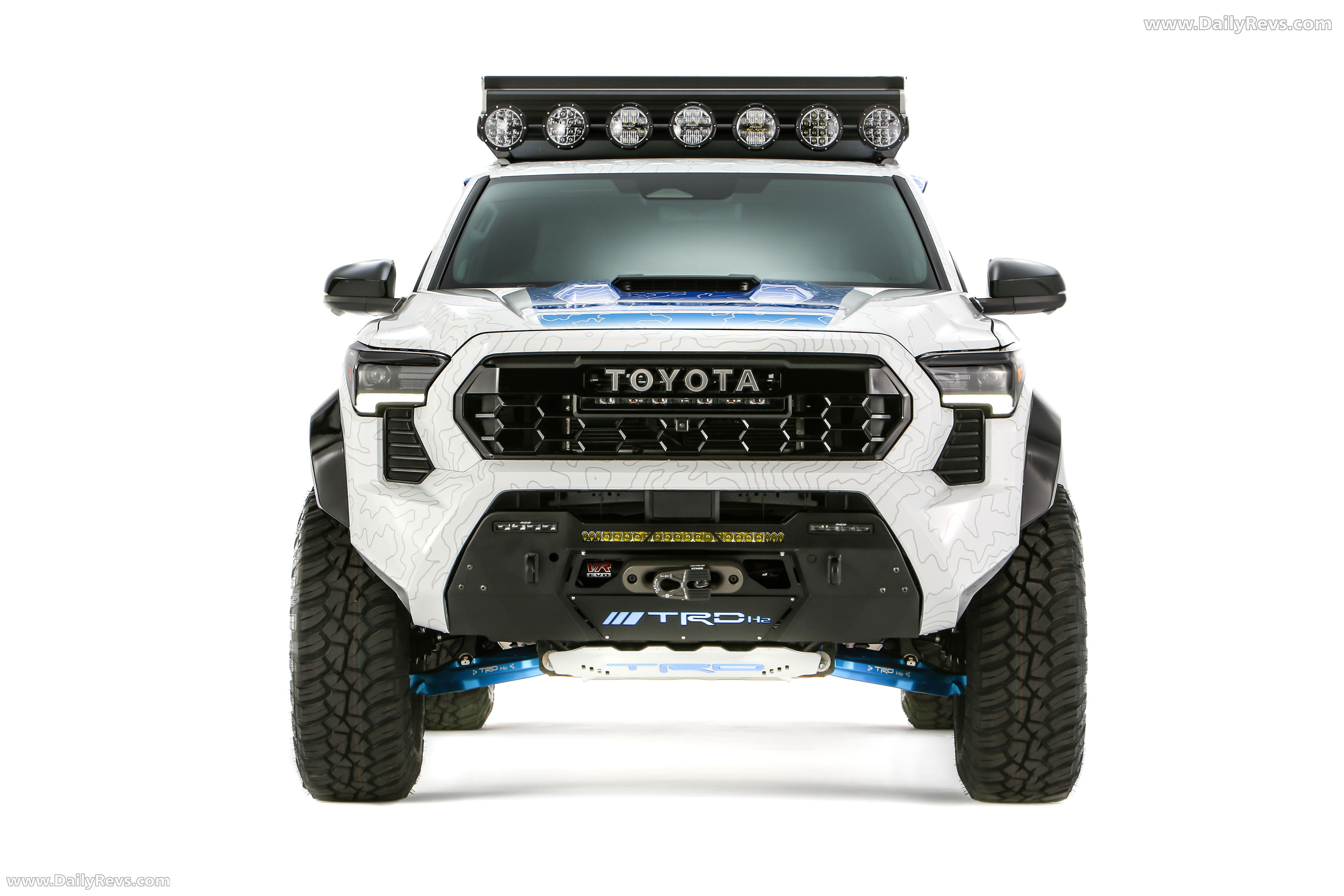
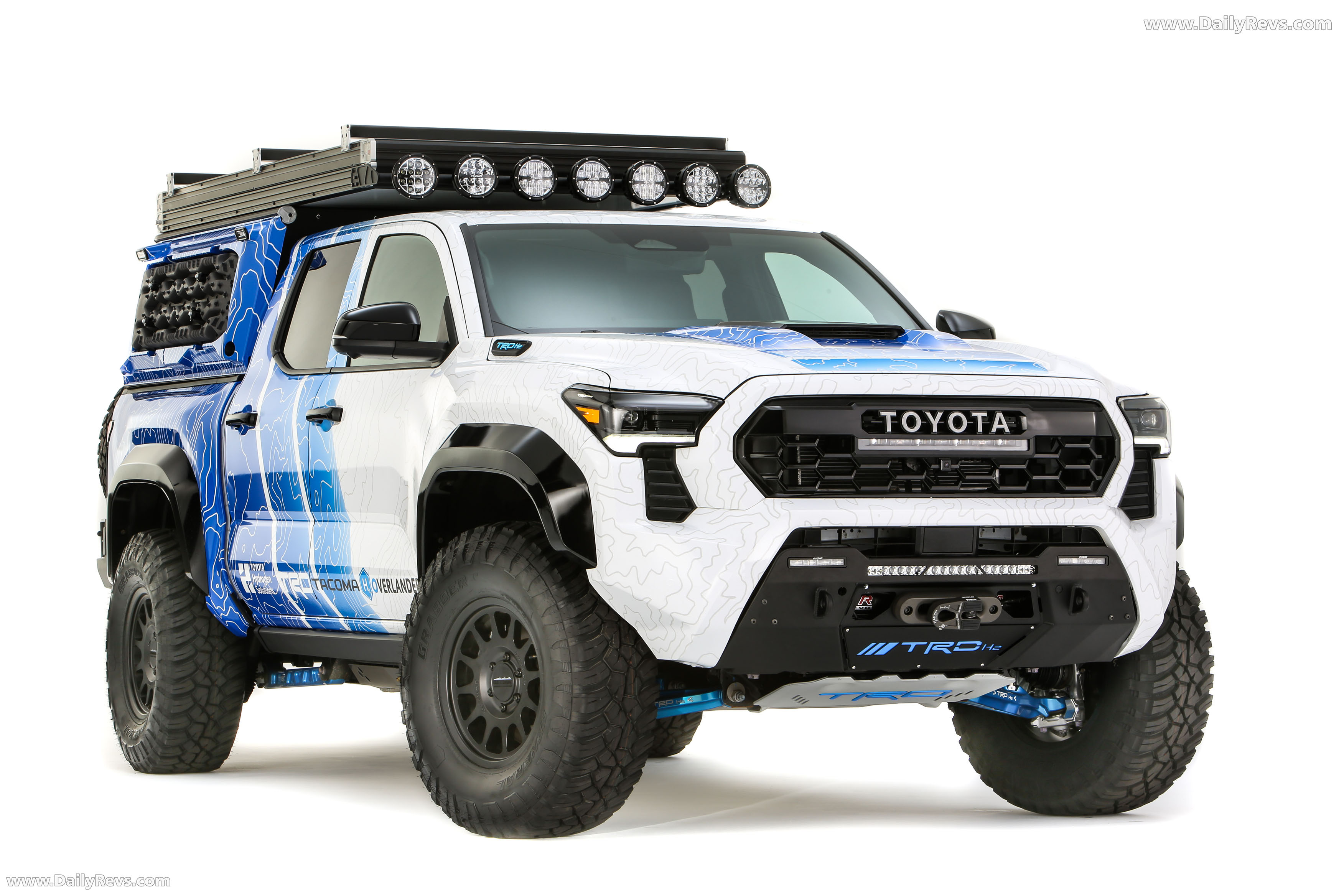
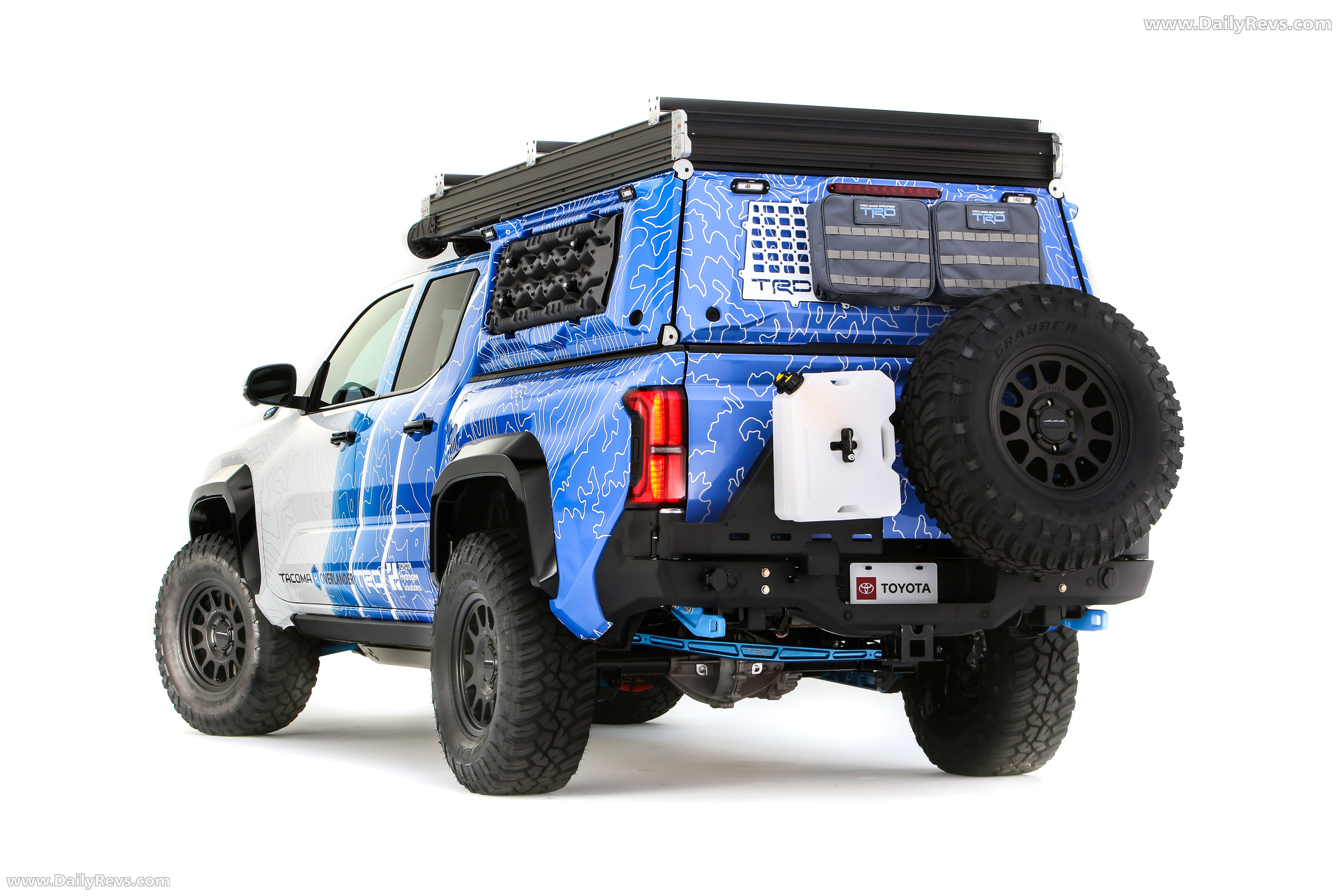
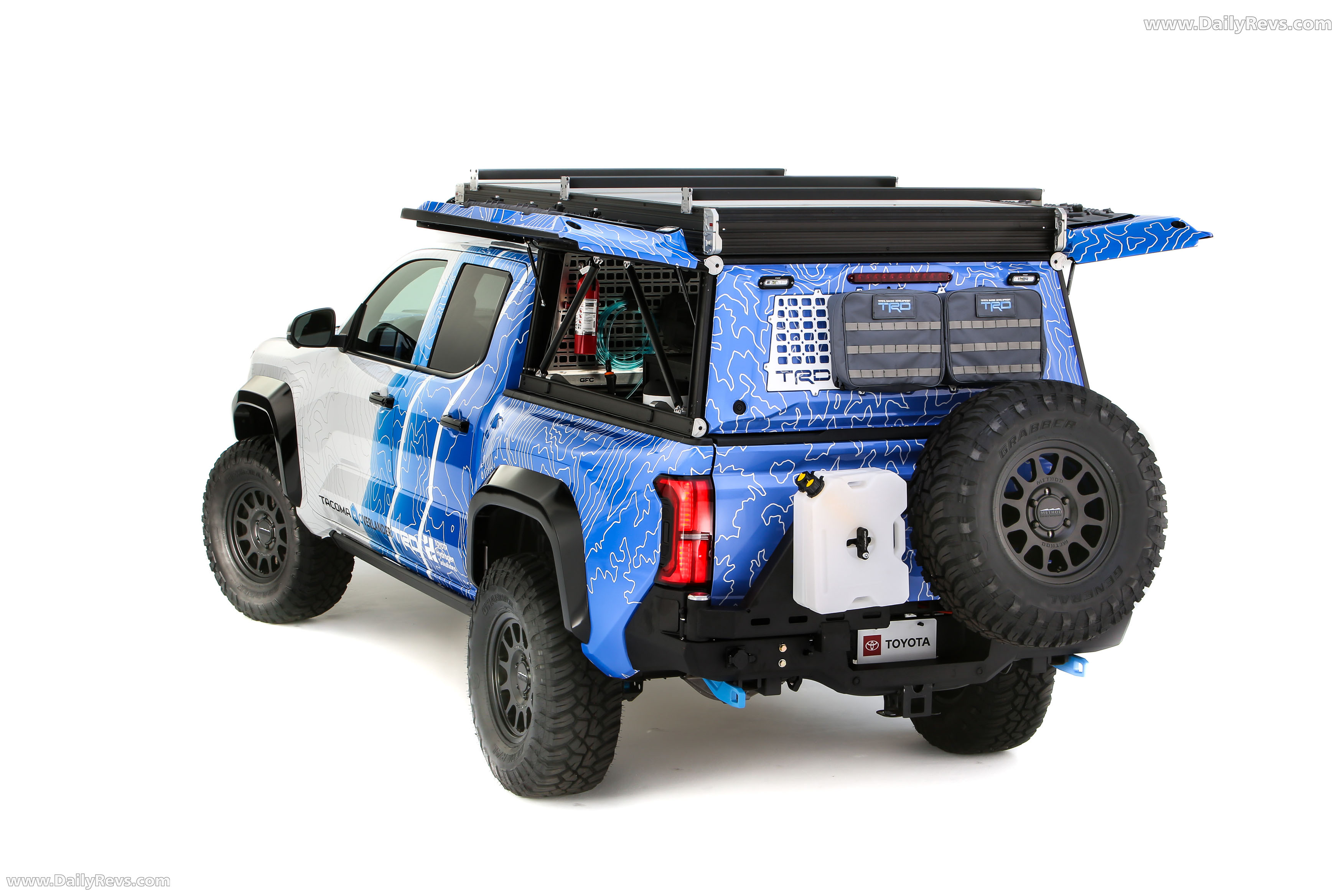
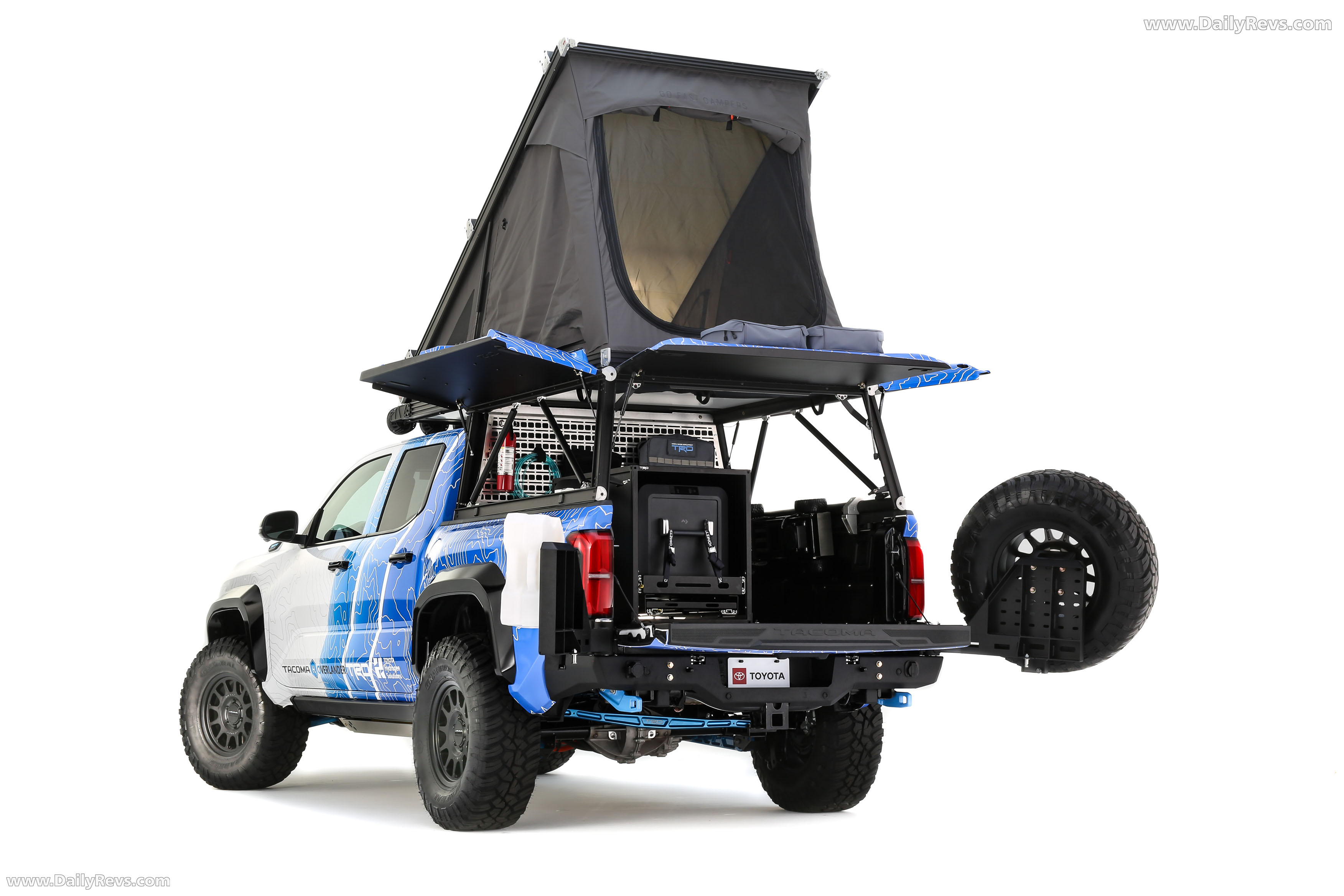
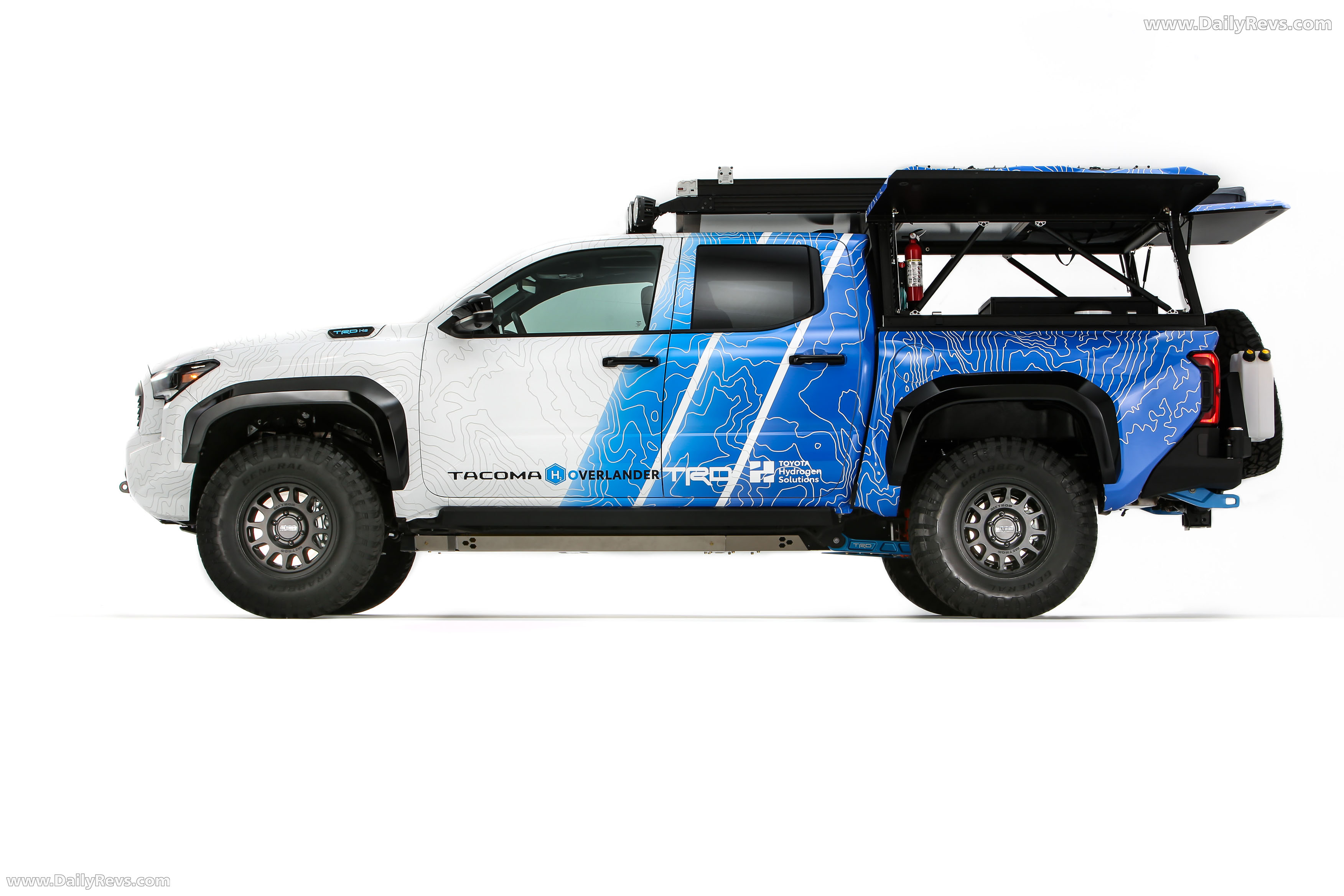
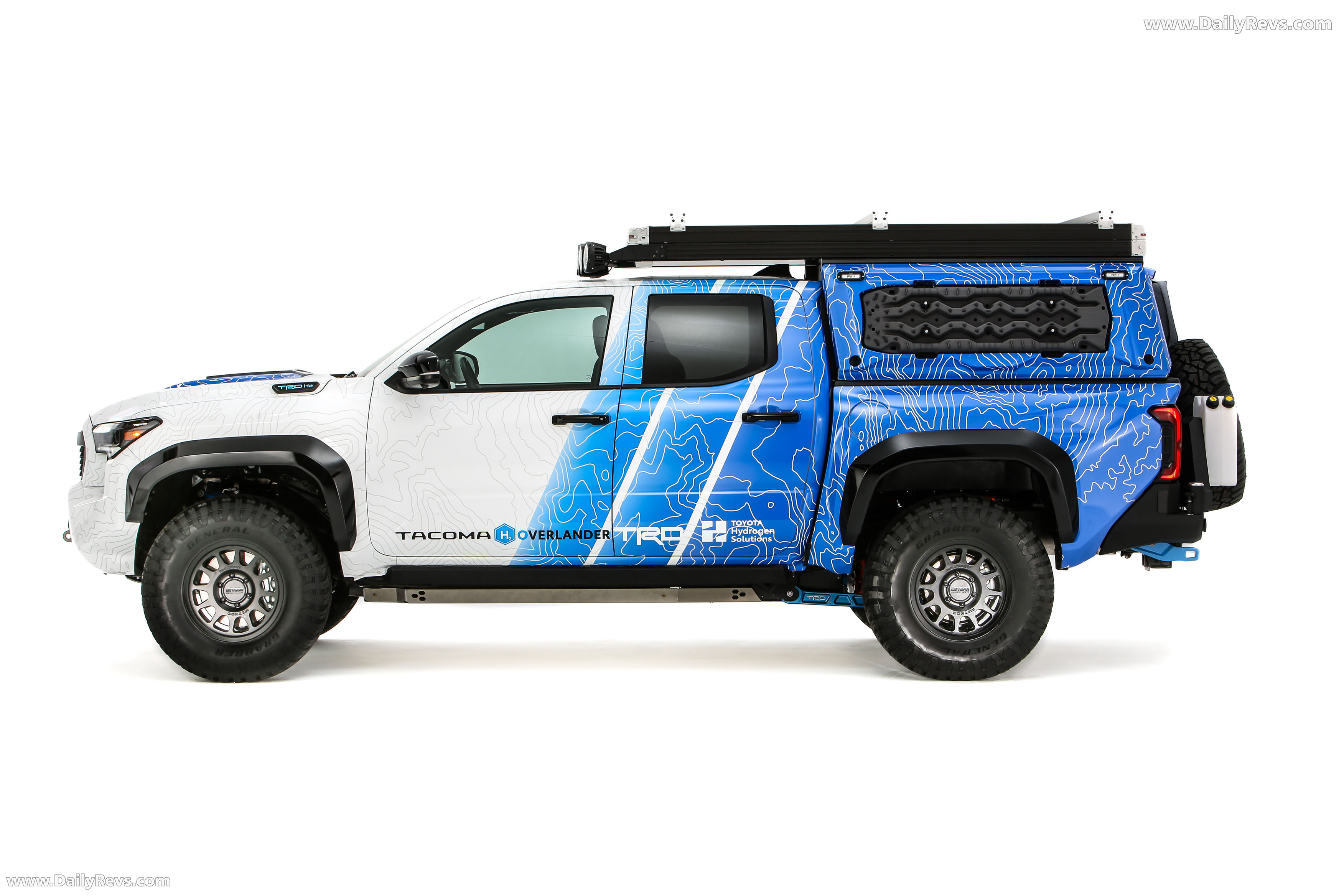
Externally, the H2 Overlander Concept looks built for the wild — with recycled carbon-fiber aero panels, integrated recovery points, a front winch, dual swingouts, and roof-mounted lighting. The custom camper shell integrates tie-downs, recovery board mounts, and storage designed for sustained off-grid travel.
Inside, details remain purpose-driven. The prototype features a cooling system adapted from the Tacoma TRD Pro and Lexus RZ, ensuring thermal balance for both hydrogen and battery systems under extreme use.
Craig Cauthen, TRD’s Emerging Technologies Manager, described it best: “We wanted to keep the off-road spirit alive while pushing the boundaries of what hydrogen can do.”
Pioneering Toyota’s Multi-Pathway Future
The 2025 Toyota Tacoma H2 Overlander Concept isn’t a production preview, but a technology demonstrator. Under Toyota’s “Powered by Possibility” theme, it represents the brand’s multi-pathway approach to carbon neutrality — one that sees hydrogen, hybrids, and EVs coexisting rather than competing.
In essence, the truck is proof that clean energy can travel beyond the pavement. With silent strength, off-grid capability, and an engineer’s sense of curiosity, it’s a concept that feels less like fantasy — and more like the next chapter in Toyota’s off-road evolution.
Technical Specifications
Powertrain and Performance
- System Type: Hydrogen Fuel Cell Electric Vehicle (FCEV) with integrated Battery Electric (BEV) technology
- Fuel Cell Stack: Second-generation Toyota Mirai unit
- Hydrogen Capacity: 6 kg stored in three tanks housed within frame rails
- Battery Pack: 24.9 kWh lithium-ion battery
Motors:
- Front motor: 225 kW
- Rear eAxle: 188 kW
Combined Output: 547 hp
- Drive Configuration: Four-wheel drive (4WD) with front limited-slip and rear electronic locking differentials
- Power Takeoff (PTO): 15 kW onboard system capable of powering external devices or charging two EVs simultaneously via dual NEMA 14-50 outlets
- Emissions: Zero tailpipe emissions (produces only water vapor)
Chassis and Suspension
- Platform: Toyota TNGA-F body-on-frame truck architecture
- Suspension: TRD billet long-travel suspension kit
- Shock Absorbers: Fox 2.5 Performance Elite Series (adapted from Toyota Tundra development)
- Braking System: Upgraded front brakes from Toyota Tundra
- Cooling System: TRD custom cooling setup derived from Tacoma TRD Pro and Lexus RZ components
Wheels and Tires:
- 17×8.5-inch custom TRD alloy wheels
- 35×12.5R17 off-road tires
Hydrogen and Utility Systems
Water Recovery System:
- TRD patent-pending exhaust water recovery and filtration system
- Captures and filters distilled water (non-potable) for washing or showering in off-grid conditions
- Fuel Cell Function: Combines hydrogen and oxygen to produce electricity and water vapor
- Output for Auxiliary Use: Can power household-grade electrical systems off-grid
Exterior and Equipment
Body Enhancements:
- Recycled carbon-fiber aero panels
- Heavy-duty front and rear off-road bumpers with integrated recovery points
- Front winch and dual swingouts
- Roof-mounted and camp lighting
Cargo Utility:
- Integrated tie-downs
- Recovery board storage
- Custom overlanding camper shell
Development and Production Notes
- Development Duration: Completed within a few months as a TRD engineering project
- Purpose: Demonstration of hydrogen and hybridized electric technologies applied to off-road use cases
- Manufacturing: Custom prototype; not intended for retail production