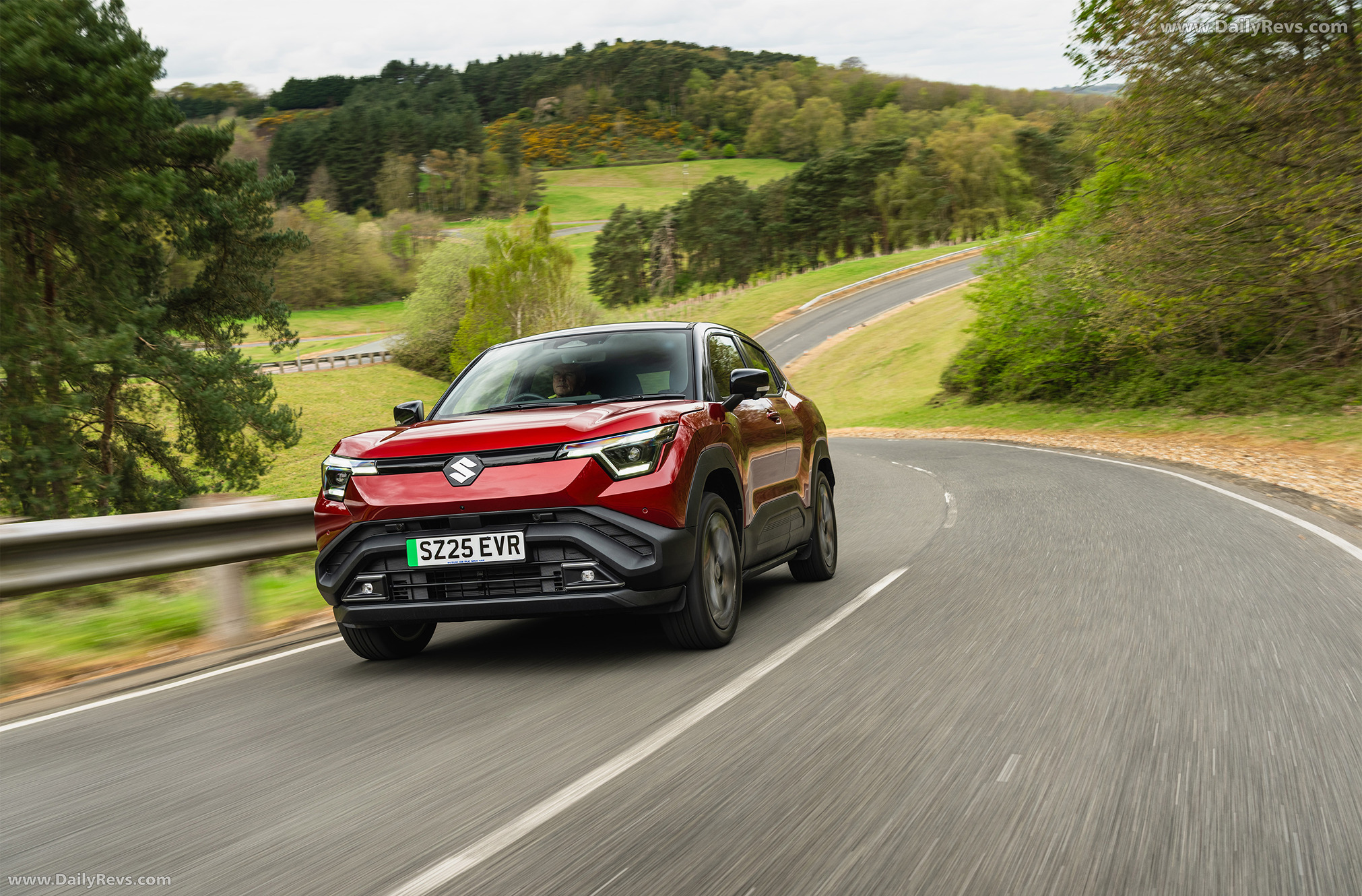
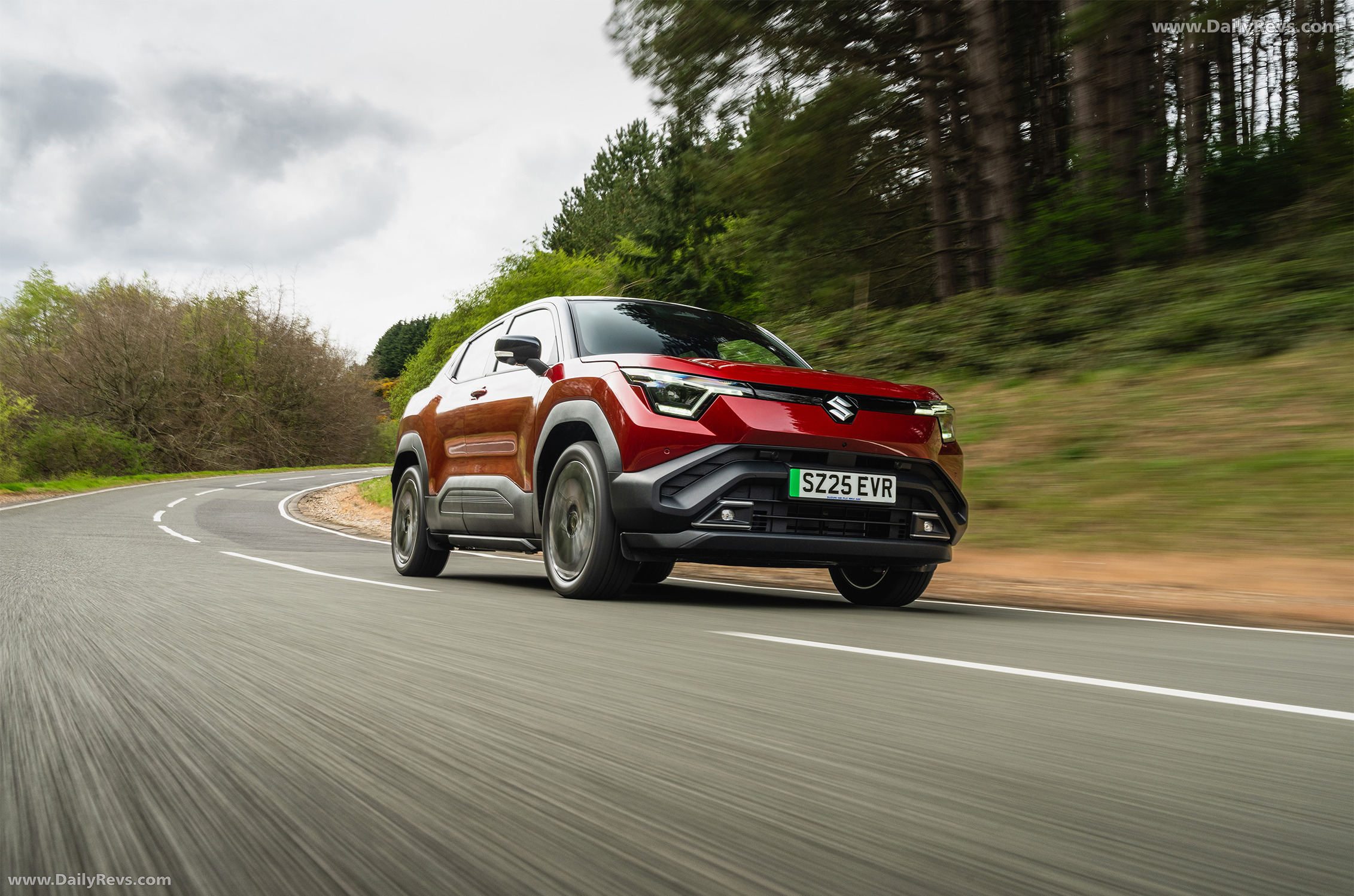
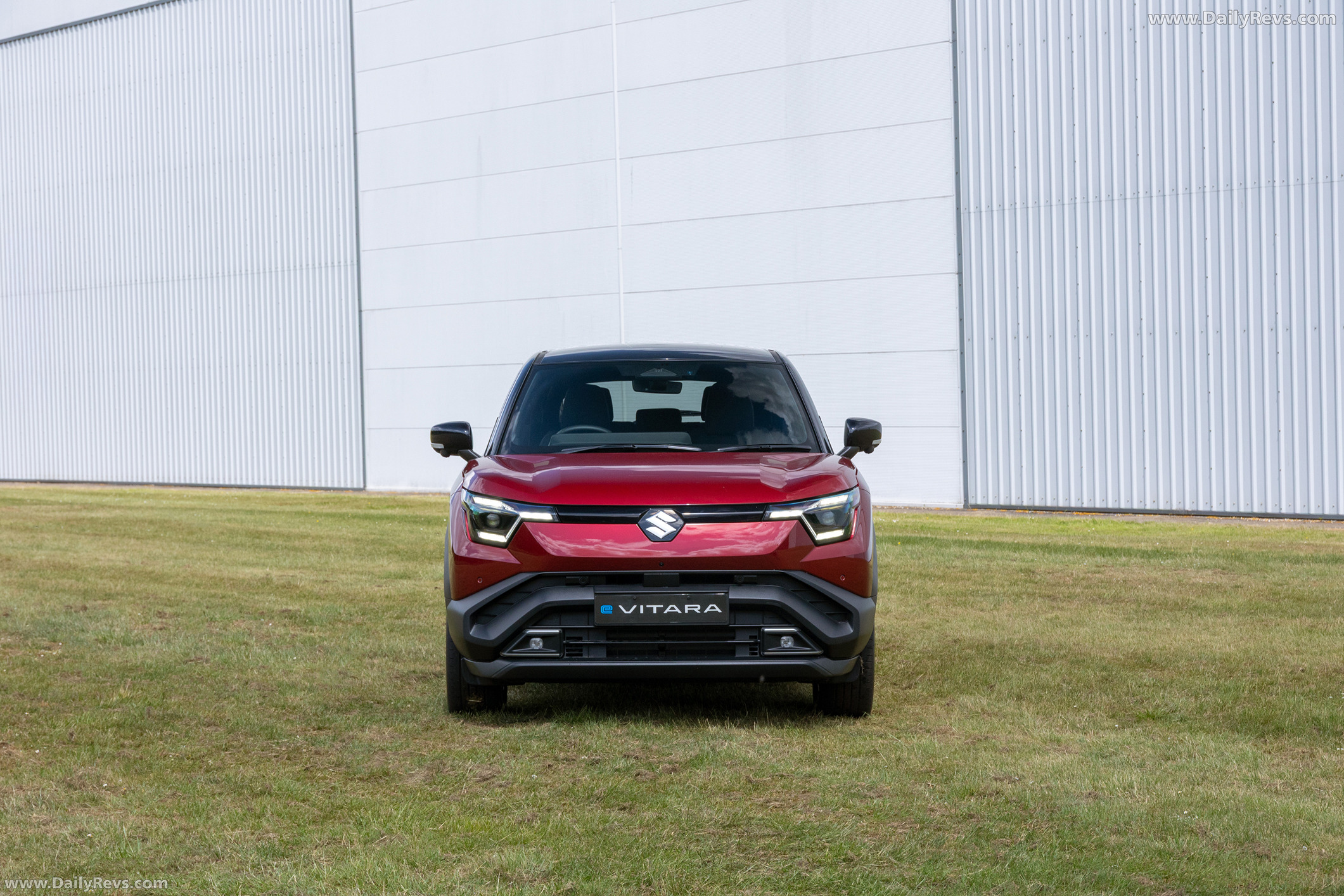
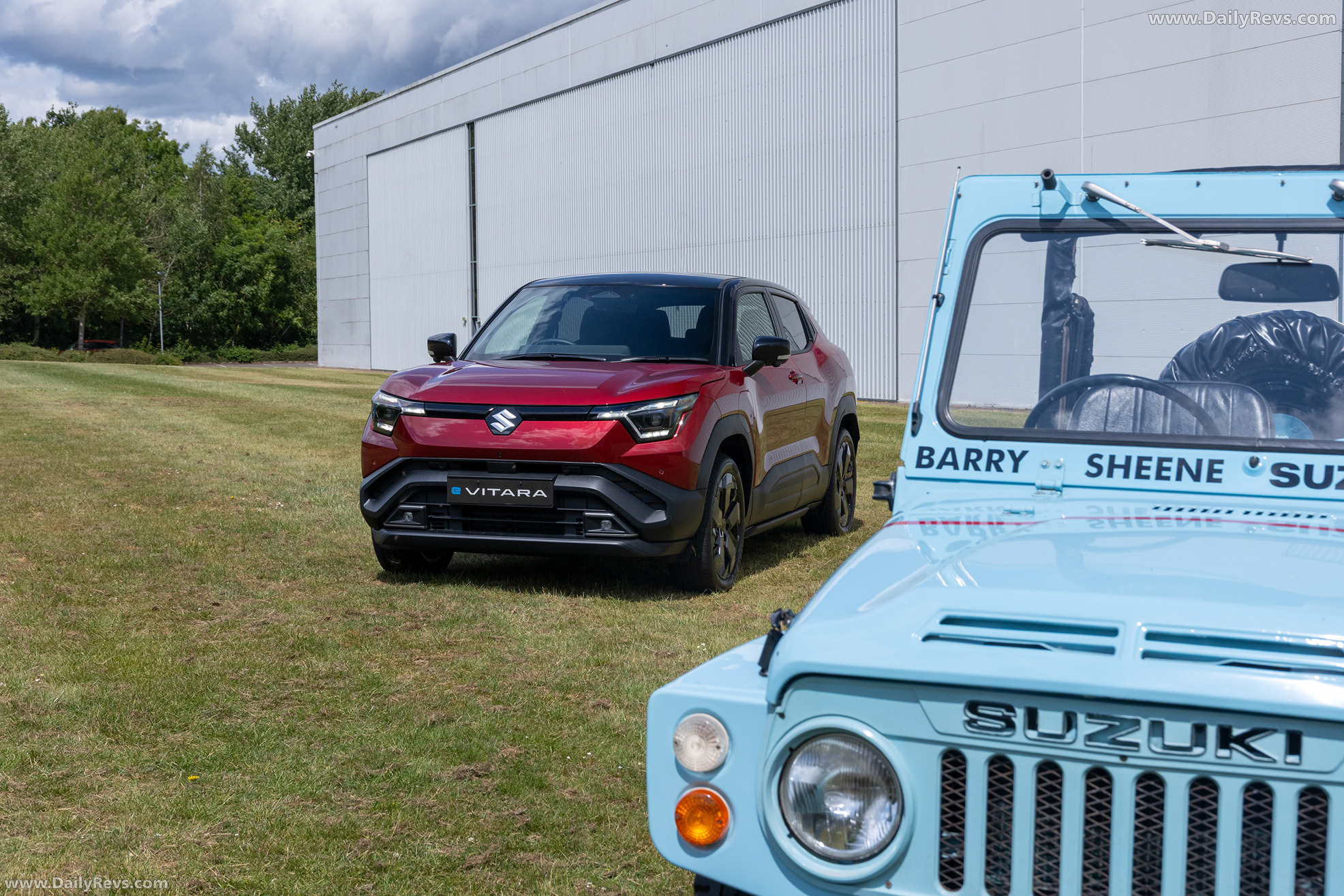


2025 Suzuki e-Vitara UK Version
By Lorenzo Bianchi August 7, 2025
Suzuki's first mass-market electric SUV, built on the new HEARTECT-e platform, arrives in 2025 with global ambitions.
Offers both front-wheel and all-wheel drive, with power outputs ranging from 106 kW to 135 kW.
Compact footprint, up to 400 km range (CLTC), and production hub in India underline Suzuki’s no-nonsense EV play.
A Straightforward Debut for Suzuki’s Electric Era
The 2025 Suzuki e‑Vitara doesn’t try to shock the market. Instead, it does something far more Suzuki-like — it gets the basics right. Revealed in Milan late last year, this compact electric SUV is Suzuki’s first proper swing at a global EV. The company’s not calling it a revolution, and frankly, it doesn’t need to.
It’s being produced in India — a crucial move that not only keeps costs down but also positions it well for export to Europe, Japan, and other key EV-hungry markets. For Suzuki, this isn’t a flash-in-the-pan concept. It’s a practical, production-ready vehicle with a focused mission: get Suzuki into the EV game without overreaching.
Familiar Size, Sharper Shape
Dimensionally, the e‑Vitara stays true to its urban SUV roots. It measures 4,275 mm long, 1,800 mm wide, and 1,635 mm tall, riding on a 2,700 mm wheelbase. That’s firmly in the subcompact SUV territory. The stance is upright, the lines clean, and the profile unmistakably Suzuki. There’s some flair in the LED lighting signatures and contrasting roofline, but overall it sticks to a familiar formula.
The SUV sits on the newly developed HEARTECT-e platform — a dedicated EV chassis that lets Suzuki package batteries and motors efficiently without going overboard on futuristic styling cues. That decision alone makes this feel more approachable than many other first-time EVs.
Powertrains for the Real World
Here’s where things get pleasantly practical. The e‑Vitara will be offered in three configurations:
A front-wheel-drive variant with a 49 kWh LFP battery and 106 kW motor (roughly 144 hp)
A more powerful FWD version with a 61 kWh battery, boosting output to 128 kW (172 hp)
And a flagship AWD model featuring Suzuki’s new ALLGRIP-e system, pairing dual motors for 135 kW (183 hp) and 300 Nm of torque
This last version gets a dedicated Trail mode for light off-roading and winter traction. Battery chemistry is LFP across the board — chosen for durability, safety, and cost. The larger pack is expected to offer over 400 km CLTC range, which should translate to around 250 miles in more realistic terms. DC fast charging is on board too, reportedly up to 150 kW, though Suzuki hasn’t confirmed final specs.
Inside: Digital Enough, But Still Suzuki
The interior walks a fine line between modernity and brand familiarity. There’s a freestanding dual-screen setup, one for the instrument cluster and one for infotainment, though the rest of the layout stays clean and purposeful. The gear selector is a simple rotary knob, and there are hard buttons for HVAC — thankfully.
Don’t expect luxury finishes or sprawling touchpads here. The cabin materials and overall layout reflect a brand that values robustness over premium flourishes. That said, the longer wheelbase helps rear-seat space, and visibility looks excellent from all angles — classic Suzuki priorities.
Right-Sized for a Crowded Segment
Suzuki is eyeing compact EV rivals like the Kia EV3, Skoda Elroq, and possibly even the Toyota Urban Cruiser EV — depending on pricing. While Suzuki hasn’t officially announced what the e‑Vitara will cost, early estimates put it around £30,000 in the UK or €35,000 in continental Europe. For India, it could slot in under ₹35 lakh, making it a direct competitor to Tata’s next-gen EVs.
What it lacks in flash, it makes up for in smart choices. Localized production, LFP battery tech, and compact packaging all point to a cost-conscious EV that should resonate with buyers looking for an honest urban SUV — now with a plug.
Final Thoughts
The 2025 e‑Vitara doesn’t reinvent Suzuki, and that’s the point. It enters the EV world with its feet planted firmly on the ground — no excessive tech theatrics, no over-promising. Just an electric SUV built for people who want something familiar, durable, and usable.
It’s not flashy, but it could quietly be one of Suzuki’s most important models in years.
Technical Specification
Performance
- FWD (49 kWh): 106 kW (~144 hp), 189 Nm torque
- FWD (61 kWh): 128 kW (~172 hp), 189 Nm torque
- AWD (ALLGRIP‑e, 61 kWh): 135 kW (~183 hp), 300 Nm torque
- Top speed: 150 km/h (AWD top variants)
Body Measurements
- Length: 4,275 mm (~168.3 in)
- Width: 1,800 mm (~70.9 in)
- Height: 1,635 mm (~64.4 in)
- Wheelbase: 2,700 mm (~106.3 in)
Curb weight:
- FWD variants: 1,702–1,799 kg
- AWD variants: 1,860–1,899 kg
Powertrain
- Platform: Dedicated HEARTECT‑e skateboard EV architecture
- Battery types: 49 kWh LFP and 61 kWh LFP
- Drivetrain: FWD standard; AWD via ALLGRIP‑e with dual eAxle configuration
Capacities & Range
- Estimated range (CLTC): Up to ~400 km for longer-range packs
- Charging: Up to 150 kW fast-charging supported
- Seating capacity: 5 passengers
Cargo (AWD variant):
- Trunk: 238 L
- Max cargo with rear seat folded: 562 L
- Ground clearance: Approx. 180 mm (as speculated for compact SUVs)
Price (UK Market)
- Starting from approximately £29,999 for 2WD 49 kWh variant
- Higher-end trims (61 kWh AWD) position closer to £37,799