

2025 IED Project Vortex
By Lorenzo Bianchi August 30, 2025
Project Vortex debuts as a road-legal student concept with a three-rotor rotary engine.
Carbon fibre construction keeps weight below 750 kg.
Aerodynamics shaped by vortex generators and marine-inspired surfaces.
A Radical Take from IED and Dallara
Every year, the Istituto Europeo di Design in Turin turns out concepts that feel less like classroom projects and more like serious proposals for the future of performance cars. The latest round, built in collaboration with Dallara, may be its boldest yet. Among six designs presented, one stood out for its stripped-back technical honesty: Project Vortex.
Where some of the other cars leaned into sculpture or ergonomic experiments, Vortex takes a harder line. It treats engineering itself as the design language. The idea was simple on paper—show the machine, don’t hide it. The result is a lightweight, road-legal sports car that looks closer to a racing prototype than anything intended for the street.
The Engine on Display
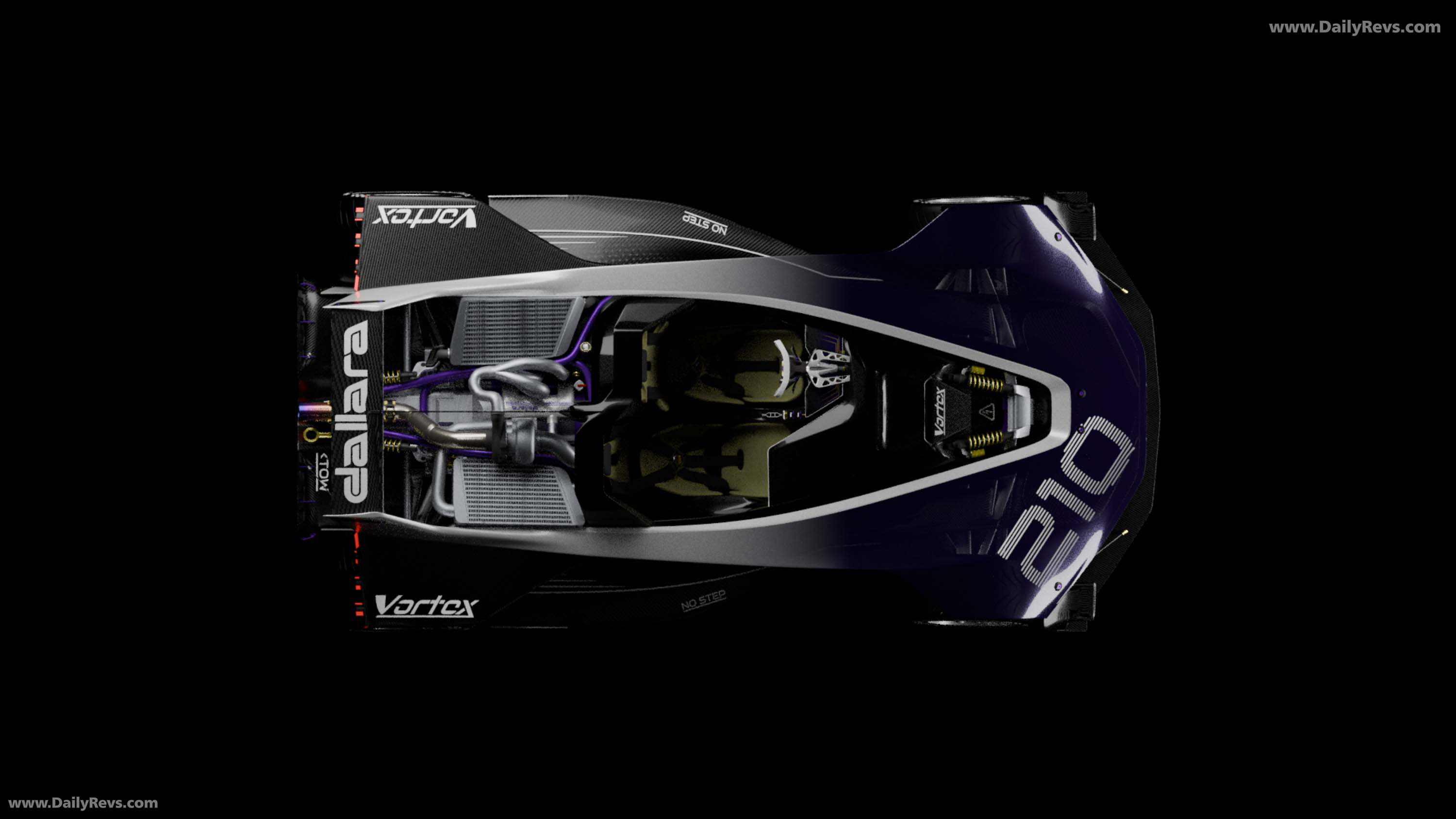
At the heart of Vortex is a three-rotor rotary engine. Instead of being buried under sculpted panels, it’s deliberately exposed, part of the car’s visual identity as much as its mechanical core.
For the students behind the project, the move wasn’t about shock value. It was about transparency—showing the connection between performance and aesthetics, and letting the engineering become part of the car’s character. In an era where so much is hidden under covers, the Vortex makes a point of putting the powertrain out in the open.
Aerodynamics Born from Fluid Physics
The bodywork that does exist around the rotary engine carries its own message. Surfaces were shaped with inspiration from marine animals and principles of fluid physics. Vortex generators and carefully treated panels control airflow in ways you’d usually associate with race cars.
The approach is distinctly Dallara. The company’s heritage is steeped in aerodynamics, and the influence shows. For the students, it meant finding a way to balance function with form, producing a shape that looks clean but never ornamental.
Under 750 Kilograms
Numbers matter here. Thanks to a carbon fibre structure and compact packaging, Project Vortex tips the scales at under 750 kilograms.
That’s a remarkable figure in a world where even small sports cars often push beyond 1,400 kg. The low mass isn’t just about bragging rights—it reinforces the same principle Dallara has always argued: reduce weight first, and everything else follows. In this case, the lightweight build gives Vortex the presence of a full-blooded racer with the promise of agility to match.
A Car Made Legal for the Road
Despite its race-bred cues, the concept was drawn up as road-legal. It’s an important distinction. The car isn’t imagined as a toy for circuits alone. It was designed, at least in theory, to function within everyday regulations.
That duality—racing spirit contained within a road-capable form—is part of what makes Project Vortex compelling. It doesn’t try to soften its intent, but it also doesn’t write itself off as a pure fantasy.
Technical Snapshot
- Engine: Three-rotor rotary (exposed)
- Structure: Carbon fibre chassis and body
- Weight: Under 750 kg
- Aerodynamics: Vortex generators, marine-inspired surfaces, fluid physics influence
- Status: Road-legal concept, developed by IED Torino students with Dallara