
2013 Lamborghini Veneno
By Lorenzo Bianchi November 28, 2013
Only three customer units were produced, each already sold at €3 million plus tax.
Powered by a 6.5-litre V12 with 552 kW (750 hp), 0–100 km/h in 2.8 seconds, 355 km/h top speed.
Complete carbon-fiber construction, advanced aerodynamics and racing-derived chassis technology.
Design and Proportions of the Vehicle
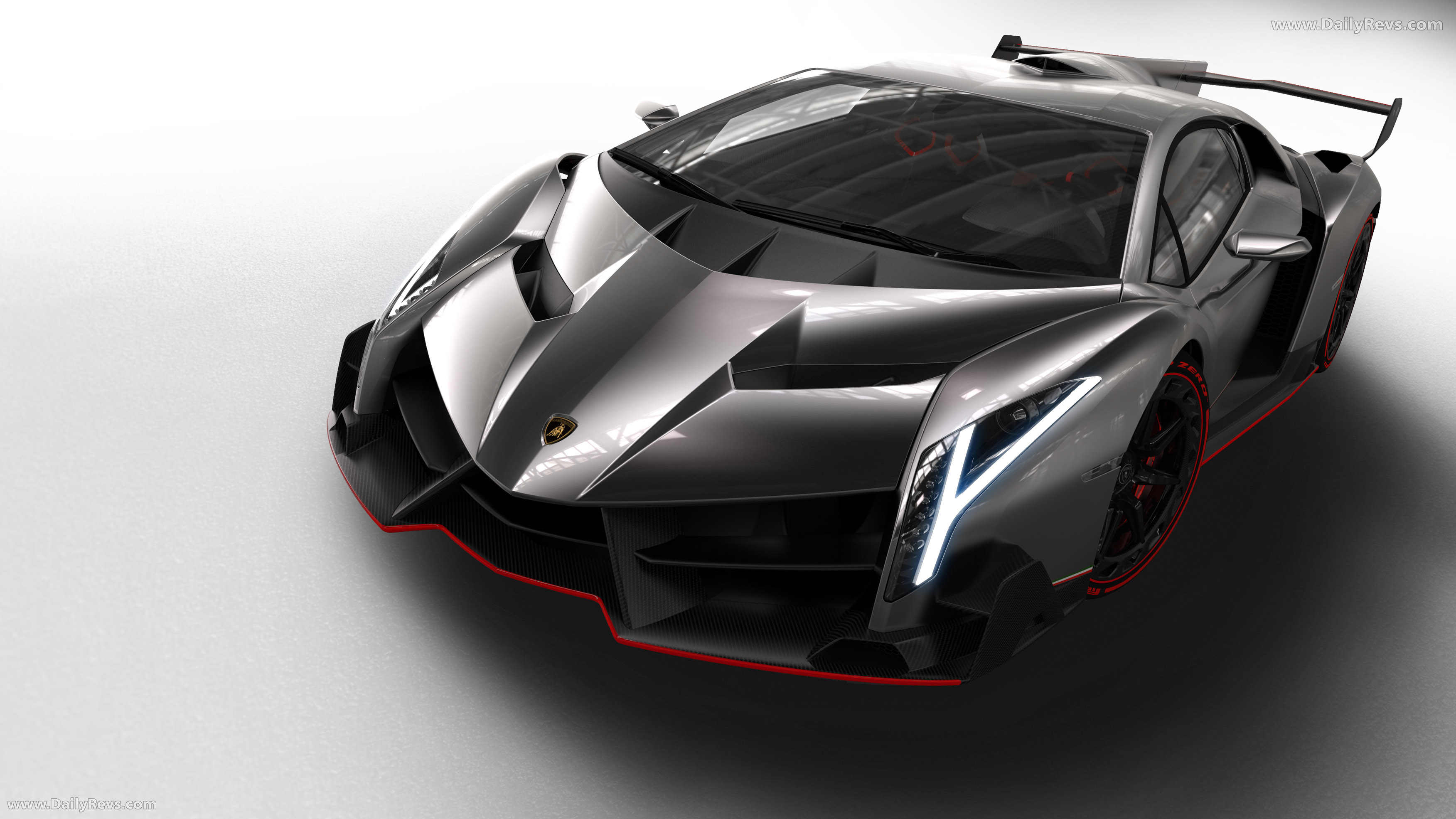
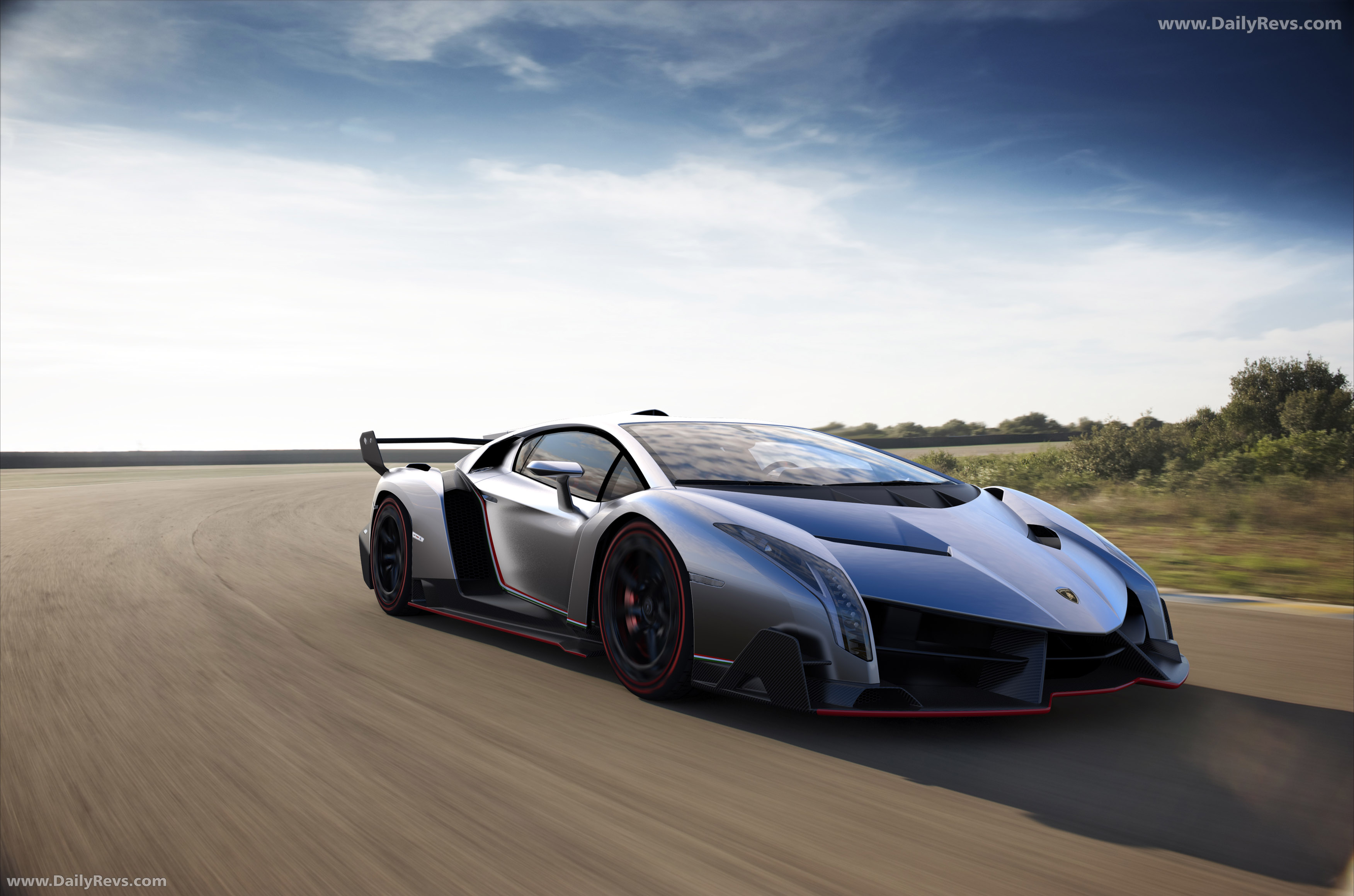
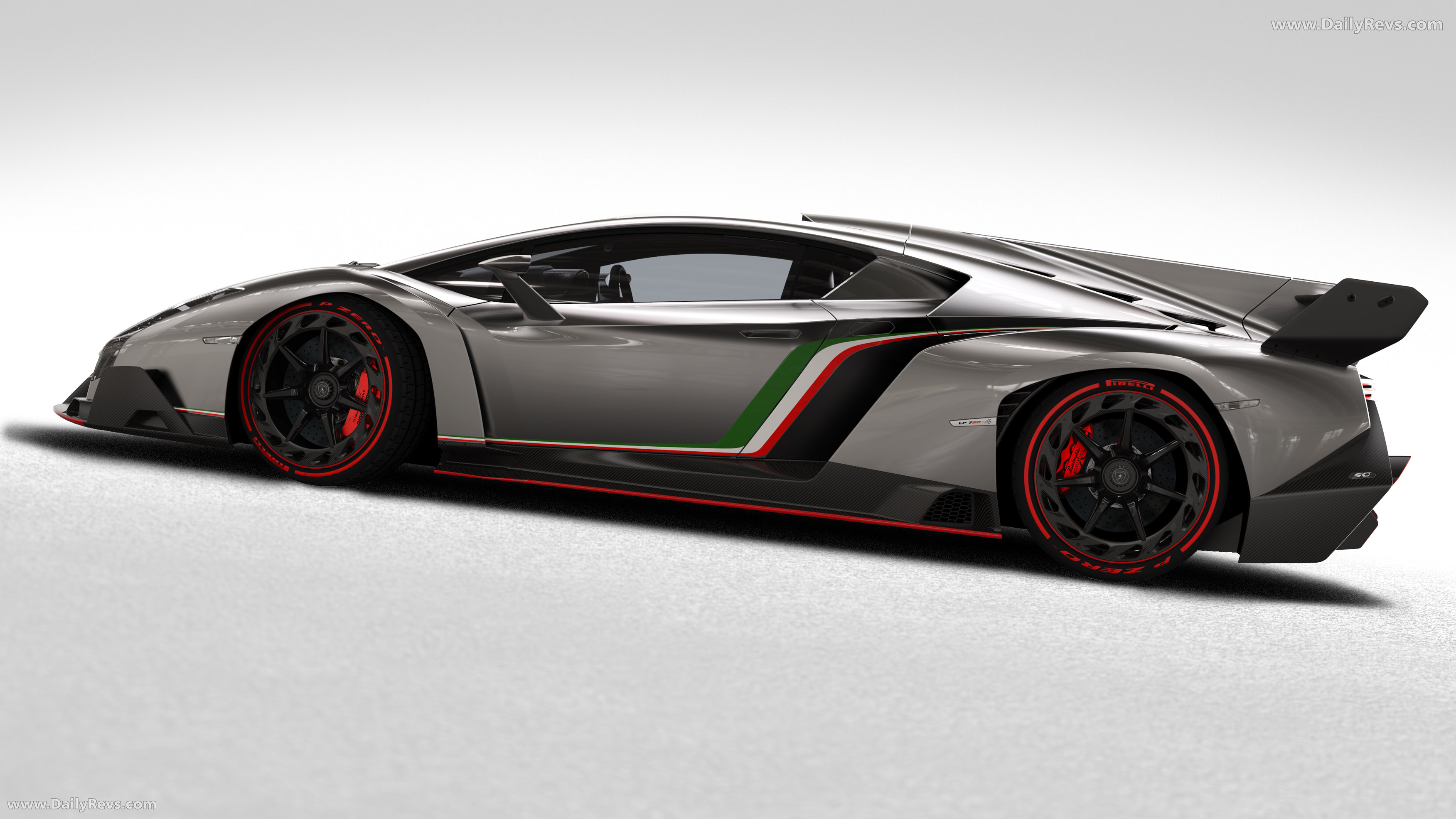
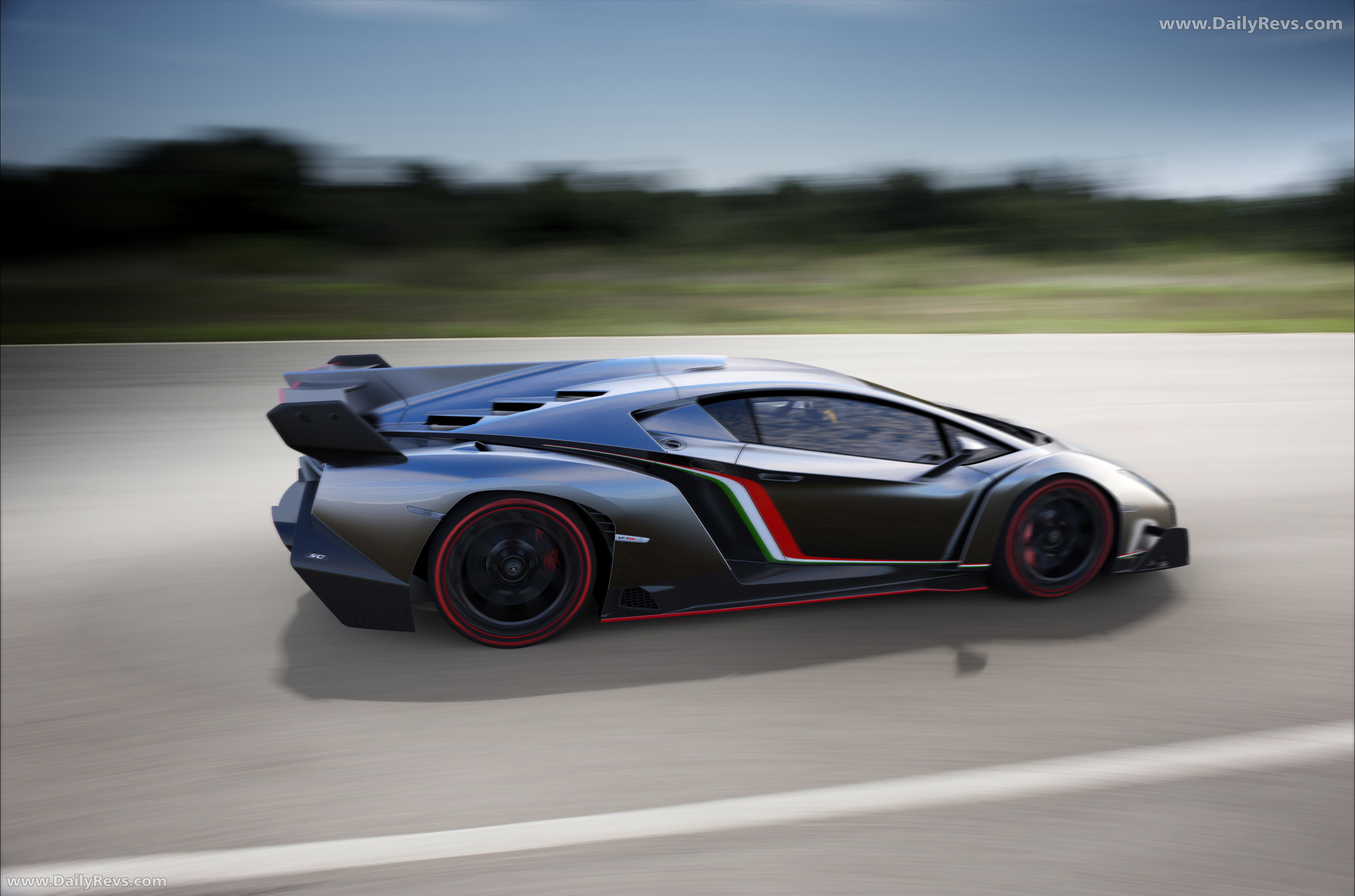
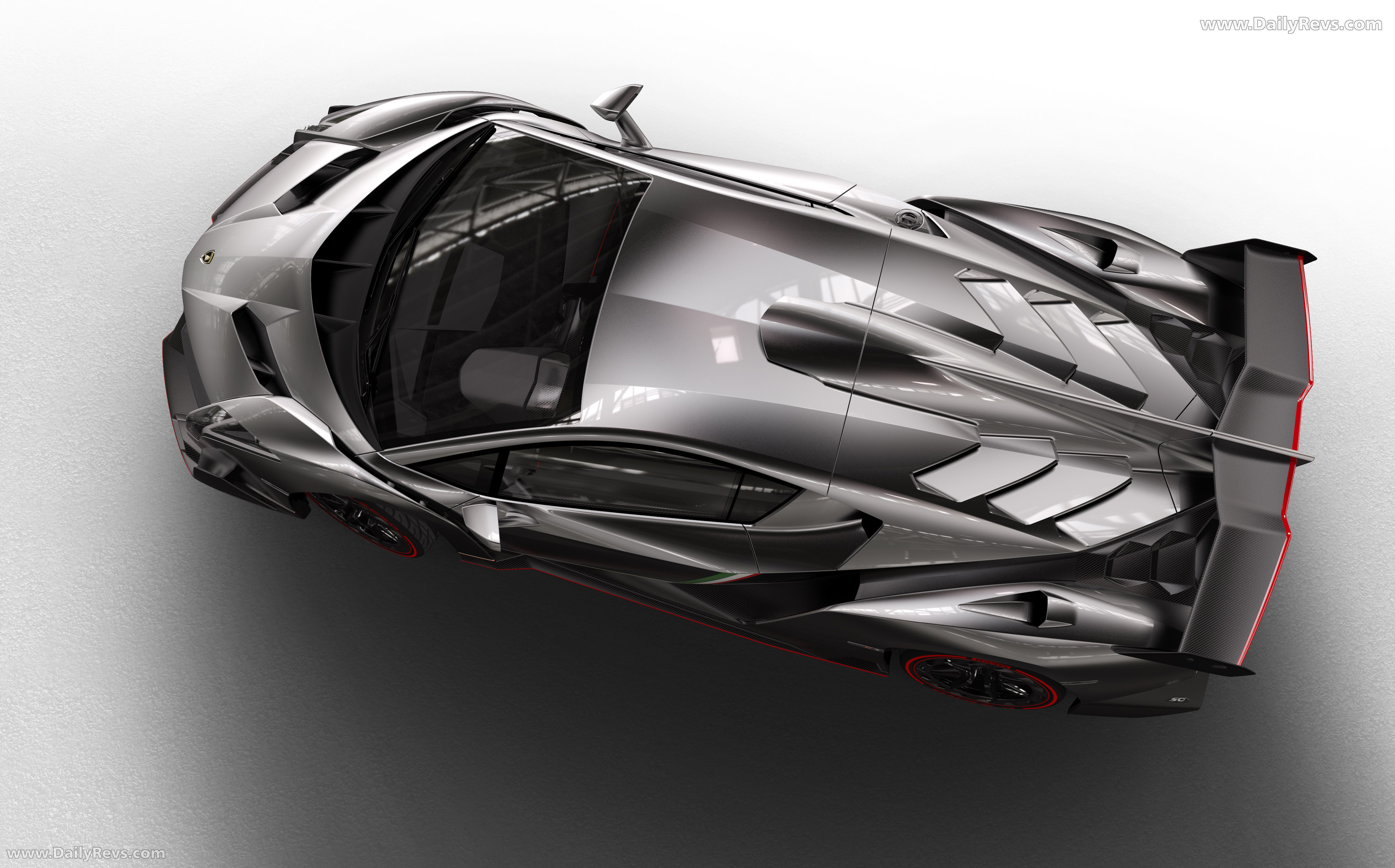
The 2013 Lamborghini Veneno appears almost otherworldly in photographs, shaped with the clarity of a racing prototype rather than a road car. Lamborghini’s designers pursued aerodynamic efficiency with unusual purity, giving the Veneno a long, arrowed front end, open channels and razor-sharp edges that read visually like instructions for airflow. The entire nose functions as a single aerodynamic wing, feeding air through the hood outlets, over the windshield and around the front wheels
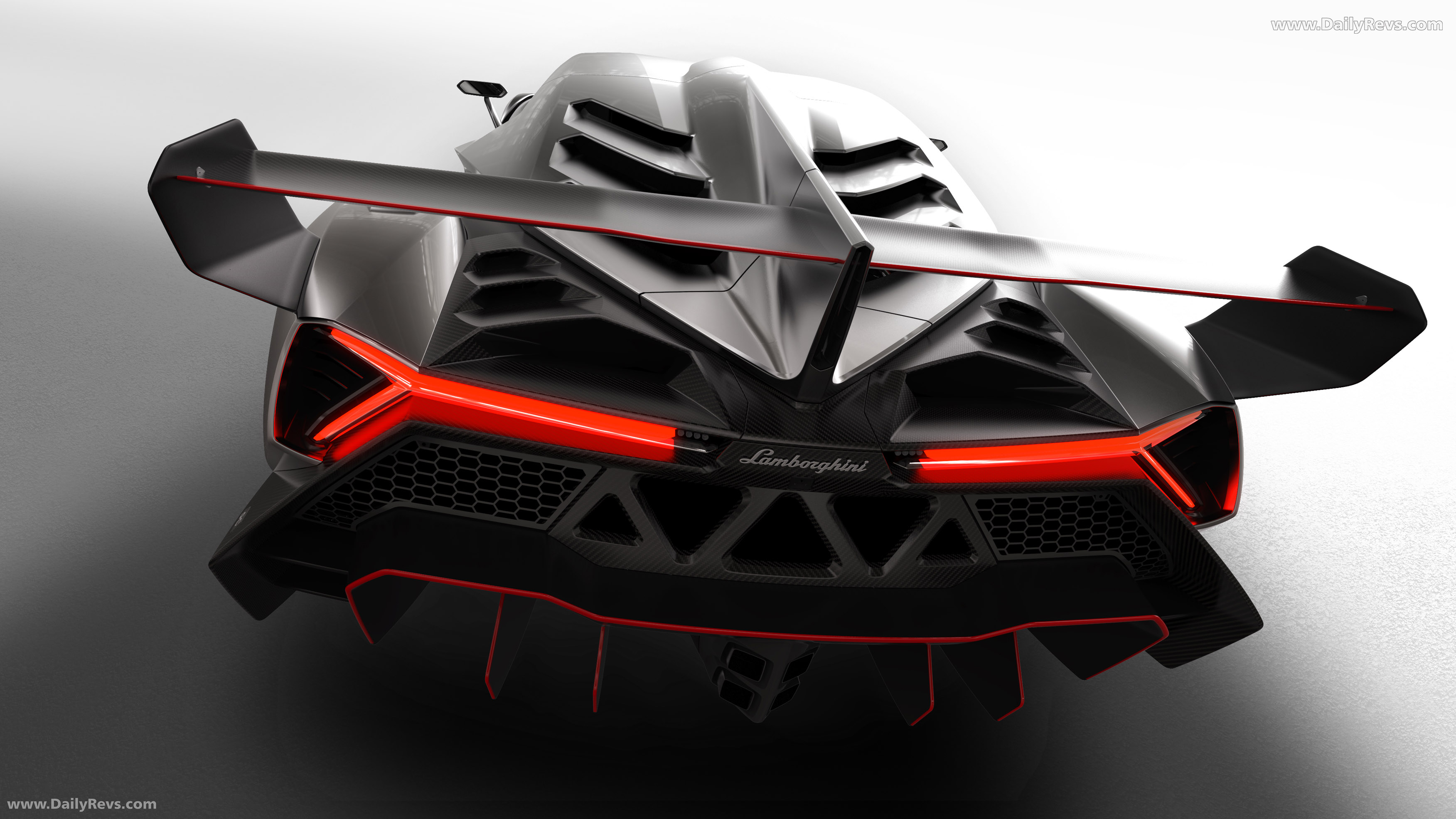
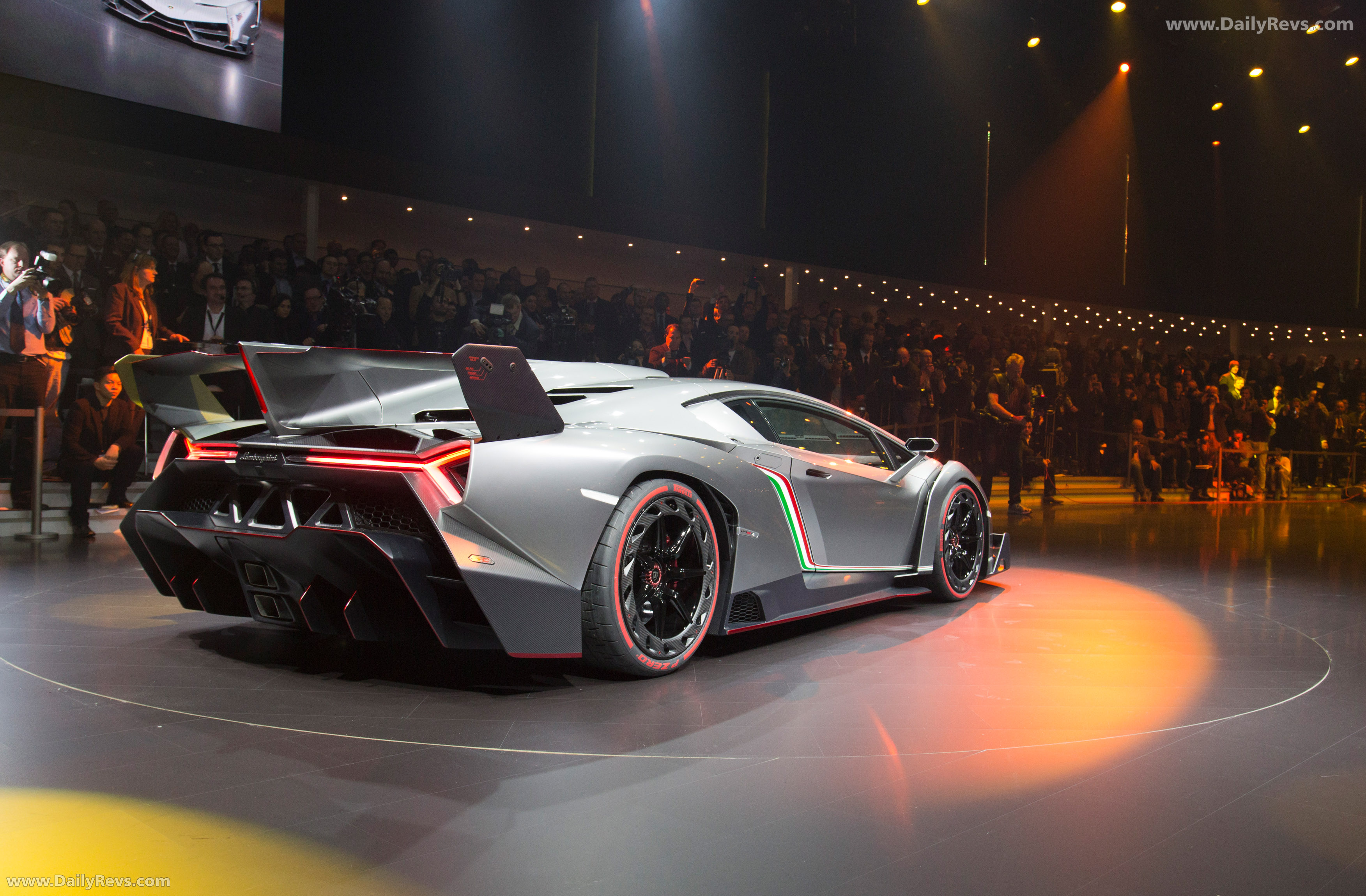
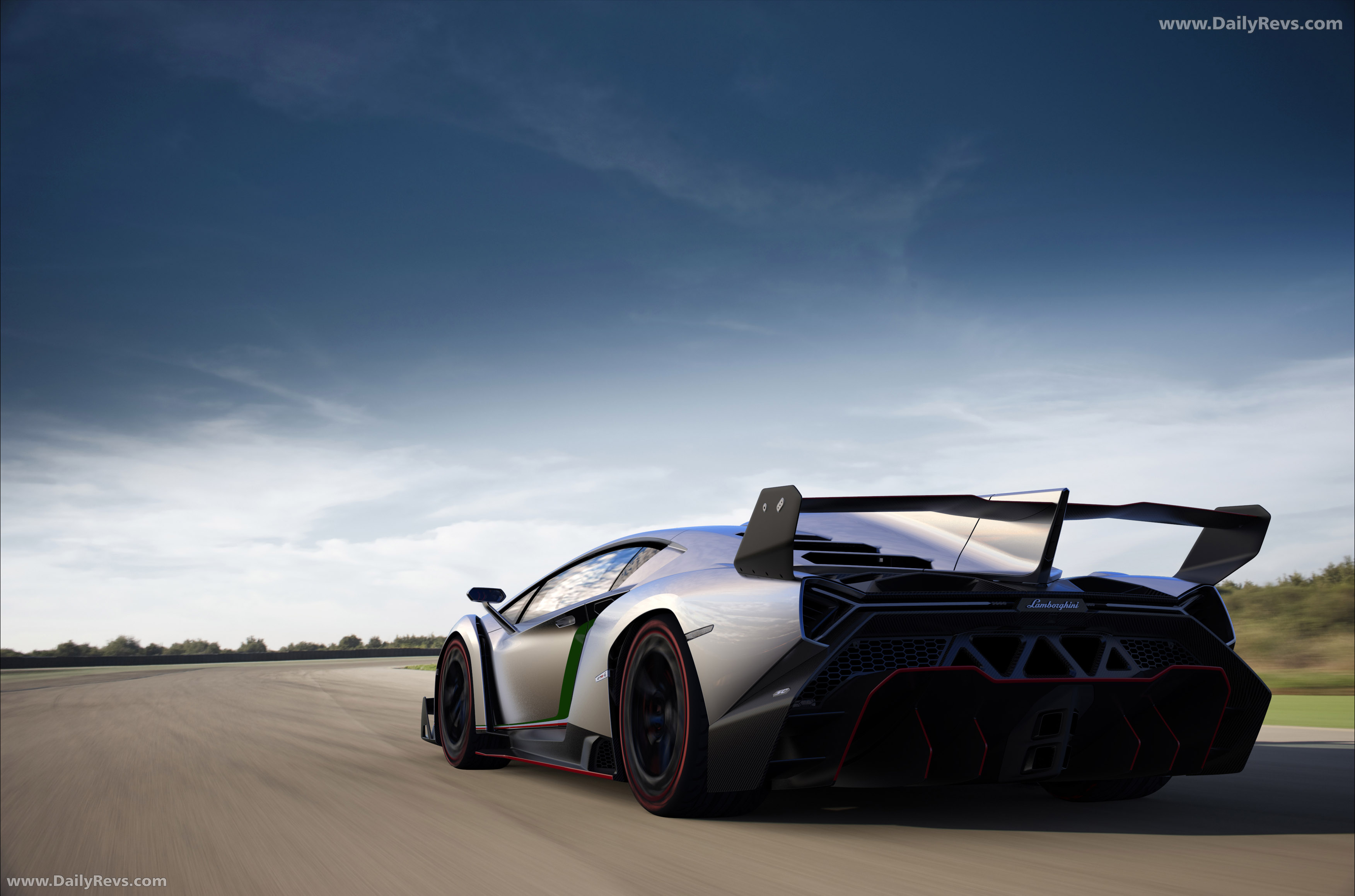
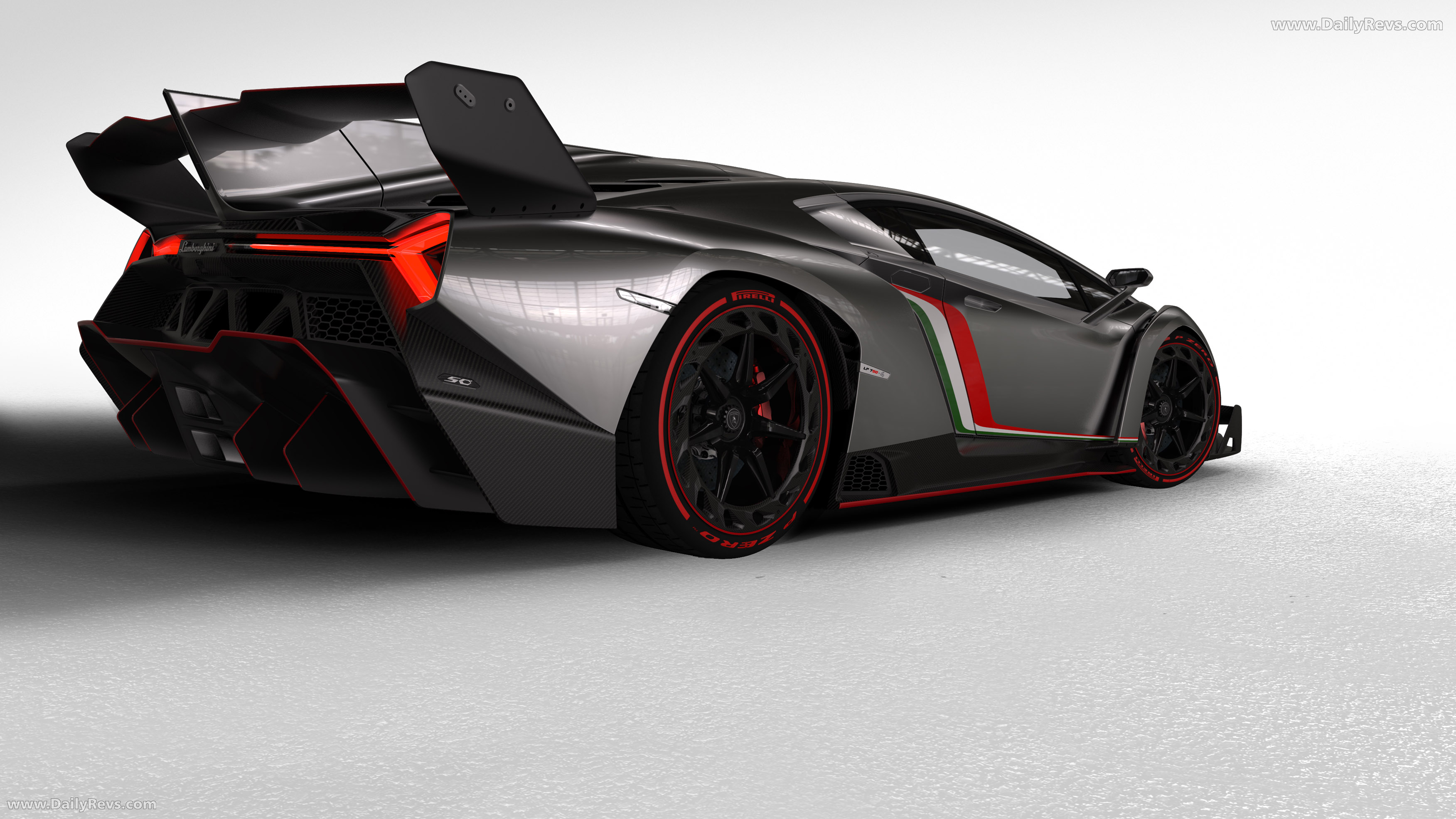
The split fenders are a motorsport reference and change the car’s proportions significantly, pushing the body inward and leaving the wheel arches almost freestanding. At the rear, the Veneno becomes even more purposeful: a smooth underbody transitions into a vast diffuser, four exhaust exits, and a rear wing shaped and positioned through motorsport simulation. Above it all, a tall central “shark fin” stabilises the car at high yaw angles and increases downforce during cornering.
Even the wheels contribute to the aero package. The 20-inch front and 21-inch rear alloys wear carbon-fiber rings designed to act as turbines, pulling air toward the carbon-ceramic brakes to assist cooling. Lamborghini finished the car in a metallic grey over visible carbon-fiber panels, with the Geneva show car receiving accents in all three Italian flag colours.
Performance and Powertrain Overview
Under the bodywork sits Lamborghini’s 6.5-litre V12, here tuned to 552 kW (750 hp). Enlarged intake paths, revised thermodynamics and a slightly higher rpm ceiling help the Veneno reach 355 km/h while retaining the immediacy expected of a naturally aspirated V12
The 0–100 km/h time of 2.8 seconds is supported by a combination of low mass, permanent all-wheel drive and a fast-shifting seven-speed ISR gearbox with five selectable drive modes. The chassis uses a racing-style pushrod suspension with horizontal dampers, a layout chosen for mechanical precision and packaging efficiency.
Despite its dramatic appearance, the Veneno remains fully homologated for road use, meeting global safety requirements.
Key Features and Interior Impression
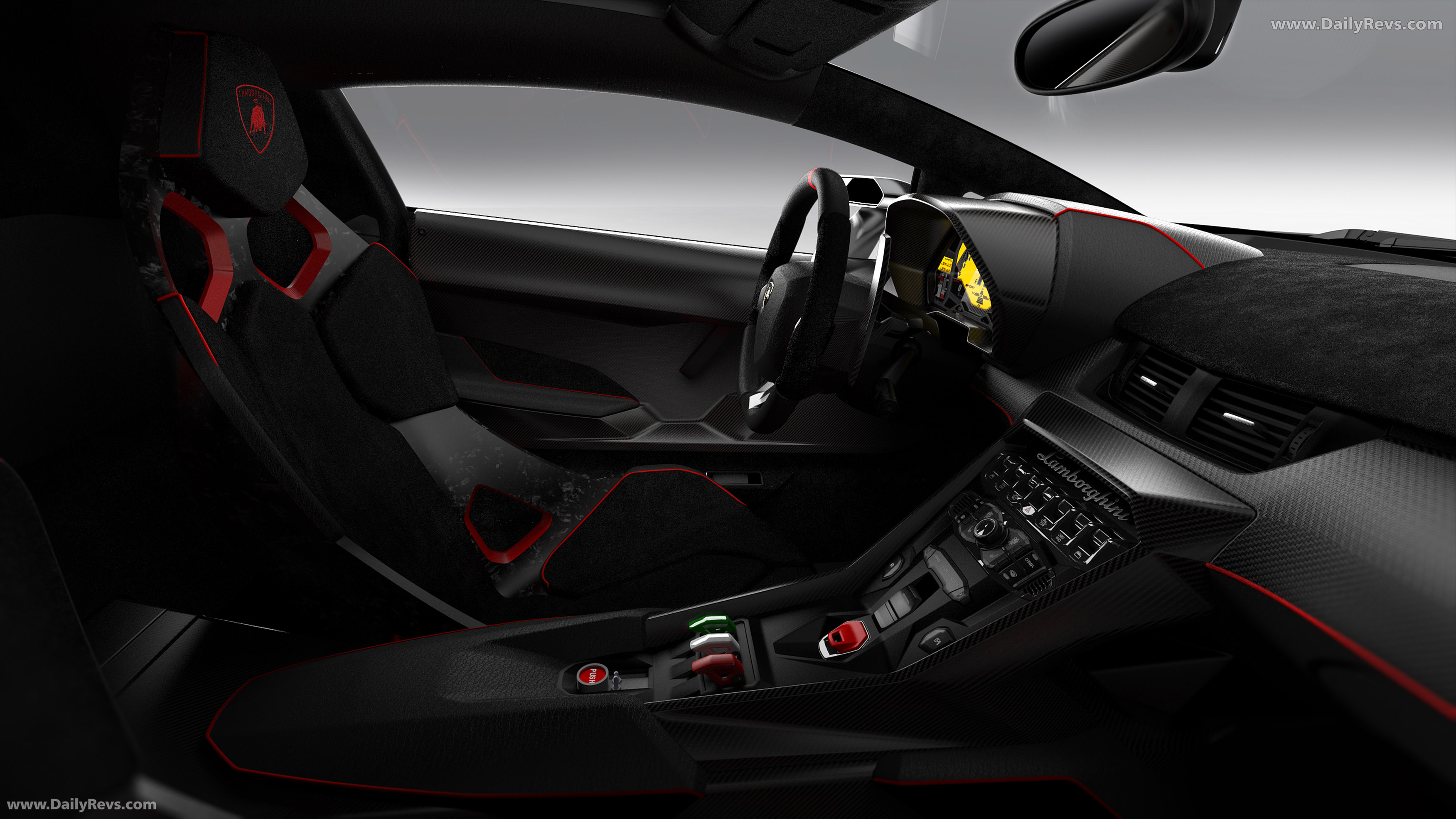
The Veneno’s structural core is a complete carbon-fiber monocoque, largely derived from the Aventador but adapted for the new body. The interior exposes sections of this monocoque along the sills and centre tunnel, making the lightweight construction visually present. The bucket seats are made from Lamborghini’s Forged Composite, and the cabin is trimmed in CarbonSkin—a flexible resin-soaked carbon-fiber fabric that conforms to complex shapes while saving weight
The instrument panel is redesigned with more aggressive graphics and includes a G-meter. Everything inside favours minimal mass and high rigidity rather than conventional luxury.
With a dry weight of 1,450 kg—125 kg lighter than an Aventador—the Veneno achieves a power-to-weight ratio of 1.93 kg/hp.
Market Positioning and Segment Context
The Veneno was created as a tribute to Lamborghini’s 50th anniversary and sits outside traditional supercar categories. Only three customer units were built, each featuring a unique single accent colour representing part of the Italian flag. The Geneva show car, labelled “Number 0,” remained with the company as a development and testing asset.
Its name draws from one of the most fearsome fighting bulls in Spanish history, reinforcing Lamborghini’s longstanding tradition of bull-inspired nomenclature.
Even within Lamborghini’s lineage of extreme specials, the 2013 Veneno remains unusual—part hypercar, part race concept, part anniversary statement. Its combination of structural lightness, all-carbon construction and track-derived aerodynamics positions it as one of the rarest and most technically ambitious road-legal cars the brand has ever produced.