1999 Seat Formula Concept
By Lorenzo Bianchi October 20, 1999
The SEAT Fórmula Concept features a mid-engine, rear-wheel-drive layout, a 2.0-litre turbocharged inline-4 engine rated around 240 hp, 6-speed sequential transmission and a curb weight near 900 kg.
Built on an aluminium space-frame and composite bodywork, the Fórmula includes active aerodynamic features (rear spoiler deploys above 50 km/h) and uses 20-inch wheels with low-profile tyres.
Unveiled at the 1999 Geneva Motor Show, the concept signalled SEAT’s interest in driving dynamics and premium design language for the brand’s future models.
Architectural Underpinnings and Design Intent
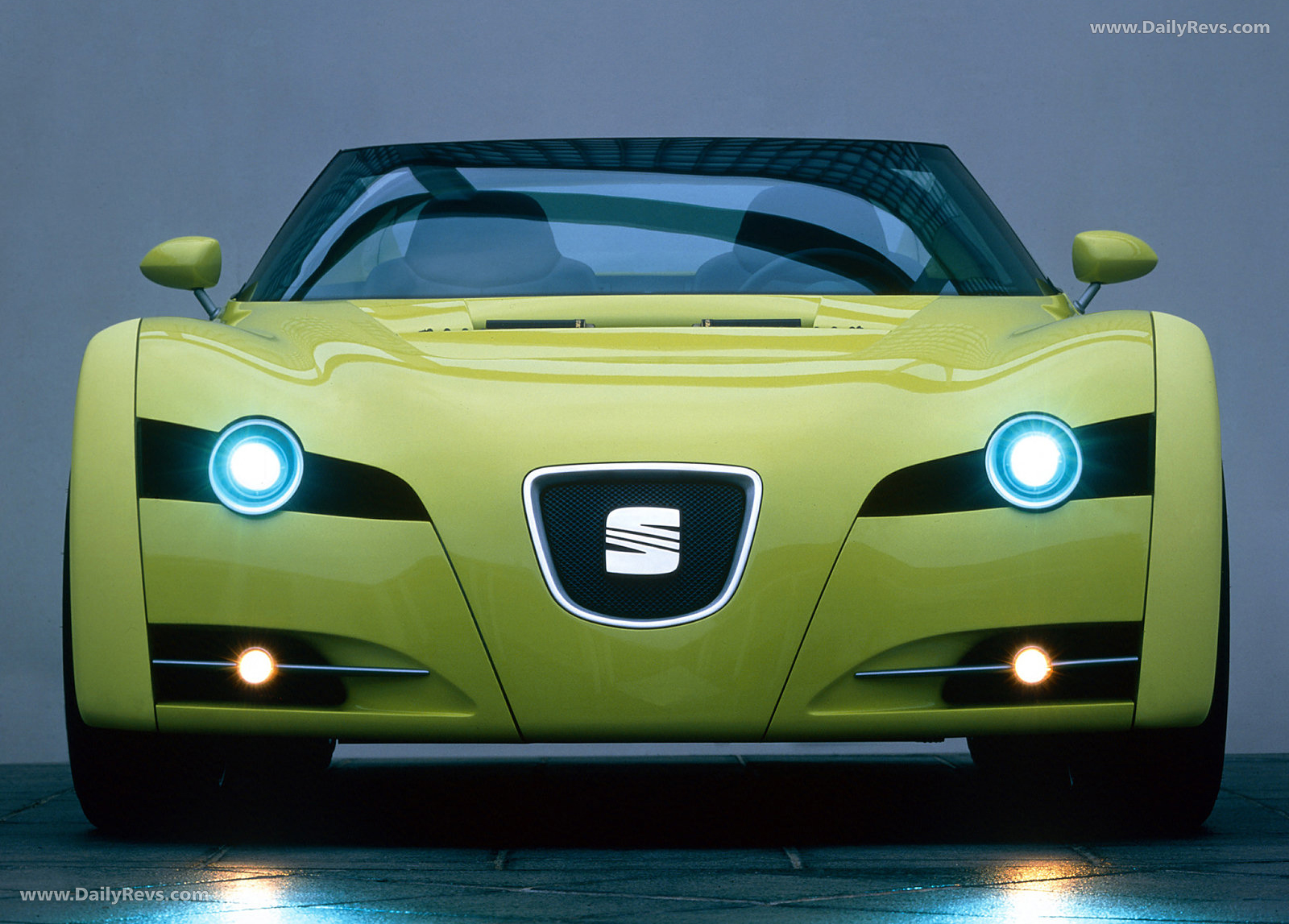
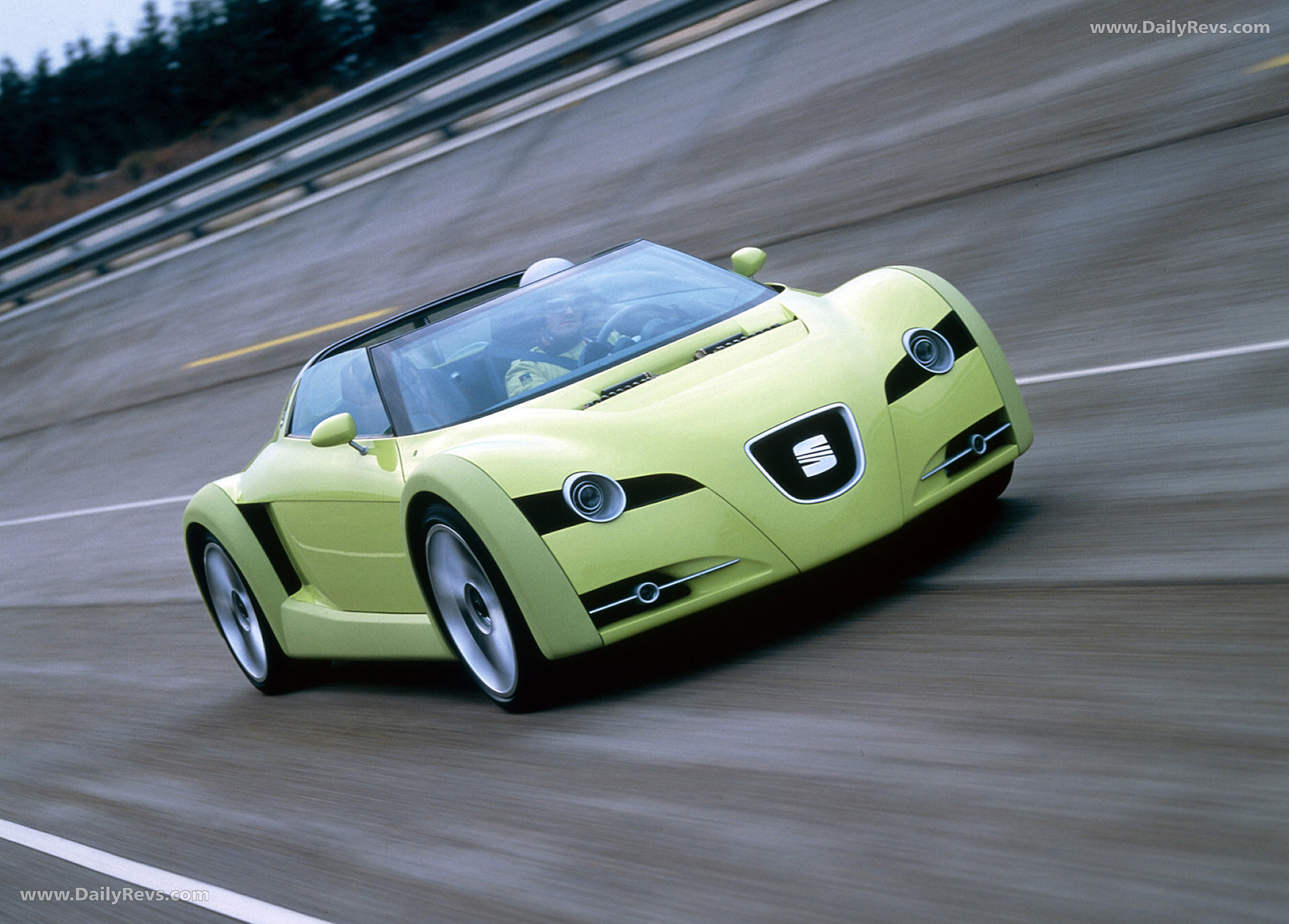
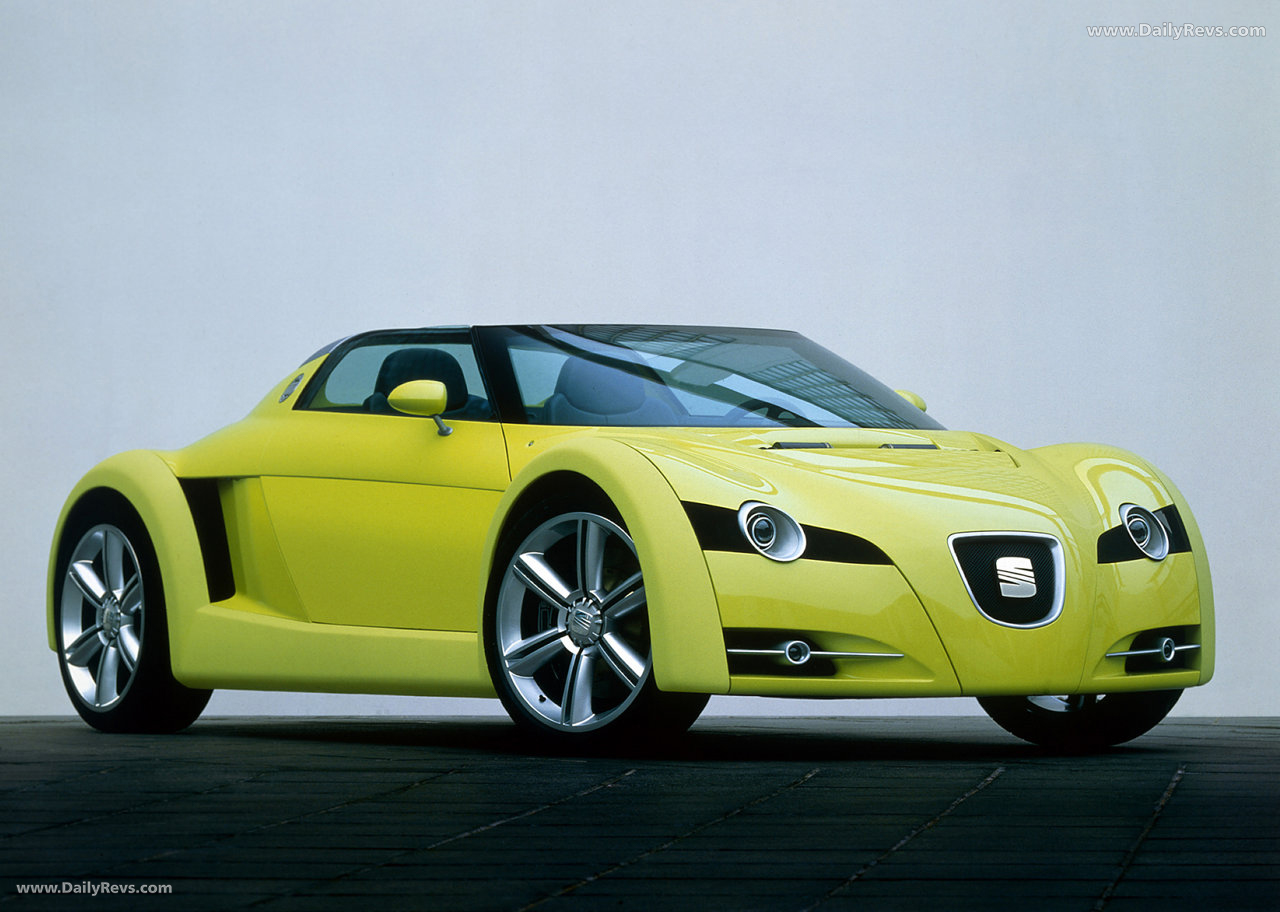
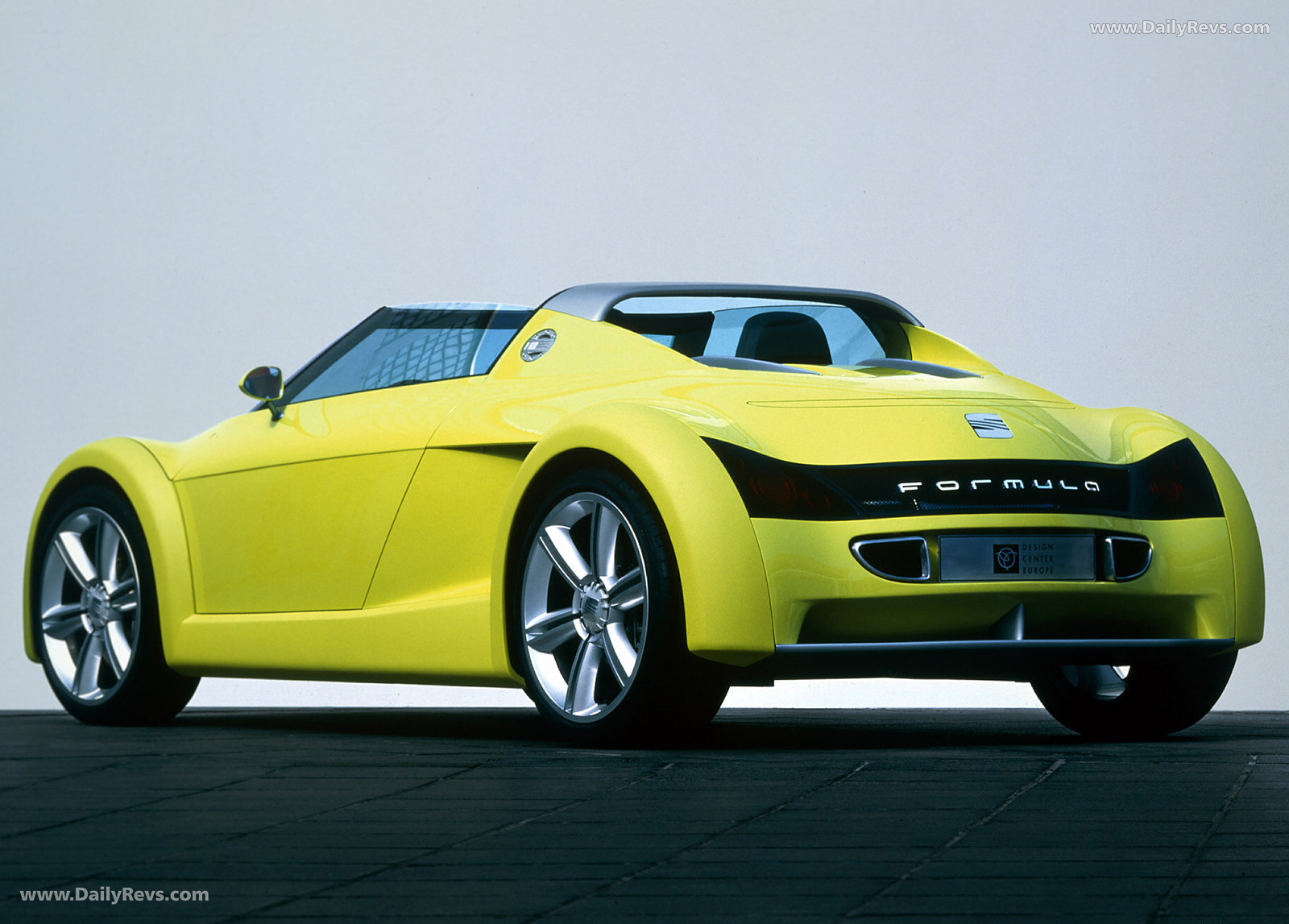
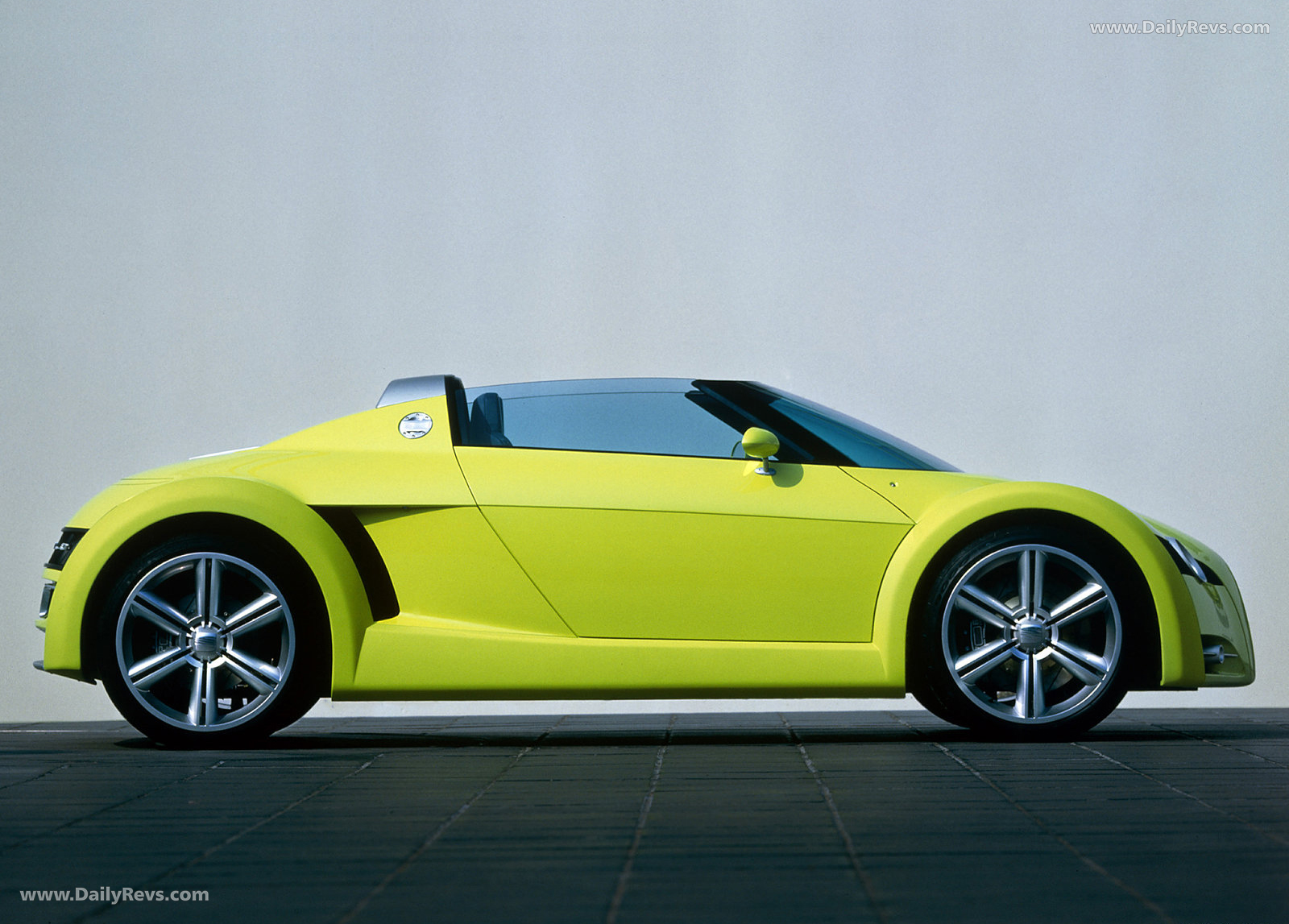
The SEAT Fórmula Concept was developed by SEAT’s Design Centre Europe in Sitges, Spain, under the direction of Erwin Leo Himmel. The roadster is built around an aluminium space-frame chassis linked by extrusions rather than standard welding. The structure supports a composite body which allows the vehicle to achieve a stated kerb weight of approximately 900 kg. The layout is mid-engine and rear-wheel drive, unusual for SEAT at the time, aligning the car with more performance-focused segments.
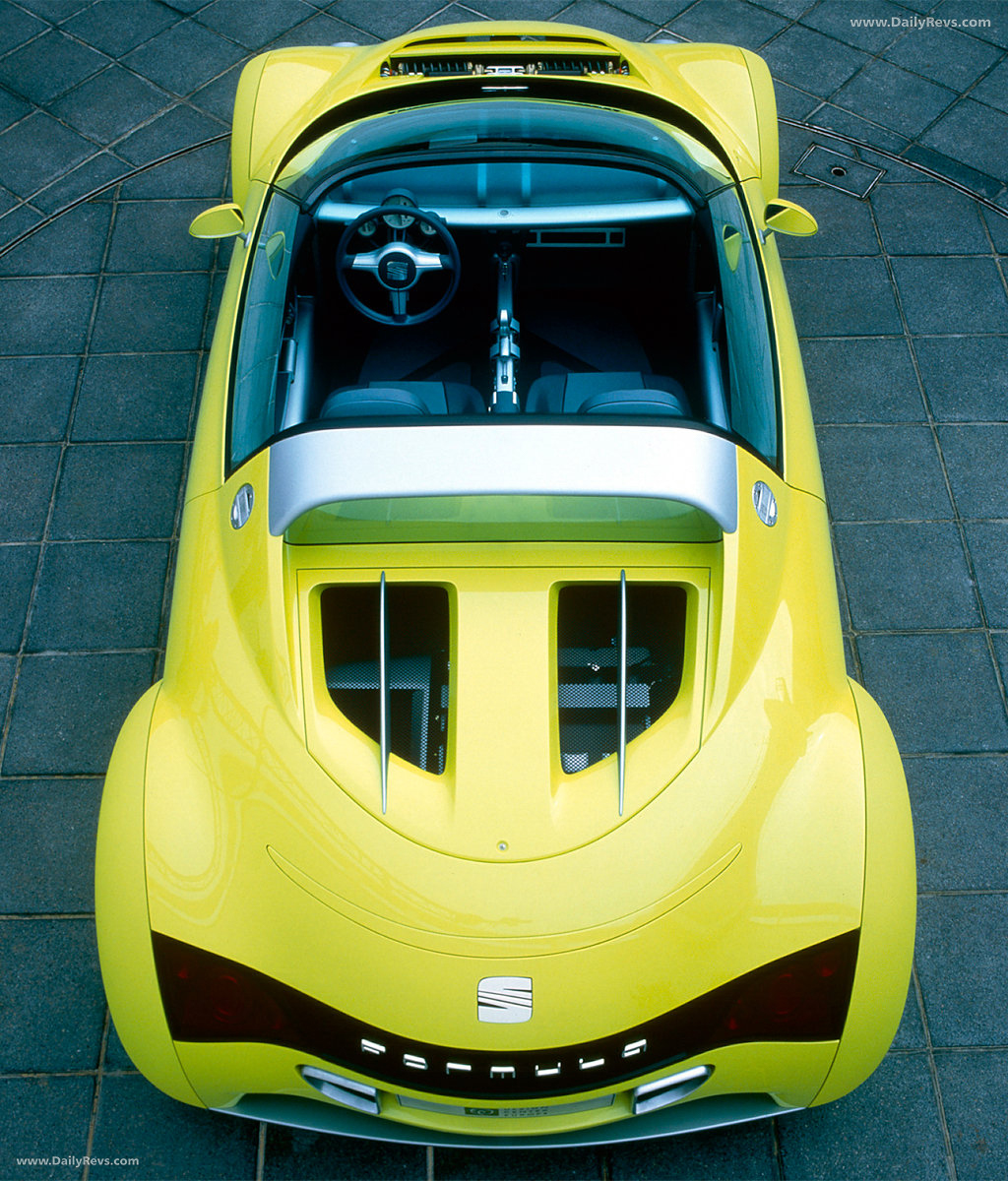
Visually, the Fórmula retains broad wheel arches, a low roofline (height stated at about 1,152 mm) and a wheelbase of 2,523 mm. The cabin is placed far forward, with short overhangs at each end, reinforcing the dynamic stance. The design includes butterfly or scissor-type doors [Unverified: standard door type according to some sources] and 20-inch alloy wheels: front 7.5 J × 20, rear 9 J × 20, fitted with tyres 205/45 R20 front and 255/35 R20 rear. Aerodynamic features include an active rear spoiler that rises automatically at speed, and vented intakes up front with adjustable blades.
Powertrain and Performance Specifications
Under the rear-mid engine cover the Fórmula is equipped with a 2.0-litre 20-valve turbocharged petrol inline-4 engine producing approximately 240 PS (≈177 kW) and 295 Nm of torque in some published figures. Power is sent to the rear axle through a 6-speed sequential “Sportronic” gearbox derived from SEAT’s rally competition hardware. Performance figures for the concept list a 0-100 km/h acceleration time in around 4.8 seconds and a top speed near 235 km/h.
The lightweight architecture and mid-engine layout produce dynamic potential: curb weight at 900 kg, wheelbase at 2,523 mm, front track 1,520 mm and rear track 1,486 mm. The suspension uses wishbone geometry and horizontally mounted dampers in the rear, aiding packaging efficiency and giving further insights to the performance intent.
Interior Highlights
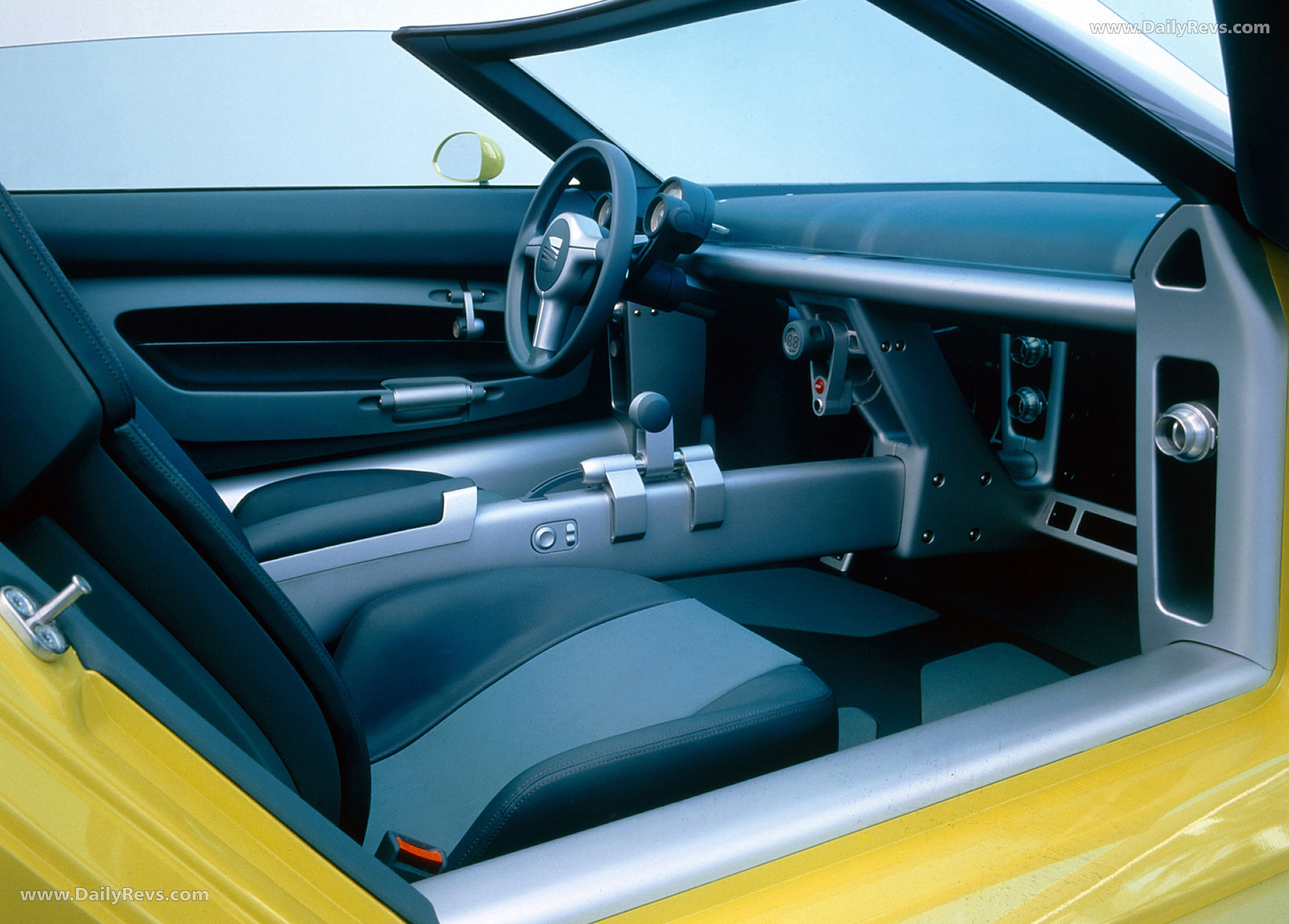
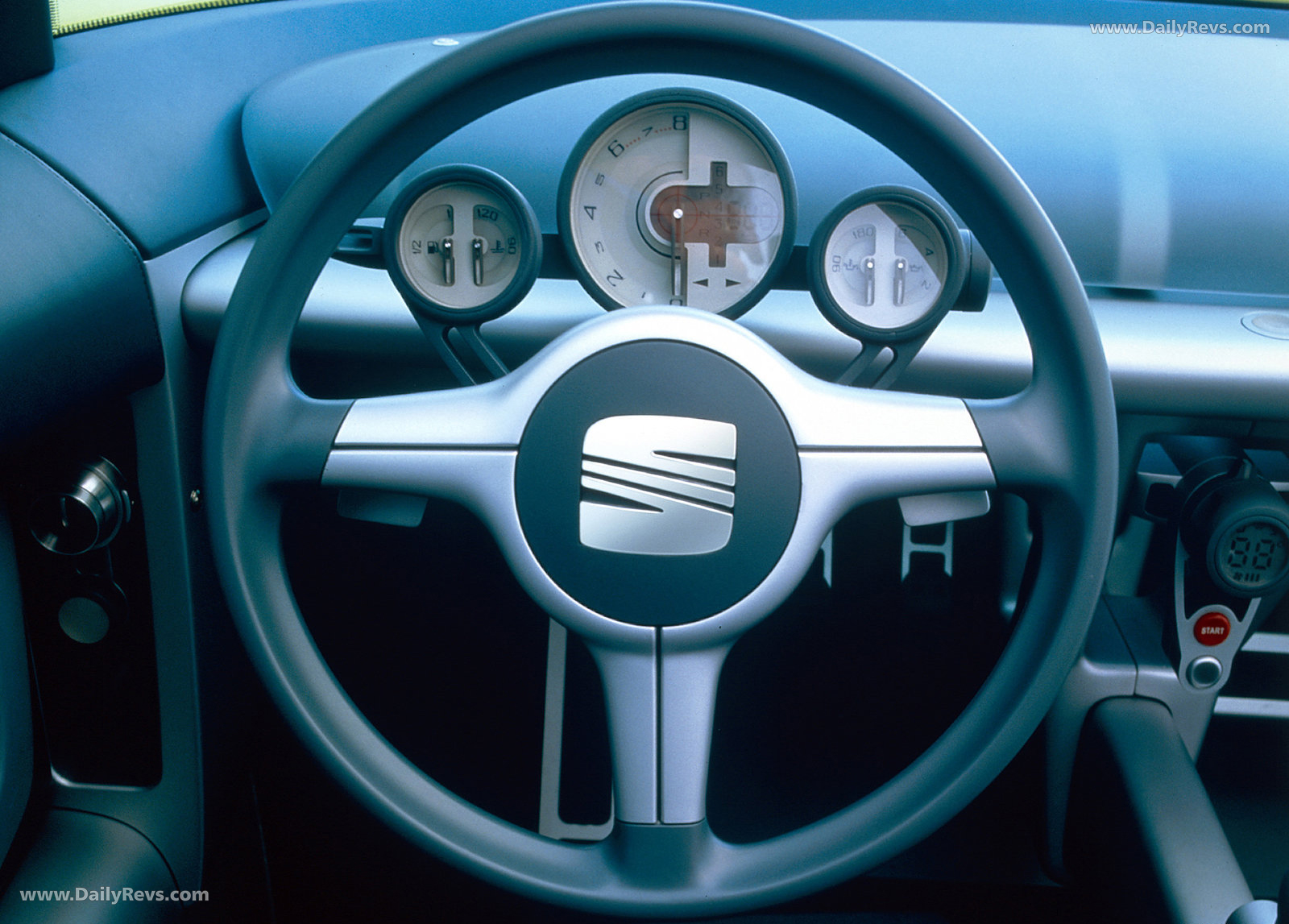
The SEAT Fórmula Concept brings several technical elements uncommon for the era and brand. Its aluminium-space-frame chassis is exposed inside the cabin in places, reinforcing the structural focus. Active aerodynamic devices, such as the deployable rear wing and adjustable cooling intakes, make it more than a styling exercise.
Interior
appointments follow a minimal design philosophy: the driver’s display
and controls focus on function. The semi-automatic gearbox can be
operated via paddles behind the wheel or a lever in the centre console.Although
primary equipment levels for comfort were modest, the design allowed
add-on options such as air-conditioning if desired.
Market Positioning and Strategic Significance
The SEAT Fórmula Concept was presented at the Geneva Motor Show in 1999, showing SEAT’s ambition to deliver a sports-car offering within its Volkswagen Group affiliation. At a time when SEAT primarily focused on compact cars and sport-trim hatchbacks, the Fórmula implied a shift toward premium-sport aspirations. Reviewers noted its relationship to vehicles like the Lotus Elise concept in architecture, although SEAT positioned it more toward attainable sport than exotic hypercar.
Although the concept never progressed to production [Inference], the platform and design language influenced subsequent SEAT sport models and highlighted the brand’s engineering capabilities within the VW Group. The Fórmula’s mid-engine layout, lightweight structure and dynamic focus distinguished it from most contemporaries which relied on front-engine, front-wheel-drive layouts.
Technical Specifications
General Information
- Model Name: SEAT Fórmula Concept
- Manufacturer: SEAT S.A. (Volkswagen Group)
- Debut: 1999 Geneva Motor Show
- Concept Type: Two-seat open sports roadster
- Body Style: Mid-engine, rear-wheel drive (RWD)
- Designer: SEAT Design Centre, Sitges (Spain)
- Chassis Structure: Aluminium spaceframe with composite body panels
Powertrain
- Engine Type: Inline 4-cylinder turbocharged petrol engine
- Engine Code: VW Group 2.0L 20V Turbo (from SEAT León Cupra R)
- Displacement: 1,984 cc (2.0 litres)
- Valvetrain: DOHC, 20 valves (5 valves per cylinder)
- Induction: Turbocharged with intercooler
- Maximum Power Output: 240 hp (177 kW) @ 5,800 rpm
- Maximum Torque: 295 Nm (217 lb-ft) @ 2,100–5,000 rpm
- Transmission: 6-speed sequential semi-automatic (paddle-shift)
- Drive System: Rear-wheel drive (RWD)
- Differential: Limited-slip differential
Performance
- 0–100 km/h (0–62 mph): 4.8 seconds
- Top Speed: 235 km/h (146 mph)
- Power-to-Weight Ratio: 267 hp per tonne
- Braking Distance (100–0 km/h): 36 meters (approximate)
Chassis & Suspension
- Front Suspension: Double wishbone, independent
- Rear Suspension: Multi-link with coil-over dampers
- Dampers: Adjustable gas-pressurized units
- Steering: Rack and pinion, manual
Brakes:
- Front: Ventilated discs (4-piston calipers)
- Rear: Ventilated discs (2-piston calipers)
- Driveshafts: Lightweight aluminium units
Dimensions & Weight
- Overall Length: 3,800 mm
- Overall Width: 1,830 mm
- Overall Height: 1,100 mm
- Wheelbase: 2,340 mm
- Front Track: 1,530 mm
- Rear Track: 1,580 mm
- Dry Weight: 900 kg (1,984 lbs)
- Weight Distribution: 40% front / 60% rear
Wheels & Tires
- Front Wheels: 8J x 20-inch aluminium alloy
- Rear Wheels: 9.5J x 20-inch aluminium alloy
- Front Tires: 225/35 R20
- Rear Tires: 255/35 R20
- Manufacturer: Pirelli P-Zero
Exterior Features
- Body Panels: Carbon-fiber composite
- Aerodynamics: Active rear wing (deploys above 50 km/h), adaptive front cooling intakes
- Doors: Butterfly-type (upward opening)
- Lighting: Xenon headlamps with integrated indicators
- Mirrors: Streamlined carbon-fiber pods
- Color at Launch: Metallic silver with exposed aluminium accents
Interior
- Seating Configuration: Two-seater
- Seats: Lightweight carbon-fiber racing shells
- Upholstery: Alcantara and leather inserts
- Steering Wheel: F1-inspired with integrated paddle shifters
- Dashboard: Minimalist digital instrument cluster
- Pedal Box: Adjustable aluminium pedals
- Roll Protection: Integrated rollover hoops
Special Features
- Active aerodynamic elements (rear spoiler and front intake shutters)
- Visible aluminium chassis members within cabin
- Motorsport-inspired steering layout
- Designed as a potential low-volume production sports car for track and road