

1992 Ital Design Columbus Concept
By Lorenzo Bianchi April 7, 1992
Nearly 6 metres long with a carbon fibre body and steel chassis.
Powered by a 5.0-litre BMW V12 producing 300 hp.
Flexible interior layout with up to nine seats and onboard media.
A concept built around movement and presence
The 1992 Italdesign Columbus wasn’t trying to be subtle.
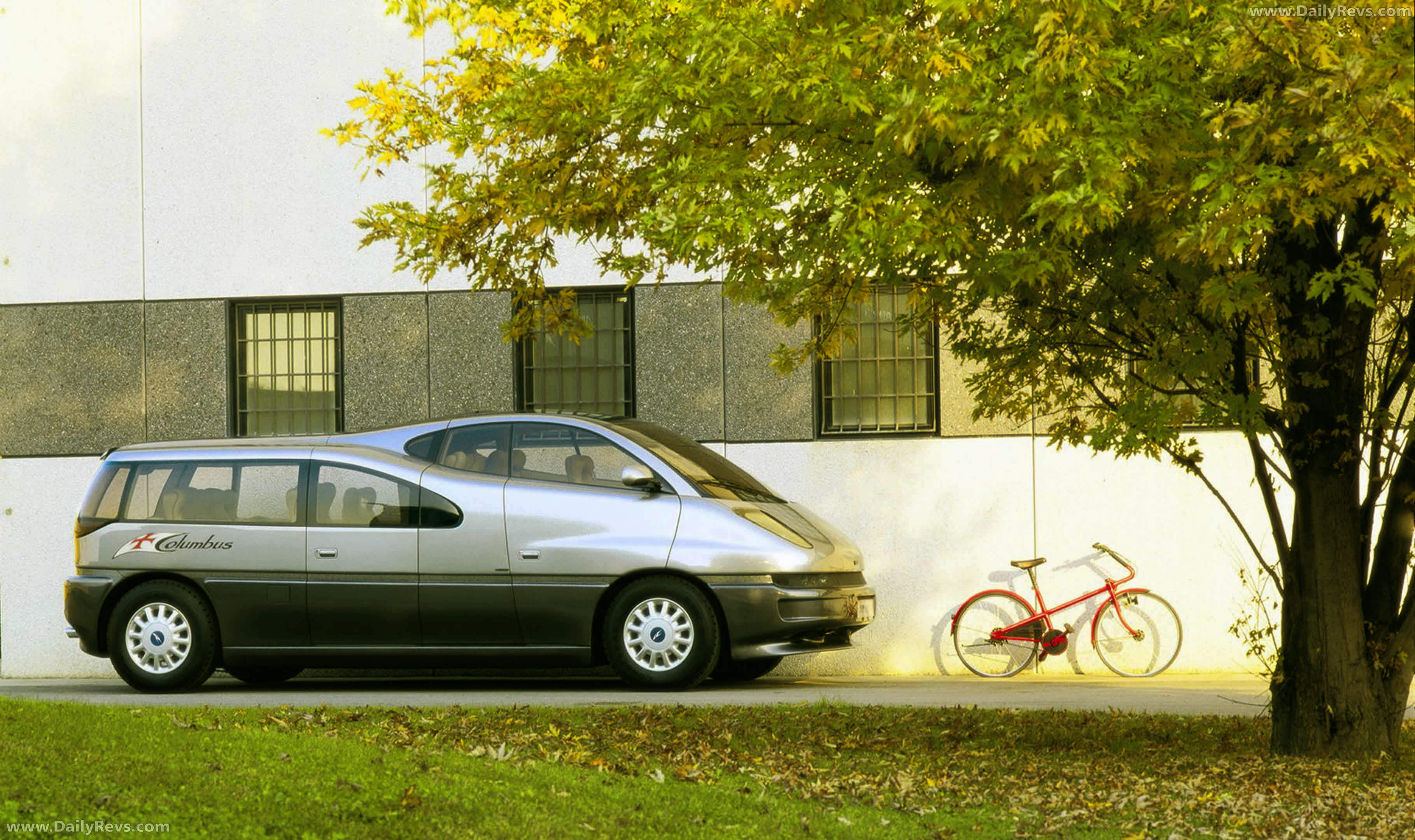
It was introduced as a tribute to Christopher Columbus, marking 500 years since the discovery of America, but the concept itself leans more toward presence than symbolism. Italdesign described it as a “sailing ship for dry land,” which sounds exaggerated until you see the proportions.
At nearly six metres long, it’s closer to a limousine van than anything else from that era.
Exterior proportions feel more architectural than automotive
The Columbus doesn’t follow conventional car design.
It’s long, upright, and almost monolithic in its form. The shape is dictated less by styling and more by how space is arranged inside. There’s very little tapering or softening.
Underneath, it uses a steel box-section load-bearing chassis, while the body itself is made from carbon fibre.
That combination was unusual for the early 1990s, especially in something this large.
The stance is wide and stable, but not particularly low. It carries its height deliberately, more like a transport solution than a traditional luxury vehicle.
Proportions prioritise space above everything else
Everything about the Columbus points back to interior volume.
The length, the height, even the flat surfaces — they all exist to maximise usable space. It’s designed more like a mobile environment than a car in the usual sense.
There’s also an interesting detail at low speeds. The rear wheels can turn up to 15 degrees, which helps manage manoeuvrability despite the size.
Without that, it would have been difficult to use in tighter urban settings.
Interior layout feels closer to a lounge than a cabin
Inside is where the Columbus becomes more unusual.
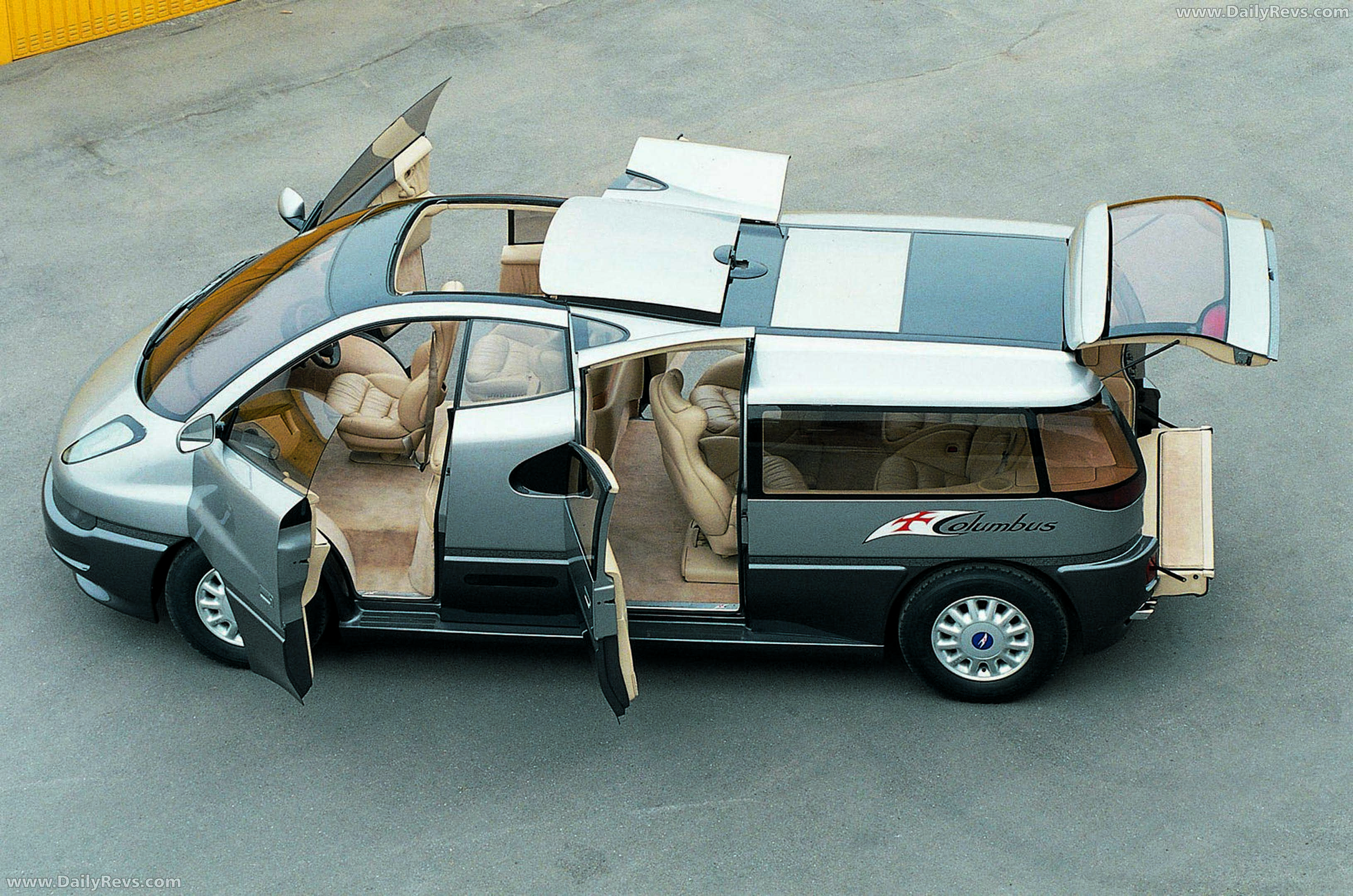
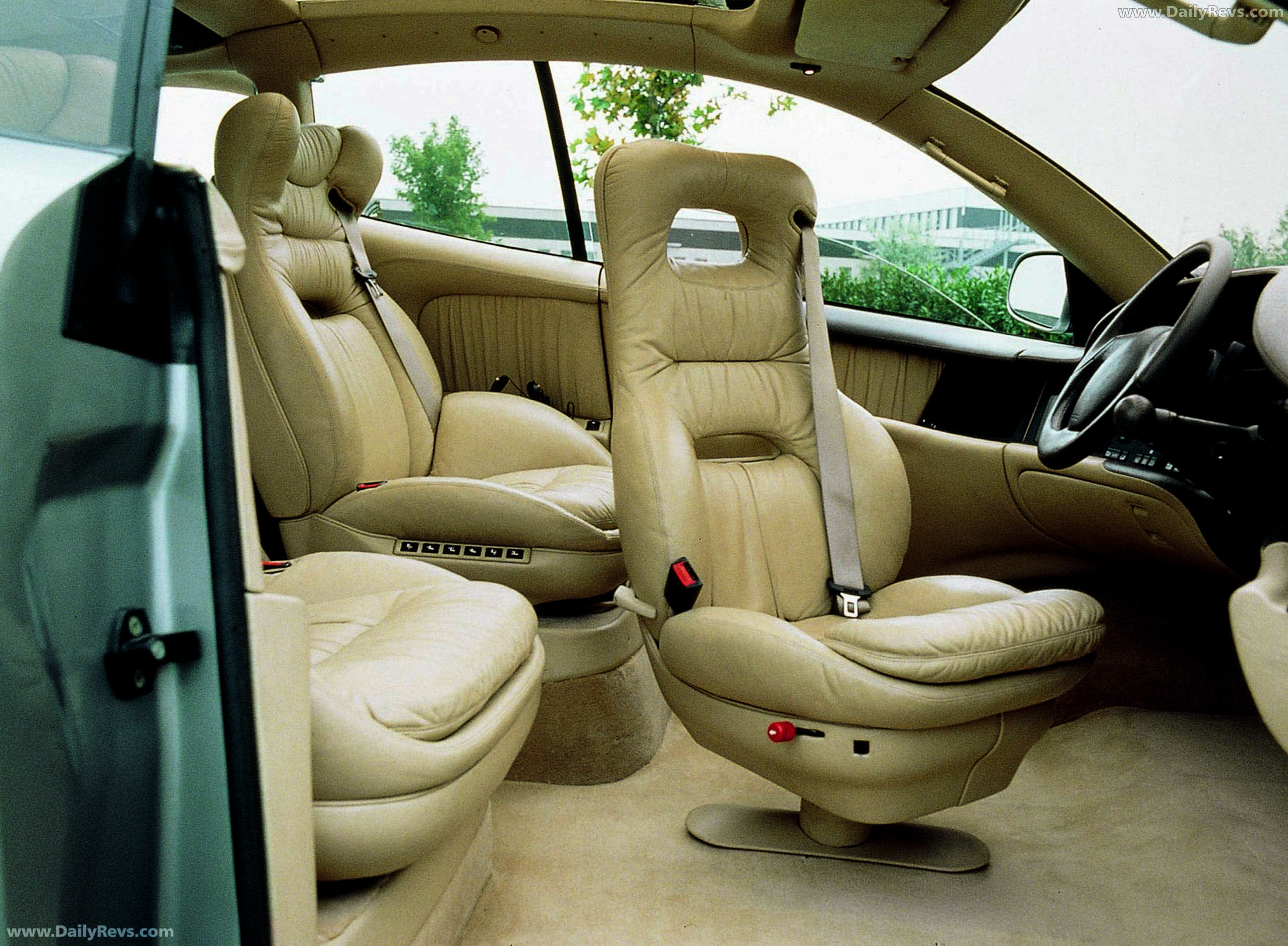
The standard setup includes seven seats, but the configuration is flexible. It can be expanded to nine seats or stripped back entirely to create cargo space.
That adaptability was a key part of the concept.
The driver sits in a raised central cockpit, positioned above the engine. It’s an uncommon layout, but it gives a clear forward view and separates the driving position from the passenger area.
Passengers get their own space. Each of the six seats is equipped with a monitor connected to TV networks and a VHS system, which, at the time, would have felt quite advanced.
Lighting inside the cabin is handled by a fibre optic system, adding to the sense that this was designed as a self-contained environment.
Powertrain placement shapes the entire layout
The engine placement is unusual for something like this.
A 5.0-litre BMW V12 producing 300 horsepower is mounted in a transverse mid position, which directly influences the raised driver’s seat.
Power is sent to all four wheels through a permanent all-wheel-drive system.
Performance figures aren’t the focus here. The setup is more about moving a large, heavy structure efficiently rather than delivering speed.
Practicality extends beyond typical passenger use
The Columbus isn’t limited to passenger transport.
With the seats removed or reconfigured, it can function as a commercial vehicle. That flexibility sits at the centre of the concept.
It’s designed to adapt depending on what’s needed — people, cargo, or something in between.
A concept that looked further ahead than most
The 1992 Italdesign Columbus doesn’t fit neatly into any category.
It’s not quite a luxury car, not quite a van, and not really an MPV in the modern sense either.
What it does show is an early attempt to rethink how space, technology, and mobility could come together in one vehicle.