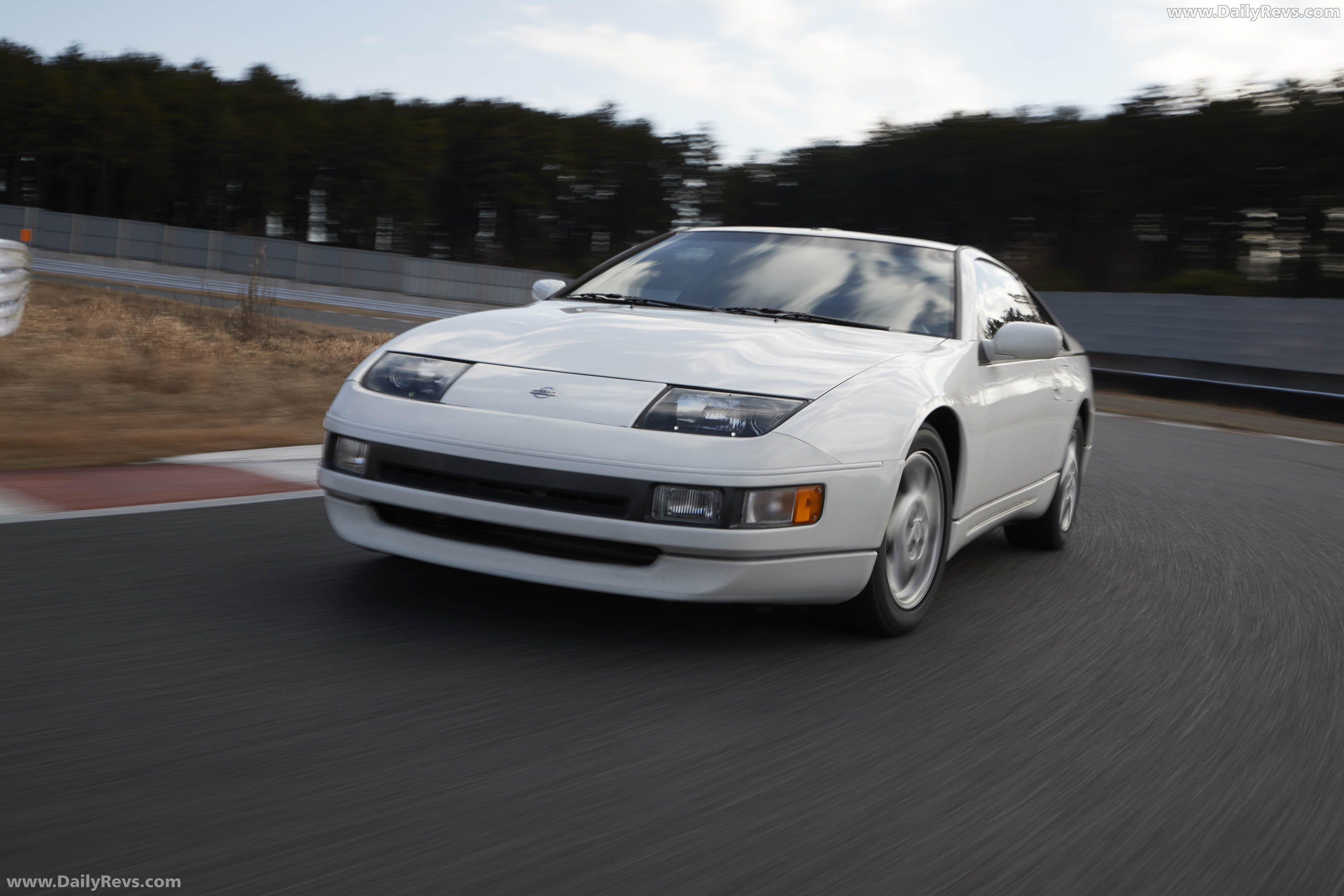
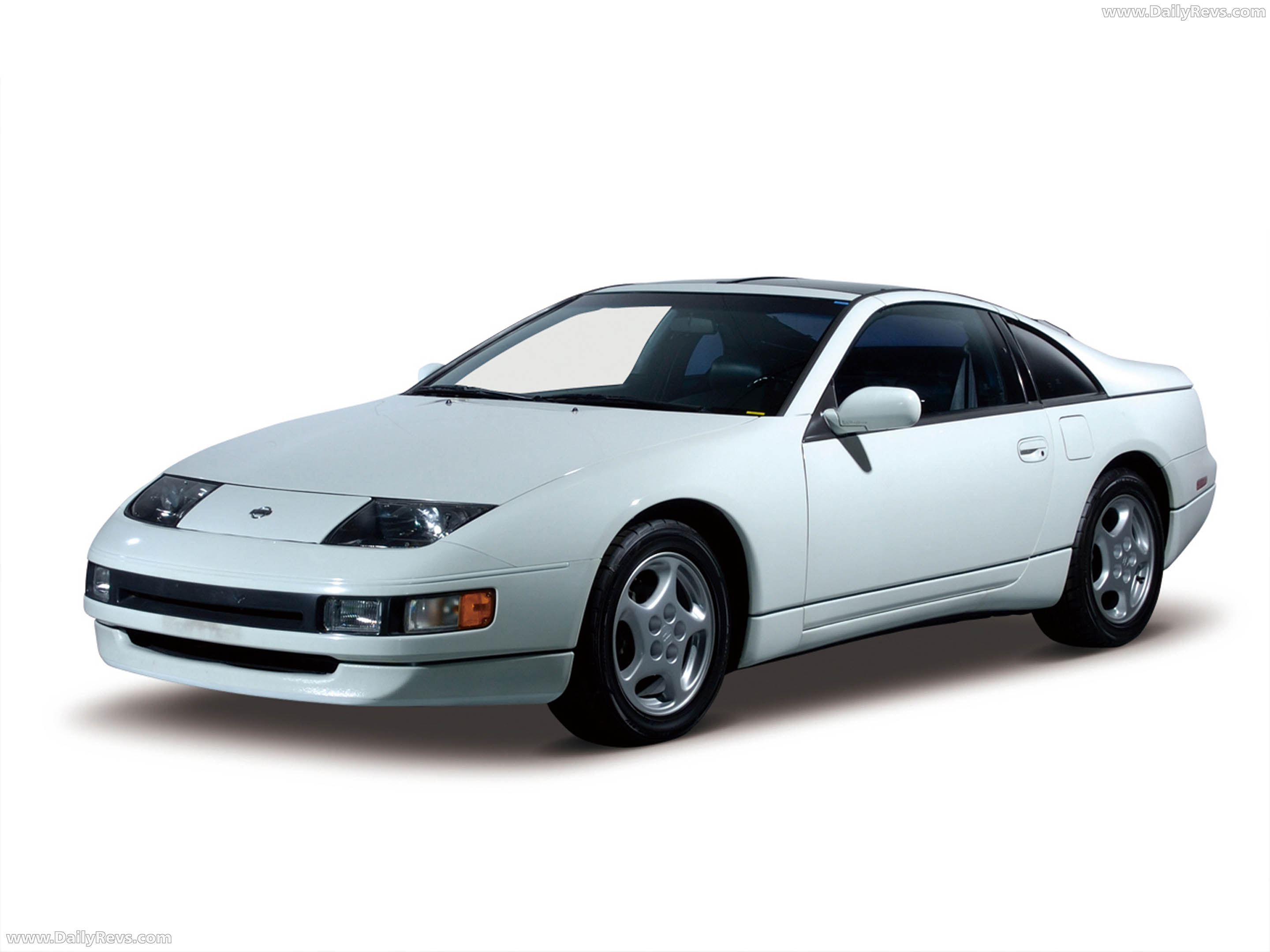
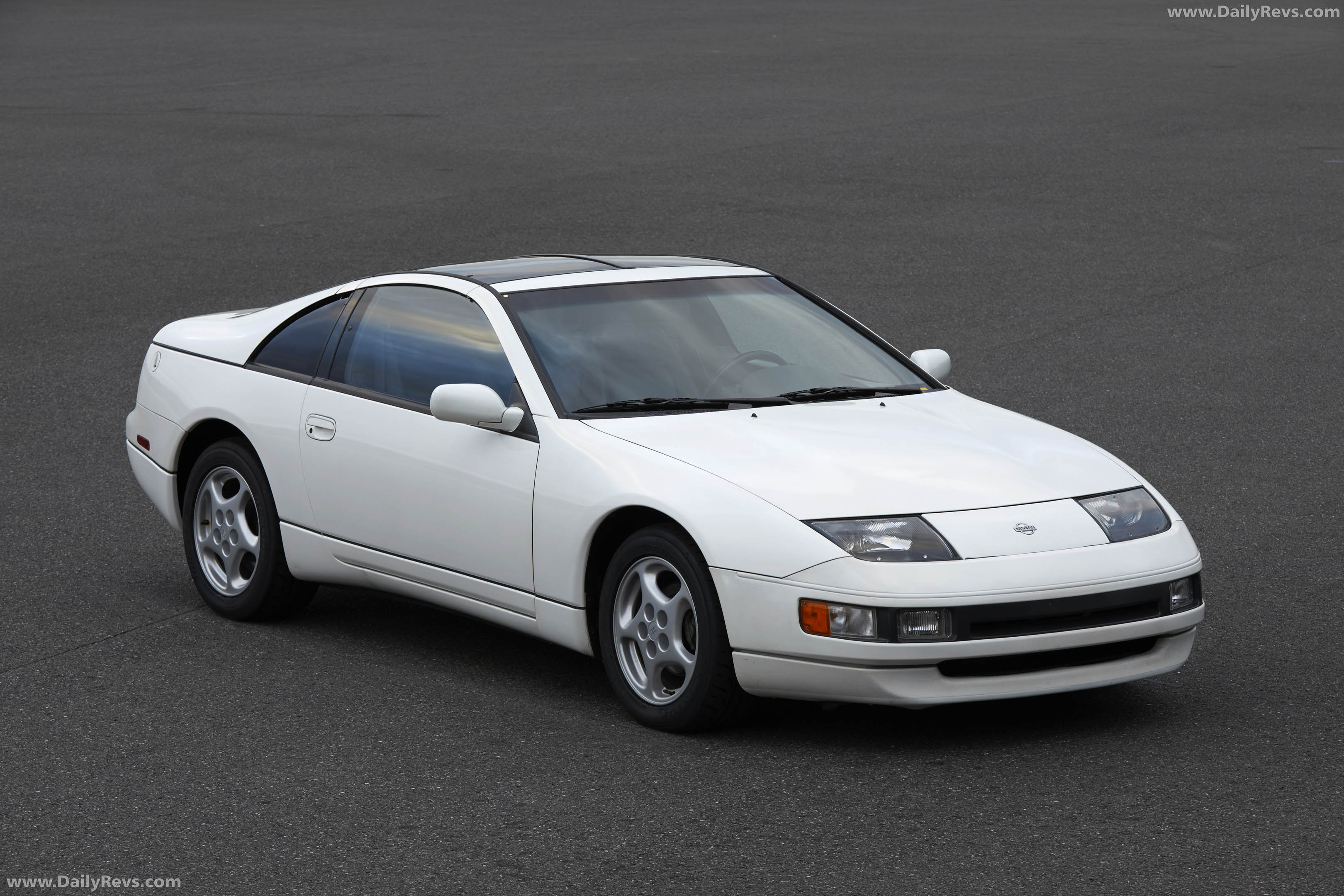
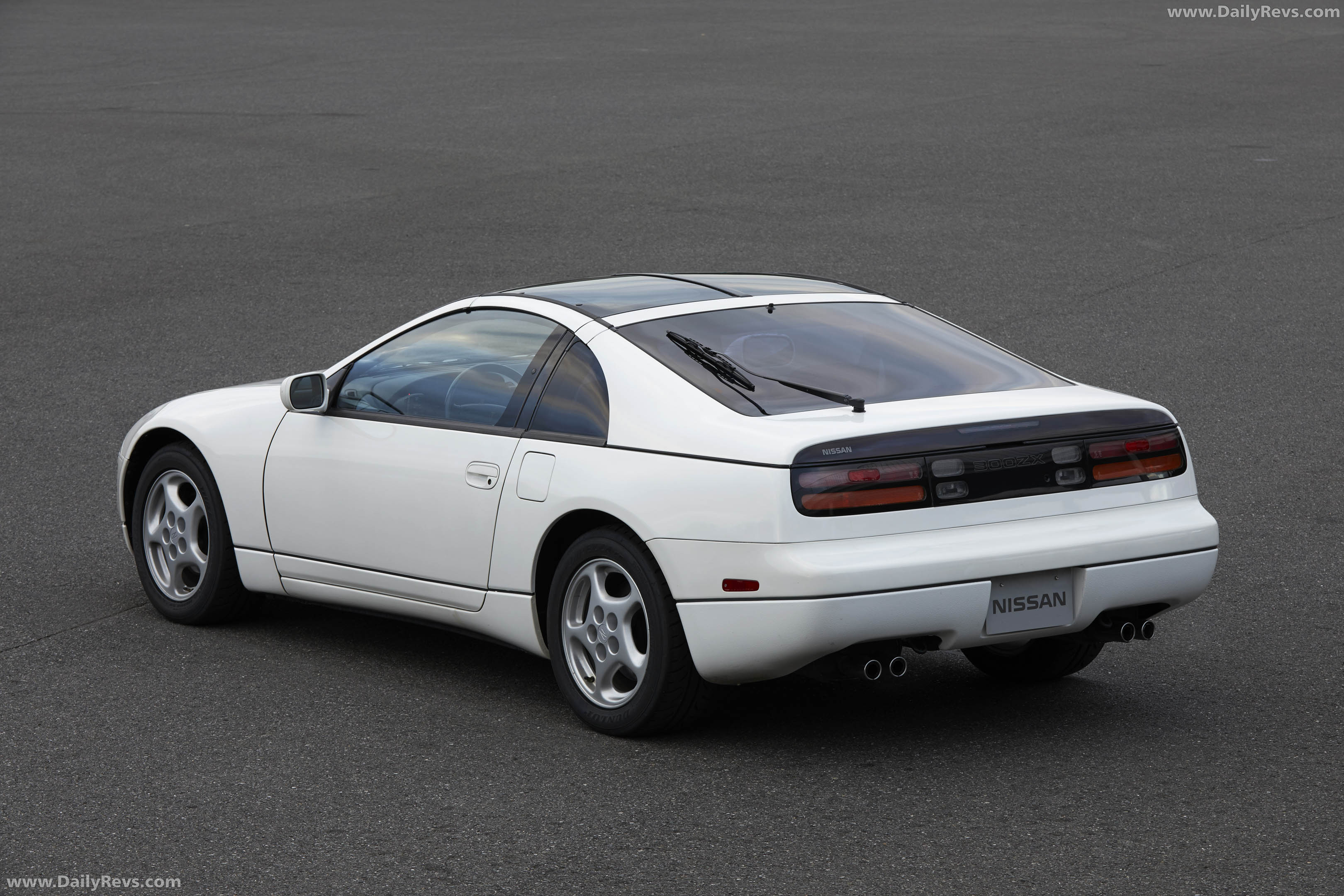
1989 Nissan 300ZX Twin Turbo Z32
By Lorenzo Bianchi September 22, 1989
The 2,960cc VG30DETT twin-turbo V6 produced 280 PS and 388 Nm of torque.
The fourth-generation Z32 launched in 1989 with a wide, low body, forward cabin and steeply slanted headlights.
Z32 chassis technology included multilink suspension, Super HICAS and four-piston aluminum front brake calipers.
The 1989 Nissan 300ZX Twin Turbo Z32 marked the arrival of the fourth-generation Z. Nissan launched the Z32 in 1989, two decades after the original Fairlady Z, replacing the more angular Z31 with a much lower and wider sports-car shape.
Both two-seat and 2+2 versions were offered, while the engine range centered on a 3.0-liter DOHC V6 available in naturally aspirated and twin-turbo forms.
Low Nose Gave The Z32 A New Identity
The Z32 moved away from the upright, wedge-like appearance of its predecessor. Nissan describes the fourth-generation car as having wide, low proportions, with a forward-positioned cabin and short overhangs. Its headlights were slanted at more than 60 degrees, becoming one of the defining details of the front end.
The 1989 Fairlady Z 300ZX documented in Nissan's heritage material measures 4,525 mm long, 1,800 mm wide and only 1,255 mm tall, with a 2,570 mm wheelbase. That particular preserved vehicle is a race pace car and should not be treated as specification confirmation for every 1989 Z32 configuration.
Z32 Brought A More Advanced Chassis
Underneath the new body was a four-wheel multilink suspension layout. Nissan also identifies Super HICAS rear-wheel steering and four-piston aluminum brake calipers among the Z32's chassis technologies.
The heritage document lists 225/50R16 tires for its preserved 1989 300ZX example, along with ventilated disc brakes at both ends.
Twin Turbo V6 Produced 280 PS
The twin-turbo version used Nissan's VG30DETT, a 2,960cc DOHC V6. Nissan's Z32 heritage specifications quote 280 PS at 6,400 rpm and 388 Nm of torque at 3,600 rpm.
A five-speed manual transmission is listed for Nissan's preserved 1989 Z32 pace car, while the separate 1992 North American Twin Turbo example in the source uses an electronically controlled four-speed automatic. The supplied document therefore confirms that transmission specification can vary by example and market.
The result was a Z that looked and felt substantially removed from the earlier generations. Its low body, twin-turbo V6 and more sophisticated chassis established the basic Z32 formula that Nissan would carry through the 1990s.