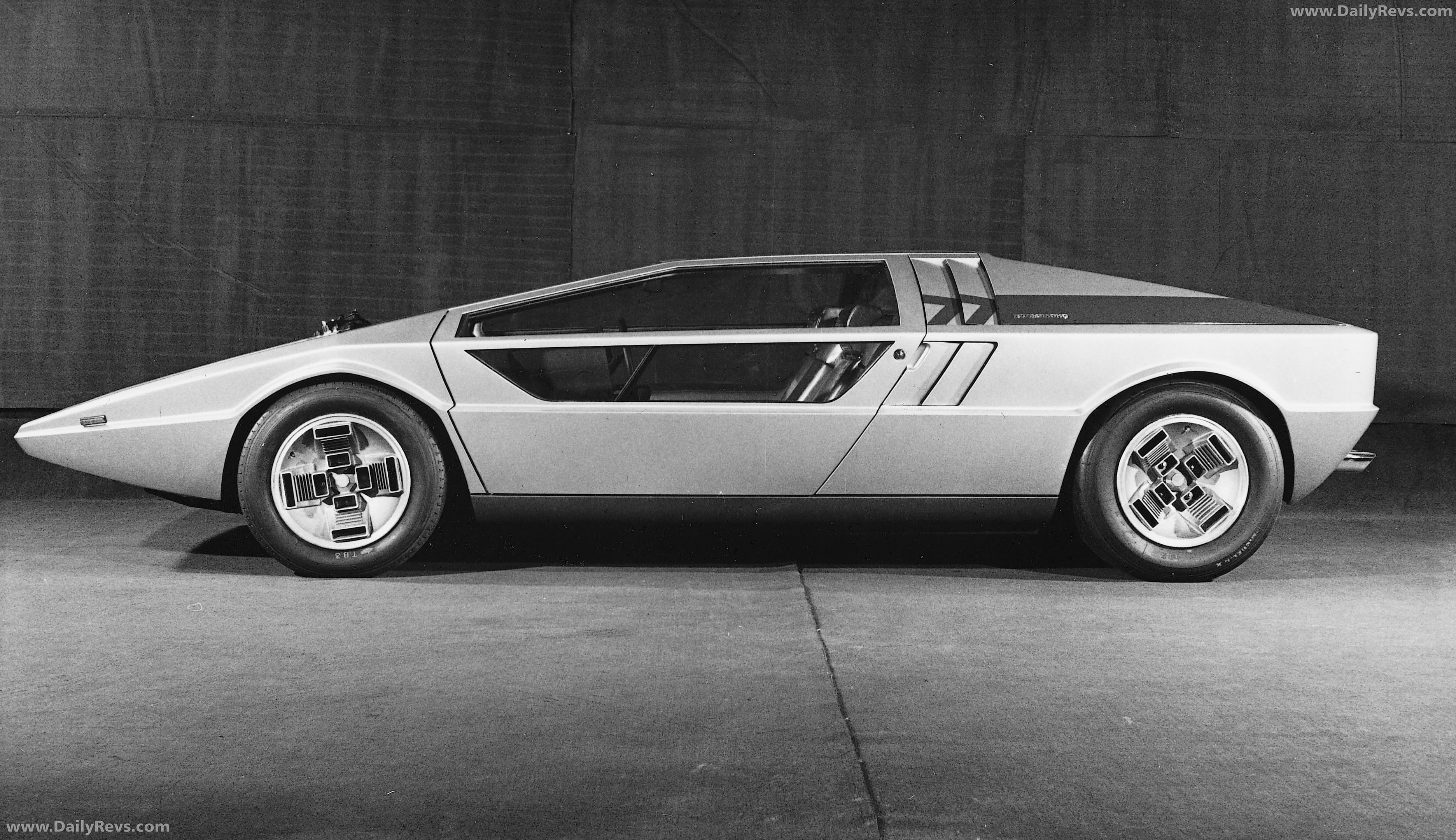
1972 Maserati Boomerang Concept
By Lorenzo Bianchi April 2, 1972
Designed by Giorgetto Giugiaro and built by Italdesign.
Powered by a 4.7L V8 with 310 hp and ~300 km/h top speed.
One-off concept that shaped future wedge-design supercars.
A concept that looked decades ahead
The 1972 Maserati Boomerang didn’t arrive quietly. It landed at the Geneva Motor Show and immediately stood apart.
Even today, it still feels extreme. Back then, it must have looked almost unreal. The car was designed by Giorgetto Giugiaro and built by Italdesign, and it wasn’t just a static showpiece. It ran. Only one example was ever made. That alone gives it a different kind of presence.
Wedge shape that defined an era
The Boomerang is often described as a wedge, but that doesn’t quite capture it.
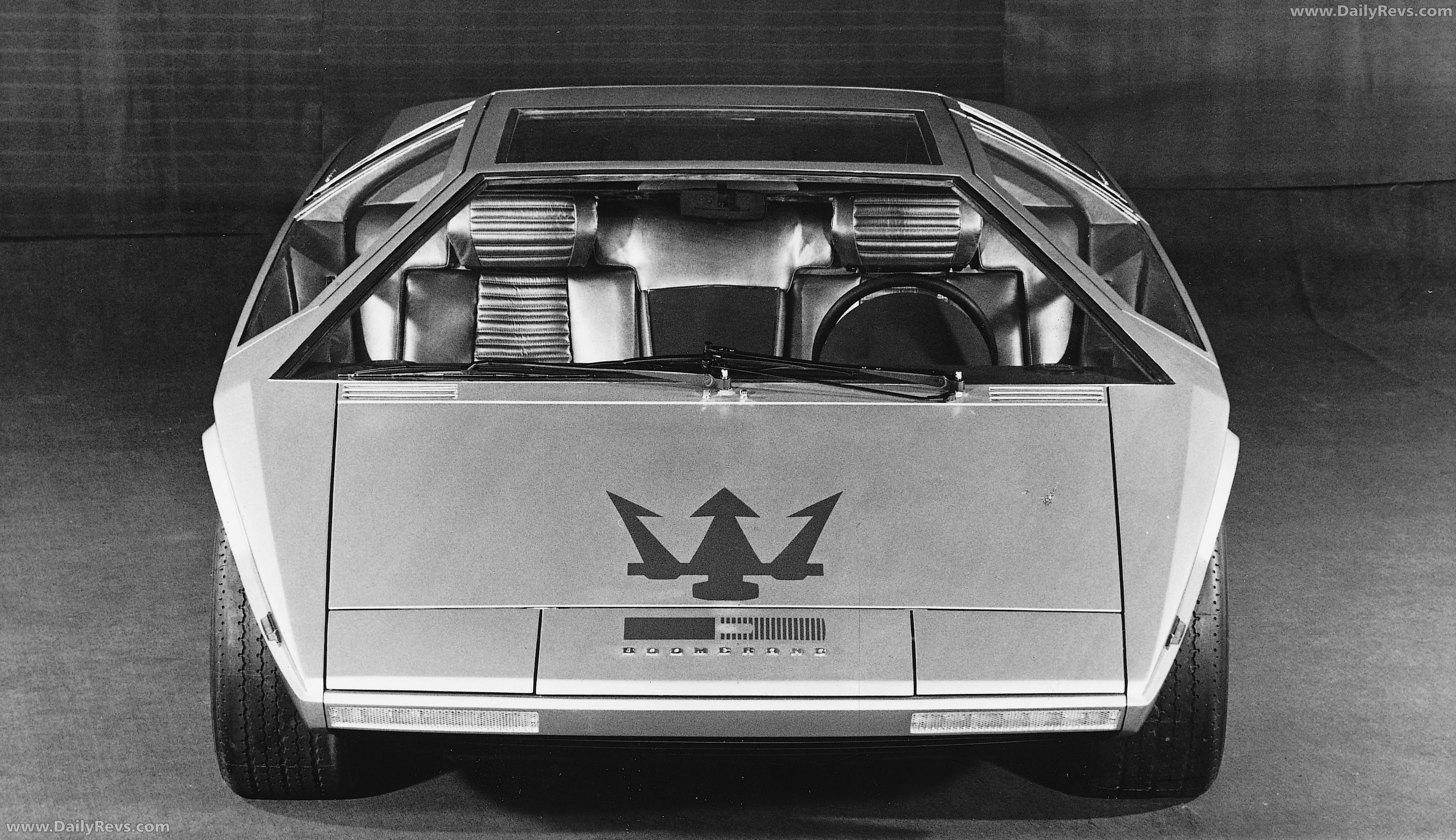
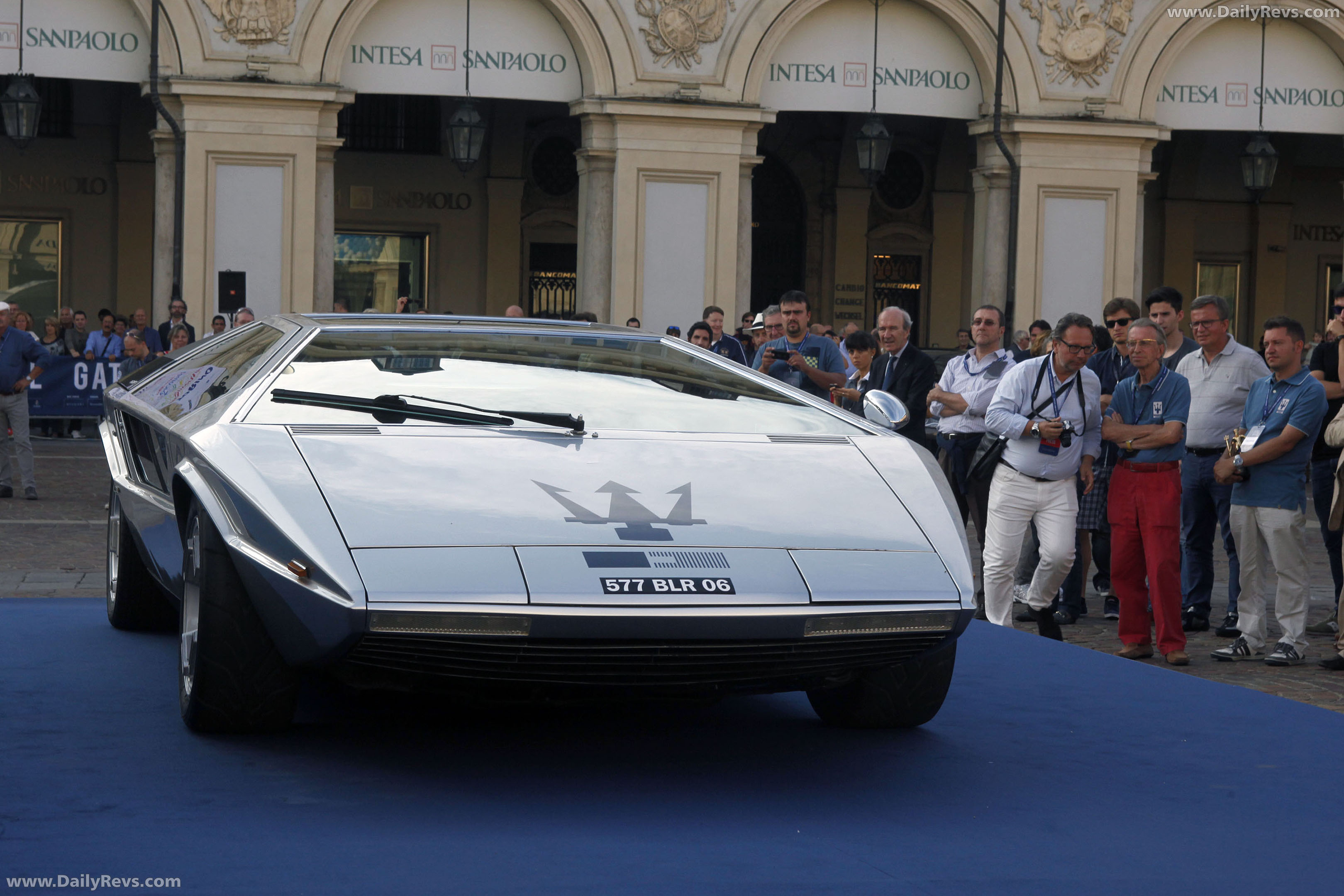
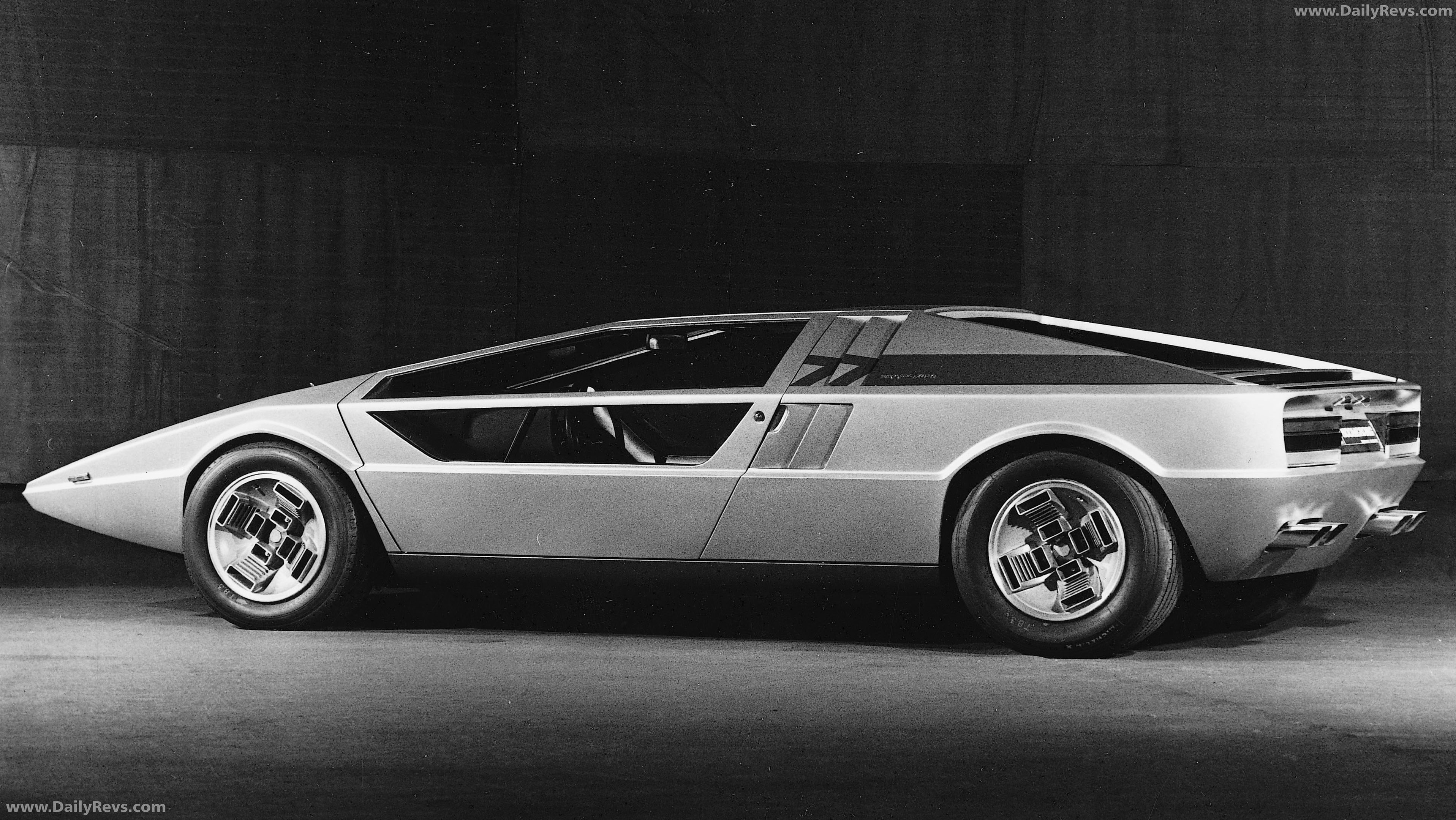
The entire car is built around a single, sharp line that runs from the nose to the rear. Everything sits within that geometry. The windscreen is steeply raked, almost merging into the roof, and the body feels like it has been cut rather than shaped.
There’s very little ornamentation. Just flat planes, crisp edges, and a sense of forward motion even when the car is standing still.
Details stand out the more you look. The square pop-up headlights sit flush when closed. The side windows are split by a metal strip, and the rear carries simple horizontal lighting. It’s clean, but not minimal. There’s intent behind every line.
Proportions built around a mid-engine layout
Underneath, the Boomerang is based on the Maserati Bora.
That means a mid-mounted V8 sits behind the cabin, shaping the proportions in a very direct way. The front is low and short, while the rear carries more visual weight.
The stance is wide, and the car sits low to the ground, with very little wasted space in the body. It doesn’t try to disguise its layout. If anything, it emphasizes it.
Interior pushed just as far as the exterior
If the outside looks unconventional, the inside goes even further.
The dashboard instruments are built directly into the steering wheel, which itself has no spokes in the traditional sense. The entire cluster rotates with the wheel, keeping everything in front of the driver at all times.
It’s an unusual setup, and one that never really made it into production cars in this form.
The seating position is extremely low, reinforcing the idea that this is closer to a race-inspired machine than a road car, even if it was technically registered for road use.
V8 power from the Bora
Mechanically, the Boomerang shares its foundation with the Bora. A 4.7-liter V8 produces around 310 horsepower, paired with a five-speed gearbox and rear-wheel drive.
For the early 1970s, that was significant performance. Maserati claimed a top speed close to 300 km/h, placing it firmly in supercar territory at the time.
More influence than production intent
The Boomerang never entered production. That was never really the point.
Its impact came through design. The wedge shape, the clean surfaces, the focus on geometry — all of it influenced cars that followed, not just from Maserati, but across Europe and the United States.
You can see traces of it in later Giugiaro designs and in the broader shift toward sharper, more angular supercars through the 1970s and 1980s.
A one-off that still feels relevant
The 1972 Maserati Boomerang remains a single example, passed between owners and appearing at events over the years.
It never needed a production run to matter. Its role was different. It showed what was possible when design wasn’t limited by convention. And decades later, it still holds that position.