


1956 Jaguar D-Type
By Lorenzo Bianchi August 14, 1956
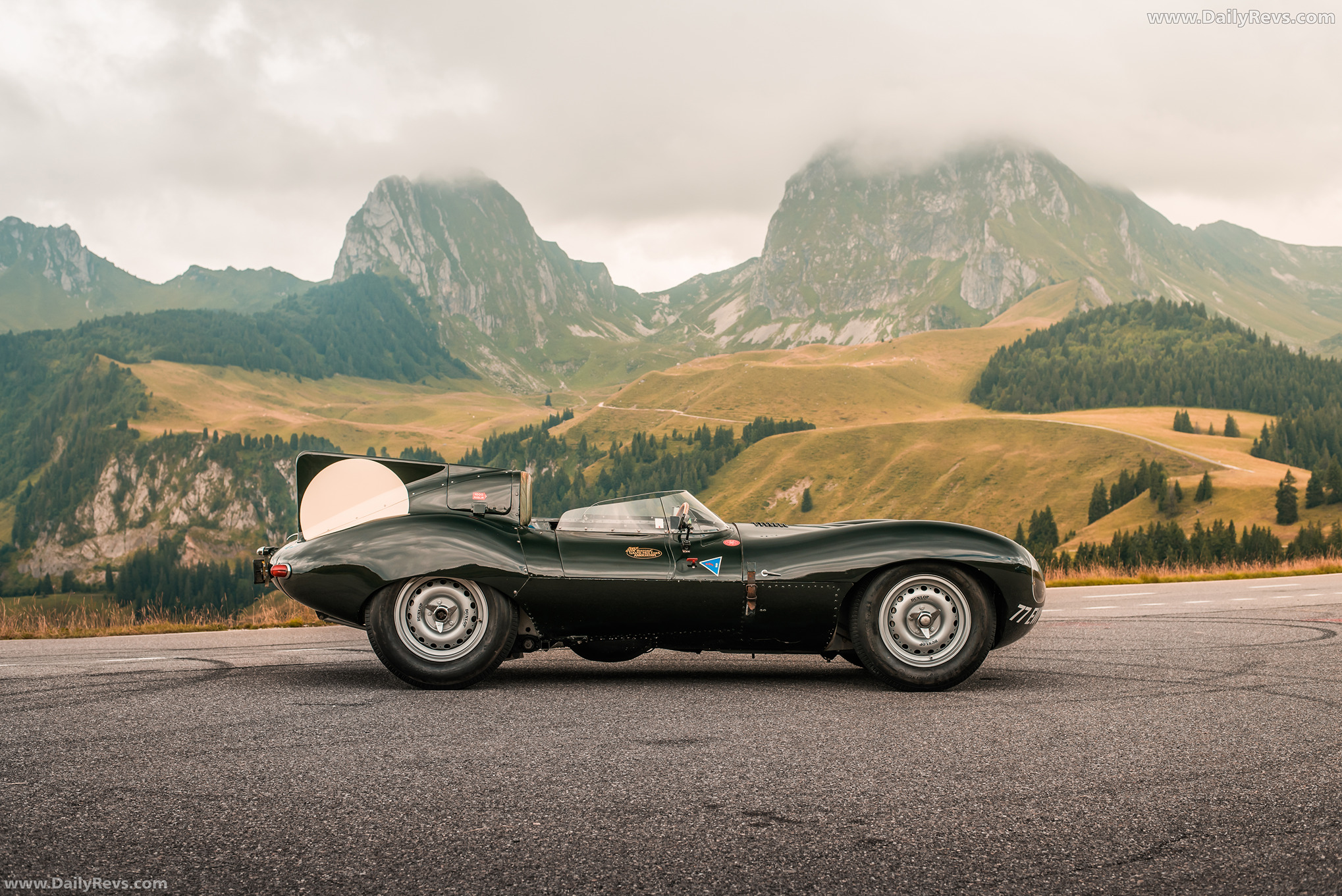
The 1956 Jaguar D-Type is one of Jaguar’s most successful and iconic Le Mans contenders, winning the 24 Hours of Le Mans three times.
Its innovative monocoque design and aerodynamic fin were advanced for the mid-1950s.
The D-Type helped solidify Jaguar’s motorsport reputation and remains one of the most collectible classics today.
A Car That Was Built to Win
The 1956 Jaguar D-Type was never about compromise. It was built with a single goal: beat the best at Le Mans. Everything in its design—down to the rivets and the bulges—was in service of that mission.
By 1956, Jaguar had already proven it could win. The D-Type had tasted victory at Le Mans in 1955, but Jaguar wasn’t done refining it. The '56 version came with tweaks aimed at keeping the car ahead of the pack—better fuel delivery, more consistent braking, and revised aerodynamics. It didn’t always translate into flawless results on track, but the potential was unmistakable.
Still Striking, Still Sleek
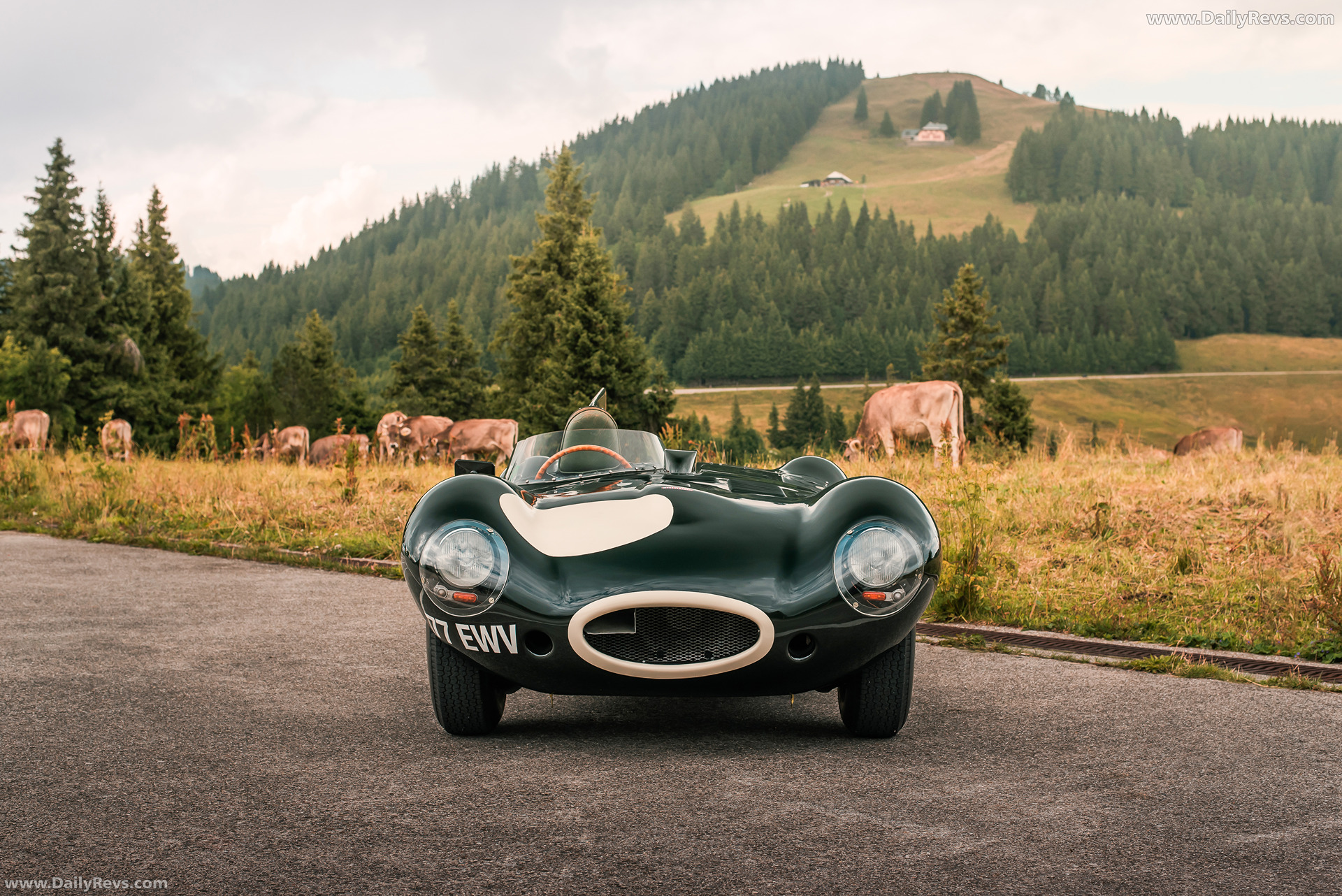
Even now, nearly 70 years later, the D-Type doesn’t look old. It looks focused.
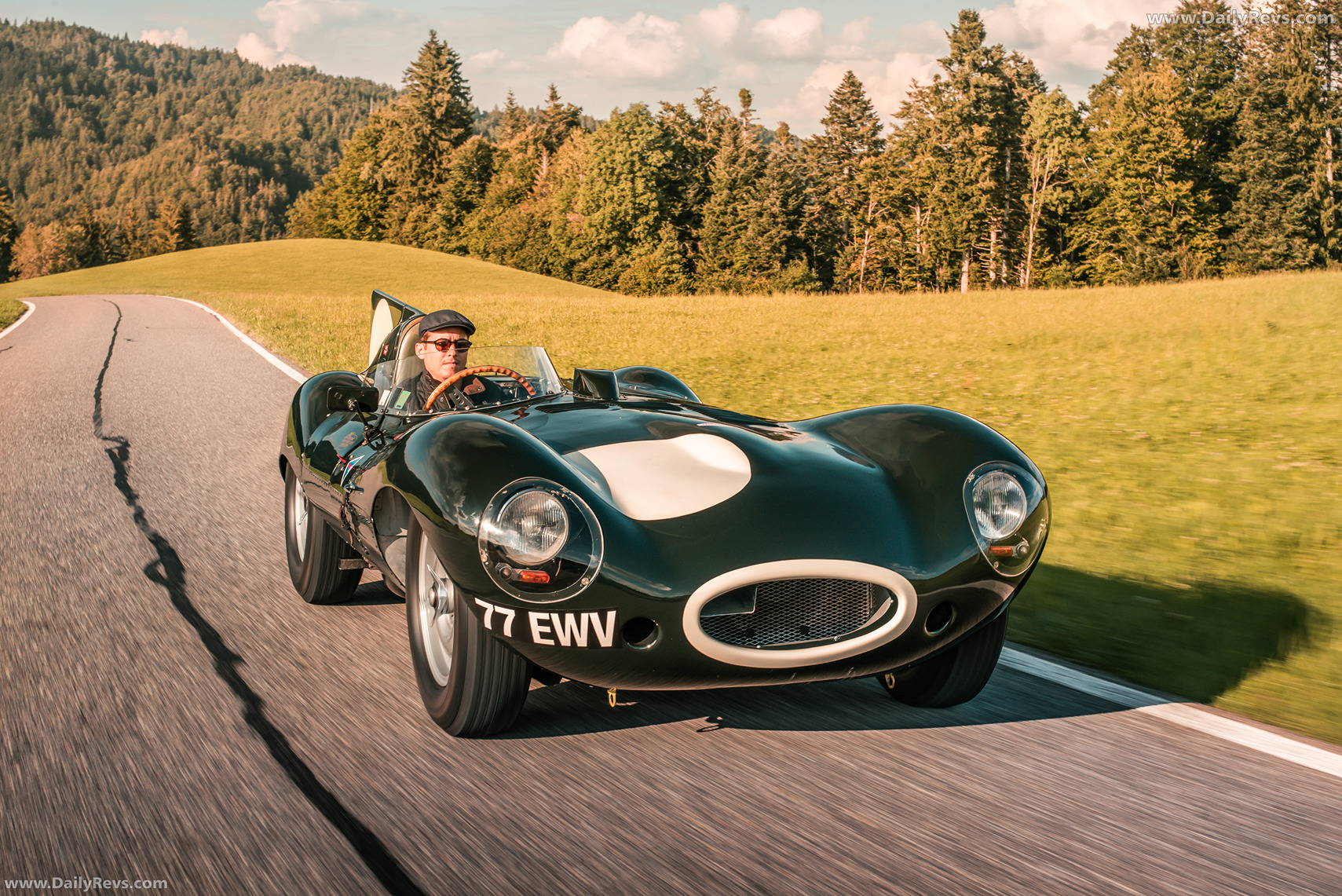
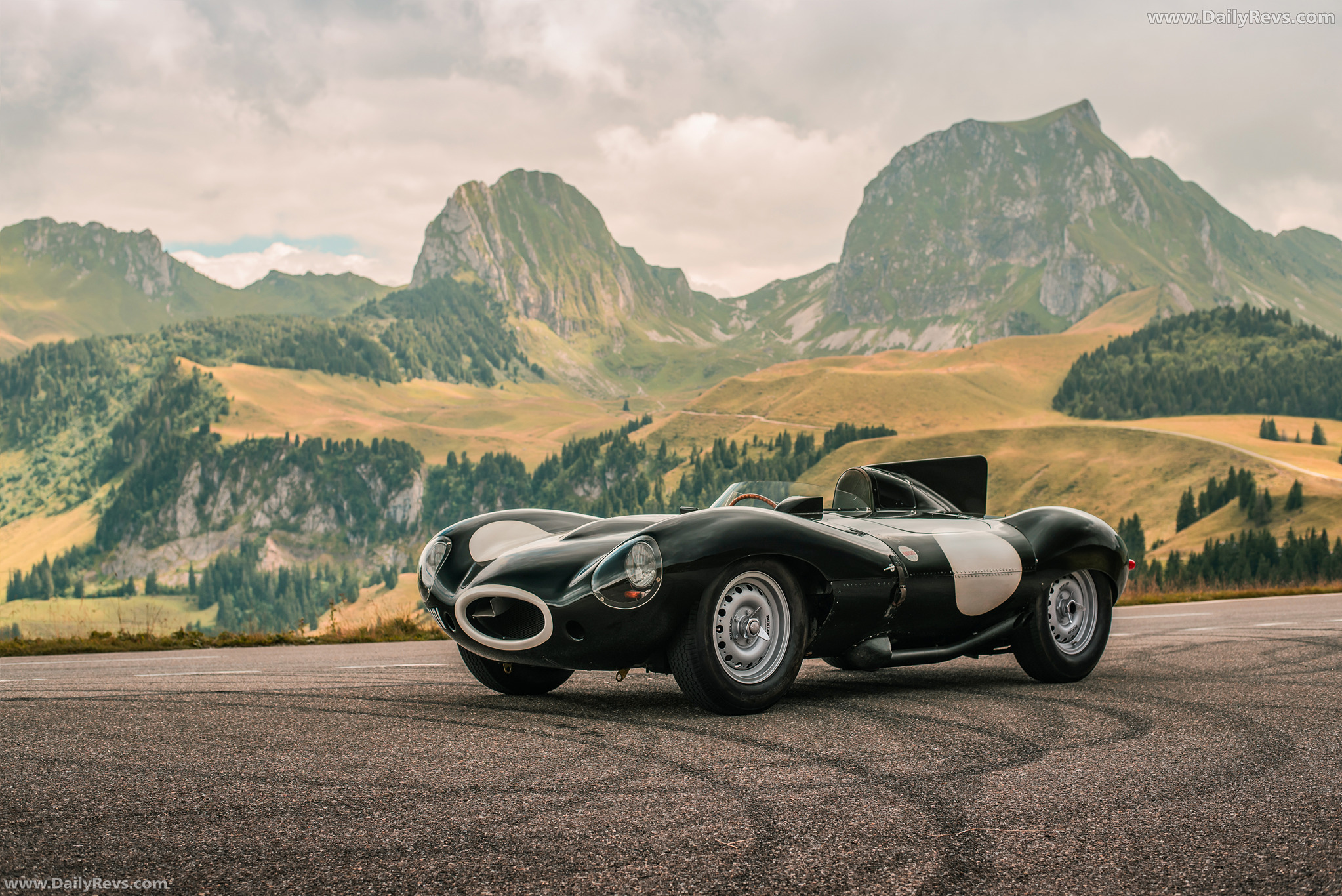
There’s a rhythm to the shape—wide front haunches, a pinched waist, then that unmistakable fin rising behind the driver’s seat. It wasn’t just for looks; that vertical stabilizer was there to keep the car steady during high-speed blasts down Mulsanne. But let’s be honest, it gives the car a serious sense of drama.
Everything about the proportions feels purposeful. The car sits low and long, with bodywork that seems to flow from front to back like liquid aluminum. Jaguar’s team, led by aerodynamicist Malcolm Sayer, understood early on how to make a car that both sliced through the air and stirred emotion.
Engineered with Focus and Simplicity
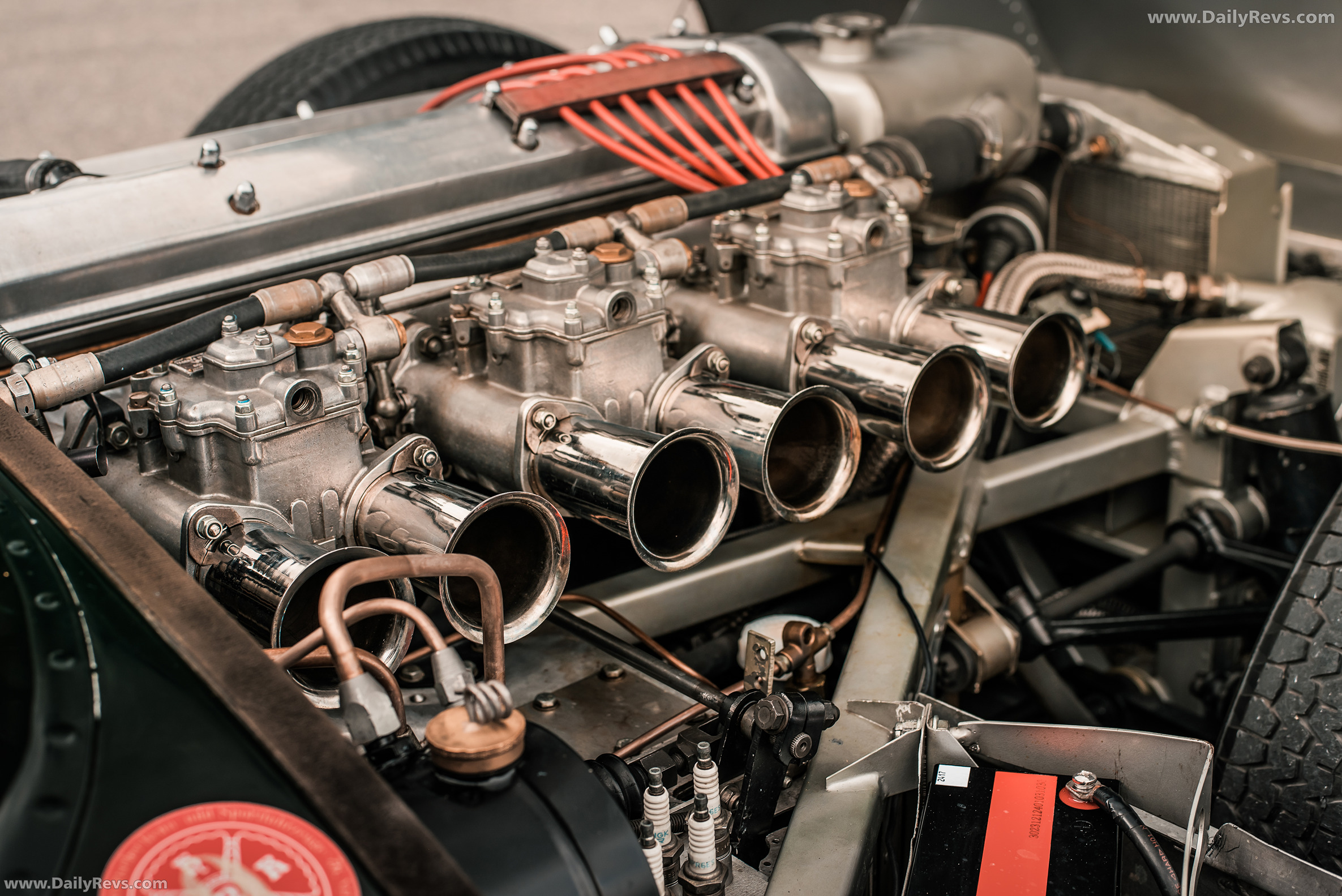
Power came from Jaguar’s proven 3.4-liter XK inline-six engine, tuned to around 250 hp (186 kW). It wasn’t flashy in spec, but in execution, it was razor sharp. A four-speed gearbox and a dry-sump oil system kept everything in check during long, high-revving stints.
Top speed? Roughly 170 mph (274 km/h)—a staggering number for the era. And with Dunlop disc brakes, it could stop more confidently than most of its Italian rivals.
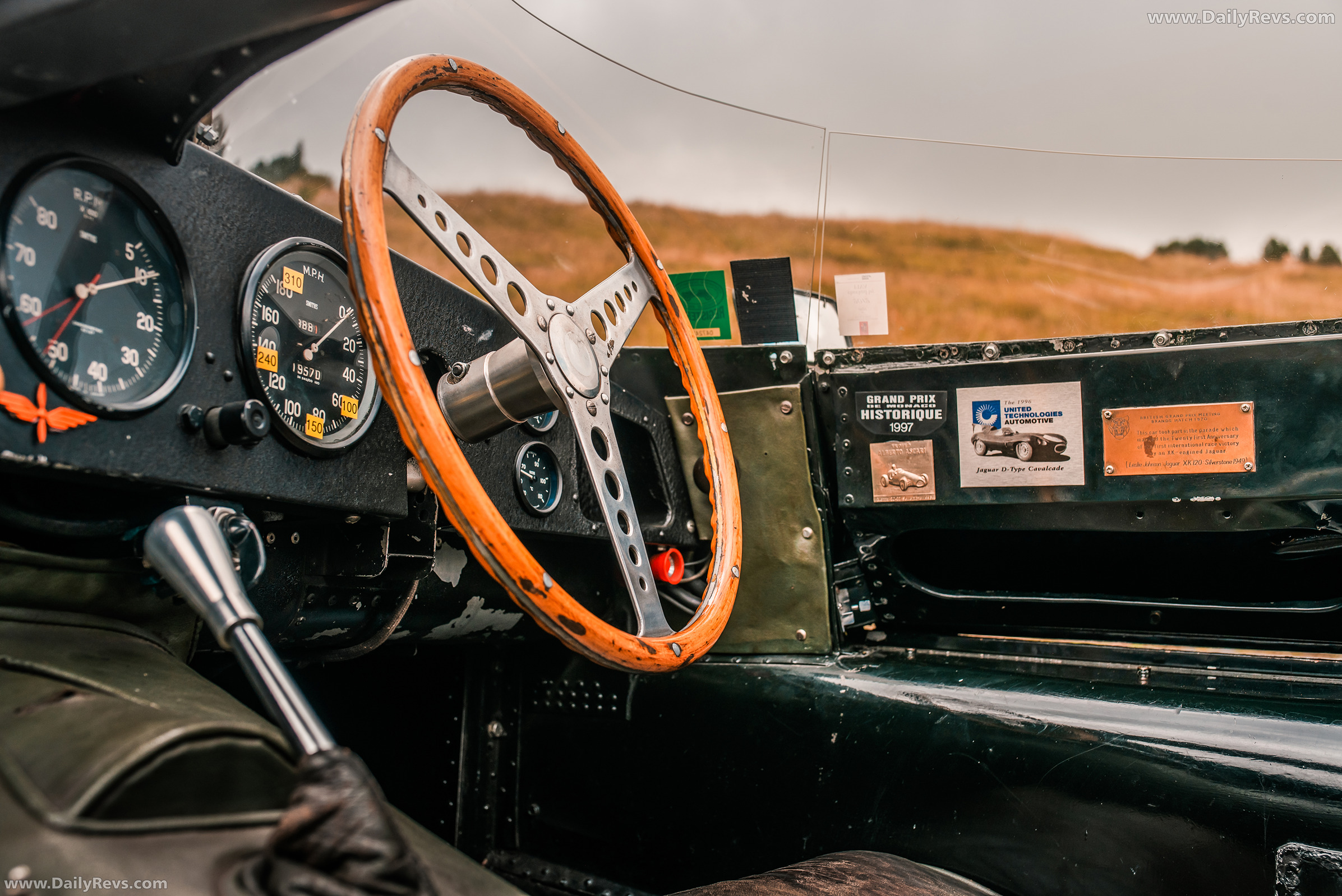
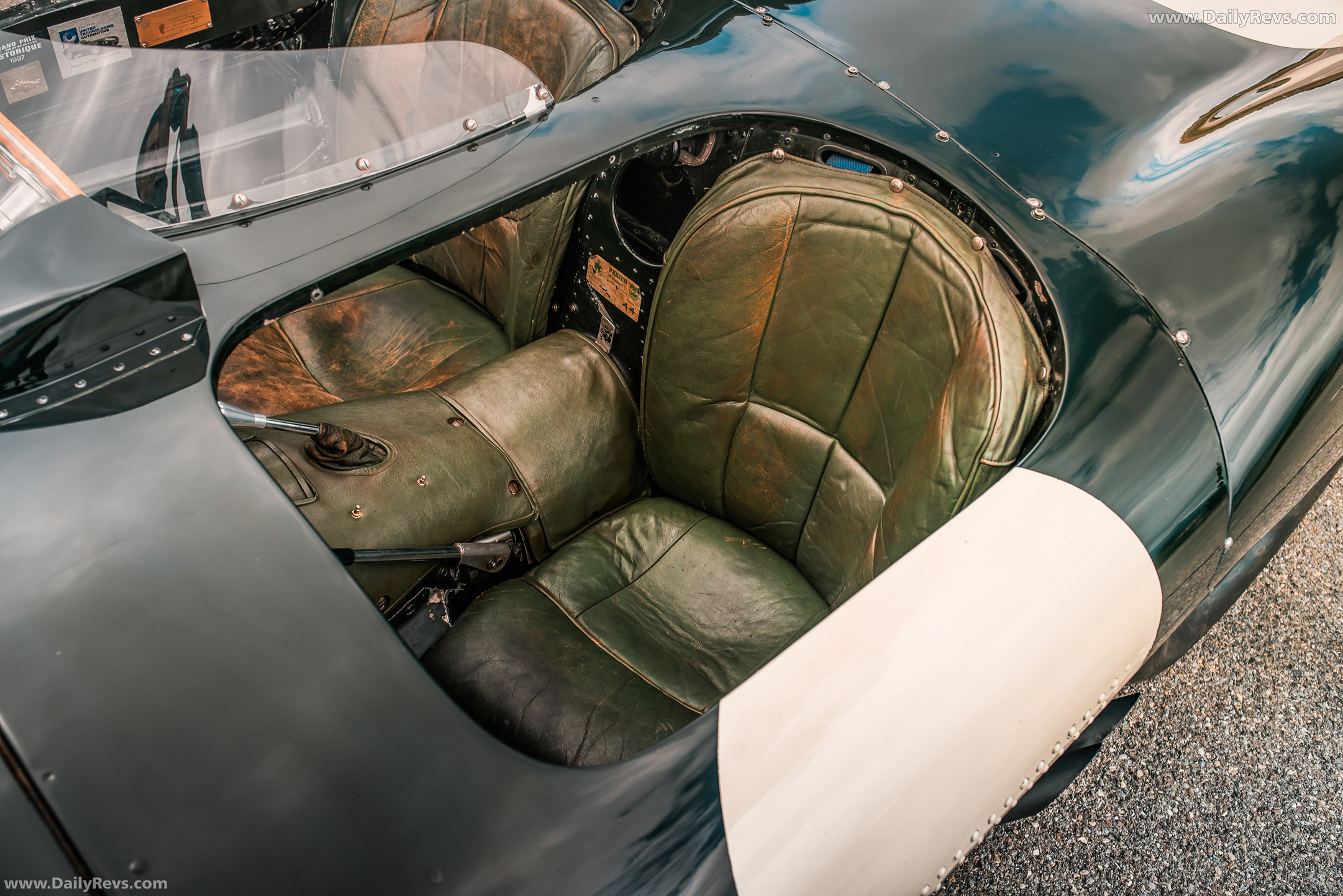
Behind the wheel, drivers were surrounded by exposed rivets, minimal padding, and a business-first dashboard. This was endurance racing in its purest form.
Privateers and the ’57 Triumph
Jaguar pulled its factory team after the 1956 season, but the D-Type story didn’t end there. The next year, Scottish outfit Ecurie Ecosse took the car to outright victory at Le Mans. Private teams had figured out how to extract the best from the D-Type, and the car’s fundamentals were good enough to keep winning even without factory backing.
In total, Jaguar built 71 D-Types between 1954 and 1956, including short-nose and long-nose versions. Each one had its quirks. Each one had a chance to shine.
A Legacy Measured in Millions
Today, the D-Type isn’t just a classic—it’s a museum-worthy artifact. With auction prices north of $20 million depending on provenance, it’s one of the most sought-after competition cars in existence.
But what makes it valuable isn’t just rarity. It’s what the car achieved and how it did it—with a simplicity of purpose and a purity of design that’s rare, even now.
Technical Specification
Performance
- Engine: Inline-6 XK engine (3.4 L displacement)
- Output: Approximately 250 hp (187 kW) @ 6,000 rpm
- Torque: Around 242–250 lb‑ft (328–339 Nm) [Unverified exact figure; inferred from period data]
- Transmission: 4‑speed manual gearbox
- Top Speed: Approximately 162 mph (261 km/h)
- Acceleration (0–60 mph): Around 4.7 seconds
- Quarter-Mile: Estimated at 13 seconds
Body Measurements
Length: ~3,990 mm (157 in)
-
Width: ~1,650 mm (65 in)
-
Height: ~965 mm (38 in)
-
Wheelbase: 2,331 mm (91.8 in)
Powertrain & Layout
- Layout: Front-engine, rear-wheel drive (RWD)
- Chassis: Aluminum alloy monocoque with front subframe and bolt-on rear subframe construction
- Fuel System: Aviation-style deformable fuel bladder in rear tail section
Capacities & Technical Features
- Construction: Aluminum and magnesium alloy monocoque body, adapted to reduce frontal area and drag
- Chassis Engineering: Dry-sump lubrication and engine inclined at 8° to lower profile and clearance
- Brakes: All-round Dunlop disc brakes (notable at the time)
- Suspension: Front double wishbones with torsion bars, rear rigid axle with torsion bar and trailing links
- Additional Features: Aerodynamic tail fin and optional long-nose body for increased speed
Historical Production & Value
- Production Years: 1954–1957
- Total Production: Approximately 75–71 (factory and privateer combined)
- Notable Auctions: Examples have fetched over $20 million—among the most valuable collector cars worldwide
Price (Historical & Contemporary)
- Original factory price: Not available in modern equivalent
- Modern valuation: Estimated at over $20 million depending on provenance and condition